Follow us on Instagram (@slowdown.media) and subscribe to our weekly newsletter to receive behind-the-scenes updates and carefully curated musings.
TRANSCRIPT
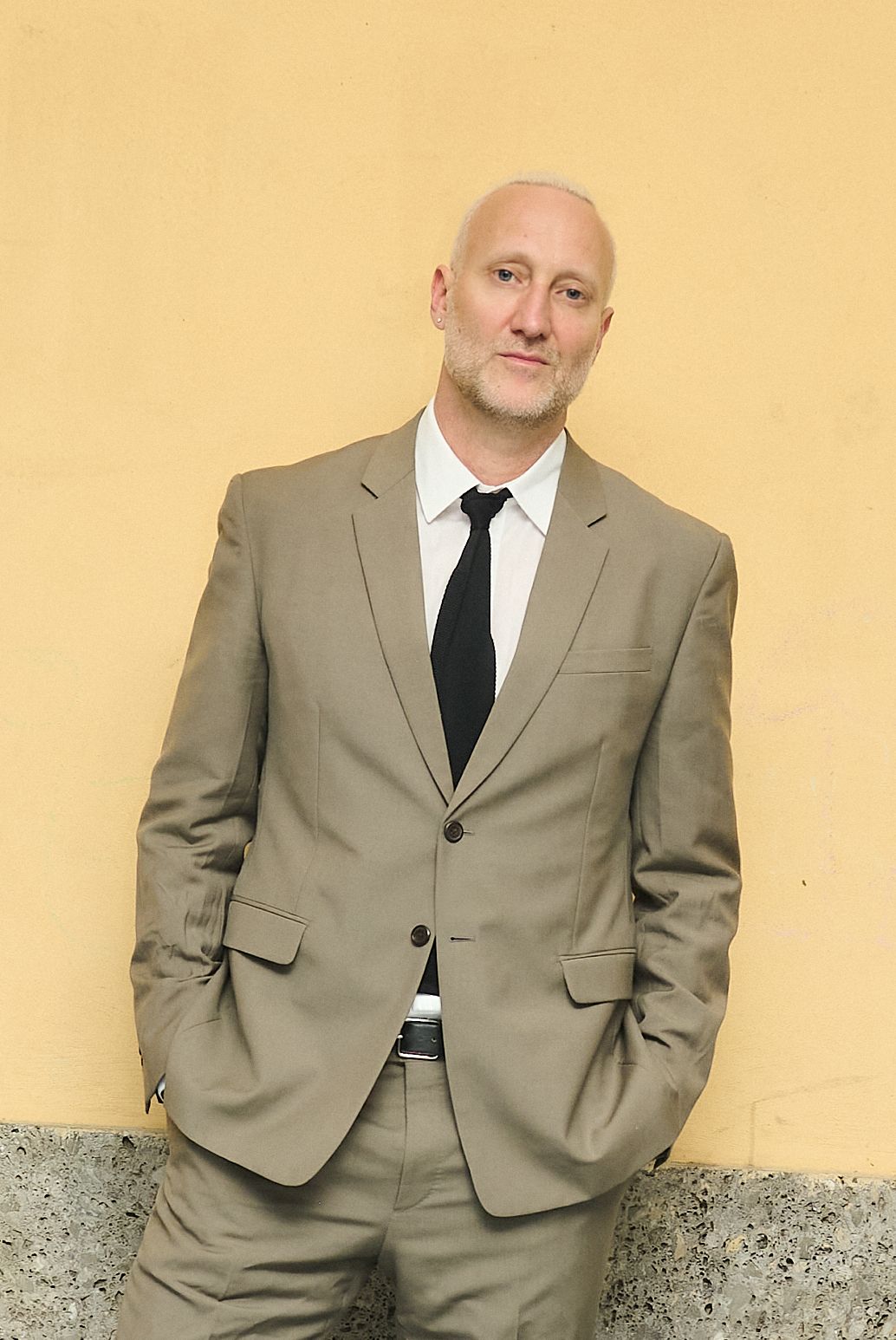
Felix Burrichter. (Photo: Benjamin Salazar)
SPENCER BAILEY: Hi, Felix. Welcome to Time Sensitive.
FELIX BURRICHTER: Hi, Spencer. Thanks for having me on Time Sensitive.
SB: [Laughs] Congratulations on forty issues and twenty years of PIN–UP. Let’s start there. How are you thinking about this moment in time and this particular milestone?
FB: Primarily I’m proud that we’ve built something that has lasted twenty years. Part of me is incredulous that it’s been twenty years, because it doesn’t quite feel like twenty years. It’s also daunting to some extent, because when you face time, you realize how much time has passed. I’m not a spring chicken anymore, and that’s another reminder. But for the most part, I’m absolutely super proud and also really excited about what we’ve built in general, but also what we’ve built with this [fortieth] issue, which was a very special project in many ways. I’m also excited to be in this moment, in my life, my personal life, but also... We’re here not to talk about my personal life, but—
SB: Maybe! [Laughs]
FB: I’m excited about this moment in architecture and design.
SB: I imagine for our listeners, many of our listeners are familiar with PIN–UP, but some might not be.
FB: [Shaking ice near the microphone] Sorry, I’m shaking my drink.
SB: [Laughs] Iced coffee.
FB: It’s an iced coffee.
SB: I thought it’d be helpful for you to get into this self-described “magazine for architectural entertainment” for a minute. What’s your thirty-second elevator pitch for PIN–UP?
FB: Oh, God.
SB: What is it exactly, as you see it now, and where does it sit within culture and society?
FB: Well, the last part of the question, I think you can probably answer better than I can. The thirty-second elevator pitch for PIN–UP is that it is a magazine about culture through the lens of architecture and design. I say it that way because it is an architecture and design magazine, but it treats the subject as something that is deeply embedded in culture at large.
Part of the motivation to start the magazine was the fact that I felt architecture in media was very insular—and by design; it was not an accident. I think it was treated and regarded as something that was very elitist and insular. Part of the motivation for me was to illustrate how we are facing and we are experiencing architecture and design every single moment of the day. Even when we’re sleeping, I suppose. I think that’s really what it is. It’s a culture magazine that looks at culture through the lens of architecture and design.
SB: And your fortieth issue is themed “Independence.”
FB: Yes.
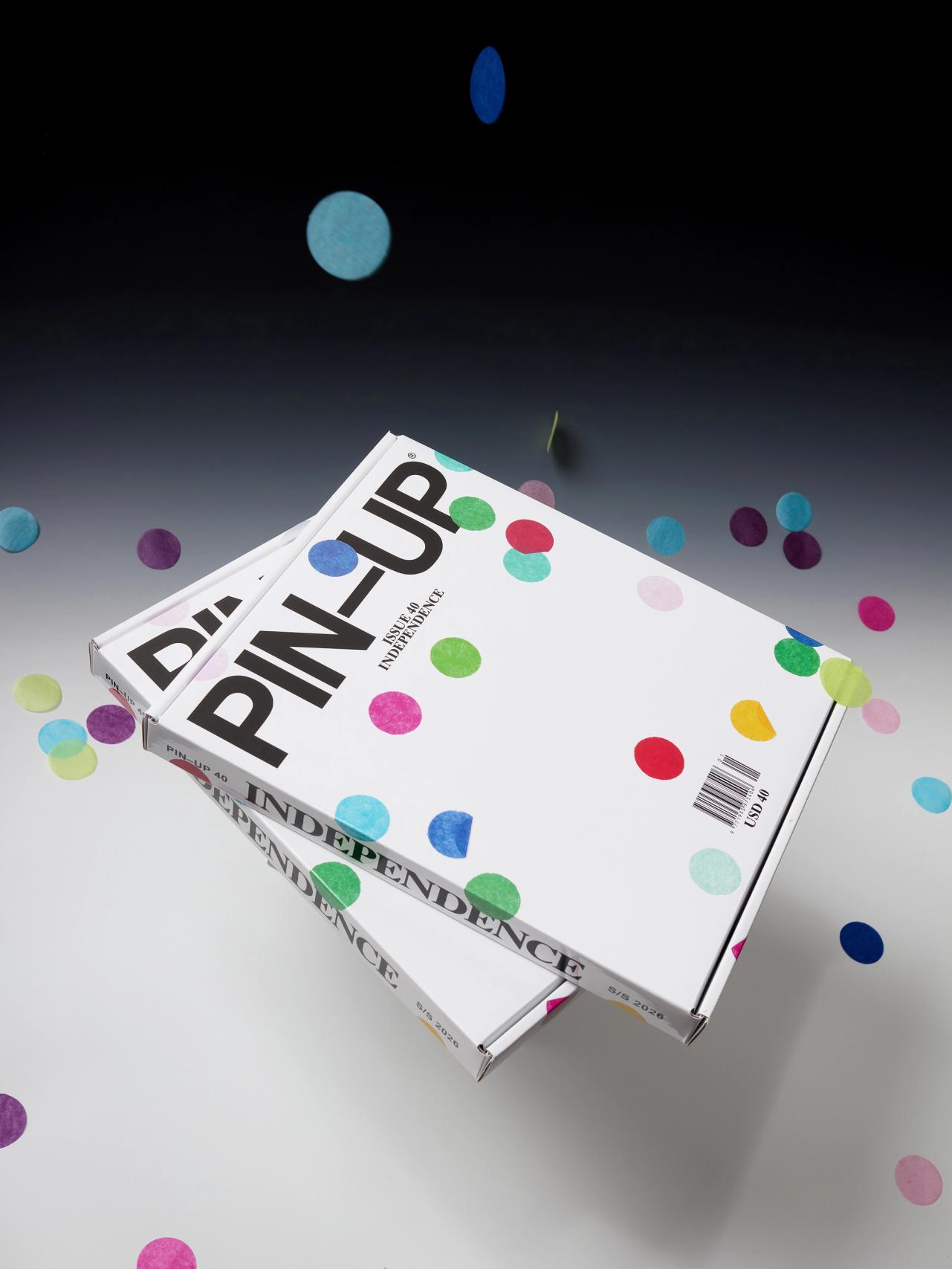
The commemorative box for PIN–UP Issue 40: “Independence” (2026), containing 10 pieces of printed matter. (Courtesy PIN–UP)
SB: How’d you land on “Independence”?
FB: I have India Mahdavi to thank. Shout-out to India Mahdavi. I saw her a few months ago. She pointed out—which is something very obvious, but when you’re in the thick of it, you don’t always notice it—[that] we’ve not just been in business for twenty years, but we’ve also been in business independently. We’ve never had a backer. We were never part of a bigger publishing house. That, I think in and of itself, is an achievement, one that I’m not necessarily celebrating every day, because it also comes with a lot of—
SB: Yeah, the pressure of running something on your own.
FB: Challenges and pressure. But I think it has enabled PIN–UP to grow in the way it has and to become this platform that it has become, because we operate independently. When she pointed that out, because I think we had… What was the initial title? Oh, “Top 40.” “Top 40” was the working title, and it’s still hidden here somewhere in the... I think we did it on the flap.
SB: Oh yeah, it’s there...
FB: The idea was always to use this issue not so much to look back on what we’ve done, but how what we’ve done has been part of a larger evolution of architecture and design in the twenty-first century. And to use this issue to make sense of a lot of these things, what’s happened in architecture since the year 2000.
SB: “Top 40” is very fitting, too, because I feel like… It’s cheeky. PIN–UP is famously highbrow-lowbrow. It’s both.
FB: Thank you. [Laughter] Thank you for noticing that. Yes.
SB: With brilliant in there, I guess: highbrow-brilliant/lowbrow-brilliant. In your Issue 40 editor’s letter, you write, “The past twenty-five years have brought the revision—and in some cases the liquidation—of old canons; a steady streak of technological ‘disruptions,’ some welcome, some not; and enough culture wars, along with actual wars, to make a precise reading of the recent past feel provisional at best.” You also add, “If earlier eras announced themselves through movements and manifestos, this one has unfolded through updates, feeds, and the low-grade exhaustion of being chronically online.”
How did you go about sifting through all this noise in making your “Top 40,” let’s say? How did you unite all of these ideas and, through an architecture and design lens, what did you ultimately make of this first quarter of the twenty-first century?
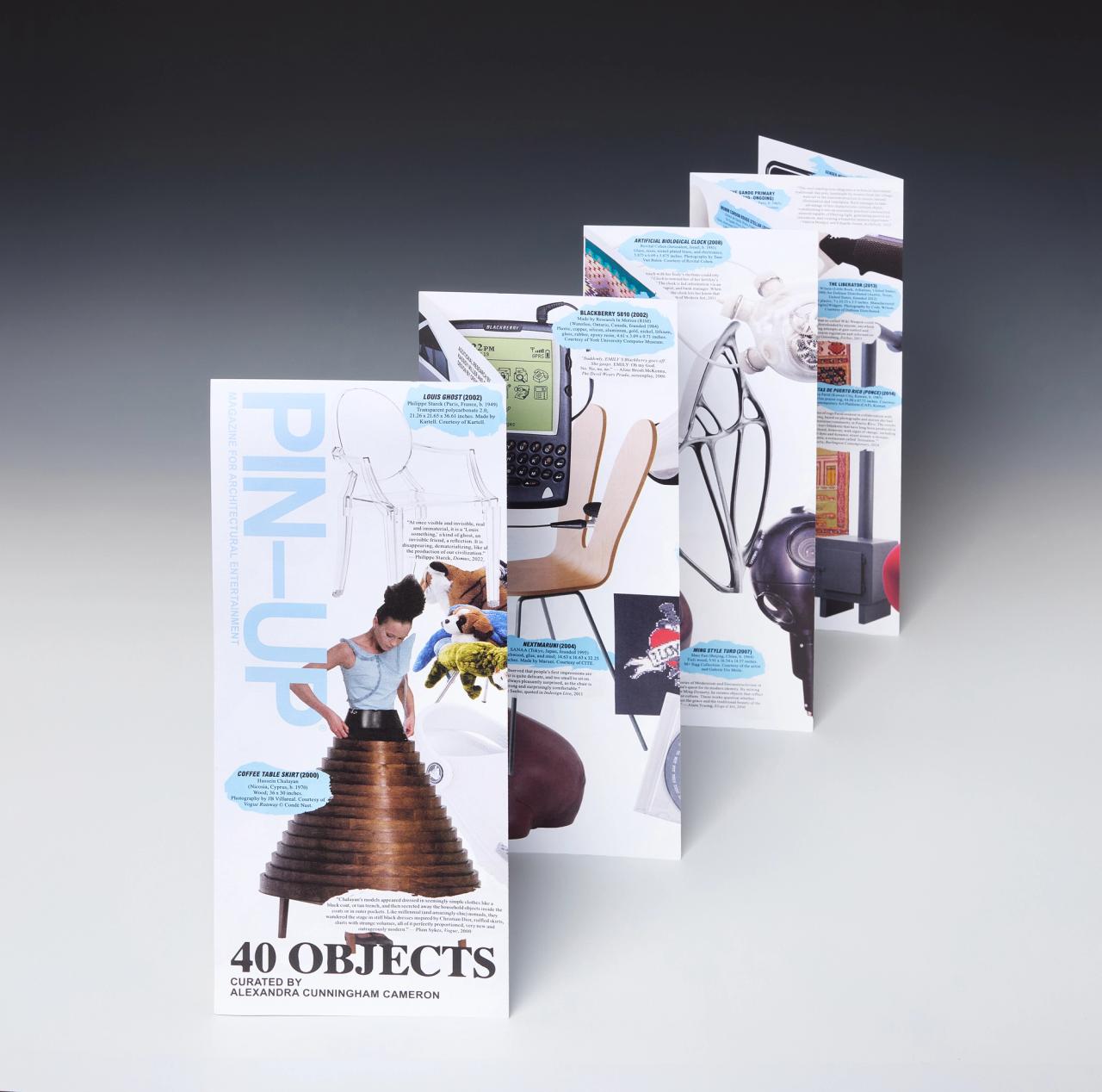
PIN–UP’s “40 Objects” pamphlet, curated by Alexandra Cunningham Cameron for Issue 40. (Courtesy PIN–UP)
FB: To answer the first part, how did I go about it? Well, I didn’t, thankfully. Other people did it for me, and we’ve had incredible contributors in general for this issue, and especially for these lists or… There are forty objects that run as a recurring thread throughout. There’s “40 Objects That Define the 21st Century.” Those were curated by Alexandra Cunningham Cameron, who is the curator-at-large at the Cooper Hewitt— the first curator-at-large at the Cooper Hewitt—and also now the design director at the Judd Foundation. She also edits a magazine called Cultured at Home. So she has a lot of jobs. I added another one to her list, which is the curator of “40 Objects.”
Then there’s “40 Houses,” which is something that I loved working on, because it’s essentially a peer review of forty of the most influential houses built in the twenty-first century, and this was an even more provocative—or potentially provocative—endeavor because making lists in general always causes … discontent.
SB: [Laughs]
FB: Especially with those who aren’t on it or just in general, people have opinions about lists. Instead of carrying the burden ourselves and making those decisions, we actually reached out to over a hundred architects to nominate three houses that they deemed the most influential of the twenty-first century. The parameters were: It had to be a “single-family house,” and it had to be built since the year 2000. The results were so eclectic and exciting. Some houses I had never even heard of or I had forgotten about. Then it was up to us to do the ranking and see how many were nominated and how many times.
There were some that were maybe nominated by almost a third of the people we asked, and some were just nominated once. That’s where we had to make a decision: Okay, which ones of these do we include? But that was a really exciting exercise… Let’s see, who do we have here? Andrés Jaque, Anne Holtrop, Annabelle Selldorf, Barozzi Veiga, Bernard Dubois, Bettina Krause, Bjarke Ingels. I’m not going to read them all... Peter Zumthor, Reiser + Umemoto, Tatiana Bilbao. So it’s a—
SB: Kind of a who’s-who.
FB: It’s a bit of a who’s-who. Also, of course, we relied on a lot of people that we already had a relationship with, but we also reached out to a lot of new people... I was really happy with how enthusiastic the responses were. People really loved to think about this.
SB: Was there one house in particular that surprised you?
FB: The number one house that I think if we had made a list—an actual ranking—number one would have been the Moriyama House by Ryue Nishizawa. I was amazed how large this project looms in the imagination of—
SB: Share a bit about this house for the listeners, because it’s an unusual—
FB: It’s an unusual house. It is actually not even, strictly speaking, a single-family house. I think that’s part of the reason why it is so... It presents itself both as a single unit and, at the same time, a complete fragmentation of the single-family house or of that typology. It’s from 2005, I should say, or, it was built in 2005, and it is individual volumes that each present one room, more or less, but even the rooms are left somewhat—not undefined but open to definition. There are courtyards, there are moments where these spaces meet, but they also allow a lot of privacy. So it is, in a way, modular without being physically modular, but the way you can occupy the space is extremely…
SB: Amorphous? Flexible?
FB: Flexible. Thank you. Yes.
SB: Well, PIN–UP has remained remarkably consistent over the years, even as you’ve evolved and—
FB: Hold on, Spencer. There was a second part to your question. [Laughs] What was that? It was the...
SB: Oh, I had asked you, what do you make of the first quarter of the 21st century?
“You could argue that we’re always in a moment of transition. We’re never somewhere final. Everything is always moving.”
FB: Oh, what do I make of it? Yes. God, I wish I hadn’t reminded you. [Long pause] I think if you draw a parallel to the first quarter of the twentieth century, it was an extreme moment of transition. And you could argue that we’re always in a moment of transition. We’re never somewhere final. Everything is always moving.
But I think that the beginning of the century has been marked, geopolitically, by so many changes. I think there was a sense of certainty in terms of the world order that permeated the nineties. The twenty-first century started with a bang by reminding everyone that actually, no, this is not the end of history; actually we’re entering something completely new. The bang was maybe both the [dot-com] bubble—the tech bubble that burst in the late, in ’99, was it?—And then, obviously, 9/11. Neither of those moments were directly related to architecture, but... Architecture always takes a while to react, in a way. But I think what happened is that everybody is looking for new answers to questions they don’t fully understand yet, because also things have accelerated a lot. Technology has accelerated.
I think societal transformations have also accelerated, and so we’re still in a moment of extreme transition, and where architecture is running after. I don’t think architecture is presenting ideas anymore, maybe the way it did a hundred years ago, where architecture was at the forefront of presenting new lifestyles. I think it’s constantly catching up with the pace of technology.
SB: Right.
FB: And sometimes also either catching up or trying to offer a respite from it. Does that make sense?
SB: Yeah, there’s a slowness embedded into the nature of architecture. You can’t just instantly build it, although we are seeing how technology is upending even the construction of buildings now.
FB: Yes.
SB: But I do think it is one of the slower arts, and humanity is better for it because of that sense of speed.
FB: I like that, yes.
SB: PIN–UP has, now twenty years in, you look at this incredible archive you’ve built up and, while it has certainly evolved, it has remained so consistent. Two issues a year, always.
FB: Two print issues, yeah.
SB: Two print issues a year, always been biannual, always had this focus on “architectural entertainment,” from Issue 1. How have you managed to stay so focused and consistent? Because even just hearing it, the difference between 2006 and now is remarkable. You started this magazine the year before the iPhone even arrived.
FB: I know. [Laughs] I was invited by SCAD to do a lecture and one of the questions was what the media landscape was like. Then I turned to the audience and I asked, “How many people here in this room were born in 2006?” I almost had a heart attack when I saw how many hands went up. Half the room was born in 2006 or later. That just blew my mind.
SB: Yeah. PIN–UP’s almost drinking age.
FB: Yes, exactly. [Laughter] Well, we can definitely vote. The paradox, I think, embedded in PIN–UP is that the biannual print issue provides a structure and we don’t just do print. I should say, obviously—it wasn’t always obvious—but we don’t just do print. We also produce books, we do video, we do events, exhibitions. No podcasts.
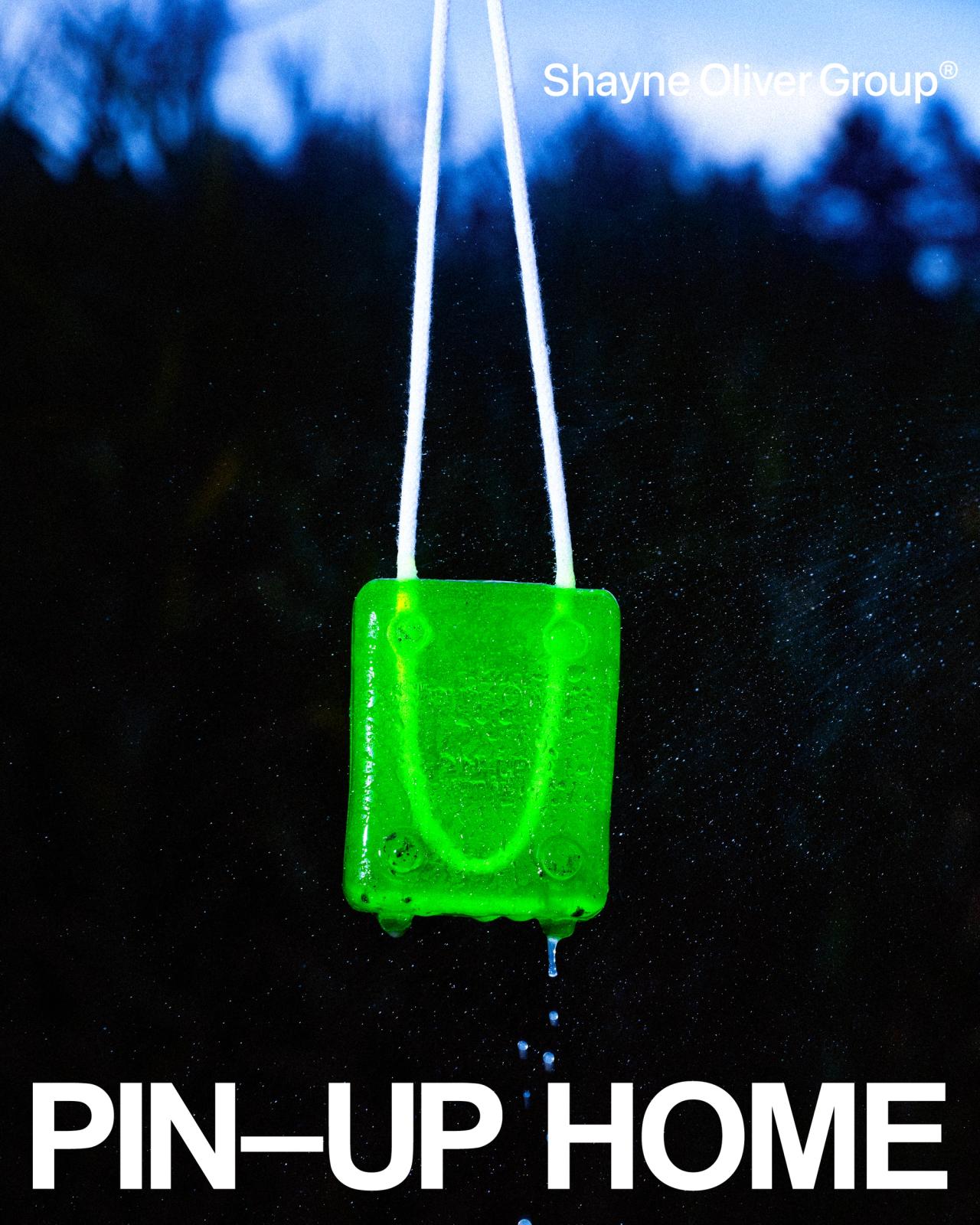
A campaign image for Soap on a Roap (2023), created for PIN–UP HOME by designer and creative director Shayne Oliver. (Photo: Nadine Fraczkowski/Courtesy PIN–UP)
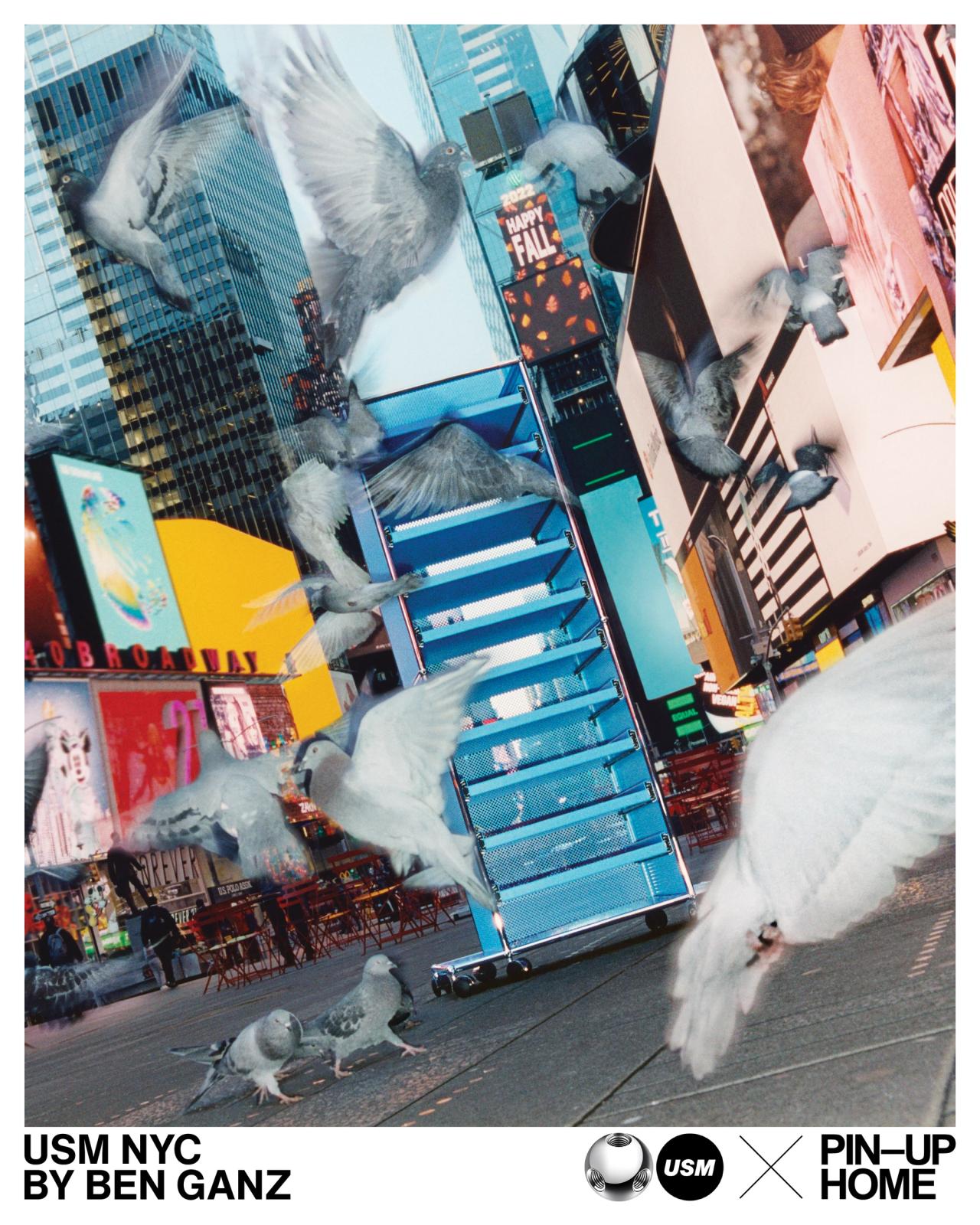
A campaign image for USM NYC modular towers (2022) designed for PIN–UP HOME by creative director Ben Ganz. (Photo: Francesco Nazardo/Courtesy PIN–UP)
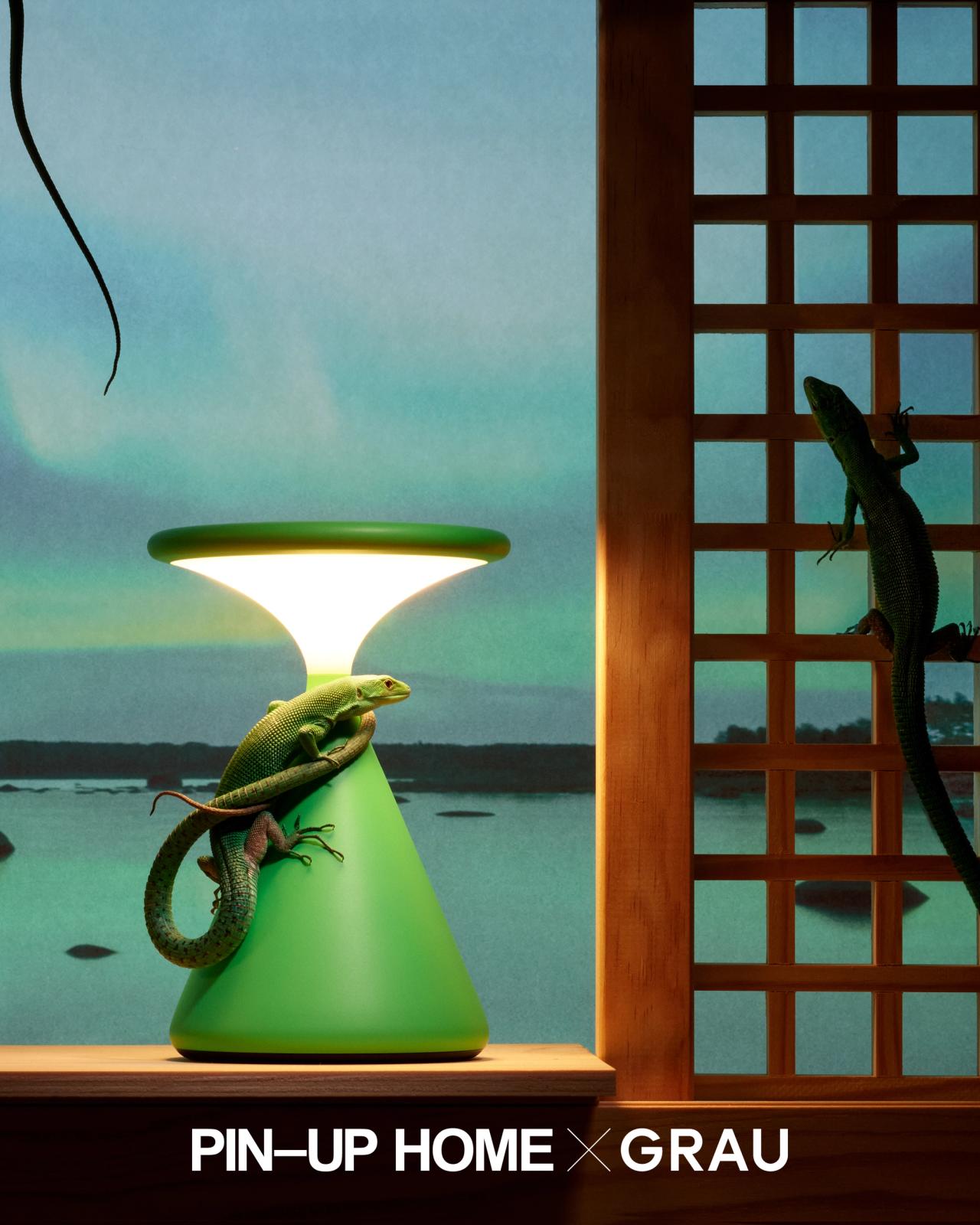
A campaign image for Grau’s Salt lamp in “Leaf” (2023). (Photo: Philippe Jarrigeon/Courtesy PIN–UP)
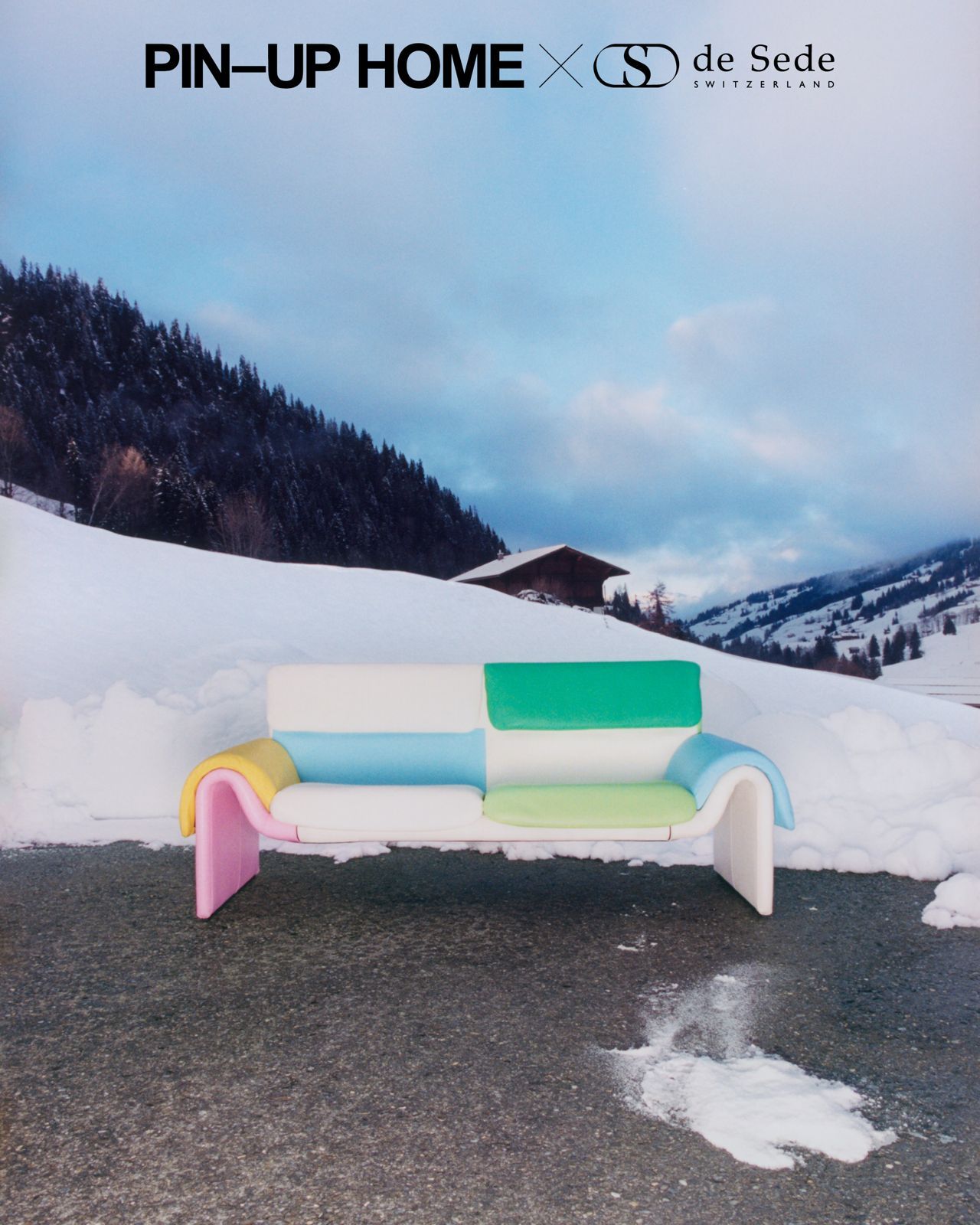
A campaign image for the DS-2011 Harlequin armchair (2024), developed for PIN–UP HOME in collaboration with Swiss furniture producer De Sede based on a 1983 design. (Photo: Francesco Nazardo/Courtesy PIN–UP)
A campaign image for Soap on a Roap (2023), created for PIN–UP HOME by designer and creative director Shayne Oliver. (Photo: Nadine Fraczkowski/Courtesy PIN–UP)
A campaign image for USM NYC modular towers (2022) designed for PIN–UP HOME by creative director Ben Ganz. (Photo: Francesco Nazardo/Courtesy PIN–UP)
A campaign image for Grau’s Salt lamp in “Leaf” (2023). (Photo: Philippe Jarrigeon/Courtesy PIN–UP)
A campaign image for the DS-2011 Harlequin armchair (2024), developed for PIN–UP HOME in collaboration with Swiss furniture producer De Sede based on a 1983 design. (Photo: Francesco Nazardo/Courtesy PIN–UP)
A campaign image for Soap on a Roap (2023), created for PIN–UP HOME by designer and creative director Shayne Oliver. (Photo: Nadine Fraczkowski/Courtesy PIN–UP)
A campaign image for USM NYC modular towers (2022) designed for PIN–UP HOME by creative director Ben Ganz. (Photo: Francesco Nazardo/Courtesy PIN–UP)
A campaign image for Grau’s Salt lamp in “Leaf” (2023). (Photo: Philippe Jarrigeon/Courtesy PIN–UP)
A campaign image for the DS-2011 Harlequin armchair (2024), developed for PIN–UP HOME in collaboration with Swiss furniture producer De Sede based on a 1983 design. (Photo: Francesco Nazardo/Courtesy PIN–UP)
“There’s no formula. We kind of reinvent the wheel with every issue.”
FB: But we don’t do podcasts yet. So there is, I think, the consistency of this biannual print product, which… There were many moments during the past twenty years where we were like, “Is this really the right decision?” There were many, many signs that pointed toward maybe giving up on it., and I’m really happy we didn’t, because it does provide a structure around which, like an anchor moment, that helps us navigate the media landscape in a very regulated way. But the paradox I’m trying to get at is that, at the same time, there is no formula. So there’s a regularity, but there’s no formula. We kind of reinvent the wheel with every issue.
SB: Let’s just take Issue 40 here. I wouldn’t even describe it as an “issue.” It’s a box set. There are ten different pieces of printed material inside this box that it comes in. I think you’re playing with the notion of what a magazine is.
FB: Yes, absolutely. I think that’s also why we never stopped, even though, especially in the late teens, it was a struggle trying to convince clients and partners why being part of a print product was relevant.
SB: And now there’s a resurgence.
FB: Oh, a complete resurgence. Absolutely. But before the pandemic, there was this idea that print is, if not obsolete, then soon obsolete. I think it was actually this onslaught of technology that everybody was faced with during the pandemic that made them realize, Well, actually it would be nice to also not look at a screen for a while. There was a certain value to having the consistency of print
SB: Yeah, and craft, people baking bread and making pottery.
FB: Yes. This is our version of baking bread. [Laughs] But this idea that there is no formula… We have a certain number of pages, we have a certain number of interviews, and there are certain rubrics that are recurring, but beyond that, there really is no formula.
I think I was always a little bit envious of publications that had a really good formula, where it’s like there’s an instruction manual and then you can just fill in the blanks. There are some really good ones out there. On more than one occasion, I would say to myself, “Oh, I wish we could just do something a little simpler.” Ultimately, it is also the superpower of PIN–UP, because when you have a formula, it can also be very easily replicated, whether by other people or by machines. PIN–UP is a tough one to replicate [laughs], for better or worse.
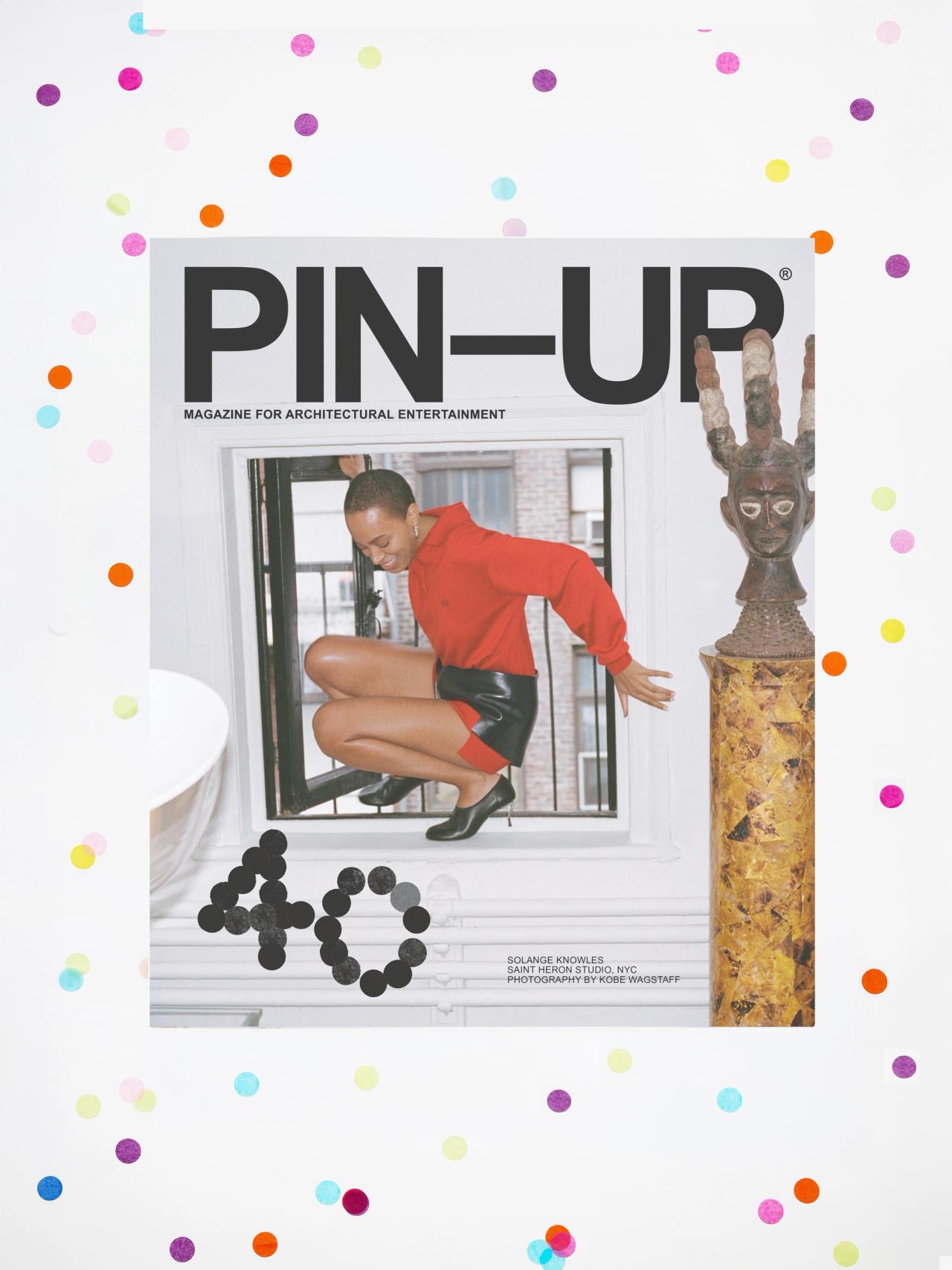
PIN–UP Issue 40: “Independence” (2026) featuring Solange Knowles in Saint Heron’s New York City studio. (Photo: Kobe Wagstaff/Courtesy PIN–UP)
SB: It’s a hand-sewn magazine.
FB: Yes, exactly.
SB: This issue features several former Time Sensitive guests: Theaster Gates—
FB: Mm-hmm, who interviewed Solange Knowles, yes.
SB: Yeah, Ghetto Gastro’s Jon Gray, Jay Osgerby, and Ian Schrager. Over the years you’ve—
FB: Oh, I did listen to the Ian Schrager interview actually before we—
SB: Oh.
FB: Yeah, that you did. Yep.
SB: And?
FB: Yeah, it was great.
SB: [Laughs]
FB: Yeah, it was great prep. I didn’t even do the interview, but I listened to it anyway.
SB: You’ve also had other interviews in the magazine over the years with Faye Toogood, Annabelle Selldorf, Shohei Shigematsu, and Robert Wilson. These are all also former Time Sensitive guests.
This is partly why I wanted to have you on the show. There’s such a strong cultural, editorial, curatorial through line between PIN–UP and Time Sensitive, or what you do and what I do, for a long time now. I feel like—even though I’ve never written for PIN–UP or contributed to PIN–UP—I’ve always felt like an interlocutor to it. I feel like what we both do maybe is this idea of treating architecture, art, and design as these things that are part of... They’re a means toward answering broader cultural questions, and we’re also forming these transdisciplinary creative networks through the platforms and offering an alternative to fast digital culture.
FB: Yeah, absolutely.
SB: Do you see that similarly? Taking a thirty-thousand-foot view, where do you see us situated in this landscape?
FB: You and me?
SB: Yeah, or just PIN–UP.
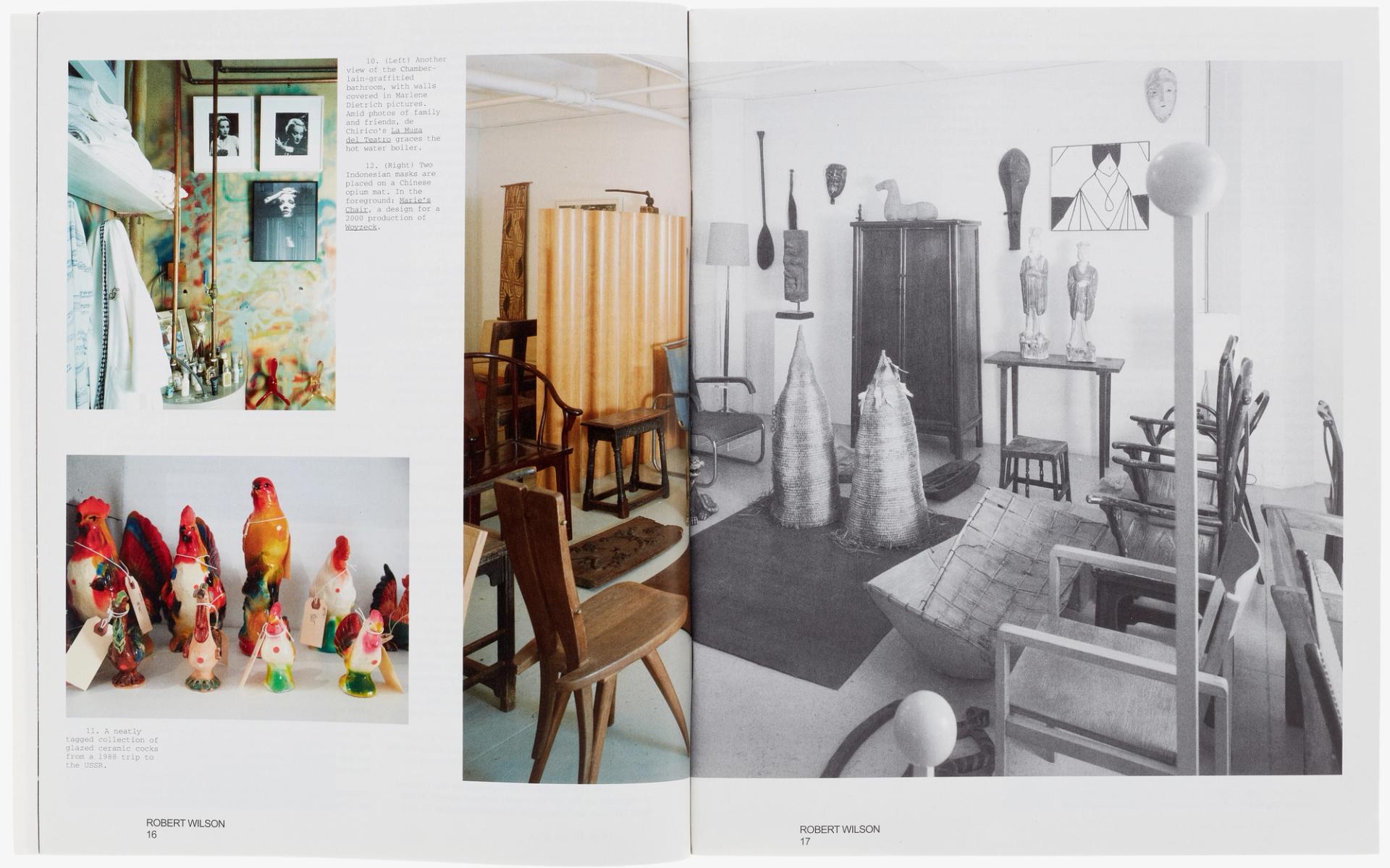
Spread featuring the home of director and playwright Robert Wilson (Ep. 96) interviewed by Horacio Silva for PIN–UP Issue 3 (2007/2008). (Photo: Todd Eberle/Courtesy PIN–UP)
“I feel a big responsibility for every story that we publish, because you’re putting something out in the world that hopefully has longer-lasting value—it’s not just a blip on Instagram—and that will be a reference in hopefully many years to come.”
FB: [Long pause] First of all, I would like to say that part of the joy of doing this is also that you can have an interview with Ian Schrager that you did, and then you can have an interview with Ian Schrager in PIN–UP, and they have very different approaches. It’s not like you walk away with like: “Oh, well that was a whole lot of the same all over again.”
SB: I was surprised when I read the Schrager interview.
FB: Oh, really?
SB: Yeah. I can’t think of specific things where I was like, “Oh, I didn’t know that about him.” But I would say it was more the way that it was approached. There were questions asked that I would never think to ask.
FB: Well, I’m happy to hear that. I think what we do—or what Slowdown and PIN–UP does, do—it’s an ecosystem. I don’t want to say “network” because it has a dirty—
SB: Cringey, yeah. [Laughs]
FB: But it is an ecosystem. You also create an ecosystem where the platform or the publication can be a catalyst, where a lot of these different voices can hold the same space, and be in conversation with each other, and inform each other. Because you can have a chef next to an architect. You even have a much broader scope, where you bring scientists and chefs.
I think you’ve created something where these things can talk to each other—and I don’t mean literally talk to each other. They sit in the same space and then they can hold the same value. This can be someone very old, this can be someone who’s just starting, this can be someone mid-career. I think creating that ecosystem comes… not to sound pompous, but I think also there’s a big responsibility that comes with that. I feel a big responsibility for every story that we publish, because you’re putting something out in the world that hopefully has longer-lasting value—it’s not just a blip on Instagram—and that will be a reference in hopefully many years to come.
SB: It’s the posterity thing, a little bit.
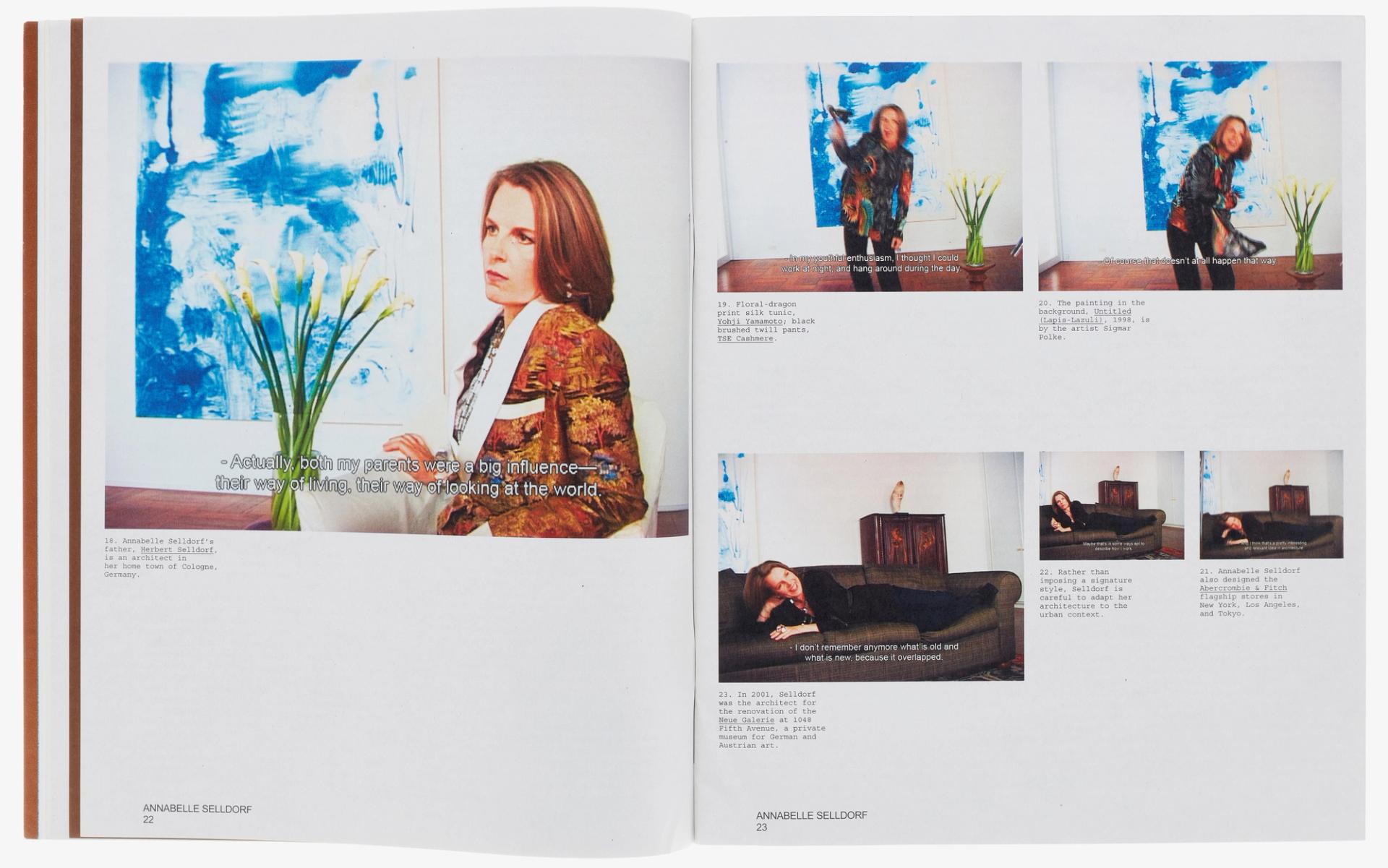
Spread featuring German-born architect Annabelle Selldorf (Ep. 104) interviewed by Ricky Clifton for PIN–UP Issue 4 (2008). (Video stills: Julika Rudelius/Courtesy PIN–UP)
FB: It’s the posterity thing, which is also why I always say—well, I don’t always say it, but I’ll say it now— We obviously cover people at all stages of their careers, but my favorite stories are people who are just starting out. Or who are—I don’t want to say at the end of their career, but in the late stage of their career. Because with people who are just starting out, you really have the responsibility of—you play an active role in how you frame their practice. I always remind the writers—obviously, I’m not doing even five percent of the content of PIN–UP—So I always remind the writers, especially, that this piece might get referred to by other people in the future, so be mindful of that.
Then for people who are in the later stage of their career, I think it’s because they think about their legacy, right? They think about their legacy so much, and then you get to either show a side of them that no one has seen before during their career, because they’ve also started to not give a fuck anymore.
SB: Yeah. After age 90, it’s usually...
FB: After 80, they’re ready to roll—or ready to rip, especially.
SB: [Laughs]
FB: That’s also exciting. Then you have the late-stage crescendo piece, and that also really shapes how people are remembered.
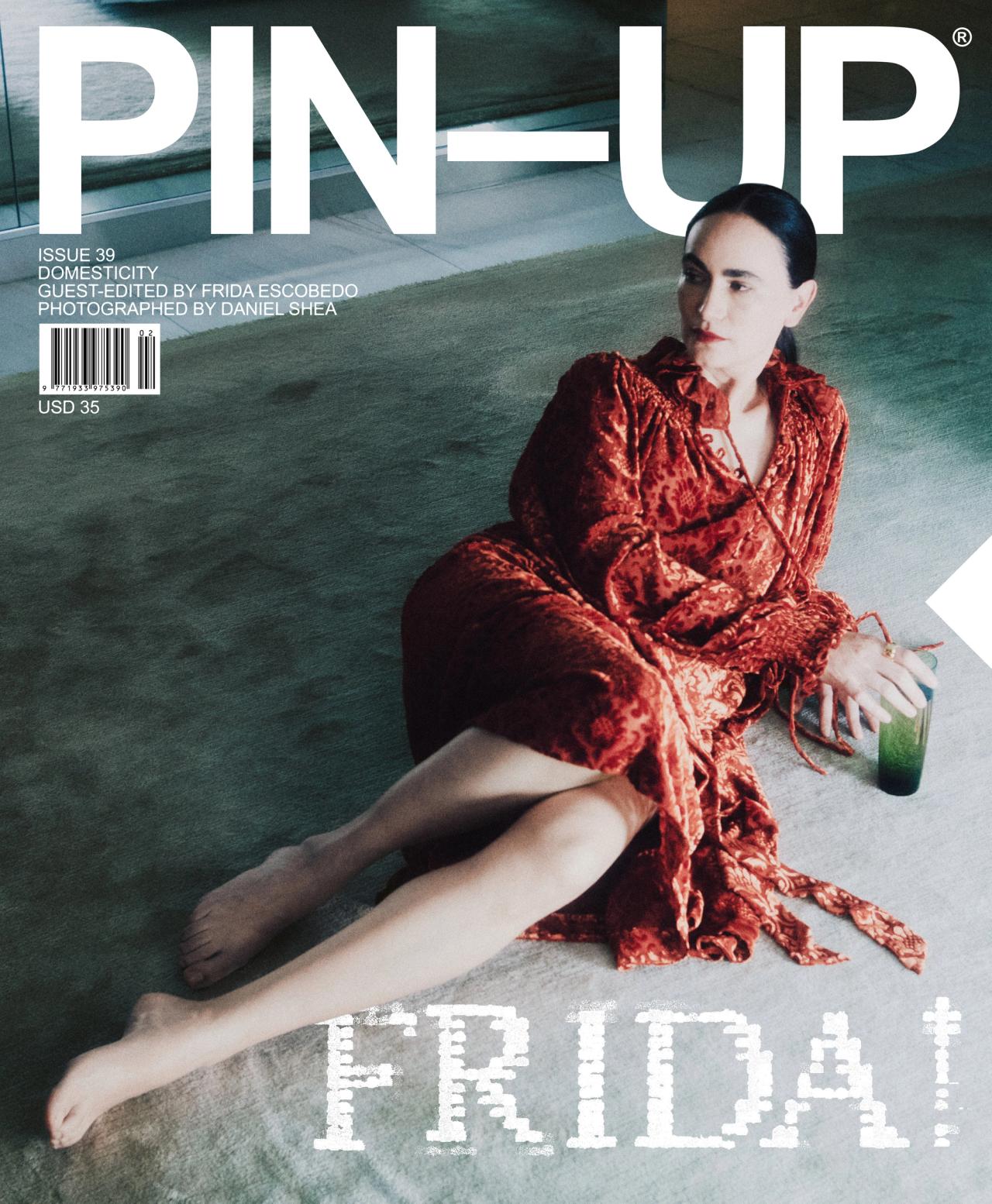
PIN–UP Issue 39: “Domesticity” (2025) guest edited by Frida Escobedo. (Photo: Daniel Shea/Courtesy PIN–UP)
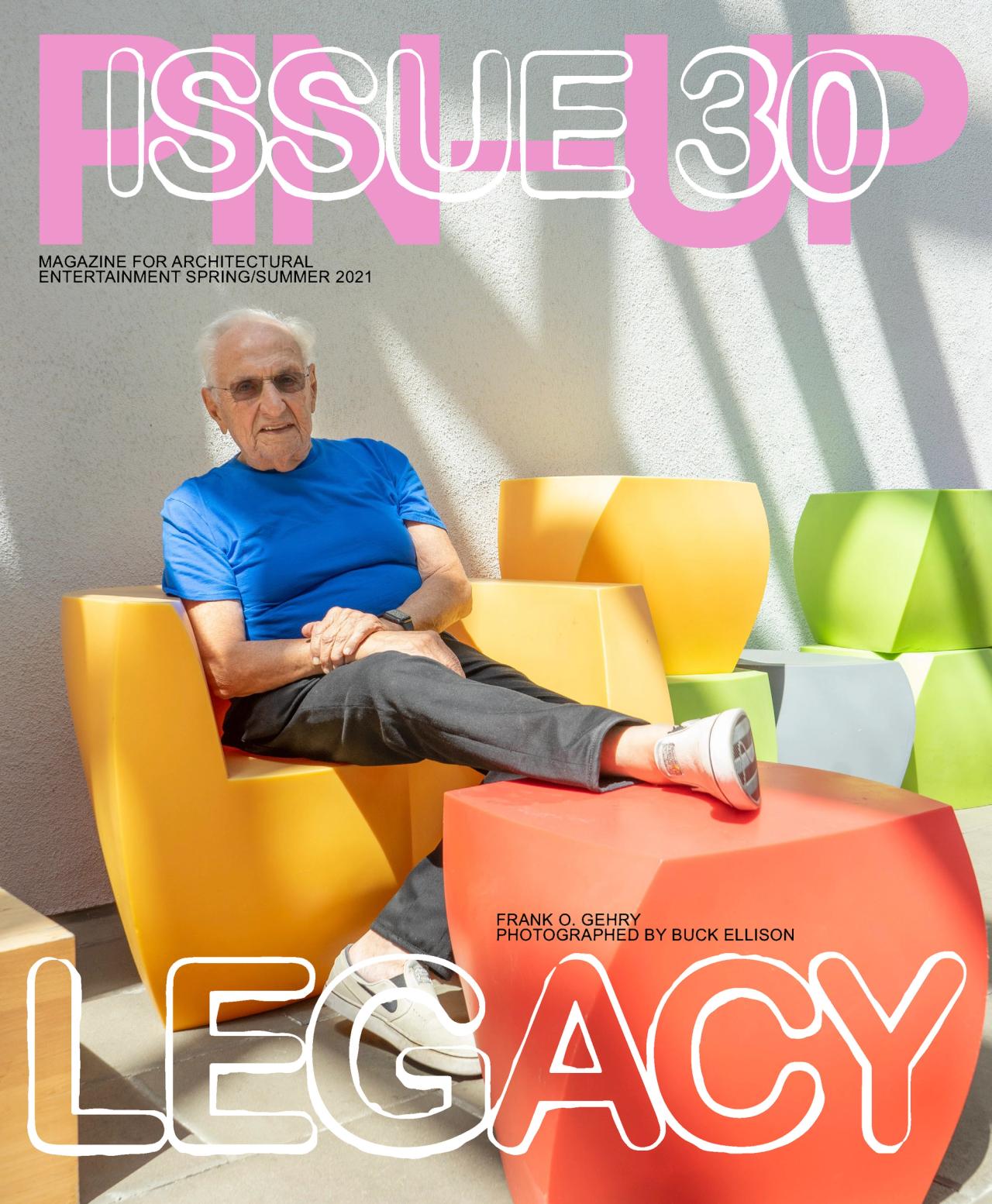
PIN–UP Issue 30: “Legacy” (2021) featuring Frank O. Gehry. (Photo: Buck Ellison/Courtesy PIN–UP)
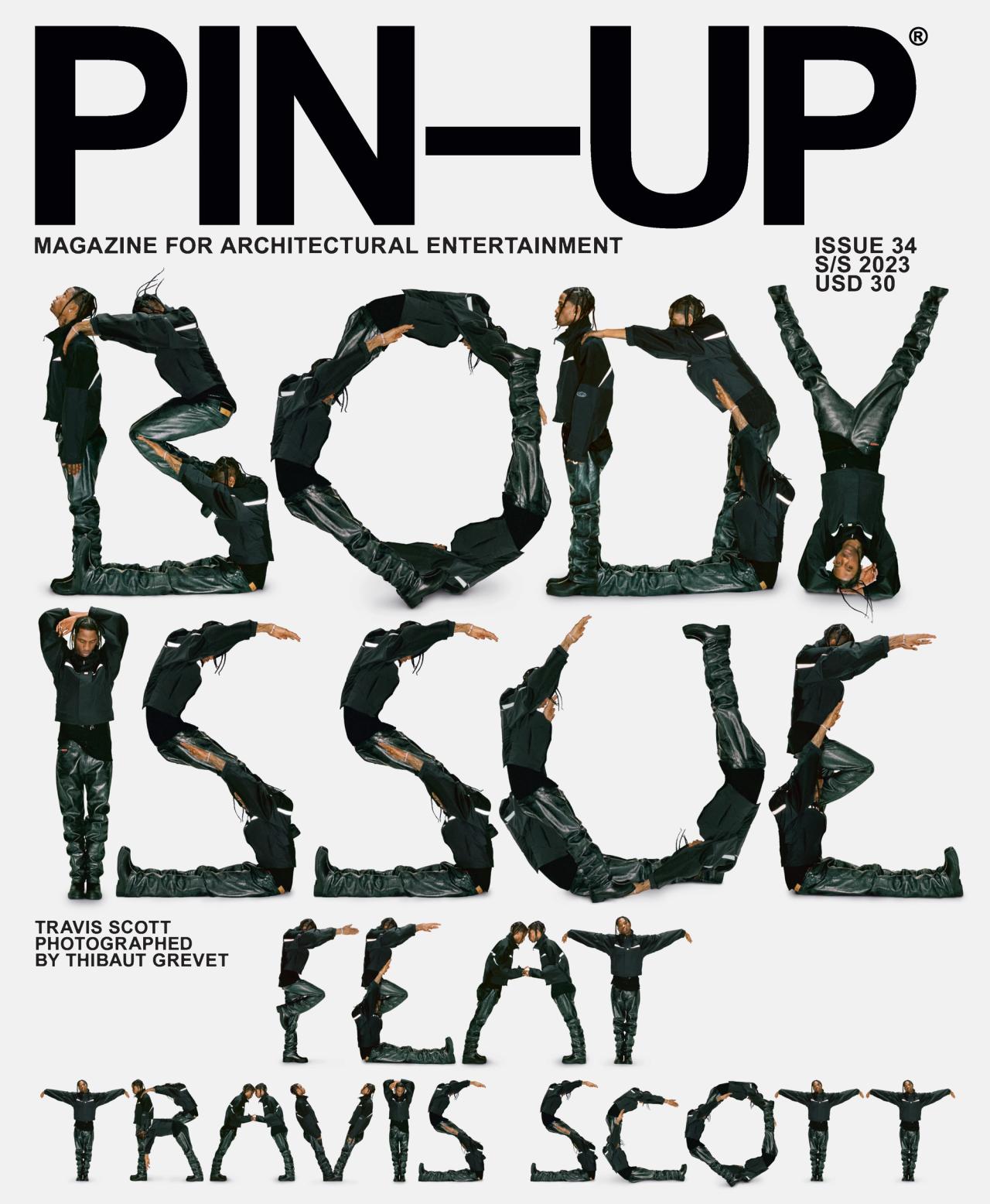
PIN–UP Issue 34: “Body” (2023) featuring Travis Scott. (Photo: Thibaut Grevet/Courtesy PIN–UP)
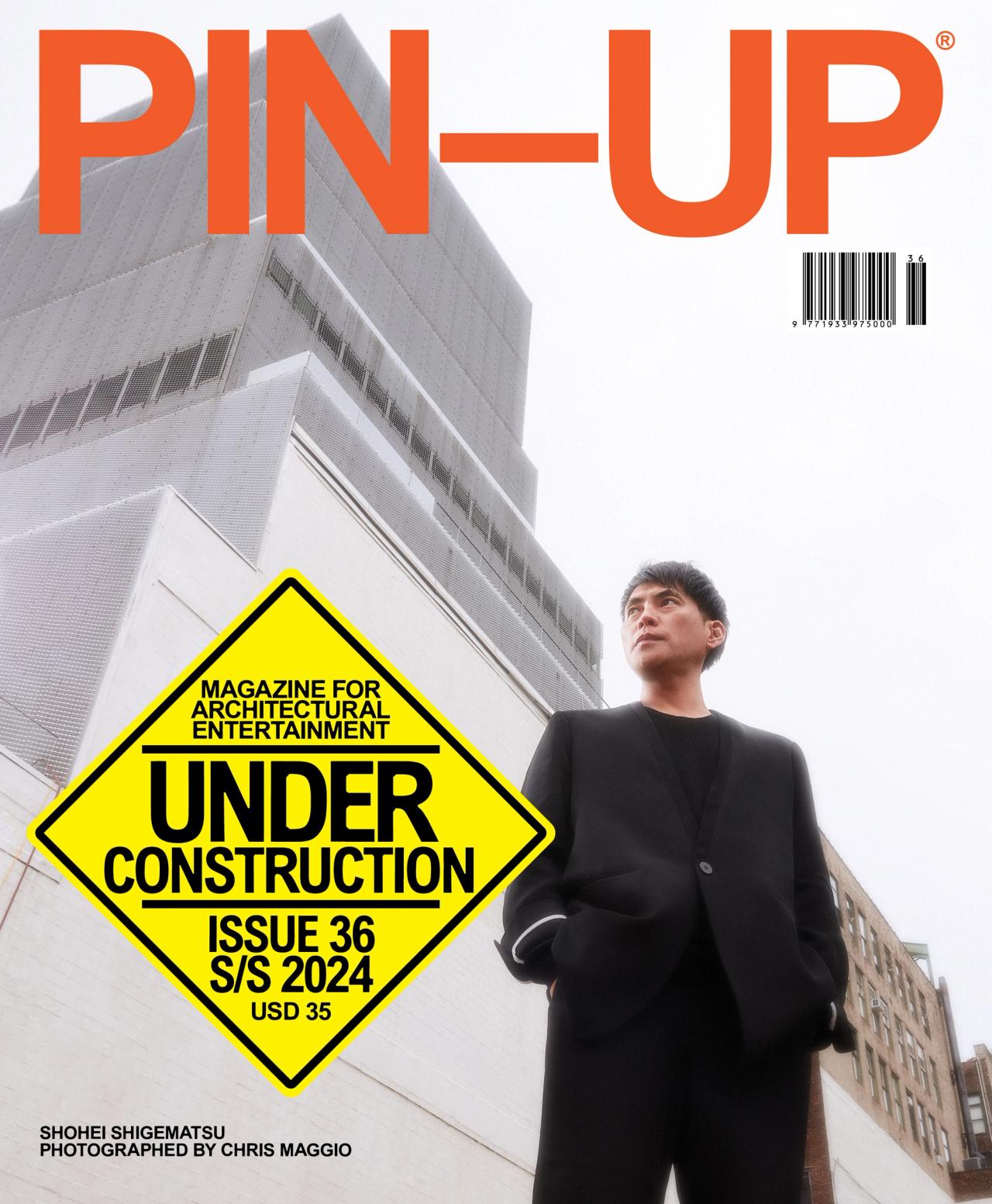
PIN–UP Issue 36: “Under Construction” (2024) featuring Shohei Shigematsu (Ep. 148). (Photo: Chris Maggio/Courtesy PIN–UP)
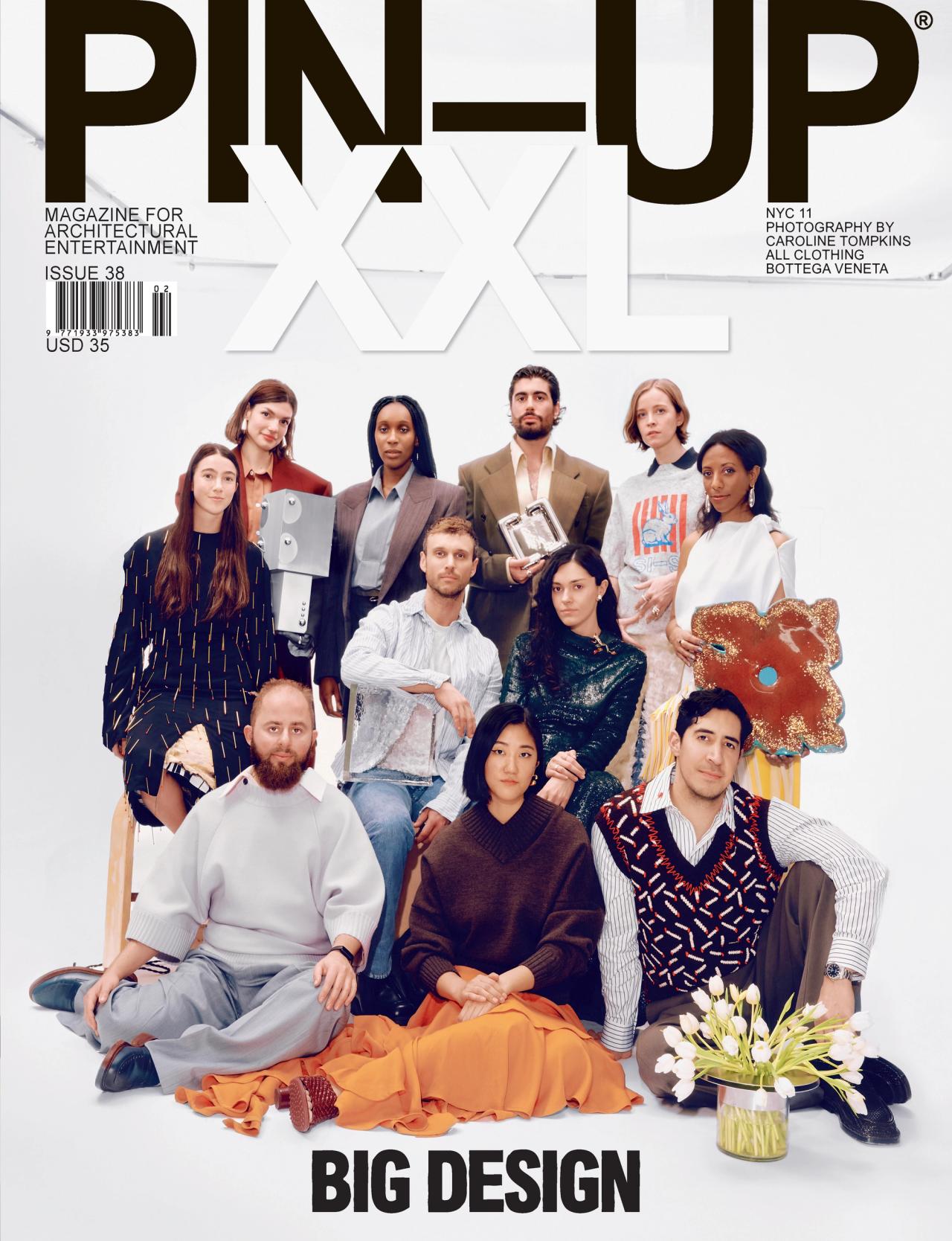
PIN–UP Issue 38: “Big Design” (2025). (Photo: Caroline Tompkins/Courtesy PIN–UP)
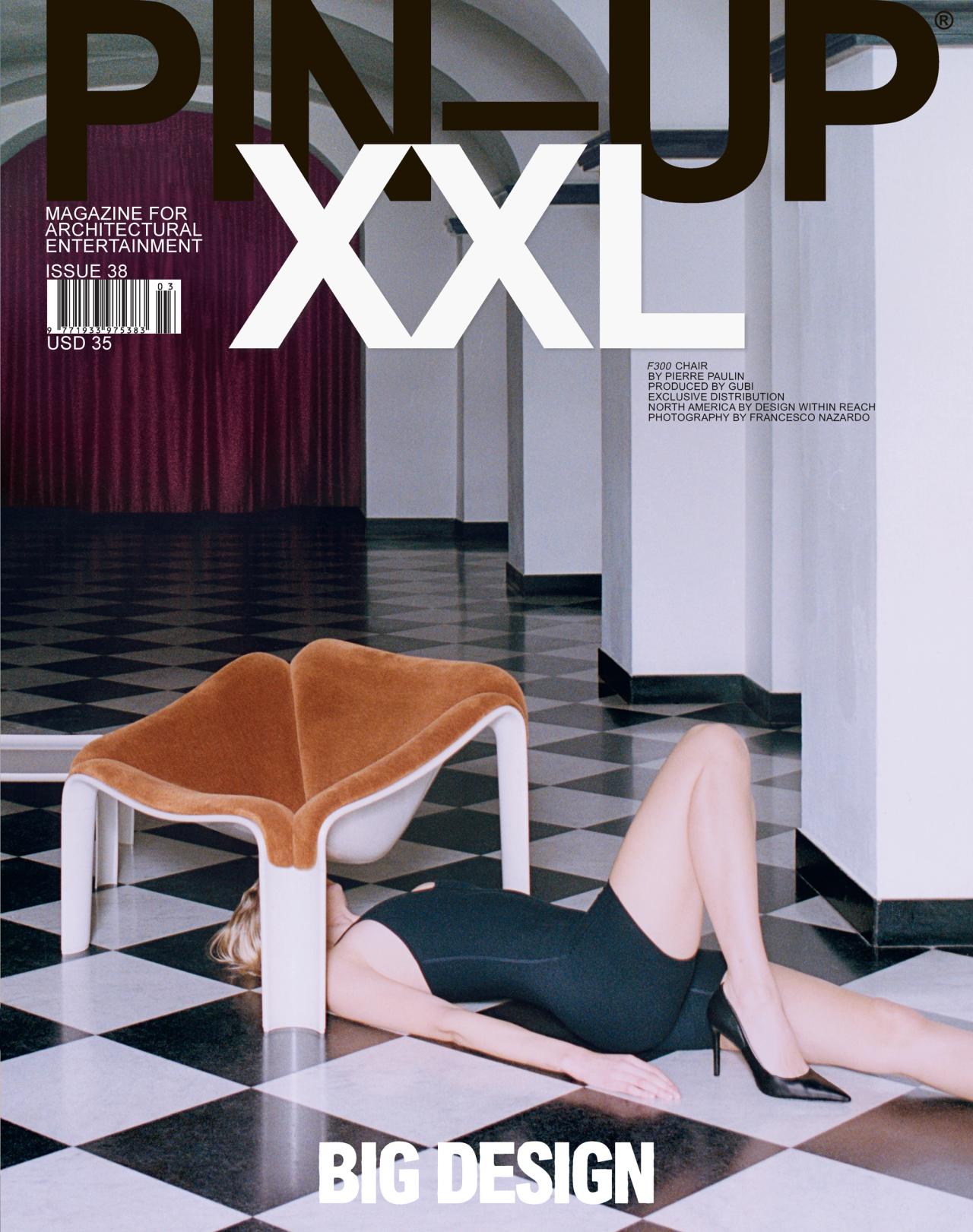
PIN–UP Issue 38: “Big Design” (2025), featuring the F300 Chair by French furniture designer Pierre Paulin, produced by Danish design house Gubi. (Photo: Francesco Nazardo/Courtesy PIN–UP)
PIN–UP Issue 39: “Domesticity” (2025) guest edited by Frida Escobedo. (Photo: Daniel Shea/Courtesy PIN–UP)
PIN–UP Issue 30: “Legacy” (2021) featuring Frank O. Gehry. (Photo: Buck Ellison/Courtesy PIN–UP)
PIN–UP Issue 34: “Body” (2023) featuring Travis Scott. (Photo: Thibaut Grevet/Courtesy PIN–UP)
PIN–UP Issue 36: “Under Construction” (2024) featuring Shohei Shigematsu (Ep. 148). (Photo: Chris Maggio/Courtesy PIN–UP)
PIN–UP Issue 38: “Big Design” (2025). (Photo: Caroline Tompkins/Courtesy PIN–UP)
PIN–UP Issue 38: “Big Design” (2025), featuring the F300 Chair by French furniture designer Pierre Paulin, produced by Danish design house Gubi. (Photo: Francesco Nazardo/Courtesy PIN–UP)
PIN–UP Issue 39: “Domesticity” (2025) guest edited by Frida Escobedo. (Photo: Daniel Shea/Courtesy PIN–UP)
PIN–UP Issue 30: “Legacy” (2021) featuring Frank O. Gehry. (Photo: Buck Ellison/Courtesy PIN–UP)
PIN–UP Issue 34: “Body” (2023) featuring Travis Scott. (Photo: Thibaut Grevet/Courtesy PIN–UP)
PIN–UP Issue 36: “Under Construction” (2024) featuring Shohei Shigematsu (Ep. 148). (Photo: Chris Maggio/Courtesy PIN–UP)
PIN–UP Issue 38: “Big Design” (2025). (Photo: Caroline Tompkins/Courtesy PIN–UP)
PIN–UP Issue 38: “Big Design” (2025), featuring the F300 Chair by French furniture designer Pierre Paulin, produced by Danish design house Gubi. (Photo: Francesco Nazardo/Courtesy PIN–UP)
SB: Staying on Issue 40, I wanted to bring up Jay Osgerby’s essay in the issue.
FB: Oh, yeah. Amazing.
SB: Jay was also on Time Sensitive, so yet another connection.
FB: Shout-out to Jay Osgerby.
SB: His essay’s titled “Design in the 21st Century: The Shift From Objects to Systems.” He basically writes about how the field of design has shifted from “shaping self-contained tools to designing portals to systems.” This idea of portals I find very interesting. As he puts it, “design’s center of gravity has moved from material to screen, from form to interface, from object to service.” I think we’re now entering this phase of design where almost, if we’re not careful, we’re going to lose all the meaning in it. His essay is an extrapolation of that. It’s almost a celebration of craft.
FB: Yes. Although what I thought was so interesting about Jay’s piece is that, if you look at Barber Osgerby’s work—there’s a brilliant show right now up at the Triennale, I think until October.
SB: In Milan.
FB: It’s called “Alphabet.” They have always thought in systems for objects, right? They’re not … potterers, how do you say it?
SB: Potters. Ceramicists.
FB: Potters. They’re not potters making crafted, unique objects. They’ve always thought about design as systems, both in the process of design, but also how objects can become... We’re looking at a Barber Osgerby Flos lamp, the Bellhop, right now. [Points to Bellhop lamp on the coffee table in the recording studio] I think it’s one of Flos’s bestsellers. It is probably one of the most iconic wireless, portable lights on the market.
SB: It’s been sitting in the Time Sensitive studio the past almost four years now.
FB: I think what’s interesting about him writing about or pointing out this idea of design becoming systems is that his mind is already sharpened to that, and he didn’t write it out of… with the bitterness, let’s say, of someone who—
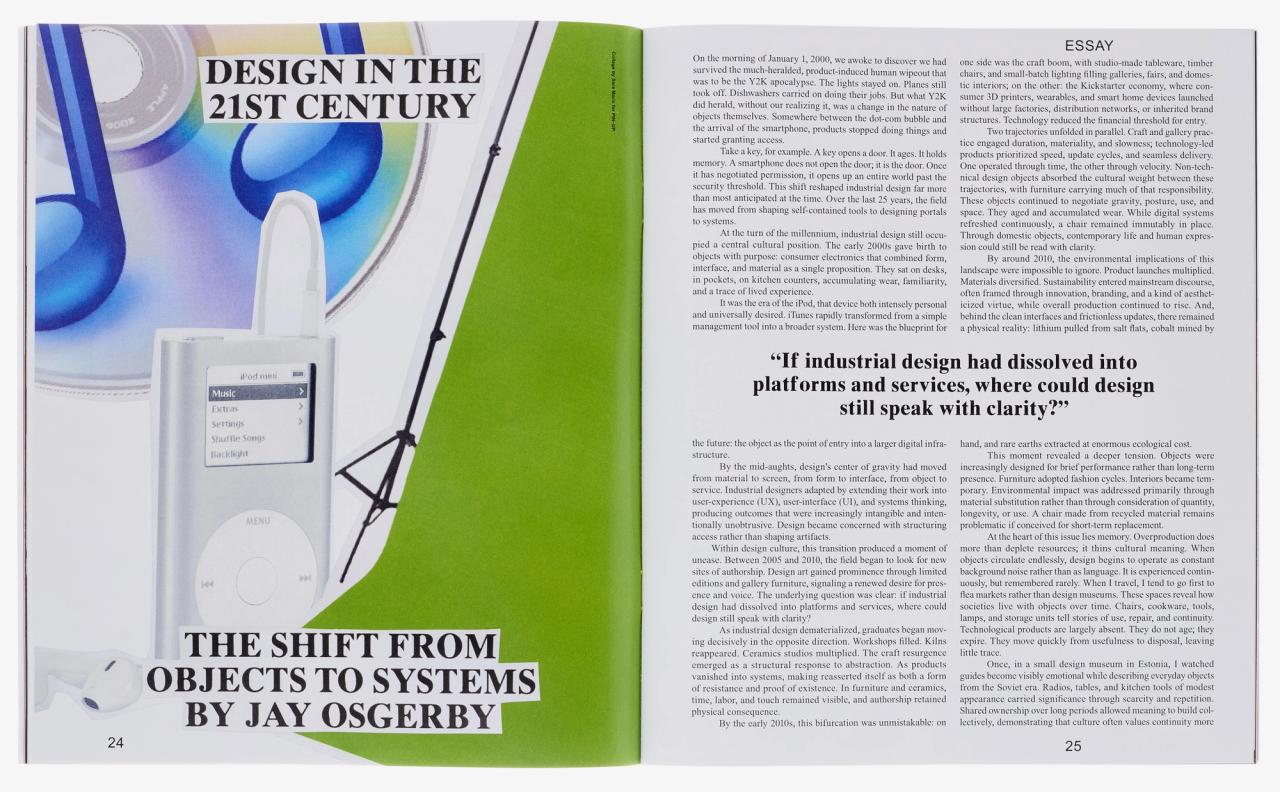
Spread of an essay written by British industrial designer Jay Osgerby (Ep. 142) for PIN–UP Issue 40. (Courtesy PIN–UP)
SB: There’s an optimism, for sure.
FB: There is an optimism to it, but I think it’s what he’s saying, and also the way you paraphrased it, is don’t let the system take you over; you need to still be able to control the system. I think that’s maybe also a pivotal point right now… Or at least that’s what so many people are afraid of in general, and maybe in design specifically, is that systems are taking over your life, and that we’re no longer in control of them.
I also read his piece as a call to agency. It’s not just, “Oh, we should all have beautifully handcrafted mugs at home.” That’s the nostalgia of how a place a design once used to be. I don’t think that’s his point at all. I think what was interesting is that he’s someone who thinks in systems, but the argument he’s making is that we need to be able to, within that, not lose the humanity and the human at the center of it, rather than as an accessory [to it].
SB: There’s also the concern he writes about overproduction, that the more we produce and deplete resources, the less cultural meaning we’re going to find.
FB: Want to talk about Milan [the Salone del Mobile design and furniture fair]? [Laughs]
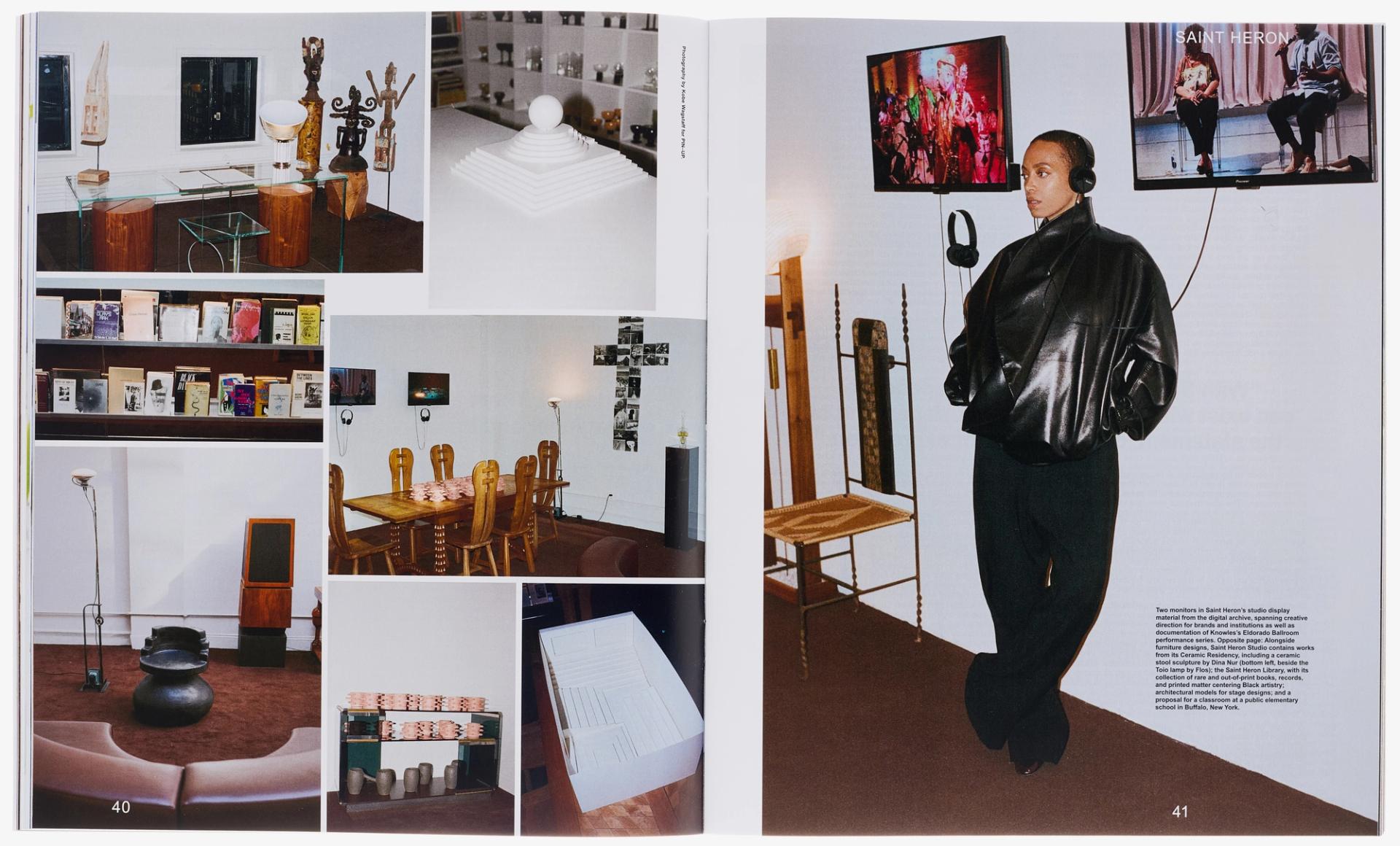
A spread from PIN–UP Issue 40, featuring Solange Knowles interviewed by Theaster Gates (Ep. 143). (Photo: Kobe Wagstaff/Courtesy PIN–UP)
SB: Tell me about your choice of putting Solange Knowles on the cover and having Theaster interview her. Is she an ultimate practitioner of PIN–UP thinking? Do you view her as this?
FB: Ooh, well, maybe in a way, yeah. Solange had always been a dream of mine. First of all, I’m a fan of her work. “Losing You” is still one of my top five songs. I’ve followed her career as a music fan primarily since “Losing You.” I wasn’t really paying that much attention to her before that, but “Losing You” was such a major pop-cultural moment. I don’t know if you remember the video, which was shot in South Africa. Mickalene Thomas did a lot of the artwork around that album drop. So I’ve been following her for a while, and then when she—I think it was early in the pandemic—started being interested in design, I was like, “Oh, this is interesting.”
“Design, over the past six, seven years, has become a cultural talking point, or of greater cultural interest than it had ever before.”
I remember talking to her for the first time, and she was talking about how her interest in design came from the Luther Vandross song “A House Is Not a Home,” which I think is my favorite detail about her work with Saint Heron, which is her creative studio. But also, bigger picture, I think it’s also a great example of how design, over the past six, seven years, has become a cultural talking point, or of greater cultural interest than it had ever before. I think more people are interested in it. It has even reached pop culture. I’m not saying that because she’s a pop star—she probably would not like me to call her that—but she is in that world. For someone of her—
SB: To shine a light on…
FB: Yeah, exactly. Even to show interest in how the built environment or space is conceived…
This is also why, at the beginning, I said I’m actually excited about the moment that we’re in, in design. I think she’s a great example of how someone who comes from the outside, let’s say—she’s not a design insider—embraces the culture and is interested in expressing herself through design.
I’ve been trying to do this story for, I think, four or five years, something like that. It somehow finally happened last year. Everything fell into place, and she was very interested in telling her story through the work that she does with Saint Heron, and how it fits into the greater arc of her career—music, writing, publishing; it’s not just design, it’s also books, it’s the Saint Heron Library, it’s Saint Heron Press. There are a lot of different elements to it. That’s how that came together.
She’s very, very particular about her vision. As she says in her interviews, she believes in slowness. But she has been incredibly generous with us in the way that, once we produced the story—and we were very meticulous about shooting every single piece that Saint Heron had ever produced; Sean Davidson went to her studio on 28th Street and catalogued every single object in that space. If she wanted to do an auction, she basically has an entire auction catalog at this point.
SB: [Laughs]
FB: Once we were finished with the production and we went to print, she had this vision that she also wanted to transform it into a digital experience. I didn’t really understand what she wanted to do, but I said, “Go ahead, here’s all the material. Do what you feel like doing.” Then, two weeks later, she came back with this insane web archive. I look at it now, it’s such a beautiful expression of her practice, digitally.
SB: It’s one of the most print-like digital experiences I’ve ever had. I mean that in a way that’s very nuanced—it’s not flat; it’s very dynamic. It has all the digital bells and whistles, but there’s something about it that is a way of exploring a website slowly, that does have that print-like quality.
FB: Yeah. She actually took it to another place that I didn’t even think we were going to have. I’m super grateful.
SB: And to have Theaster interview her.
FB: And to have Theaster interview her. Talk about a cherry on top.
SB: Last year, for Issue 39, you got Mexican architect Frida Escobedo—
FB: Who’s that? I’m just kidding. We’re literally sitting in her—
SB: Inside [Bergen Brooklyn], a building she designed.
FB: Inside a building designed by her, yes.
SB: Is she another one of these practitioners defining this moment in culture and, I guess, “PIN–UP thinking,” let’s call it?
FB: Yes. [Laughs] She is. Very different. Very, very different from Solange. I don’t even know if you’re asking me to compare her to Solange. Frida is a much more classic architect in the sense that she is trained as an architect. She’s always worked in architecture. She’s much more part of the—
SB: Discourse.
FB: Discourse and the classic training. I think what’s so interesting to me about Frida is how, when you talk to her, it’s almost like she talks about anything but architecture in the most formal sense. It’s not about the architecture with a capital A. Space, materials: All of that is obviously part of her practice. But I think that what she’s so good at communicating is architecture as a lived experience and how it is completely linked to, let’s say, anthropology, to culture. She’s just so good at communicating that. I don’t want to say the projects become secondary, because you already are in the headspace. The headspace is there before the actual space is finished. Does that make sense?
SB: Mm-hmm.
FB: I don’t know. Sorry, Frida. [Laughter] This sounds confusing, but I really admire this about her. She’s able to talk about these things with such clarity and, at the same time, there’s a lot of poetry in the way she talks about the work.
SB: Time is a huge part of her practice.
FB: Exactly.
SB: Slowness. I think there’s also just a very quiet strength, a quiet presence.
FB: All things I don’t have, so I admire her for that even more.
SB: [Laughs] Well, let’s go back to your upbringing here. I actually don’t know a ton about your background and it was hard to dig anything up, but I know you were born and raised in Düsseldorf. Tell me a bit about your Düsseldorf time.
FB: The Düsseldorf days? Well, what is there to say? I was born there and I was raised there. Düsseldorf is about the size of Boston, but I like to compare it more to Dallas. And that’s actually not even an original thought. Even within German lore, people often say, “Oh, it’s the German Dallas,” which, obviously, it’s so not. [Laughter] I think the reason why people say that is because it’s a city that has a lot of money, but its history is fairly recent. It didn’t really become an important city until the late nineteenth century, which, for European standards, is pretty late. It’s very close to Cologne, which is the opposite. It’s a city that’s over two thousand years old.
It has the reputation of being a little nouveau riche. It has, also, an incredible art academy. It has very important collections and museums—some very important galleries as well. But I have to admit, I did not know that much about all that when I was growing up there. I just couldn’t wait to get out of there. I was very keen on leaving Düsseldorf behind. I appreciate these things now that I’m much older, and my family’s still there. I go visit pretty often, given that I live thousands of miles away, but it’s a convenient place to get around in Europe. You fly there and then it’s an hour to Milan or, I don’t know, four hours by train to Paris. I don’t know what else to tell you about Düsseldorf.
SB: Do you think the, let’s say, infrastructure of Düsseldorf somehow slowly infiltrated your mind and interest in architecture?
FB: I think the benefit of growing up there was that it was big enough to not be a complete country bumpkin, but small enough to not be jaded and to want to get out. [Laughs] I think that was the winning formula here.
SB: When I read that, for some of high school, you lived in Southern California?
FB: I did. I was in San Diego for a year. I was an exchange student.
SB: What was that like?
FB: In Poway, San Diego. What was it like? It was extremely formative. I loved it. I stayed with a family, the Whiteheads. I got the full high school experience. I was in a band.
SB: What’d you play?
FB: Clarinet. Wait, what? I was prom prince! I got to be prom prince.
SB: [Laughs] Living the American dream.
FB: Living the American dream, exactly. I often say that I think I understand Americans better than most people who move here, because I got to spend a year here in high school. I think the high school is such a formative experience—
SB: That time. Yeah.
FB: Well, that time, but I think in general, I think high school is so important in the American psyche. How many countries do you know where high school movies are a thing? It’s such an American psychology.
SB: Were you aware of Louis Kahn and the Salk Institute [for Biological Studies, in San Diego] at that time?
FB: Absolutely not. I only cared about MTV’s The Grind.
SB: [Laughs]
FB. That was my priority then. [Laughs]
SB: So you go on to study architecture in Paris for undergrad, and then come to New York for your master’s at Columbia [University Graduate School of Architecture, Planning, and Preservation]. Share a bit about your university and training, architectural training. Was there a professor who kind of shaped your thinking? Did you intend to become an architect?
FB: I did. I was always really preoccupied with architecture. We would have these architecture magazines at home that I would just pore over. They would come every month and—
SB: That’s where it started?
“I was either going to be an architect or a hairdresser.”
FB: That’s where it started, but that’s also where my passion for magazines started. And I think it was always the duality of architecture magazines and also fashion magazines. On the one side, I would devour these architecture magazines, and especially in the late eighties, nineties, there was a lot of Pomo, of course. And then, fashion magazines, I would be obsessed about those.
I say this sometimes: I was either going to be an architect or a hairdresser. [Laughs]
SB: And then editor—
FB: There was the other one—
SB: Editor, somehow, sits in between the two.
FB: Exactly. No, I think hairdresser at some point, that was a short phase, but it was an interest of mine. I always felt that architecture was probably what I wanted to do, partially because it was creative, but it was respectable. There’s maybe also kind of a middle class pressure of doing something respectable.
SB: You’re not a doctor, you’re not a lawyer, but architect’s okay.
FB: At least you’re an architect. At least that.
SB: After Columbia, you went and worked in architecture at KPF for a bit.
FB: Yeah. I just wrote the foreword for the fiftieth-anniversary book [Connective Urbanism: New York].
SB: Oh, wow. [Laughter] Full circle.
FB: Forth Bagley called me, I was like, “Did you read any of the interviews, how I talk about at KPF?” Because I did not love it there, I have to say. Sorry, KPF. But I did love writing the foreword for their book.
SB: I read you were doing things like drawing curtain walls for casinos in Macao.
FB: Yes, that’s it. That’s right. They took me off that project pretty quick.
SB: How did you leap from KPF to PIN–UP? How did you go from this, let’s call it middling architecture work, where you’re not happy and frustrated, to creating this magazine for architectural entertainment?
FB: That’s the through line. I needed to balance the monotony of my day job. Shout-out to KPF. They made PIN–UP possible. The first couple of issues were paid by my KPF salary, and I also used their printer. [Laughter] I often think about that. If I had worked in a more creative, but also more demanding, environment—at the time, a lot of folks who graduated from Columbia, they went to DSR or just much smaller firms, where the projects were maybe more...
SB: Experimental. Cultural.
FB: Experimental. But I don’t think I would’ve had—probably not even the time—let alone I think I would’ve already been fulfilled another way. I wouldn’t have felt the need to create PIN–UP. But PIN–UP was a direct result of wanting to... Because I loved studying architecture. Studying architecture was super fun. Studying architecture, you learn history, you learn construction, you learn— Its anthropology, it’s theory. There are all these different aspects to it. Aesthetics.
Then once you start a proper job, you realize, Oh wait, this is not at all like what we did in school. I think I was trying to bring back the excitement of being back in school and constantly learning new things, meeting new people, discovering new people, discovering new ideas. I definitely was not doing that in my day job.
SB: Yeah. Well, and just bringing your personal touch. On creating PIN–UP, you’ve called it a “queering agent,” as well as “defiantly inclusive.” So this idea of creating an opportunity for all these voices to coexist together. Share a bit about Issue 1 and I guess also how that paved the way for everything that has come since.
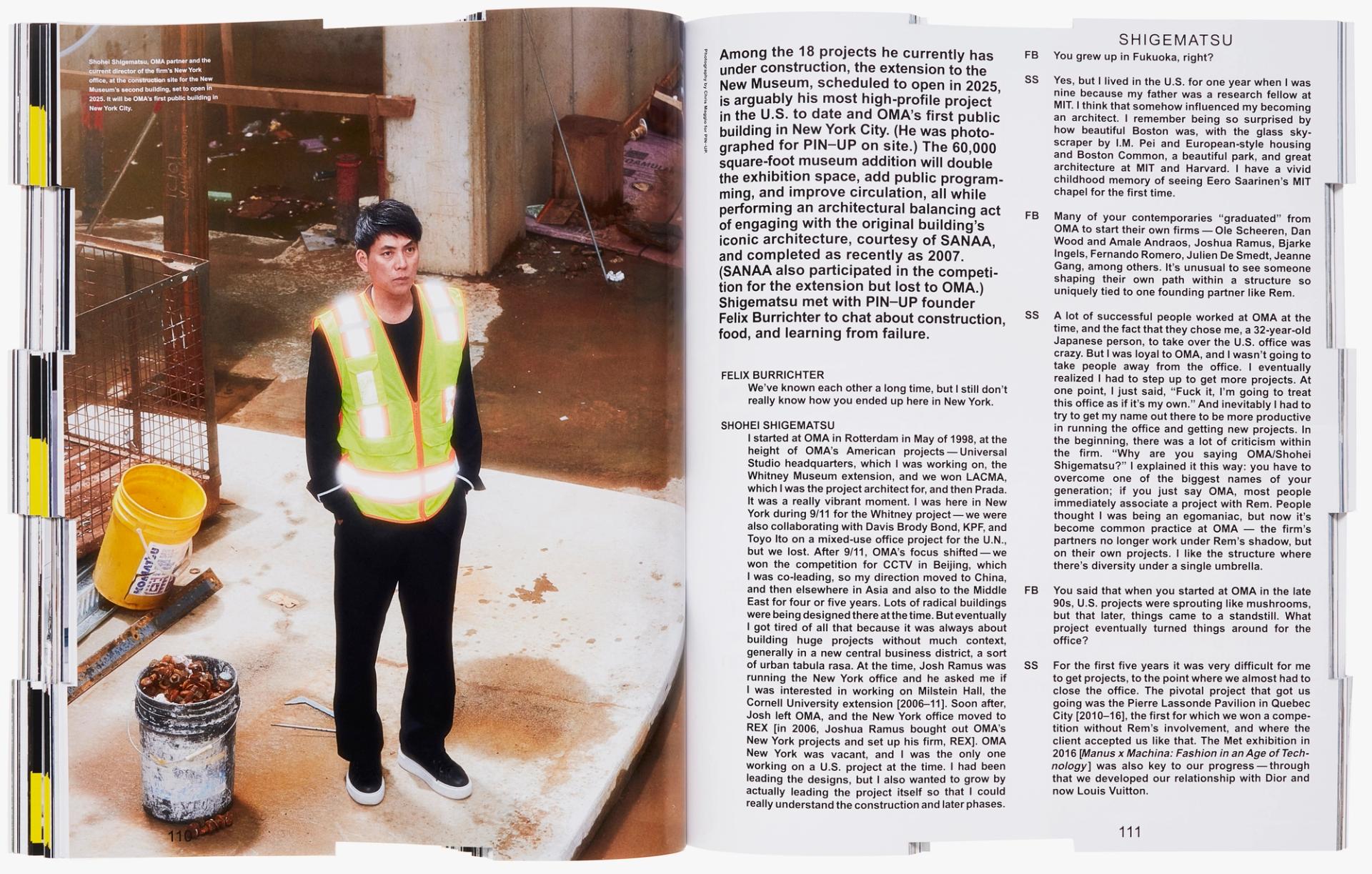
Spread featuring Japanese-born, New York–based architect Shohei Shigematsu (Ep. 148) interviewed by Burrichter for PIN–UP Issue 36 (2024). (Photo: Chris Maggio/Courtesy PIN–UP)
“To this day, graphic design is such an important part of the magazine because it is the scaffolding that holds it all together.”
FB: Well, Issue 1, funnily, is the blueprint to this day. I think I worked on it for a year. I did a few mock-ups myself. I had a pretty good idea of what kind of mix of subjects I wanted to have in the first issue. Because I’d always done internships [at Numéro and Butt magazines] on the side, creating a magazine wasn’t a mystery to me anymore. I had done enough internships with publications where I understood, Okay, these are the parameters. This is how you talk to writers, this is how you commission photographers, all these things where... And I learned from some of the best, like Jop Van Bennekom and Gert Jonkers, who I consider mentors, along with Stephen Todd. I learned so much from how they operated—and they operated, some of them in much bigger structures, much bigger publishing houses.
I had sort of a playbook or at least enough to start. I’ve obviously learned a lot since. I think the breakthrough for the first issue came when I hired graphic designers. Because at some point I think I thought I could do it all myself, like a lot of architects do. They think they can just be a graphic designer and a poet and a writer and a builder and a designer. I was introduced to Dylan Fracareta and Geoffrey Han, and they designed the blueprint for the first issue. To this day, graphic design is such an important part of the magazine because it kind of is the scaffolding that holds it all together, because the content can be extremely eclectic and it was, even in the first issue. The design is the scaffolding that kind of...
SB: Makes it sexy, makes it a full package.
FB: Makes it sexy, but also makes it coherent.
SB: Yeah, coherent.
FB: It allows for stories to sit next to each other that—
SB: Otherwise wouldn’t. For sure.
FB: That otherwise wouldn’t really make sense. It’s the beauty of graphic design to make that possible. So I always encourage everyone: If you have a project, get a designer. Don’t do it yourself.
SB: You’ve also along the way become a great interviewer. You did a great interview with me, actually.
FB: Oh, yes.
SB: And over the past two decades, you’ve interviewed everyone from Ricardo Bofill and David Chipperfield to—
FB: Don’t ask me who my favorite interview was! [Laughs]
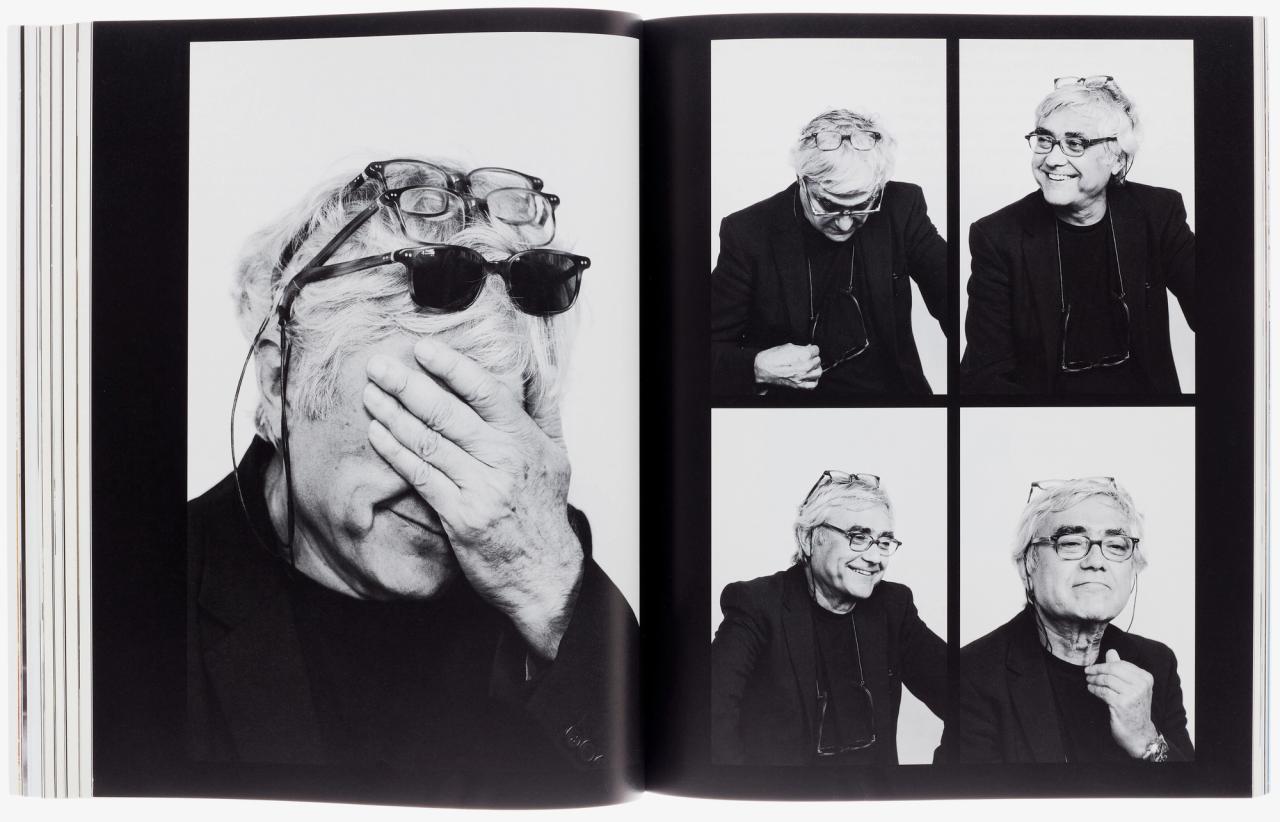
Spread featuring the late Uruguayan-born architect Rafael Viñoly, interviewed by Michael Bullock for PIN–UP Issue 11 (2011/2012) (Photo: Leonard Greco/Courtesy PIN–UP)
SB: I’m not. That’s not where I’m going. You’ve also interviewed Francis Kéré and Rafael Viñoly. One conversation I wanted to bring up, because it has a lot to do with time and with slowness—actually, probably my favorite conversation I came across while going through the archives—is the one you did with the Pritzker Prize–winning Brazilian architect Paulo Mendes da Rocha.
FB: Oh my God, that was amazing.
SB: He says, “Time has its fractures. It’s always been like that. History tends to happen in a noncontinuous way.” What do you remember from your conversation with him? What comes to mind for you?
FB: I’m embarrassed to admit I don’t remember at all what we talked about, but I remember him so vividly. I was in his office in República, in São Paulo. It was just him and his wife who ran the office, and there were so many models. It felt like stepping into the 1960s or maybe the late seventies. It really felt like time had stopped at some point and he was still going, but things were happening elsewhere. And it was a bit of a time capsule, but then he himself was so vivid and so fast.
SB: He was talking about what he called “celestial mechanics of reality.” [Laughs]
FB: I mean, c’mon! I need to read that interview again.
SB: He’s, like, a poet, really. This is not the kind of conversation you would typically find about architecture in a magazine.
FB: This is what I was also saying earlier. It’s so important for me that in every issue we have someone like him, who is... Okay, how am I going to say this? They’re at a point in their career where they’ve already done everything.
SB: Yeah, he won the Pritzker.
“It’s so important for me to have these voices that when they speak about their work, they’re no longer promoting a project. They’re just talking about ideas.”
FB: Yeah. It’s arguable whether that is the peak of everyone’s career. But yes, he also won the Pritzker, and he had created some of the most important buildings of the twentieth century and he had single-handedly defined with [Oscar] Niemeier, this Brazilian national style. I don’t know if I put it in quite those words, but I think he symbolizes South American and especially Brazilian architecture. I think it’s so important for me to have these voices that when they speak about their work, they’re no longer promoting a project. They’re just talking about ideas.
SB: Your conversation with Bijoy Jain, as well, that really reminds me of that. This was in Issue 28, from 2020, and he describes his unusual architecture practice as “exploring thoughts, ideas, and materials with no specific intention,” which is very un-architect in a way. He talks about how things are more loose in his studio and “how when asked, ‘Are you busy?’ he says, ‘No, I’m occupied.’” [Laughter] I like this, because he creates really resonant work, but I think it’s the openness of his process. Again, it’s like you open your average architecture magazine, you’re not going to get that full kind of story. I think that’s what you and what PIN–UP does really well.
FB: I think it’s always less about projects and more about ideas, ultimately, because frankly, there’s better magazines to look at if you want to look at projects. That’s not, I would say, our strongest suit. It’s...
SB: The humanity in a way.
FB: Yes, exactly. Exactly.
SB: This connects, in a certain way, to your editor’s letter from Issue 36, from 2024.
FB: Oh my God. You’re pulling out some...
SB: This issue was themed—
FB: Oh, “Construction”?
SB: Yeah. This issue was themed “Under Construction,” and you write, “In a world where the illusion of certainty no longer holds, humanity has inured itself to a perpetual state of ambiguity, one we can either embrace or endure.” You describe architects as “custodians of memory.” I love that idea and I was hoping maybe you could just elaborate a little bit on this idea of: What does architecture, what can architecture at its best—which is to say, I guess, it’s most thoughtful, refined, open—contribute to culture?
FB: “Custodians of memory” sounds really beautiful, and I think you’re tempted to read it immediately as something very positive, but it doesn’t have to be, even. I think that architecture is always a mirror of the time we live in, for better or worse. Because architecture lasts longer than almost anything else. Probably just plastic bags last longer than most architecture.
SB: Books and magazines maybe.
“A dress stands for a certain moment, but architecture stands for much longer stretches of time—and it can hold all that.”
FB: Mmm, I don’t know. Hopefully, yes. Hopefully you’re right. But I think architecture tends to last for the most part, right? At least that’s always the ambition, that it lasts. Of course, nothing is forever, but I think, in that sense, it has the capacity to represent larger stretches of time, whereas maybe a dress stands for a certain moment, but architecture stands for much longer stretches of time—and it can hold all that.
That also extends to images of architecture. Because the way we experience architecture is not necessarily always through this physical experience, but a lot of it is and that has always been true. This is not a result of twenty-first-century image technology. This is—
SB: It’s just become more sped up.
FB: Yeah, it’s sped up and accelerated.
SB: Look at architecture magazines from the 1950s...
FB: Or paintings from the Renaissance. Architecture has that power, and I think that’s why I continue finding it so intriguing. Because, yes, we’re in a transitional moment. We’re always in a transitional moment where everything is always under construction, but architecture provides those moments where you actually have proof of what a moment stood for in physical form.
SB: Thinking about what you’ve done with PIN–UP, do you view yourself possibly as a sort of Andy Warhol of twenty-first-century architecture and design?
FB: What?! [Laughs]
SB: Because I look at what he did with Interview, right? Interview magazine was this really interesting... It still exists, but during his time it was pairing all these people in conversation, right? But if you look at PIN–UP, you have all these great conversations with Hans Ulrich Obrist interviewing different folks. You have Kenny Schachter interviewing Zaha Hadid, Francesco Vezzoli interviewing Rem Koolhaas. You’ve kind of done that, but through architecture.
FB: Yes. Well, I think that’s totally out of pocket, that question. [Laughter] Although if it means that in the future, back issues of PIN–UP go for millions of dollars at auction, then I’ll take it. I doubt that’s going to happen.
I’ll accept the comparison only under the condition, or only under the perspective, in the sense that Andy Warhol for a long time was not taken seriously and he didn’t care so much about being taken seriously. I think he was much more interested in the moment and about the ecosystem of people.
SB: Yeah, the Factory.
FB: I think he was genuinely interested in people and people’s stories. Did he like the adjacency to money? Yes, and the art market. But at the same time, I think what was really important to him was having interesting people around it, and if it was taken seriously or not, I don’t think he cared so much. He was more interested in finding something new and exciting to do than being canonized in any way. The canonization, of course, I think was then later done by gallerists and collectors and—
SB: Bob Colacello.
FB: Yeah, Bob. I actually don’t even know if it was him or... In that sense, I think there is an element of that in PIN–UP, where… It’s nice to be taken seriously, but I don’t think it’s our primary concern.
SB: Well, you definitely don’t take yourself too seriously. The magazine doesn’t either, and you feel that.
FB: I think I’m just not overly interested in being... Once you stick around long enough, you end up being canonized in one way or another. Or established, let’s say, not canonized but established in one way or another. But I think what’s much more exciting to me is the newness. The surprise, or being able to continue building this ecosystem in ways that feel exciting or fresh.
SB: PIN–UP takes old subjects—the Barbie Dreamhouse—and makes them super fresh and interesting again. There are so many beautiful essays and thoughtful pieces of criticism that you’ve published over the years.
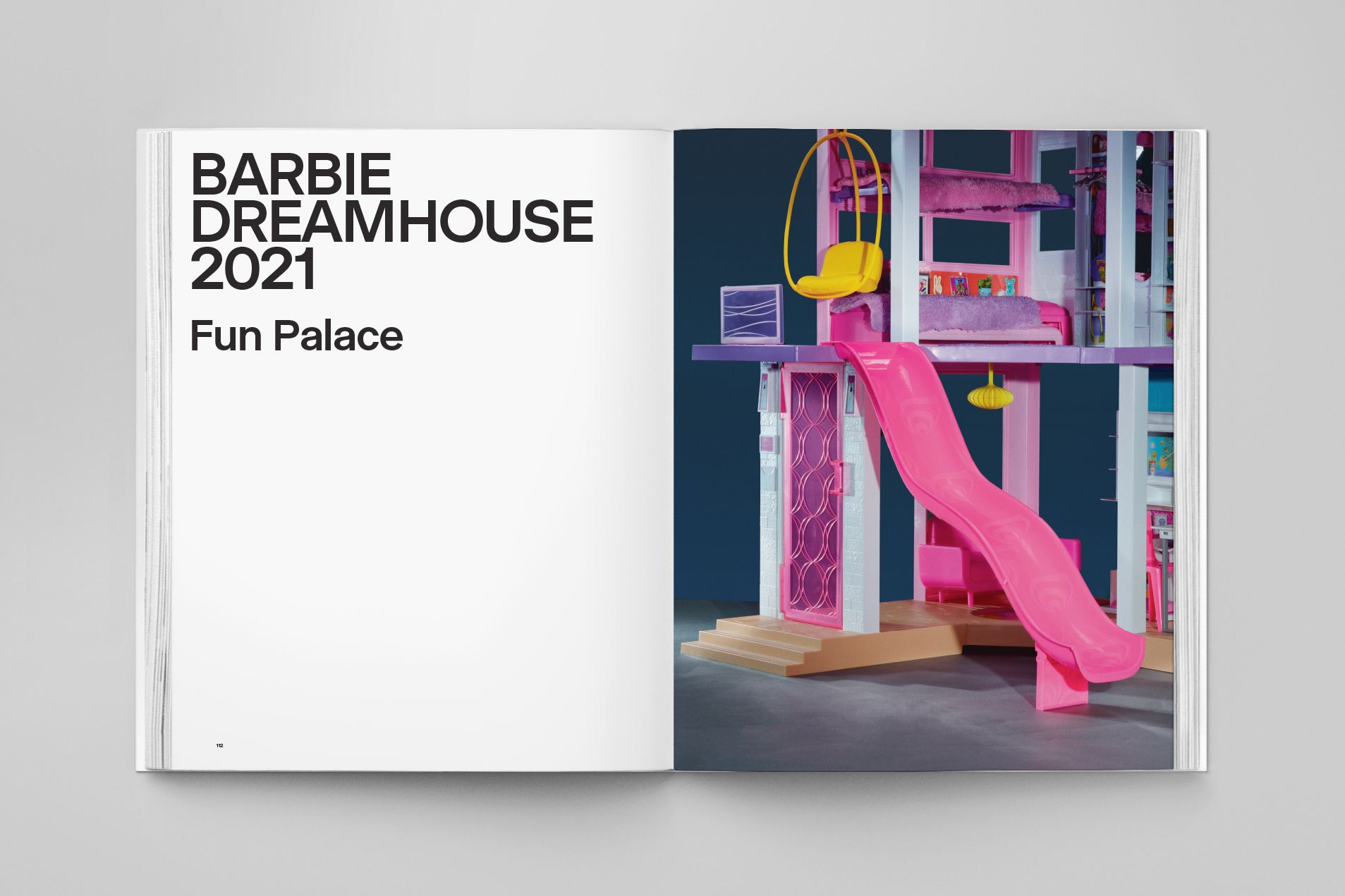
A spread from PIN–UP’s book The Barbie Dreamhouse: An Architectural Survey (2022), co-edited by Felix Burrichter and Whitney Mallett. (Courtesy PIN–UP)
Listeners will know this about me. I’m a Noguchi … nut. [Laughs]
FB: “Noguchi nut.” Put that in your Instagram bio. [Laughter]
SB: In Issue 35, for example, you published this piece by Iris Chen about Isamu Noguchi with the very PIN–UP title “Rock Hard.”
FB: [Laughs]
SB: I wanted to quote from it because I just feel like it’s hard to say anything new about the work, but she managed to capture this spirit that I think is so special. She writes, “How do you say something new about Isamu Noguchi? Perhaps with silence.” And of his museum in Long Island City, she notes, “At night … this pocket of Queens becomes one of the stillest places on earth … The whole place whispers.” I just love that. This kind of beautiful nuance—poetry, almost—is the kind of stuff you can find when you go digging in the PIN–UP archive.
FB: Wow, yeah, thank you. Forgot about that story, too. I have a kind of media amnesia because I think we’re so always focused in the moment that...
SB: I feel you. I think people who don’t produce media don’t realize how intense it is, the churn, the cycle.
FB: But I love hearing you pulling out these quotes, Bijoy or Paulo Mendes da Rocha or this Iris Chen piece on Noguchi, I think that is... That’s exciting to hear how those can touch upon things that help people see even things that may seem part of the cultural inventory in a new way. That make sense?
SB: For sure. And I think become, even though each issue is very much of its time, there is a timelessness to the work that speaks across time.
FB: Okay.
SB: Let’s talk about the power of print in a digital era—
FB: Wait, can we talk about Noguchi for a second? Because I went to see the Dallas show. Oh, sorry, Dallas. What am I talking about? Atlanta. I went to see the show [“Isamu Noguchi: ‘I Am Not a Designer’” at the High Museum of Art] in Atlanta. Did you see it? It’s so good. I loved it. It was so beautiful.
SB: All the listeners, get yourself to Atlanta for this Isamu Noguchi show at the High Museum.
FB: Yes. Get on a plane right now.
SB: “I Am Not a Designer,” it’s titled.
FB: “I Am Not a Designer,” and it’s interesting because the week I went to see that, also we were planning an event for Dozie Kanu, who is in the—
SB: Current issue.
FB: Issue 40, the current issue. It made me think about how I love artists and practitioners like Noguchi and Dozie who don’t accept to be confined by—
SB: Any one thing.
FB: Not by a discipline, whether they do a theater set, or they do a table, or they do an experimental installation, or design a fountain, or a sculpture—period—or garment. I thought about Dozie when I was in that show because it felt so good to know that there are people practicing today that are a) not confined, and b) also just do it for the joy of doing it, and not for the ’gram.
SB: Let’s talk here about the power of print, before we finish. In your Issue 29 editor’s letter, you write, “Few formats lend themselves better to reflection at this moment in time, safe from surveillance or endless trolling. On the eve of the fourth industrial revolution, some of the most subversive experiences will not be digitized.”
FB: Oh, wow. Did I write that? [Laughter]
SB: You did. I agree. I think as part of that sort of print renaissance we were talking about, that’s like there is this sort of return and this kind of new energy being put back into what it means to do a print magazine in 2026, which it certainly feels like this retro thing, this analog thing, this thing that’s like... It’s not anti-A.I., per se, but it is, in many senses, the opposite of what is being spoon-fed to us through our devices in our pockets, let’s say, and through the social media on those devices.
FB: Well, it’s anti-algorithm, maybe. I wrote in the editor’s letter, when you unpack the Issue 40 box, you’re not being tracked by some algorithm that is monitoring what you’re reading and—
SB: Trying to sell you socks or something.
“What I’ve always loved about print and maybe more so even now than when we started is that, unlike the consumption of digital media, it has a beginning and an end, and it is a sort of closed experience.”
FB: Or what you’re saying, and trying to sell you more of the same thing. What I’ve always loved about print, and maybe more so even now than when we started, is that, unlike the consumption of digital media, it has a beginning and an end, and it is a sort of closed experience. Whereas digital experience is ultimately a wide-open field with no beginning and no end; you can go in when you want, you can leave when you want, and there are no boundaries, for better or worse.
With print, there are very real-life constraints. First of all, just from the production side. Also there’s the constraint of only being able to fit X amount of stories in one issue. I’ve used this analogy before, and I hope I’m not overusing it, but, in that sense, it’s like a dinner party rather than an all-you-can-eat buffet [laughs]—all-day, 24-hour buffet. It is a sit-down dinner party and you make very intentional choices, who is coming and who is sitting next to whom, and it starts at eight and it’s over at midnight or whenever, but there is a beginning and an end, and that is such an intimate experience. You also can’t invite a thousand people to a dinner party. I’m sure it’s been done, but it’s probably not a successful formula.
SB: Not as fun.
FB: There’s a certain amount of people you can invite. That sort of closed-circuit experience, the intensity of that is what print delivers on a media level. I think that’s why it’s so satisfying. It’s so satisfying to make, and it’s hopefully also satisfying to experience, to read—or actually not read; you can also just look at it. I think hopefully the design... Ben Ganz, who does the design, outdoes himself with every issue and so you can also just enjoy that part.
SB: I wanted to ask you about that, the sort of architectural aspect of what you do. Do you view each issue of PIN–UP as its own form of architecture?
FB: [Long pause] Only in the sense that I consider it like a closed space. I want to be very clear: I’m not at all a purist that says this is the only valid way to experience media. Most of what we do also has some life, has some digital life. Some things even have a better digital life than they have a print life. A lot of the mini-documentaries that we’ve done for MoMA or for Cooper Hewitt, a lot of these projects, they rely on digital, apart from social and obviously all the stories that go on the website, but I think the physical magazine is probably as close as you can get to a spatial experience in print. So in that sense, there’s an architecture to it. I said it earlier: It is different every time. I sometimes wish it wasn’t, but it is a different experience.
SB: Yeah. You’ll trim the edges differently…
FB: Yes.
SB: You’ll do a zigzag edge.
FB: We’re really pushing it every time.
SB: You’ll do a sort of bollard-like edge.
FB: Those are the things you immediately notice, but we change the grid, we change the... the fonts are different.
SB: The finishings.
FB: Even the minutia of design is... These are all things that can be standardized, and yet we don’t do it. Every issue, it’s a new beginning.
SB: Hand-sewn, hand-sewn.
FB: To stick with the dinner analogy, you’re not going to do the same flower arrangements for every dinner. Change it up.
SB: Yeah. New guests, new recipes.
FB: New guests, new flowers, new plates. New food.
SB: I think a great place to end this conversation today—this might seem random, but you’ll see where I’m going—is the subject of utopia.
FB: Uh-huh. SB: In a certain sense, I see PIN–UP magazine as a magazine kind of about utopia.
FB: Oooh.
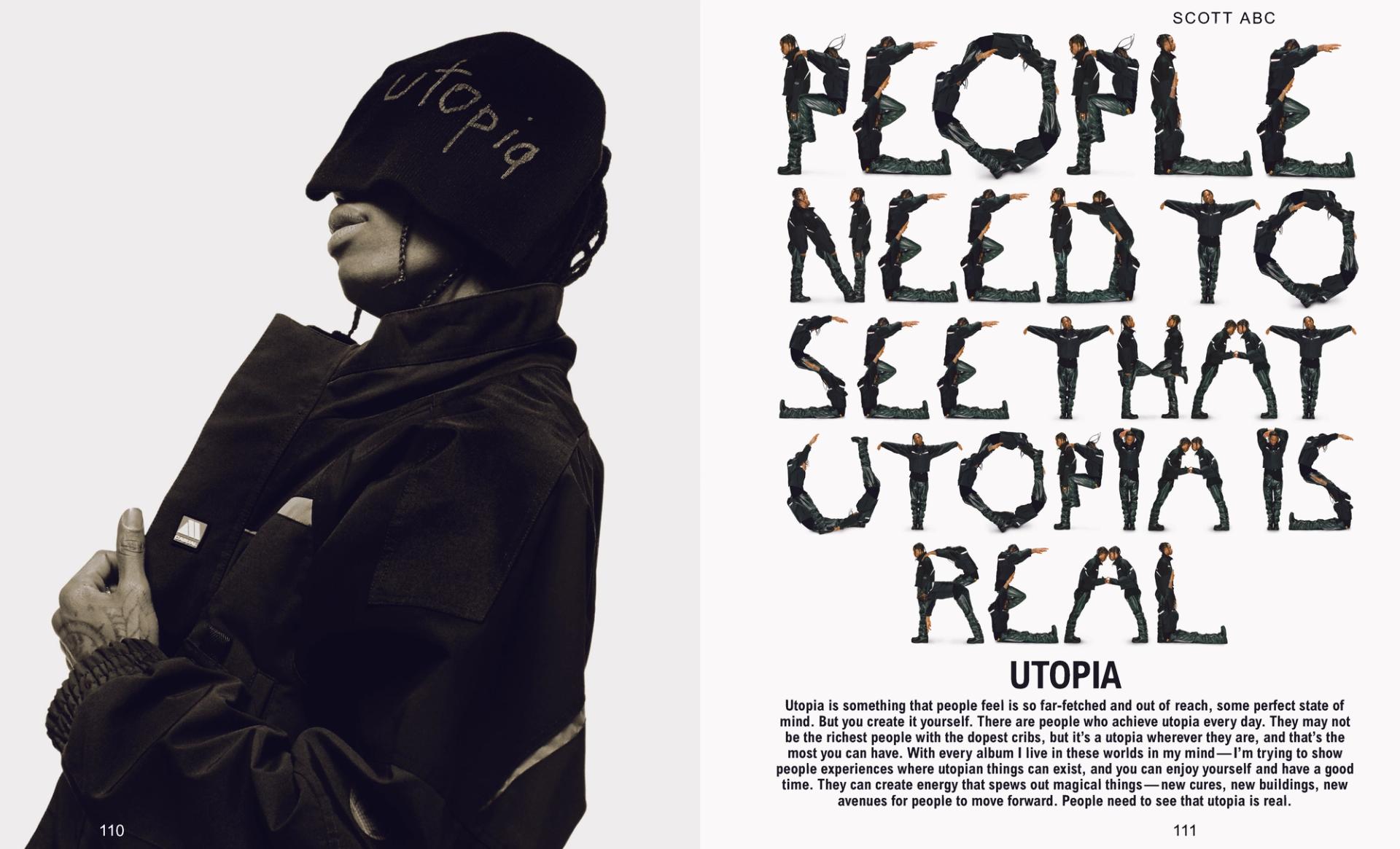
A spread from PIN–UP Issue 34: “Body” (2023) featuring Travis Scott. (Photo: Thibaut Grevet/Courtesy PIN–UP)
SB: I know you’ve explored it here and there over the years. There’s one instance I wanted to bring up, which is from 2023, Issue 34, the “Body Issue.” You had the rapper Travis Scott on the cover, and he was doing this sort of ABCs art direction. The letter U is utopia, and he had this great quote.
FB: What did he say?
SB: He said, “Utopia is something that people feel is so far-fetched and out reach, some perfect state of mind. But you create it yourself. There are people who achieve utopia every day. They may not be the richest people with the dopest cribs, but it’s a utopia wherever they are, and that’s the most you can have… I’m trying to show people experiences where utopian things can exist, and you can enjoy yourself and have a good time. They can create energy that spews out magical things—new cures, new buildings, new avenues for people to move forward. People need to see that utopia is real.”
FB: Wow, Travis.
SB: I assume this resonates with you. You published it, but...
FB: It does!
SB: I feel like we live in this world where people hear “utopia” and they’re like, “Oh, it’ll never happen. It’s in the far distant future.” But I like so much of what you do in PIN–UP because it is about utopia now. It is about, in a way, this collective of different creative people from a lot of different walks, all through this architecture and design lens, talking about building a better future, in a way, and sometimes looking to the distant past to understand where we are now, but… There’s a fantasticalness to it.
FB: First of all, I love this quote. Thank you for bringing this up. I think he’s right. I think you can try and strive to create utopia every day but at the same time I also think that utopia is utopian, so I don’t think you’ll ever be able to create it. Most of the time when utopian ideas have been made into reality...
SB: Right. Arcosanti.
“If the reality of architecture was what looked like PIN–UP, then I’m not even sure we’d still have to do this magazine.”
FB: It went awfully wrong. But I think you always have to strive for it. I think that PIN–UP does that. If the reality of architecture was what looked like PIN–UP, then I’m not even sure we’d still have to do this magazine.
SB: [Laughs]
FB: In the same way that I think PIN–UP is a sort of heightened, utopian expression of who I am. Sometimes I think PIN–UP is way cooler than I am, and—
SB: You choose these stories, I think, because you feel this deep personal connection, right?
FB: There’s a deep personal connection. And also, I think to create a space where all these things can coexist and also pollinate each other, speak to each other, and live an exchange of energy or of ideas, that is a utopian place. Is that the reality, always, of the world? No, but I think that’s what we do try to create with every issue, and with PIN–UP in general, but especially with this sort of hyper-specific experience of a print issue.
SB: Yeah. A way of looking at the world that’s sort of radical, optimistic.
FB: There is something very optimistic about PIN–UP, yep.
SB: What’s next? What do we have on the horizon that you can share?
FB: Well, I don’t know, I’m not a fortune-teller.
SB: [Laughs]
FB: What can I tell you? What’s next? There’s always the next issue. What’s the saying? After the issue is before the issue or... No, isn’t that a soccer reference? “After the game is before the game.” Do people say that? Is that a German saying? Maybe.
This is technically the spring/summer issue, so we’re working on the fall/winter issue. We usually do the fall/winter issue as a guest-edited issue. We had Frida last year. Before that, we had Fredi Fischli and Niels Olsen for the “Museum Issue.” For the fall this year, we’re exploring the relationship between architecture and fashion, and we’re working with Rana Toofanian, who is an editor, a fashion editor, who used to be with System magazine. She’s based in L.A., and we’re working with her to look at all the different ways these two industries, one much better organized than the other, is sort of... where the connecting points are, what’s the tension.
I thought it was especially interesting after coming back from Milan where you notice so many fashion houses were so keen on getting in on that architecture pie, or the design pie, let’s say. I think there’s an inherent tension there, but there’s also so many connecting points between the two. We’re working on that issue for the fall, which I’m very excited about.
I really love collaborating. I love bringing on these guest editors to bring their vision and then see how that works with how we are structured. Either they bring a lot of new people on board, whether it’s photographers or writers, or we help them pair—they have more abstract ideas. Rana’s an editor, so she knows what she’s doing, but with some of the people who we worked with before, they’re not in the habit of commissioning writers or photographers. With Frida, it was super exciting to think together with her on: Who makes sense? Who was she fascinated with? That’s our fall issue, so that I already know, that’s happening.
I can also tell you that we are launching—we have a little sister company called PIN–UP Home, where it’s our little laboratory for home accessories. Usually twice a year, once or twice a year, we work with designers to come up with a new product that we kind of—I can’t even tell you how they come about. We’ve done this amazing soap with Shayne Oliver, then we did a sofa with De Sede, then we did a lamp with Grau. What else? Candleholders with Vincent de Rijk, this Dutch resin artist. And now, for this summer, we’ll work with Bitossi, the ceramic company, to create this collection of vases designed by Bernard Dubois, the Belgian architect.
Shout-out to Sight Unseen, actually, our friends from Sight Unseen, because these vases we actually showed the first time ten years ago as one-offs. This sort of an experimental project, at a Sight Unseen. I think they had a fair called Offsite, and we showed them there for the first time. Then, when we were thinking about a new product, we were looking at some of the projects we had done and we’re like, “Oh, let’s see if we can bring these back,” but then Bernard went back to the drawing board and completely changed the project. The topology is more or less the same, but they couldn’t be further apart from the original design. I’m very excited about those coming out during 3daysofdesign in Copenhagen, which, by the time this airs, will have already happened. So go to pinuphome.com and get your vase—or vases.
SB: Final question: Imagine we’re twenty years from now.
FB: Oh, my God, are you crazy? Twenty years?
SB: Imagine we’re twenty years from now. Where do you hope PIN–UP is? What sort of legacy do you hope PIN–UP has established and has put into the world at that point?
FB: Twenty years?! Spencer, you’re insane. I can barely think about what I’m doing tomorrow.
First of all, I hope it will still be around, whether I’m involved or not. I don’t even know if I’m alive in twenty years. Hopefully, it’ll be around, and it will continue to kind of broaden its world. If I compare the kind of stories we did and the kind of ecosystem we operated in—also the media landscape we operated in, in 2006, ’07, ’08, ’09, if compared it to today—we’ve done... We work slow, but at the same time, it’s a huge leap. On the surface, we’re still doing a biannual print magazine, but it couldn’t be more different—the cultural environment couldn’t be more different—and yet PIN–UP plays a role in that environment, and hopefully one that is inspiring and entertaining.
SB: Little radical, little renegade.
FB: A little radical. And hopefully fun. I hope that in twenty years time, whatever it is, whether it’s still print or whatever shape it’ll take, I hope it will carry all those values forward. I really don’t know. Twenty years, Spencer. Come on, now.
SB: [Laughs] All right, twenty seconds now.
FB: Okay. Since you brought up Andy Warhol, when did he die? In ’65, do you think he would’ve known that he was going to be on The Love Boat in the mid-eighties? So, I don’t know, whatever happens happens. You had to ask Andy Warhol in 1965, “Where do you see yourself in twenty years?” I don’t think he would’ve said, “I’m going to be on The Love Boat.” So...
SB: 2046.
FB: 2046. Find me on The Love Boat or whatever the equivalent of that is. [Laughs]
SB: [Laughs] Thanks, Felix. It was great having you here.
FB: Thank you so much. This was fun.
This interview was recorded in The Slowdown’s New York City studio on May 19, 2026. The transcript has been slightly condensed and edited for clarity. The episode was produced by Olivia Aylmer, Ramon Broza, Mimi Hannon, Colin Lee, and Johnny Simon. Illustration by Paola Wiciak based on a photograph by Maria Fonti.