Follow us on Instagram (@slowdown.media) and subscribe to our weekly newsletter to receive behind-the-scenes updates and carefully curated musings.
TRANSCRIPT
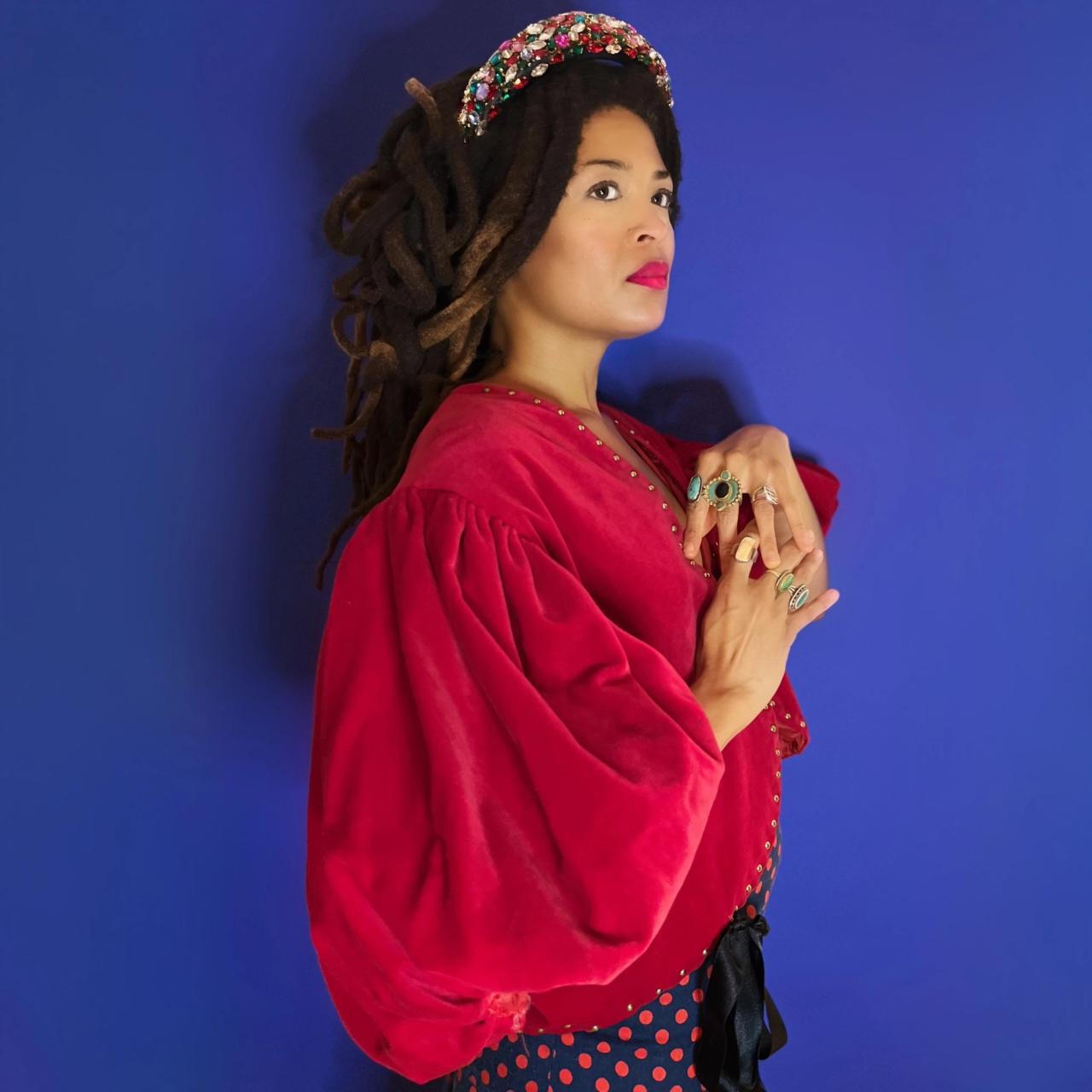
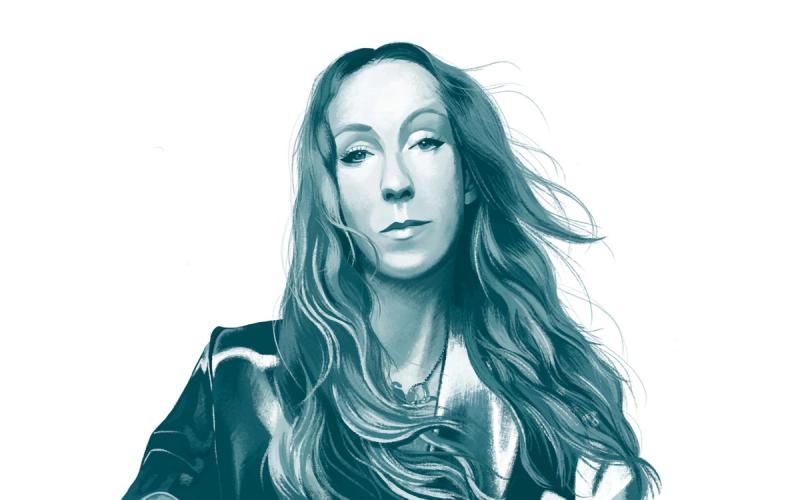
Valerie June. (Photo: Brights)
SPENCER BAILEY: Hi, Valerie. Welcome to Time Sensitive.
VALERIE JUNE: Hello. Thank you for having me, Spencer.
SB: I wanted to quote from an essay in your book Maps for the Modern World, this 2021 collection of poems and illustrations that you put together about cultivating community and mindfulness. You write, “By centering ourselves in the present moment—here and now—we can awaken inner beauty. Each moment holds an illuminated light that can transform our reality.” I just thought that’d be a nice place to start the conversation.
VJ: I like that. “Illuminated light that can transform our reality.” There’s so many realities within this reality. [Laughter]
SB: Well, I feel like you’re someone who spends a lot of time thinking about time and processing time. What does time mean to you? How do you define it?
VJ: Every day I wake up and I do think about time, and I think about how the meaning of time changes as I move through it. When you’re little, how long thirty minutes seems, and then as you get older, how fast time passes and what it means to be an earthling and how time feels in this body versus how I imagine it feels if you’re out of this body. How it’s a construct to me; it’s something that we have created in order to keep this world spinning, and the way that we see it.
Today, I started to read a little bit of a Pema Chödrön book, How We Live Is How We Die, and she’s talking about The Tibetan Book of the Dead and the bardos and how life is a bardo. This is the dying bardo and transitioning between lives. When I think about that, I think about time and what that time means outside of the body, and what it means when you get back into a form, whether it’s a body or anything else that might occur afterwards. Time is on my mind all the time.
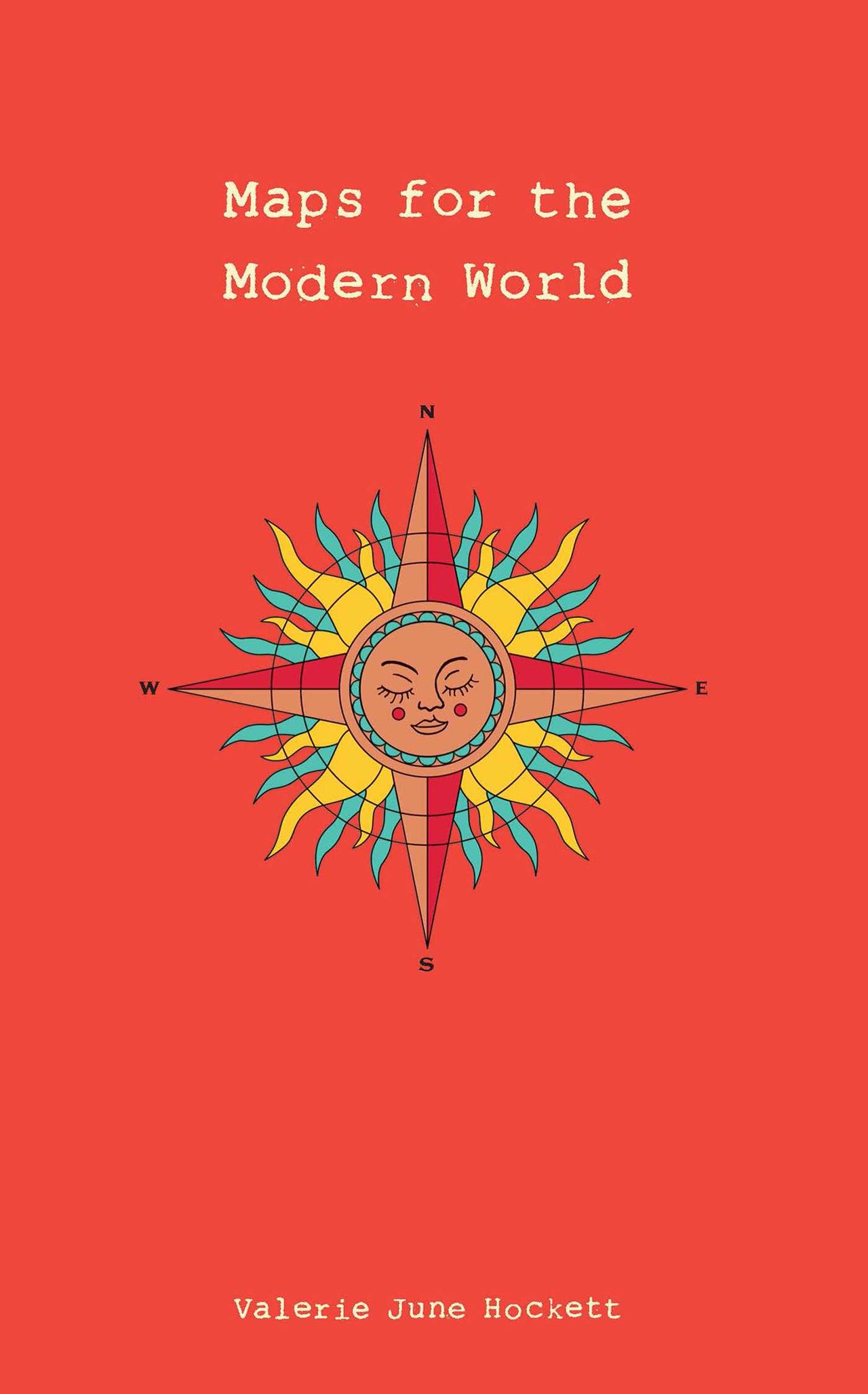
Cover of June’s Maps for the Modern World (2021). (Andrews McMeel Publishing)
Yesterday, even, I was sitting with the song... I’ve been watching a lot of music documentaries, because I’m not on the road like a crazy person, so I can absorb music. When I’m on the road, I don’t want to get too far into music, because I’m doing music every day. But one that came up for me was thinking about the song “Time Is on My Side,” and I was like, “Did Irma Thomas write that song?” Because The Rolling Stones did it and there have been other artists who’ve done it, and I just thought about, do I feel like time is on my side and have I ever felt like time is on my side? I just went down this time—and my place in time—perspective yesterday. Every day it’s something new with time that I’m dealing with.
SB: There’s so many angles to it, especially the way you see the world through, I would say, your mindfulness approach, your spirituality—we’ll get into that for sure—but also your music. You’ve previously said music has always been and always will be the ultimate timekeeper. It transcends time. Tell me a little bit about that. How does music and songwriting come into this time conversation for you? In what ways do music and time intersect for you? Is music time?
VJ: Music is like keeping time. That’s what it is. A drummer is keeping time for the whole band, for the world, tuning into the spinning of all things. There’s a book [by] Hazrat [Inayat] Khan, and it’s a spiritual book. He was an Indian musician, and he talks about how sound was the beginning of all things. I just think about that. That is time. To have sounds is to have this historic record of time. I haven’t spent time with it since the pandemic, that’s when I read it, but I was just blown away by connecting that to something like the Bible, which I was raised on. [Laughs] I was raised very strictly on. That saying that in the beginning the Word was spoken. So, that being the beginning, too, just like sounds, that the Word, something would be said. That’s sound.
“How does sound move things? How does sound move the world?”
Sound being this thing that, in two different philosophies or viewpoints, was the beginning of things. How does sound move things? How does sound move the world? Even in the Pema Chödrön book, she talks about that philosophical idea that, if a butterfly flaps its wings and how that affects other things, I think about that in terms of sound. How does this sound move through time and how do songs stay alive after a body is passed? Just because an artist passed away doesn’t mean that song doesn’t live on through other artists after. All things are living, really. That’s how I think about it sometimes, time in the sense of music and sound.
SB: You were talking about this vocal break in an interview, and you described it like a photograph in time. I loved that. This idea of taking something that we think of so visually and applying it to the sonic. You can only get that vocal break once, that one recording. You’ll never get the exact break again.
VJ: Yes, absolutely. I know what you’re talking about. That happened on the song “Trust the Path,” and my voice broke in the song and I was just like, “No, we’re not doing that again. We’re keeping that. I got to have that,” because that’s what it’s like when you trust a path. [Laughter] You’re going to have breaks, you’re going to have faults, all that stuff.
SB: Could you talk about the time you’ve spent making music or learning to play music? The craft of it, basically. I know when you were learning to practice guitar in your early twenties, for example, you had this ten-minute rule. Which is this time-based thing to get you to learn how to play guitar. Tell me a little bit about that.
VJ: I had to develop the ten-minute rule, because I had to eat and I had to pay bills and survive, and I didn’t have time to learn how to play an instrument because I had my jobs. I would get up at 6 in the morning and I would be at somebody’s house to clean, then get off from that one and go to another house. I cleaned about two to three houses a day and then worked at a coffee shop and an herb shop in the evening and then played music at bars and places around Memphis at night sometimes. So, in order to teach myself how to play—because I was in a band, so I was dependent on the band to be the backing when I was playing the music, but when the band broke up, I was like, “Well, I still want to play music, but I don’t play anything. I also don’t have good rhythm, which is keeping time. So how do I learn these things? And how do I learn these things when I don’t have time to learn these things?”
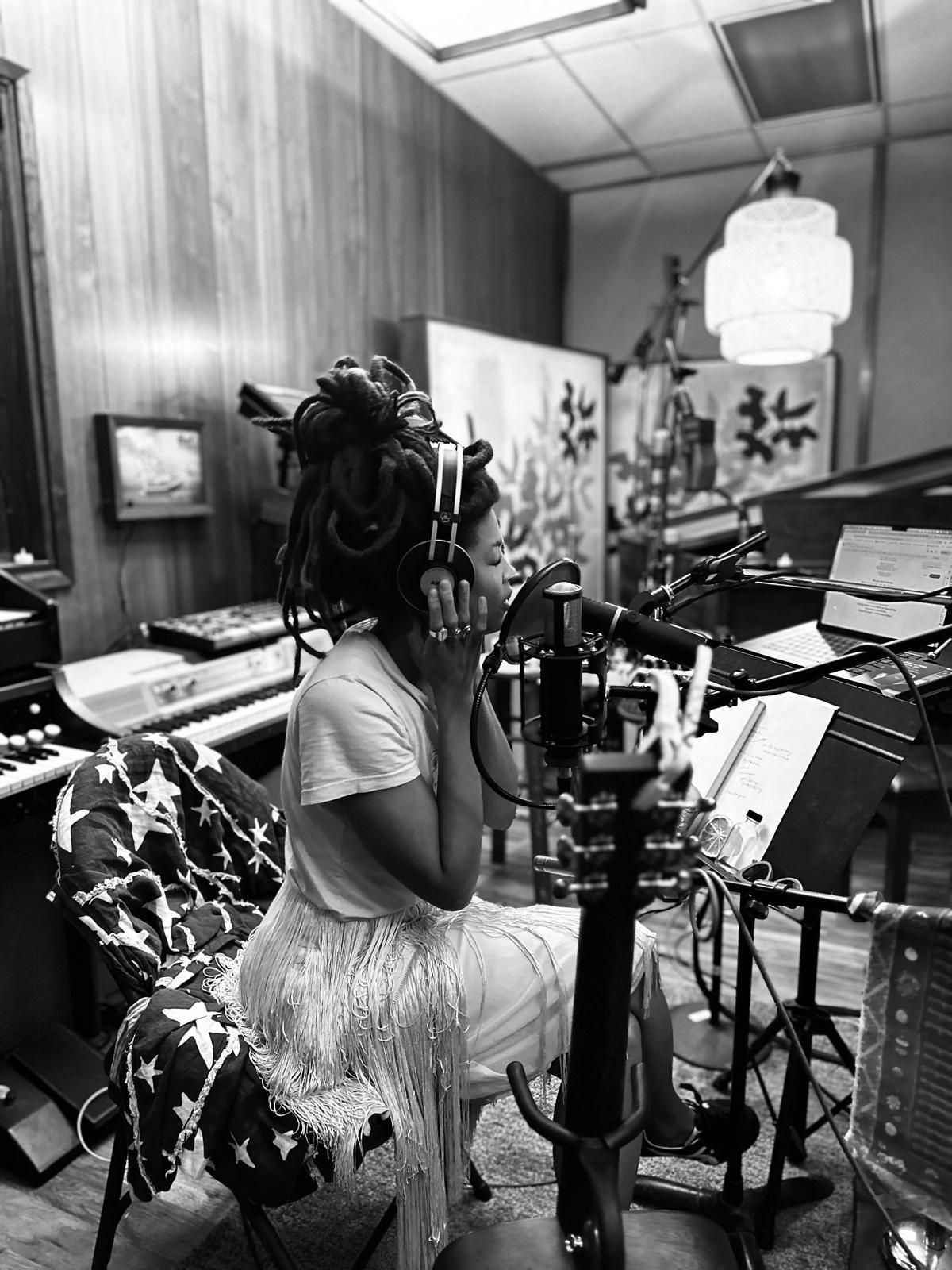
June in the studio. (Photo: Dr Ietef Vita)
The way I started is I said, okay, if I could just do ten minutes a day, after I get off my job, between a job, something, ten minutes a day with the goal long term of looking at older people like Elizabeth Cotten and Mississippi John Hurt and these older musicians that didn’t get successful in the world’s eye until they were in their eighties, late seventies, and saying, “Okay. Well, I’m not going to be Hendrix, where I die at 27 and I know how to shred the guitar, but by the time I get to 80, if I do ten minutes a day, I’ll be able to play like Mississippi John Hurt.” Breaking down life into ten-minute rules has helped me to learn things that I want to learn.
Now, if I’m on the road and I’m super busy, I do ten minutes of yoga versus an hour, I do ten minutes of dance, I do ten minutes of walking meditation. I don’t put these things on myself where people are like, “I have to do a sitting meditation every day for thirty minutes, twenty minutes, an hour.” No, I’m just going to do ten minutes. If it turns into an hour, it turns into an hour, but ten minutes is the start of everything to me.
SB: I love that. Going beyond, thinking in maybe ten years or ten thousand years, or at least a hundred years, music is this form of channeling we could say. We talked a little bit about that earlier, this time-travel aspect that occurs with a song, how it can live beyond you. In this conversation with Norah Jones on her podcast, you talked about how it’s, “a crazy thing to sing a song and go back in time.” I wanted to hear you just elaborate a little bit on that, this metaphysical nature of a song—how a song transports you to another place in time.
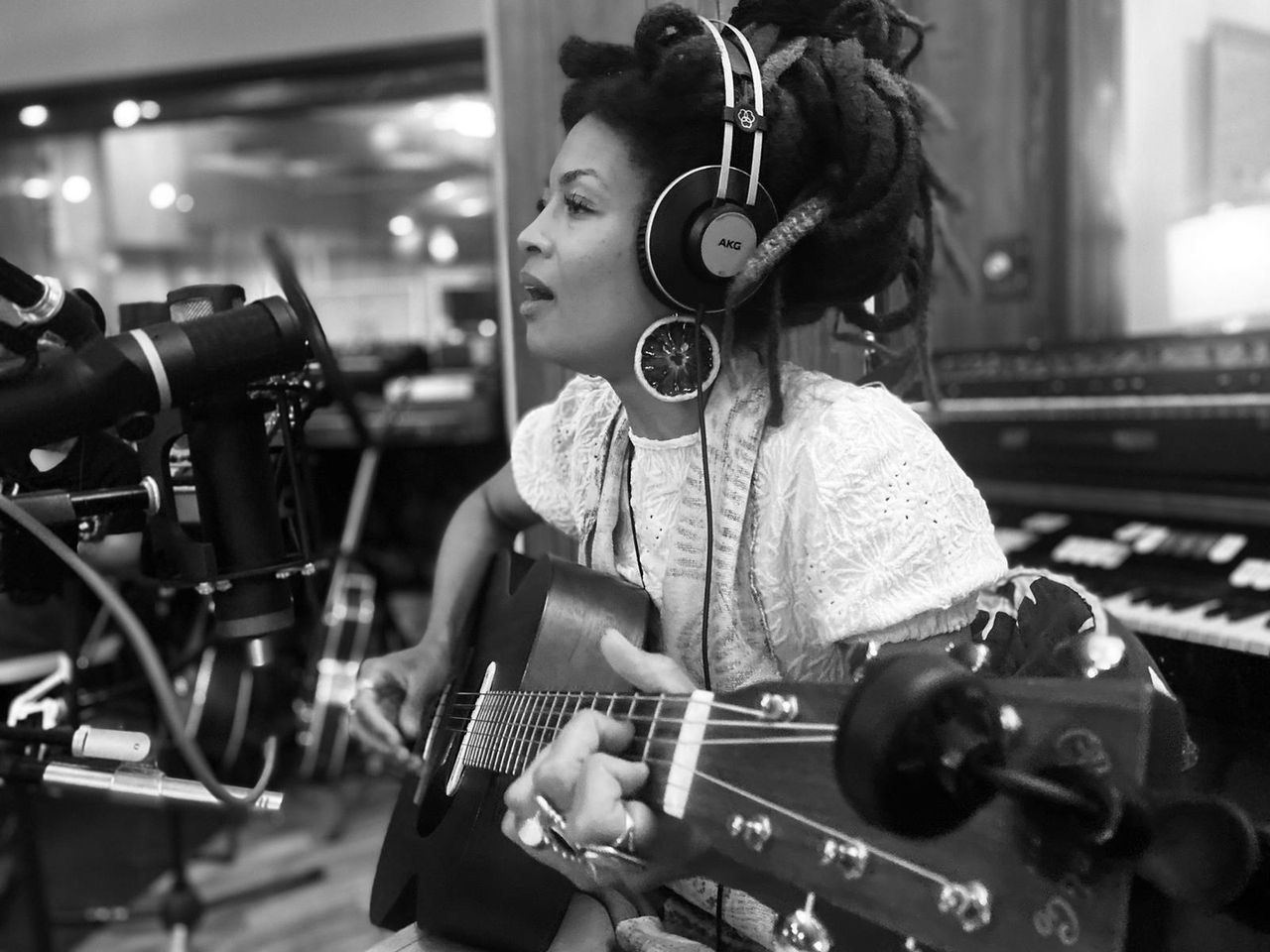
June in the studio. (Photo: Dr Ietef Vita)
VJ: That’s what songs do to me. They take me to different realms, so to say. A song like “Astral Plane,” I was cooking in my kitchen when that song came and I was in the kitchen. I had a cast-iron skillet, that was actually happening. I was frying stuff in olive oil. But when the song started to come, it started to take me to a very ethereal realm. I had to turn the stove off, because I would have totally burnt that meal, because my whole being was swept up. It’s almost like Mary Poppins or something, swept up into this other world. I’m still in this body, I’m still on earth, but in my mind-space, in my being, I’m gone. [Laughs] I’m up there writing this song, hearing this song, in the song. I say all the time that it’s like I was hanging out with David Bowie and Little Richard at the same time. [Laughter] Then they land me back on my body on earth and I turned the stove on and finished cooking.
That happens with songs. I’ll be walking down the street and I’ll hear a song in my head and it’ll take me away and then I’ll come back and I’ll be walking down the street again.
Then, sometimes, it happens where they come in dreams. Like I said, I’ve been watching a lot of music documentaries lately and it’s just so funny to me because I have received three dream songs... To me, dream space is out of time in the sense of the way we see time on earthly terms, while we’re in our bodies. We get taken to these other worlds, which is very similar to what songs do to me. But a dream is a dream, right? It’s not the same as being awake and getting a song. When I got a song in a dream, it’s only been three times and I’ve been writing songs since I was a little girl and I’m 43 now. To receive three dream songs, I think it’s pretty magical.
I was scared to tell people that this was happening to me when it happened, but as I’ve watched these other musicians... Johnny Cash. His wife, June [Carter Cash], wrote the song “Ring of Fire,” and she played it for him and he said, “Oh, we have to record it.” He went to bed that night and he dreamt those horns, [sings horn part], and then they put those Mexican horns on this track, or I think it was Duane Allman who dreamt a guitar part on this song “Little Martha,” and he dreamt that Jimi Hendrix came and played the guitar part for him and he woke up and went in the studio the next day and played what Jimi had given him. Dreams and time and all of these realms: They’re realms where you can meet others, where you can hang out with them, where you can get information that needs to be processed again or brought to this earth and given to others or shared with others. It’s when you can connect the worlds, almost. It’s really cool to me to think about music as a way to connect those worlds for people.
SB: It’s maybe the closest thing to dreaming in real time.
VJ: Mm-hmm. It really is. That, to me, is a form of channeling. [Laughs]
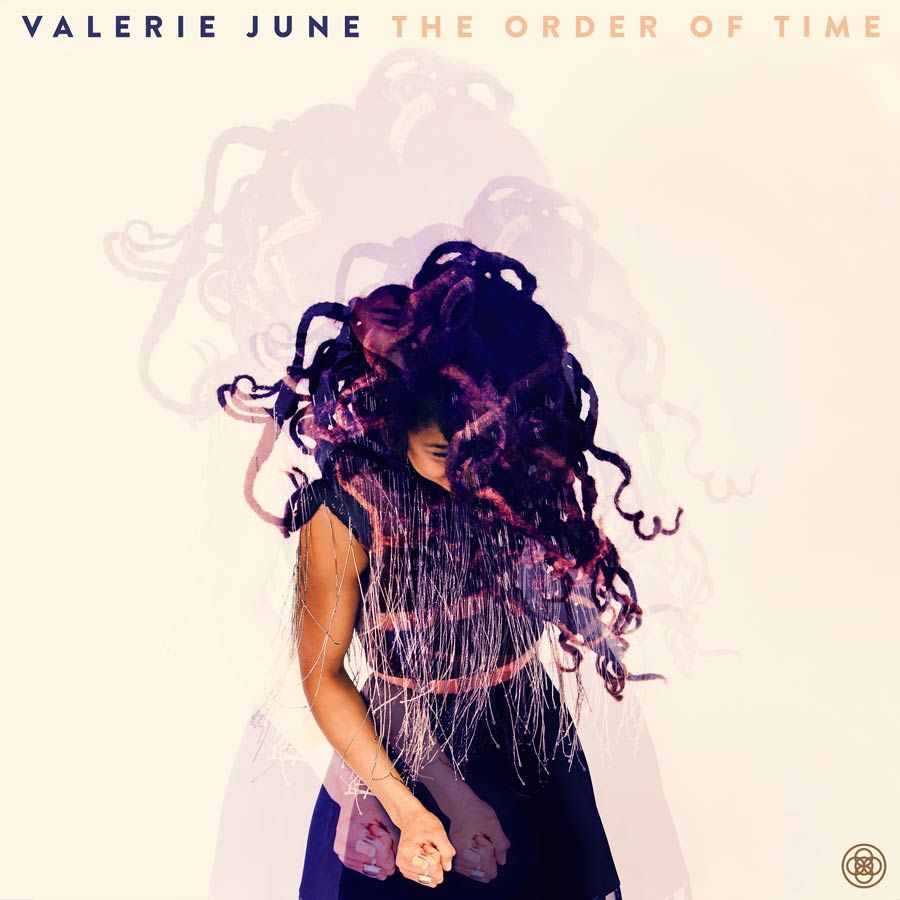
Cover of June’s The Order of Time (2017).
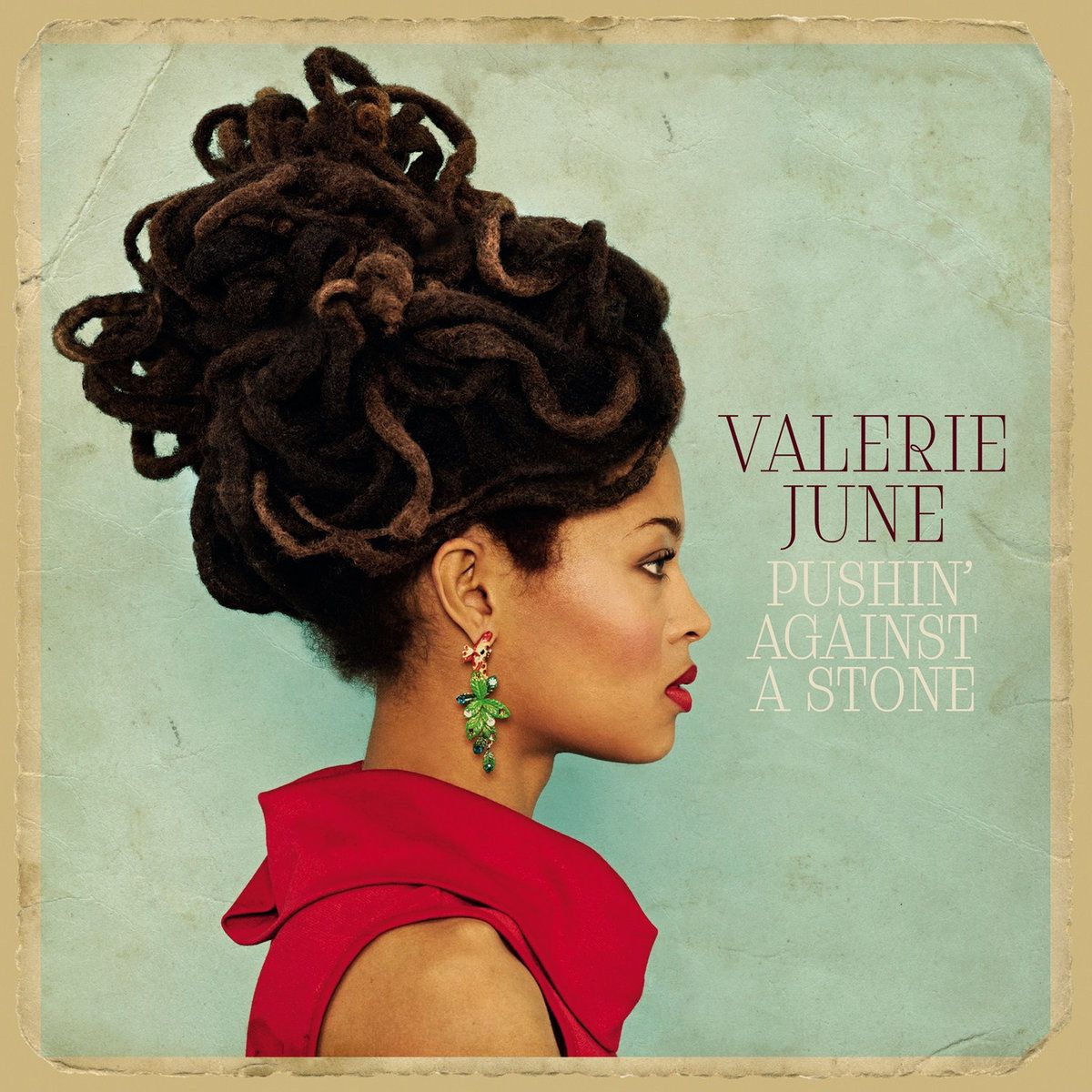
Cover of June’s Pushin’ Against A Stone (2013).
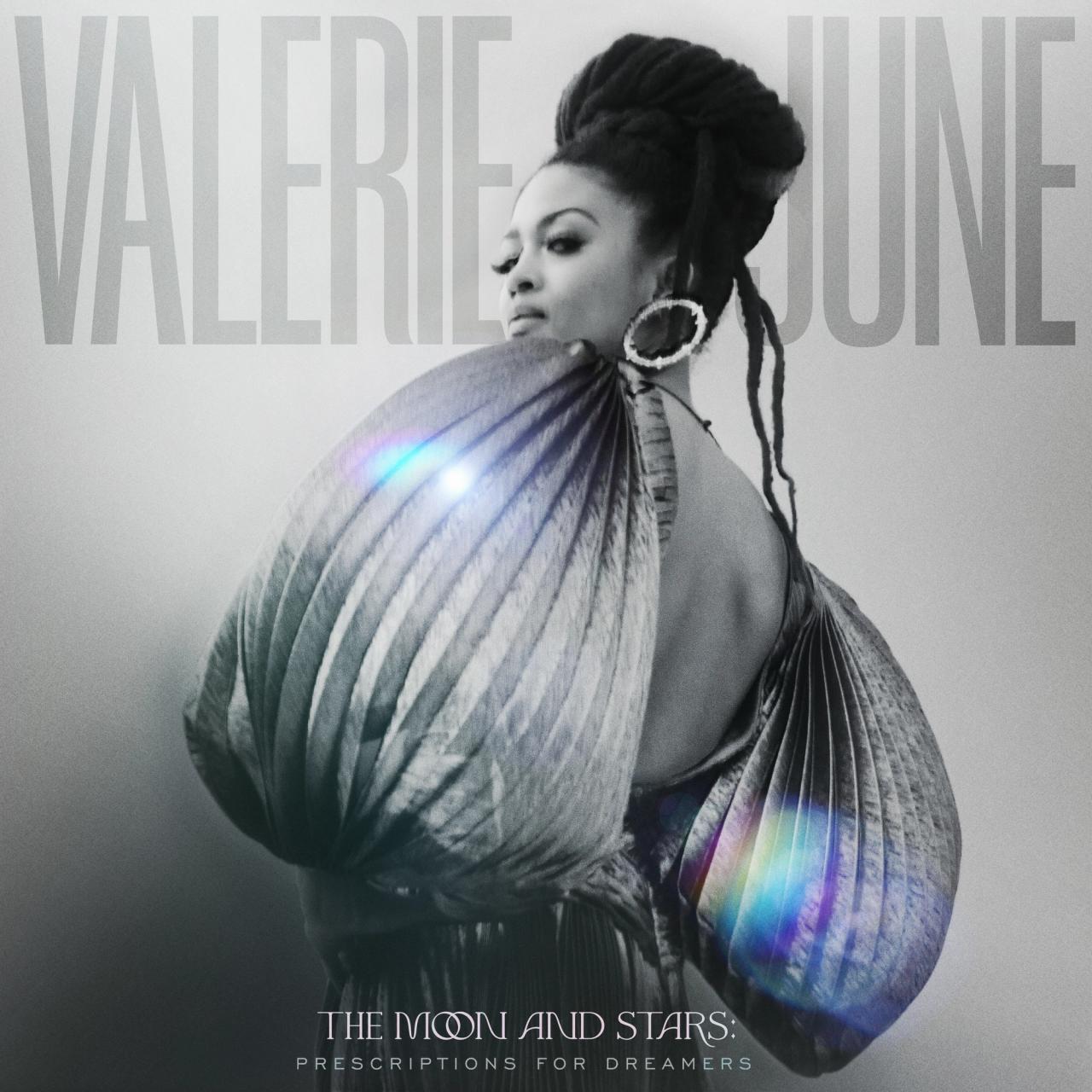
Cover of June’s The Moon And Stars: Prescriptions For Dreamers (2021).
Cover of June’s The Order of Time (2017).
Cover of June’s Pushin’ Against A Stone (2013).
Cover of June’s The Moon And Stars: Prescriptions For Dreamers (2021).
Cover of June’s The Order of Time (2017).
Cover of June’s Pushin’ Against A Stone (2013).
Cover of June’s The Moon And Stars: Prescriptions For Dreamers (2021).
SB: I love that you brought up “Astral Plane” because it’s on your 2017 album, The Order of Time. How did you come up with the title, The Order of Time?
VJ: The Order of Time, how did I come up with that title? I have to go back to that time period to think about that. I was thinking about… The songs had been done, recorded, and I was reading a lot of astrophysics books and I was thinking about going from Pushin’ Against a Stone and having long-term visions and goals for art and music and how everything on the earth realm happens in a time of physical time. It takes time for things to happen, but I think there are realms where things happen fast: As soon as you think a thought, it manifests.
That’s why you have to practice creating. You can’t just go out there... Some things happen fast for us here. Some creators can manifest something really, really fast, but that is also very dangerous, because if you manifest the wrong thing really fast, having not thought of all living beings, then you can create some chaos. You have to know how to use these tools. Earth is a school. It’s a place where we learn how to use these tools, so when we get to other realms where things happen faster, we know, “Oh, but that might affect such and such negatively or in an opposite way. When I’m creating, I want to mind what I’m creating. I want to tend to what I’m creating.”
SB: The physics of creation.
VJ: Yeah! To me, that’s what earth is, and I was thinking about the songs and what they are giving to me and that they were given on earth, and that to me is a process of The Order of Time. Even as an artist, it’s a process for me. It’s not like I’m going to be someone who puts a one-hit out or something. No, this is a lifespan for me and I do it regardless of whether it’s huge or not. I just do it because it’s something that takes me to these other worlds and I enjoy being in that mind space.
SB: There’s this amazing book of the same title that came out, I think, a year or two after your album by Carlo Rovelli, this physicist. If you haven’t read it, you must.
In any case, I want to go back to “Astral Plane,” because it really embodies these themes we’re talking about of time and dreams and light. We haven’t touched on light yet, but it’s this dreamlike song and it carries an ethereal presence—much like you, I would say. Well, you’re the creator of it. But it’s a song importantly about patience. As you sing, "Follow the signs slowly but steady. Don’t rush. The day will come when you are ready. Just trust." I think we should give it a listen, and then we’ll come back. [Plays “Astral Plane”]
Tell me about “Astral Plane” from a time perspective. How do you think about that song when it comes to time?
“For me, the astral plane is occurring as we are in the physical plane. It’s all happening right now. Everything is happening now. All is available now.”
VJ: It’s ever-present, honestly. People come to me oftentimes and they talk to me about losing a loved one and how that song helped with the transition or some mothers listen to it when they’re giving birth, so helping with the transition of a life coming or going. I get that and I understand that and, to me, both of those are ways that the song can be used. I also use the song presently because, for me, the astral plane is occurring as we are in the physical plane. It’s all happening right now. Everything is happening now. All is available now. Everything, absolutely everything. Life is the activation of what is there. [Laughs] So the astral world is not somewhere different than here.
SB: I have to say, because you brought it up earlier—that the song came to you while cooking in your cast-iron skillet—there’s this amazing project I know about by a Japanese photographer named Hitoshi Fugo and it’s called “Flying Frying Pan.” In it, he takes pictures of the same frying pan over, I think, a fifteen-, twenty-year time span, and they’re made to look like celestial, cosmic photographs, like a NASA photograph basically, but it’s his frying pan. What those pictures say to me—which is quite similar, actually, to what your song says to me, and now knowing the backstory, it makes it even better—but it is this idea that something as mundane and simple as a cast-iron skillet could say so much about the universe.
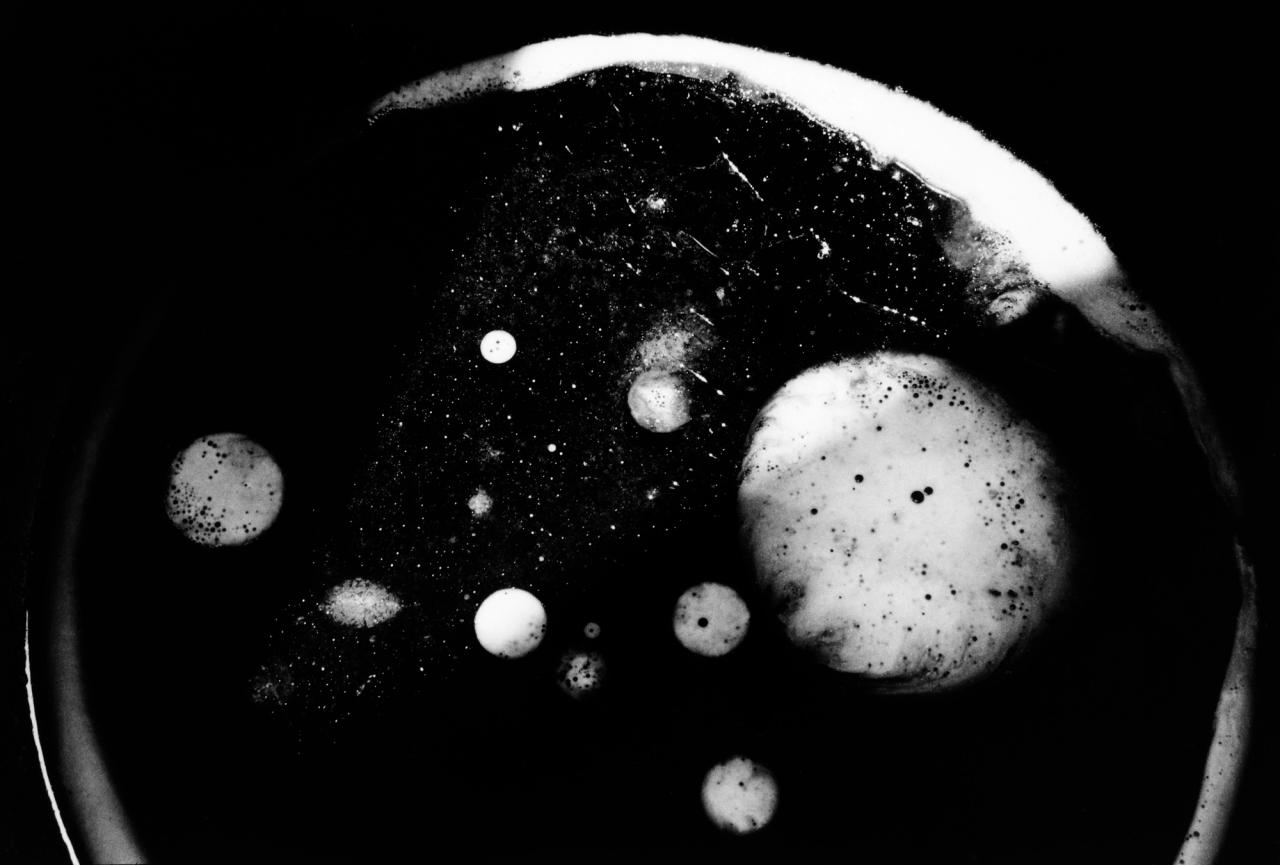
Hitoshi Fugo’s “Flying Frying Pan 47” (1979). (Copyright: Hitoshi Fugo/Courtesy Miyako Yoshinaga)
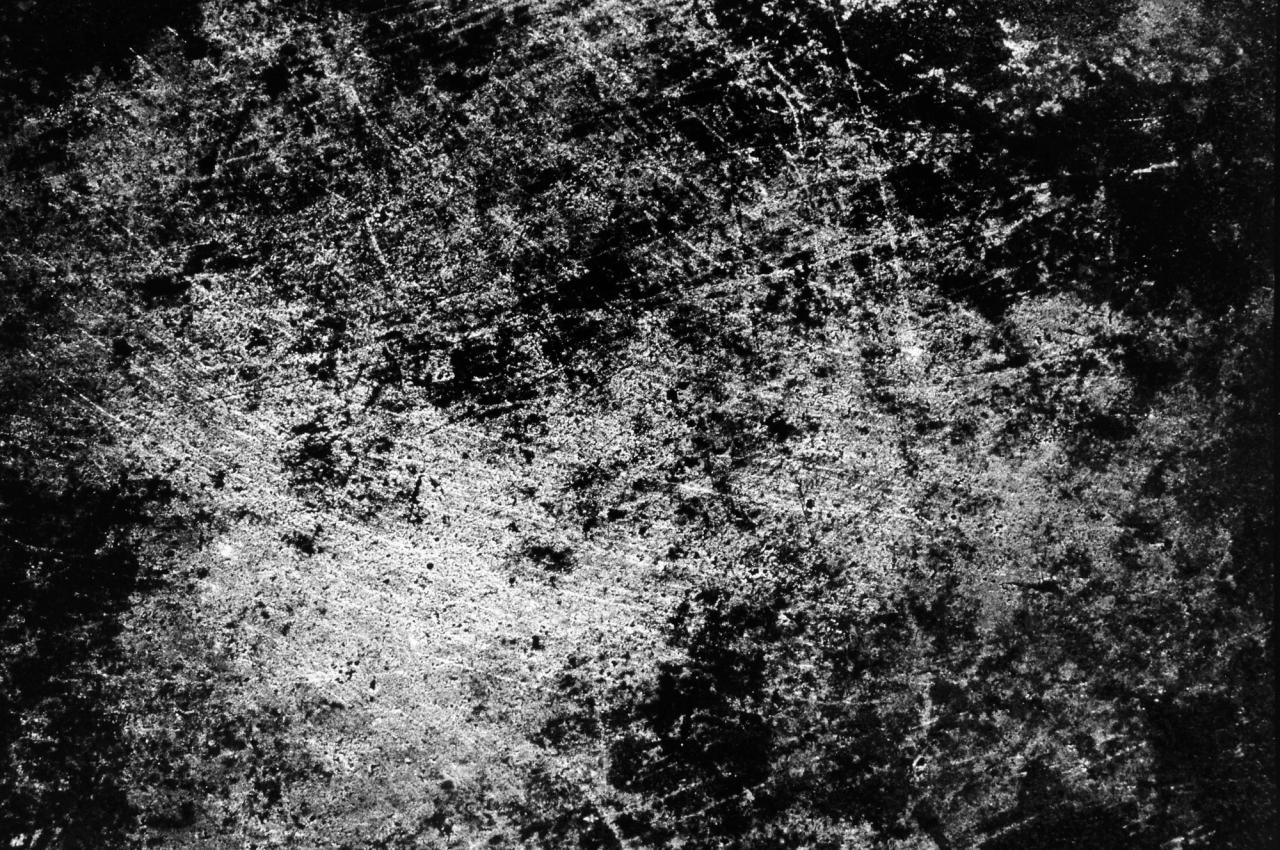
Hitoshi Fugo’s “Flying Frying Pan 5” (1994). (Copyright: Hitoshi Fugo/Courtesy Miyako Yoshinaga)
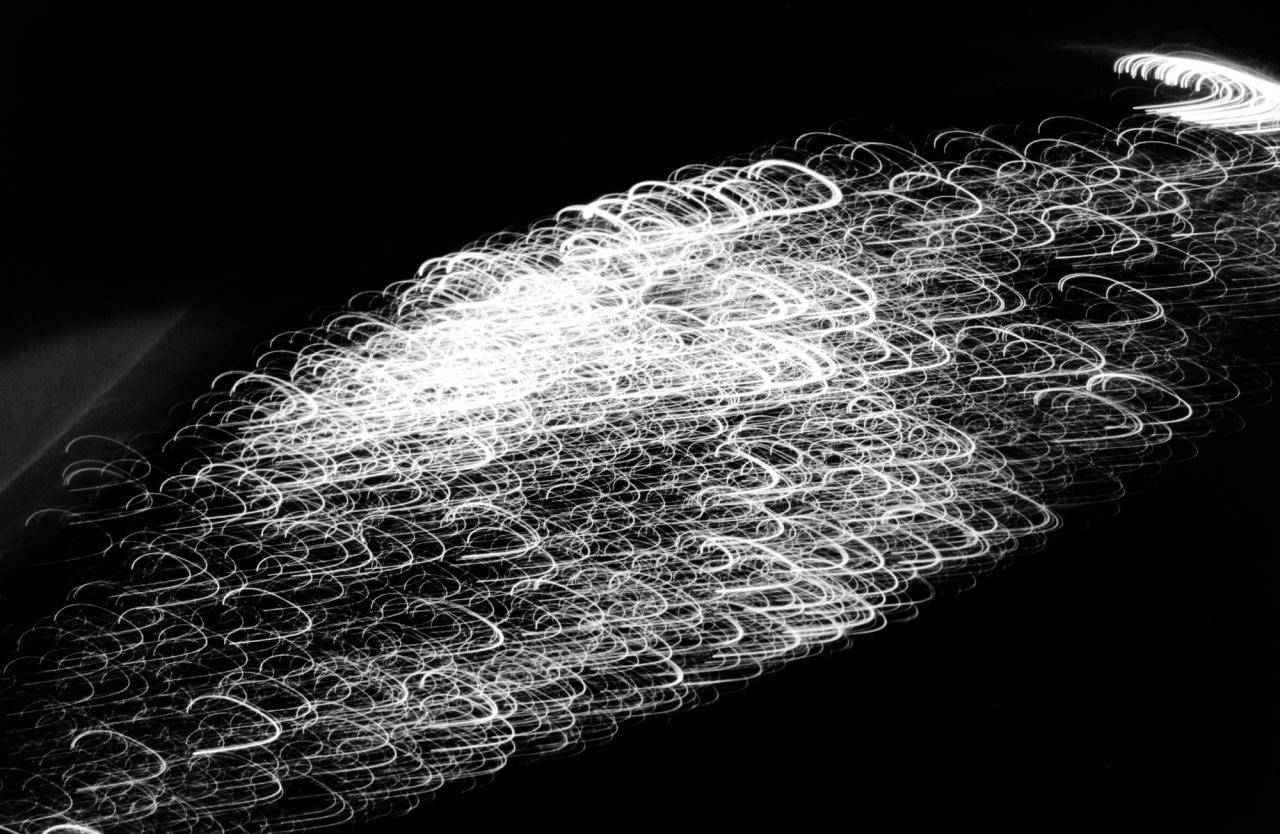
Hitoshi Fugo’s “Flying Frying Pan 33” (1990). (Copyright: Hitoshi Fugo/Courtesy Miyako Yoshinaga)

Hitoshi Fugo’s “Flying Frying Pan 36” (1994). (Copyright: Hitoshi Fugo/Courtesy Miyako Yoshinaga)
Hitoshi Fugo’s “Flying Frying Pan 47” (1979). (Copyright: Hitoshi Fugo/Courtesy Miyako Yoshinaga)
Hitoshi Fugo’s “Flying Frying Pan 5” (1994). (Copyright: Hitoshi Fugo/Courtesy Miyako Yoshinaga)
Hitoshi Fugo’s “Flying Frying Pan 33” (1990). (Copyright: Hitoshi Fugo/Courtesy Miyako Yoshinaga)
Hitoshi Fugo’s “Flying Frying Pan 36” (1994). (Copyright: Hitoshi Fugo/Courtesy Miyako Yoshinaga)
Hitoshi Fugo’s “Flying Frying Pan 47” (1979). (Copyright: Hitoshi Fugo/Courtesy Miyako Yoshinaga)
Hitoshi Fugo’s “Flying Frying Pan 5” (1994). (Copyright: Hitoshi Fugo/Courtesy Miyako Yoshinaga)
Hitoshi Fugo’s “Flying Frying Pan 33” (1990). (Copyright: Hitoshi Fugo/Courtesy Miyako Yoshinaga)
Hitoshi Fugo’s “Flying Frying Pan 36” (1994). (Copyright: Hitoshi Fugo/Courtesy Miyako Yoshinaga)
VJ: Exactly, yeah. I get that. I really think that. [Laughs] I have to look at his work.
SB: There’s a book. I’ll have to find a way to get it to you.
If we’re going to talk about time in the context of your work, we also have to talk “Tennessee Time,” this song from your 2013 album, Pushin’ Against A Stone, which was produced by Dan Auerbach of The Black Keys. Through researching for our conversation, I learned that you wrote this song with Dan in John Prine’s Nashville studio. How incredible. Let’s play a bit of it for the listeners, and then we’ll talk about it. [Plays “Tennessee Time”]
What is “Tennessee Time,” exactly?
VJ: Tennessee Time is a time that moves slower than the rest of the world’s time. It’s like “Island Time” or we have Southern Colored People’s Time or different times within this time. Tennessee Time is definitely slower. It’s like, yeah, we’re going to meet at noon. Oh, I’ll get there about 12:15, 12:20. I’m not rushing. It’s going to get done. You go to the official offices to get something done. Okay, we’re going to get it done. You can get the stamp or the license or whatever you need. We’re moving at a different pace than the rest of the world. The song “Tennessee Time” that I wrote with Dan, it kind of captures that side of slow-moving life in a fast world.
SB: I’d like to turn to your upbringing in rural Humboldt, Tennessee, which was, I should say, very much astral and cosmic. [Laughter] You’ve said, “I would clear space on the ground and get down on the ground and just talk to the moon and spend time with the stars.”
VJ: Oh, yeah.
SB: Is this where some of your spiritualness comes from, your early years in nature in Western Tennessee?
“To be able to spend time in nature connects me back to where I was when I was out of the physical realm, and that’s my door or my window to communicate with the spirit.”
VJ: Yes. I think it came before I got into this physical realm, but when I got here, to be able to spend time in nature connects me back to where I was when I was out of the physical realm, and that’s my door or my window to communicate with the spirit. I don’t know why, but I would go outside and watch the moon in all of its phases. We lived down the road from where we are now, and that was ten acres of land and it was very thick with brush. [Laughs] I had to clear space and I would just get on the ground and talk to the moon and just sing and whisper to just nature and all that was and all that is. I still sometimes do that. I think it’s important to do that, to connect with nature in that way for me.
SB: You still go back there quite often when you’re not in Brooklyn or you’re not on tour. You have this cabin, right?
VJ: Yes. It’s a really magical space for me. Also, the animals that come. There’s snakes, there’s critters, there are great blue heron, muskrats, there’s animals everywhere, really. Just being in nature and being away from people and watching the flowers and watching the trees and watching everything as it grows and changes. It’s a big part of me, to need to have that side of my life, and I don’t really share it very much with people because I share so much with people that I’m like, “Okay, this is going to be—I’m going into hermit space.”
SB: It’s your Tennessee Time.
VJ: Yeah, hermit space. [Laughs]
SB: You also grew up in a family that three times a week went to a church where there was this songbook, a hundred songs deep, and a four-hundred-person congregation. Spiritually, you were definitely getting in touch there and with music. Your mother was a painter and your father, who ran a construction company, was a part-time music promoter specializing in gospel and R&B. Art was really all around you—spirituality and art. I’m curious to hear about your childhood from a music perspective. Tell me about music in your home, at church, how music surrounded you growing up.
“I hear age and I love it. It’s like good wine. It makes me so happy to hear time when I hear musicians who’ve lived long lives.”
VJ: Church was the biggest place where music surrounded me, because the way that church was, there were a thousand songs in that songbook and five hundred people at the church. When I was very little, we went to a predominantly Black church and everyone in the church sings all together. There’s no choir, there are no instruments. So you learn about voices. You hear time on a voice. I love hearing time on a voice. A good example of hearing time on a voice is to listen to Joni Mitchell young and listen to Joni Mitchell old, singing “Both Sides Now.” [Laughs] That is, you can hear the age. I hear the age on Mavis’s voice, on Willie Nelson’s voice. I hear age and I love it. It’s like good wine. It makes me so happy to hear time when I hear musicians who’ve lived long lives.
For us, it was five of us kids and going to church and being surrounded by all of these voices every Sunday morning, every Sunday night, every Wednesday night. Then moving from the city of Jackson out into the country area and my parents being like, “Well, just because we’re Black, we’re not driving across town to go to church, we’re going to go to church right here. Same church of Christ.” But it was mostly white people, five hundred white people and us Black folks. The singing was very different. It was the same songs, but the singing was more like “Ahh” [singing soprano] than “Ooh” [singing baritone]. It was really cool to learn how sound works differently in different people’s traditions and bodies and stuff at that young age. I was surrounded by music that way.
Also, my father had the construction company, but the promotion-of-music company, too. He listened to music all the time. He was one of these people who wanted to have music on twenty-four hours a day. My mother was like, “No, turn it off! I got five kids. I don’t want to hear anything. I got mouths running all the time. That is all.” [Laughter] He would have to go outside and bump his music and we weren’t around any neighbors, so that wasn’t a problem because we were in the country, so he could do that, go to his man cave out in the car.
She wouldn’t really listen to a lot of music, so I learned to appreciate silence, too. In the silence, I started to hear the music of the world. I really like being in solitude. I love to be alone. I like to listen to what’s happening in the world, from birds to a siren to whatever it is. To me, that’s music. Then, as I’ve gotten older, I’ve learned that there are people like John Cage who actually studied that, [laughs] and that’s what I’ve been doing when I was out looking at that moon and kissing the ground and speaking to the goddess and the earth and the sky and beyond. That’s what I was out there doing. I was listening to the world and getting that music, too. It’s always been there.
SB: I know you’ve got this near-endless list of artists who have shaped you, from Stevie Nicks to Dolly Parton, to Otis Redding, to Sam Cooke, to Nina Simone. But I did want to ask you specifically about one, Carla Thomas, the Memphis Stax legend, who you’ve called a godmother and who performs with you on your song “Call Me a Fool.” That must have been pretty incredible to be able to record with one of your heroes. I wanted to ask about that experience and how that felt for you, maybe even from a time perspective—this person you probably heard on the radio or your dad playing a record of and then decades later to get to record.
VJ: That was so cool. The way that it happened is, after leaving Humboldt, I went to Memphis and I was there for about ten years and I heard about this woman, Carla Thomas, because I didn’t know her music before then. I had heard her with Otis. I didn’t know her as a separate artist until I moved to Memphis and I was 18 years old. It would be like, Carla Thomas is playing in such and such. Carla Thomas is going to be here. Carla Thomas is going to be there. I’m like, “Who is this Carla Thomas?” She’s the queen. I had heard her songs my whole life. I just didn’t know that that was her. I was scared of Carla Thomas, I would say, for a decade. I’d be like, “Oh, my God, there’s Carla Thomas.”
Now I’m friends with Carla Thomas. Ten years later, twenty years later, I know Carla Thomas and have sung with her and sit and listen to her tell me stories about all the times that she’s had with these amazing artists. She’ll tell you stories all day about Otis, about all the musicians that she’s come into contact with over the time that she’s been the “Queen of Memphis Soul.” I call her my fairy godmother, because I learned so many lessons from her and just from watching her and understanding… She was very young, her father was in music, too. Understanding how to age in music and she’s just a really beautiful teacher for me. I love her.
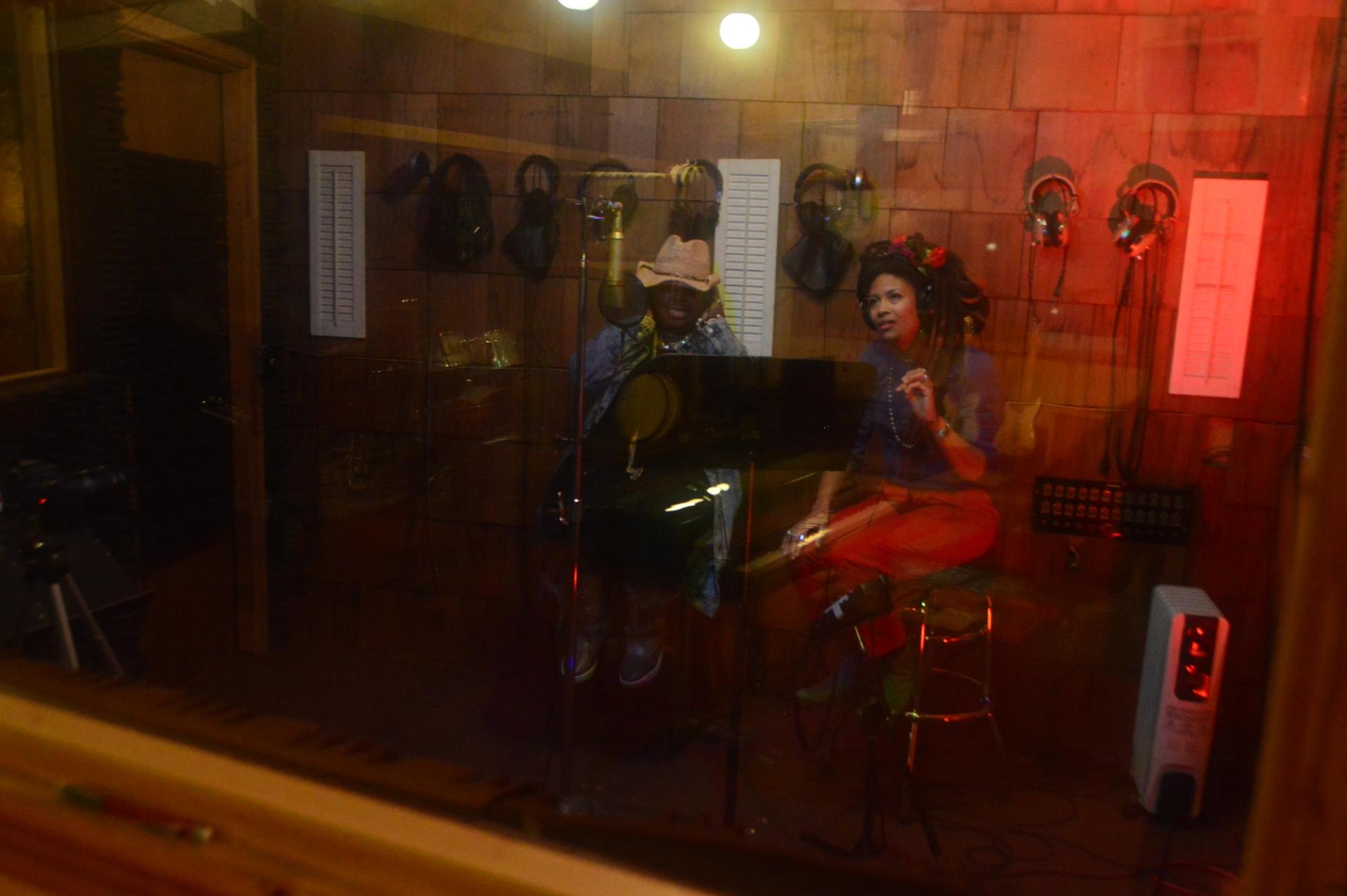
June in the recording studio with Carla Thomas, the “Queen of Memphis Soul.” (Photo: Danny Day)
SB: I love, too, that it’s this language, this dreaming of music that leads you to her and then her ultimately to you, and the stories she gets to pass down to you. That’s something that’s across time. Let’s give the listeners a taste of this special song, “Call Me a Fool.” [Plays “Call Me a Fool”]
I also wanted to ask you about Mavis Staples, for whom you wrote the song “High Note.” You’ve said that Mavis changed the direction of your life and was a key to opening a door. Could you share a bit more about that? What is Mavis’s real role for you?
VJ: She called—it was actually Andy at Anti Records. She’s [Mavis is] on the record label, and Andy said, “Mavis is looking for songs for a record. Do you have anything?” I said, “Yeah.” He said, “Well, I want you to get on the phone with her so y’all could find the right thing for her.” I got on the phone with her and she was talking about her life and marching with Dr. King and just how there’s still so much to do, even though they were working. That time we’ve still got so far to go with creating more change and more love in the world and how her father, Pops, he always said, “Hey, any songs that y’all are going to sing, I got one rule. They need to be songs that are going to be lifting people up, that are going to be inspiring people and moving people in a positive direction.”
She says, “So, what do you have that’s positive?” I was looking at a hundred and fifty songs that I’ve received in my lifetime up to that point, and I was like, “Dang, I only have two positive songs.” [Laughter] Because they were all sad and blues. I just said to the universe, “Look, you’re going to have to be sending me some more positive songs.” Since I talked to Mavis, I just get these songs that are full of light and joy and beauty. I’m like, “That was not the way my life was going before I had that conversation with Mavis.” I feel like she opened up something in the song world that says, “Okay, we could download these to Valerie.” I received that.
SB: I would say you’re synonymous with joy at this point.
VJ: Thank you, Mavis. [Laughter] Yeah, because I was dark. I was on some Elliott Smith stuff.
SB: Returning to your upbringing, when you were 14, your family’s house burned down. Lost everything. What do you remember from that time? How did you recover from that moment? How did your family recover?
VJ: Oof. We were homeless for a while there. We stayed in a motel, and it was a motel. [Laughs] We had nothing, nothing. Everything was gone and they didn’t have any money. There were times where they would break the penny jars and send us to school with some pennies to pay for lunch and things like that. I knew when we were eating certain foods that the times were hard. This happened at a time that was hard. My dad’s construction business was the main thing that was feeding us, and music was always something that he really lost money on, but he did it because he loved it. So I learned a lot about dreams and time and understanding what it takes to manifest a dream and how patient you have to be and how much of a juggle it can be sometimes and how it can break your heart, how hard it can be, and all the things from watching my family and my parents through many struggles that they went through.
After living that way for a little while, with the loss and church people giving us clothes, they gave us things that we needed. That’s how I had something to wear to school the next day, because the church people dropped off these garbage bags full of stuff. So I was wearing stuff way too big for me, but I love those people because they took care of my family. I learned about community through that… I was going to say, when you’re on a dreamer’s path, there’s ups and downs, like with art. I start the year, I’m like, “Oh, God. How am I going to eat this year? I got one gig. I got two gigs. How’s this going to happen? How am I going to come on the other side to another January and be fed, and pay bills and stuff?”
It was similar to that with the way my father was providing because he worked for himself. He was a small business owner, a Black man in the South trying to make ends meet for five kids and a wife and not really always having steady work. They had to pace it. This was one of the low times, and in this time, after about two or three months, they got a bid in on a job. It was to build a church and he got the down payment and he went down the street to this house that we passed all the time, and the house was one where the bus would drop the kids off that lived there.
I would say to myself, “God, I don’t know why we have to live in a shop,” because we lived in a garage cinder block shop that my parents built. Half of it was an apartment that they put in and the other half was just giant doors that we could lift in the summertime where he could drive a tractor trailer truck or a bulldozer or anything in there to work on things that he needed to use for his jobs. They had a dream that they would put a house on the land, but that never happened because the shop burned down and they never got enough money to build a house. Well, with the down payment from the church, they went to this auction and I had been planting seeds like, “I want to live somewhere like that one day.”
The house was being auctioned and he had exactly the number that was needed to purchase that house at the auction. It’s a house that, in a lot of ways, Black folks—because of redlining and situations like that—would not have been able to get this house if he had to go through a bank and all the things. So he was able to get the house. We moved in, and I just learned about how everything that we have, it’s just borrowed. Having lost everything, everything that I gathered after that, and even now, I’m like, “I’m just a keeper for a little bit.” I understand that in my soul now. Before that, you couldn’t have told me that. I was like, “But that’s my glove. That’s my necklace.” Everything was mine. Now I’m like, “Okay, if I have to let it go, I have to let it go,” and everything you have to let go.
SB: It’s not lost on me that, about a year after the fire, you got your first guitar. You’d begged your grandpa, who had this guitar in a closet, “Gimme the guitar.” And it came true. He finally said, “Okay, okay, you can have the guitar.” This is a life-changing moment, coming out of the ashes of this event. I was thinking about that being so special, that it arrived shortly thereafter, this guitar in your hand, which of course took a little longer to learn. [Laughs]
VJ: Oh, my goodness. Yes. That guitar was in the closet at gran and granddad’s house from birth until age 15, and nobody played it. My granddad didn’t know how to play guitar. He just got at a yard sale and told himself, “One day I’m going to learn.” People have instruments at their houses as they listen to this that they are gonna one day learn, and I was one of those people. Even after he gave it to me, I was like, “Well, one day I’ll learn it.”
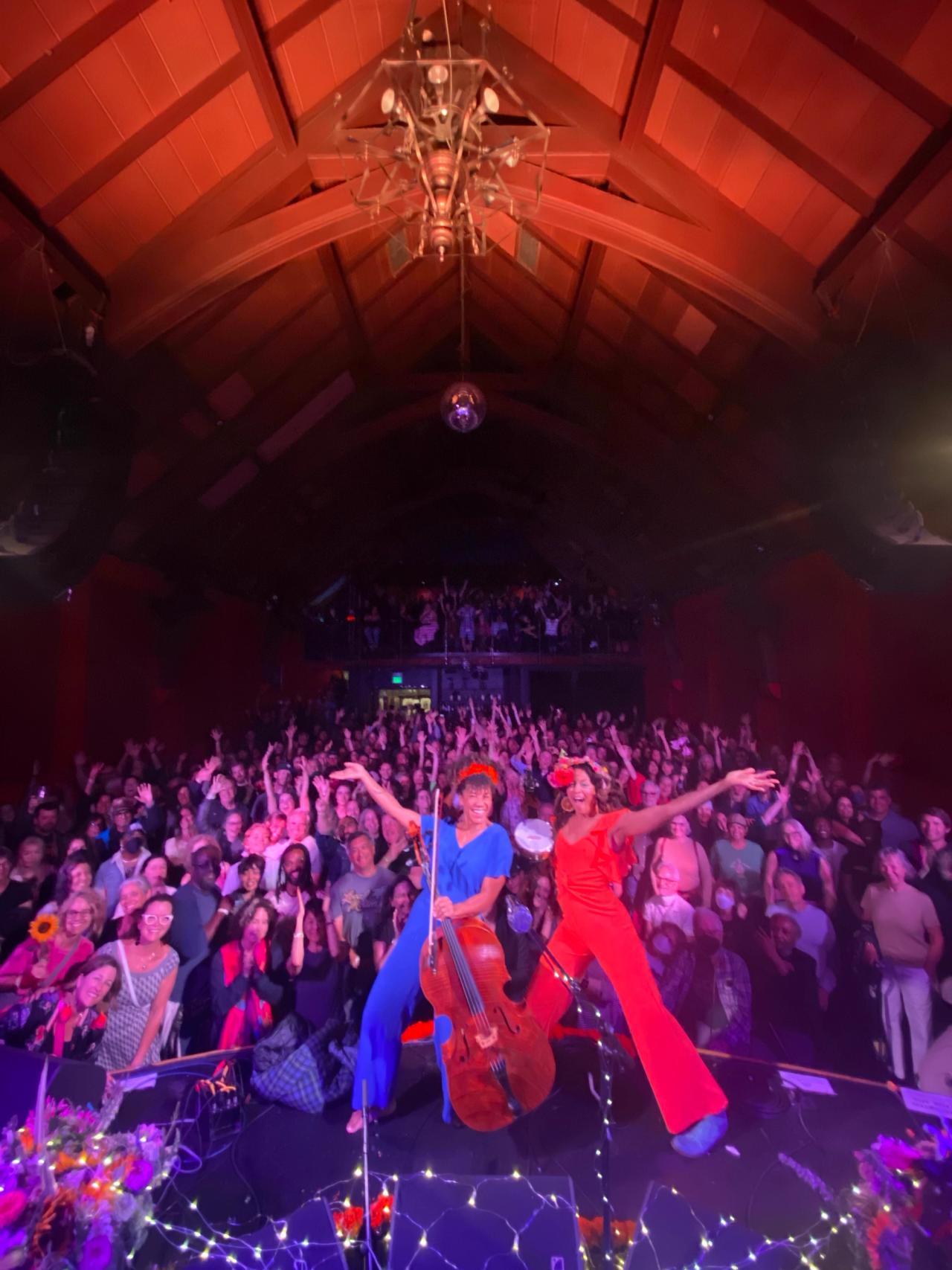
June performing at The Chapel in San Francisco’s Mission District in August 2026. (Courtesy Valerie June)
SB: Talk about time, this decision your grandpa had to buy a guitar fifteen years before led you on your path today.
VJ: I know, and he didn’t know, and nobody knew that that guitar, that they would always say, “Don’t touch it,” was going to end up changing my life, and it did. It really did. [Laughs]
SB: At 18, you’re living in Memphis, and you decide to become a songwriter. You’ve been singing with bands and also doing a solo act, but during these years, these were the years you were also doing the cleaning job, the coffee shop, the various jobs, playing dive bars, self-releasing your music. How did you keep pushing forward and going? What sort of inner light did you find to keep making music and seeing your dream through, even though you were so busy doing other things than music?
VJ: I’d done a lot of stuff. I came from those dreamers, my family, and I also look at the world of dreamers. Not just individual dreams. I have a personal dream, my dad had a personal dream, my best friend had a personal dream of having a café. But then one of our collective dreams, like a Dr. King dream, of oneness and being judged by content of character, and being in Memphis, the place where he was assassinated, it was there with me every day. I see those spirits walking down Beale Street. I can communicate with those ancestors that worked the fields and I feel that. It’s like, present. It’s not like something that happened way back when.
Those spirits are still here and in a lot of cases when I see them, they are happy with how far we’ve come, but like Mavis has said, they realize where we need to go and they are gently pushing us in that direction, and in order for me as a young person at that time to really understand, “Well, why hasn’t this happened yet? That was a long time ago when Dr. King was assassinated. It’s forty, fifty years later. Why hasn’t it happened yet?” I wanted to use my life to understand time in relation to the manifestation of dreams and a way of collective dreaming and collective manifestation of a better world. The best way for me to understand that was to use my life as a testing ground for that.
Then I had read books like Gandhi’s experiments of life, his autobiography [The Story of My Experiments With Truth]. It’s like an experimentation, life being this thing that you can use as kind of a lab scientist to learn and sculpt. I wanted to use my life that way, and the best way for me to do that was to take the thing I feared the most, which was music with no rhythm. The girls on the cheerleading spot, most of them were white and they said, “Girl, are you Black? Because you ain’t got no rhythm.” [Laughter] I had to learn it. They all had rhythm. [Laughs]
SB: We should add here, you were the head of your cheerleading squad at some point.
VJ: I got there. I did not have that at the beginning.
SB: [Laughs]
VJ: Even that was me learning how to work with time. What’s it going to take? Seeing what I wanted and going into this darkness and being totally like, “Okay. Well, this is what I see and what I wish and calling it forth.” I wanted to understand that in my own life, because of course, one of the jobs that I had was working at a bookstore and there were artists... The Oscar-winning director, Craig Brewer, came in. I served him coffee every day. There were actors, painters, musicians, all kinds of amazing creatives, and they would always have journals and they would be reading really cool things like anything from Siddhartha to the Book of the Dead, as I mentioned, things of that sort.
“The goal of my life is to collectively dream with others for more harmony in the world. That’s what I want to see. I use my life as a testing ground for that.”
I was very curious about creatives, and coming from a mother who is creative and being slightly creative myself, I just was curious about, okay, well, if we all ask our creatives and creators, then what part of the world are we designing and what part are we creating and how do you even get from sitting in a café, writing a movie script to being an Oscar-winning director? Or writing a song and then being a top seller, like Carla Thomas with “Gee Whiz?” How does that even happen? You gotta understand that through the lens of an individual path. But once I followed that for myself, then I would like to. The goal of my life is to collectively dream with others for more harmony in the world. That’s what I want to see. I use my life as a testing ground for that, and that’s why I chose this very difficult path. Because I could have done something else in my life to make a living. [Laughs] Something a little easier.
SB: I like this notion of the collective, which is so you. If you get to know your music, it really is about this oneness and this collective. Here, I’d like to play your song “Workin' Woman Blues,” which I imagine must have had its roots in this time. It is personal, but it’s also universal. [Plays “Workin' Woman Blues”]
VJ: Yes. [Plays “Workin' Woman Blues”]
SB: Bringing this conversation back to this present moment, I wanted to talk with you about the time we’re in now, dealing as we do with what you’ve called the “injustices of the present” and highlight this beautiful keynote talk you gave a little more than two years ago for Folk Alliance International. In it, you say, “There has never been a more critical time in history to examine ourselves and our relationship to those we may not one hundred percent agree with, relate to, or even share the same ideas with. There’s never been a more crucial time to strip ourselves naked of our prejudices and biases and see ourselves as a united human family,” adding, “Now is the time to train ourselves to be more compassionate, and it is a practice. Now is a time to practice empathy.” I think these statements are even more urgent and just as true in 2026.
I was actually just reading this essay the author Rebecca Solnit wrote, yesterday, titled “This Cold Winter, Love is a Superpower.” In it, she notes, “Empathy is itself an act of imagination, that begins with attention and care: what is it like to be this other being, what are they feeling, what do they need. It arises from and reinforces a sense of non-separation, a sense that we're all in this together, that everyone is your neighbor and no one is a stranger.” Which also reminds me of something you said in that FAI talk. You describe creativity as a revolutionary act. You say, “For you to take time in this crazy world we live in to be creative, you are in a way taking your power. That’s how I see it as a revolutionary act… We get distracted by so many different things. If you take that time, that’s revolutionary.”
VJ: I do think that.
SB: I wanted to quote from this talk, because I think it’s rare to see someone so boldly and strongly express themselves outside of their artistic medium in that talk format the way you did. It speaks to this moment we’re in, where I think we’re feeling… Were feeling heavy right now, let’s be real. How do we find joy through this quagmire, this maelstrom, this swamp?
VJ: I was using a different medium than I normally use. It would be drawing, it would be writing, it would be songwriting, it would be poems, normally. To get invited to speak there, I was very nervous. I almost died in a snowstorm the day before, so I was coming in hot, [laughter] but I needed to say that, and I don’t know if it made me any friends, but I will say that I believe in creativity and joy with a fierceness and its ability to create more of a change we want to see than some of our older methods of handling crisis, because those have been done so many times that the system knows itself and how to react and respond to it.
So a more creative way of approaching what we wish to see in the changed form is to work with elements of sweetness. Gran always used to say, “Kill them with kindness.” When I’d get my tail beat up by the girls at school, I’d come home, mama would say, “Well, kill them with kindness,” and I’m sitting there thinking, “They killing me. I’m coming on bloody every day. What you talking about kill ’em with kindness?” [Laughs] But I honestly believe that these women were right when we are in the midst of so much chaos…
Also, at that time, I had been reading Sapiens, by Yuval Noah Harari, and he talks about in the book the magic of this time period that we live in and how amazing it is... This is what I took from it anyway, that the threats that have been upon us as humans, from dinosaurs to all these barbaric ways of survival we had to go about and competition with each other and things of that sort.
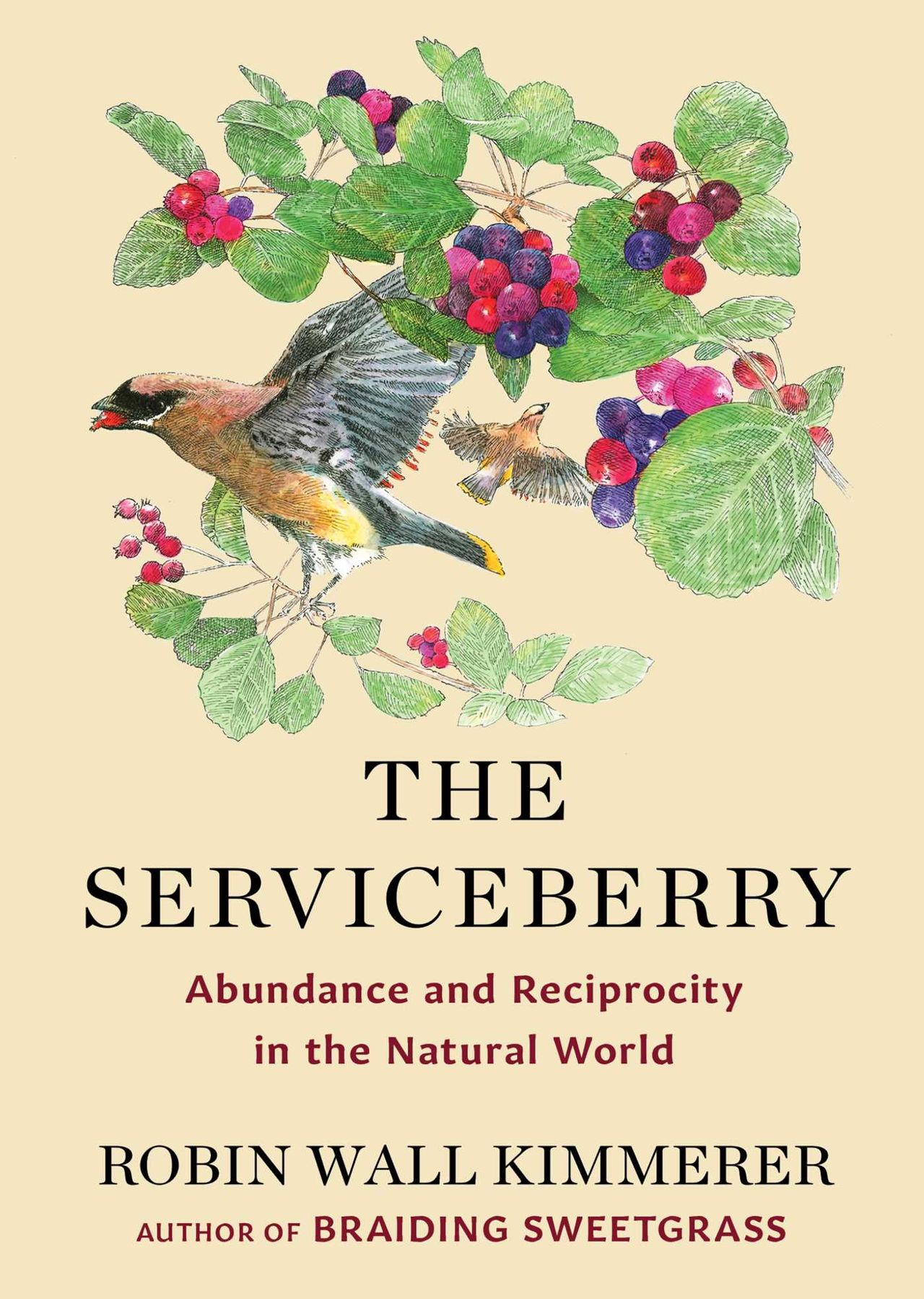
Cover of Robin Wall Kimmerer’s The Serviceberry (2024). (Courtesy Scribner)
There’s another writer I love who talks about competition versus moving into a more cooperative space, and that is Robin Wall Kimmerer in her book The Serviceberry. I’m all about being a serviceberry in this world, because our old ways of moving change. Maybe we have to rethink this. Maybe we need to change the way we call forth what we’re wishing for and we live in a period of time, back to Yuval, where we don’t have all of that stress as a human collective. Whoa. To me, that’s like a trampoline of opportunity for something amazing, some beautiful shit to happen. Like, ooh, the endless possibilities of how great life, how positive, how beautiful, how wonderful all things can be. We hadn’t even tapped into the potential or the probability of positivity. [Laughs]
I kind of get a little bit like, “Okay, yes, if we want to…” There’s all the heaviness, there’s all the pain and I come from a race of people that have experienced that, as a collective, African American enslaved people have experienced that heaviness almost to the worst degree in the time of my existence or whatever in studying American history— But when I think about these things, I’m thinking about the pain that people have felt and how if my ancestors can believe that I could sit here free, and they could be working those fields and beaten and pushed back and so much injustice upon us and they can dream of what they wish to see in their daughter’s daughter’s daughter’s daughter’s daughter’s daughter’s daughter, then we can do that as a collective of humanity.
What we can learn from those who have suffered is huge. There’s a huge lesson to be learned from the suffering of African American people, of the Jews during the Holocaust, of all suffering beings. There’s such a lesson versus turning away from that and being afraid of it.
SB: In Indigenous culture, it’s the seventh-generation principle, right?
VJ: Exactly.
SB: Yeah. They have a way of looking backward and forward and living fully in the present by doing so. I think about that, too, because we live in this time in which it’s so easy to just be negative. I think if you try to find ways to harness an abundance mindset, it completely shifts your way of thinking about how to deal with a situation. There are the brutal realities of the present—the atrocities of the present—but if we shift our thinking, we can completely transform tomorrow and the next day.
VJ: Our thinking is constantly being streamed in another direction to keep us from that, so it’s like—
SB: I wanted to close this conversation about your sixth and latest album, Owls, Omens, and Oracles—great title by the way—which is produced by M. Ward and features vocals by the Blind Boys of Alabama and Norah Jones. You described the record as “a radical statement to break with skepticism, surveillance, and doomscrolling,” so relevant to what you were just saying, and this idea of really embracing “the feeling of aliveness, to connect, weep, change, open.” [Editor’s note: June asked Pleasure Activism author adrienne maree brown to write her bio for the release of Owls, Omens, and Oracles, calling it “a kindred collaboration.”] Could you speak about these ideas of music and ultimately happiness and joy, because that extends out of your music as tools to push against darkness, anger—to resist?
VJ: I’ve been practicing... Because it is a practice. It’s not easy. I wake up so mean, I’m evil. I’m just like a nasty person in the morning. You do not want to talk to me before I have my tea. Thank you for this cup of tea I’m having right now.
SB: I’m glad we had this conversation at 2 in the afternoon.
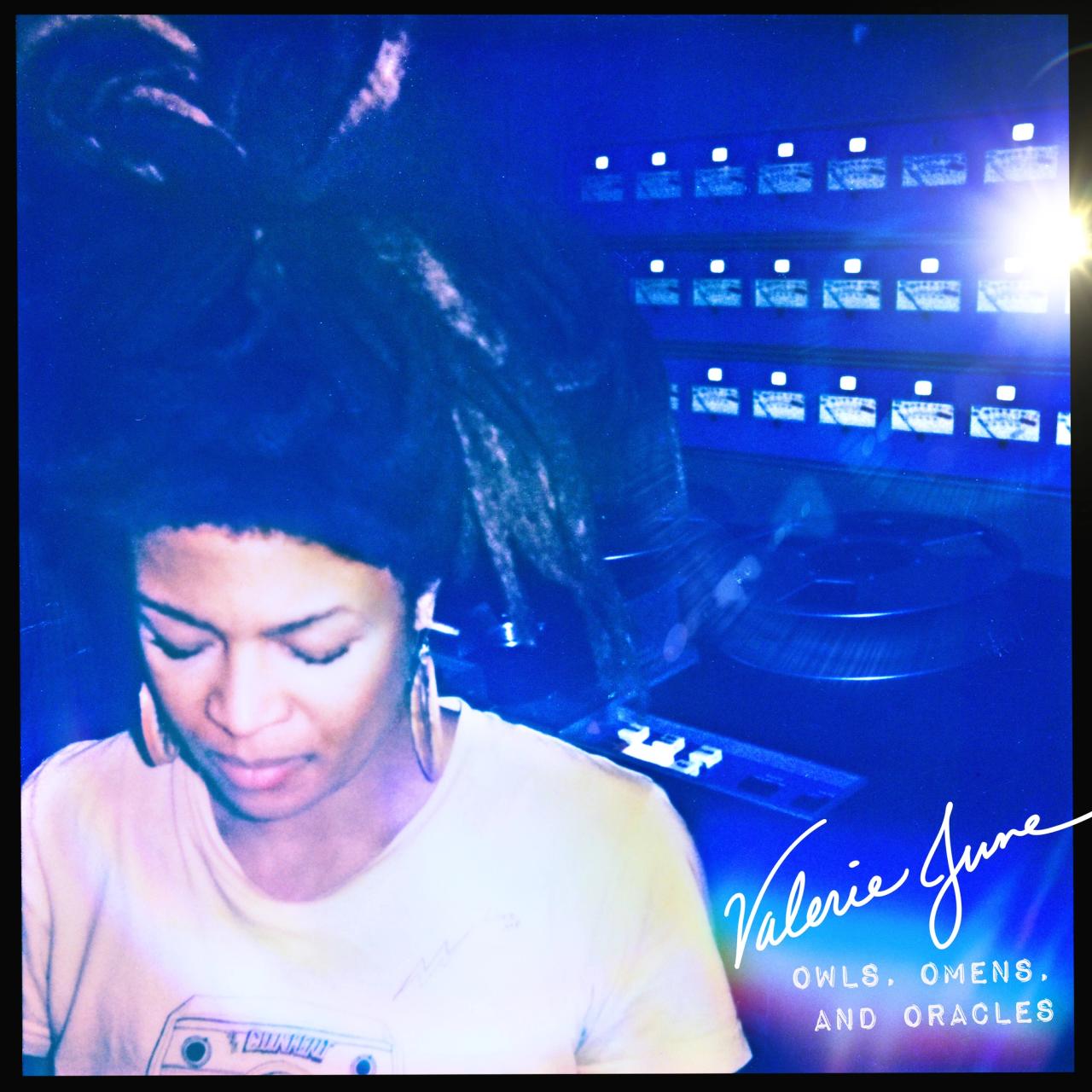
Cover of June's Owls, Omens, and Oracles (2025).
VJ: Oh, believe me, it was scheduled properly. [Laughter] Joy don’t come easy. I don’t wake up joyful. I work for my joy. Knowing that I’m going to have to do all these practices to get to a place of joy, I’m like, “Okay.” We can’t just wake up and expect to just be joyful. No, not when we live in this dark world. Like an instrument must be tuned before you start playing the song, we have to tune ourselves every day on repeat. It’s not like you just wake up one day and you tuned for life. Now that would be enlightenment. Good for those people. I haven’t gotten there yet. [Laughter] So every day, tuning, tuning, tuning, tuning, and I think that that’s like the way for me, and it might be the way for some other people, but everyone has got their own way.
You start to sit with yourself and figure out what is that way for you to reach that place by the end of the day when you close your eyes, where you will have spent that entire day moving in the direction of beauty, joy, positivity, something radiant, even though you might be dark as fuck when you close your eyes that night, you at least tried. I wrote down today in my journal because we’re in a new year and I’m like, “What are my goals?” One: Die trying. Why not? Every dreamer I’ve known who really dreamed the dream, most of them haven’t made it. Dr. King didn’t make it. My father didn’t make it. My best friend who had the coffee shop didn’t make it. They made it, but they didn’t make it. You know what I mean? Like in their lifetime. Dreams last beyond you. They last beyond your lifetime. The work that you do in a day for positivity, for joy, it’s not necessarily for your ass, it’s for the people who are coming after you.
SB: That’s a good tombstone: “Died trying.”
VJ: [Laughs] The next thing I was going to call a record one day, Punished for Trying, because sometimes when you wake up and you try, you feel like you’re getting punished for trying.
SB: The first track on this new album, “Joy, Joy!,” really gets at this feeling. It’s funny, you’re talking about waking up like ugh, but you hear this song and it is just oozing joy.
“Especially in the dark times, that’s when I’m really in the lab. I’m working on it heavily during these times every day and trying to call people into my sphere who keep me uplifted.”
VJ: [Laughs] That must have been recorded at the end of the day. For sure, it definitely is something that I’m working on. I’m practicing. I’m trying to examine, especially in the dark times. That’s when I’m really in the lab. I’m working on it heavily during these times every day and trying to call people into my sphere who keep me uplifted, because you have to surround yourself with things that are going to keep you visualizing and in action toward the things you want to see. I want to see more harmony. I want to see there be some peace in Minneapolis and in the world. I look at our nation and I’m like, “Whoa, what we can be.” How cool if we were able to expand what’s here versus feeling like closing it down, that there’s not enough, that we need to push out and shut down. No. What is expansion in a more beautiful way versus feeling threatened look like? These are questions I’m sitting with. I’m just like, “Why is our mode to push away and to close and to feel like we don’t have enough for everyone to enjoy a beautiful life?” I think there’s enough for all beings that are here to live a gorgeous, beautiful life. I really do.
SB: There’s something you said in a TED Talk you gave that I wanted to quote here: “Our feelings are superpower. It’s a treasure to be human.” Which reminds me of probably my favorite Rilke quote of all time, which is, “Let everything happen to you: beauty and terror. Just keep going. No feeling is final.”
VJ: I was thinking about that book, Rilke, today, and how I never could get through it. [Laughter] I don’t know what happened. I was going through all the books and [Julia Cameron’s] The Artist’s Way, different ones. I got to them and I was like, “Why have I never been able to?” I picked it up several times in my life. But I love that quote. I’m thinking, “Well, I don’t know. Some books just... They reject you. They say, ’Oh, okay. Not for you.’”
SB: Next time.
VJ: Yeah. Next time.
SB: Valerie, this has been a joy. Thank you.
VJ: Thank you. I appreciate it. Thanks, Spencer. [Plays “Joy, Joy!”]
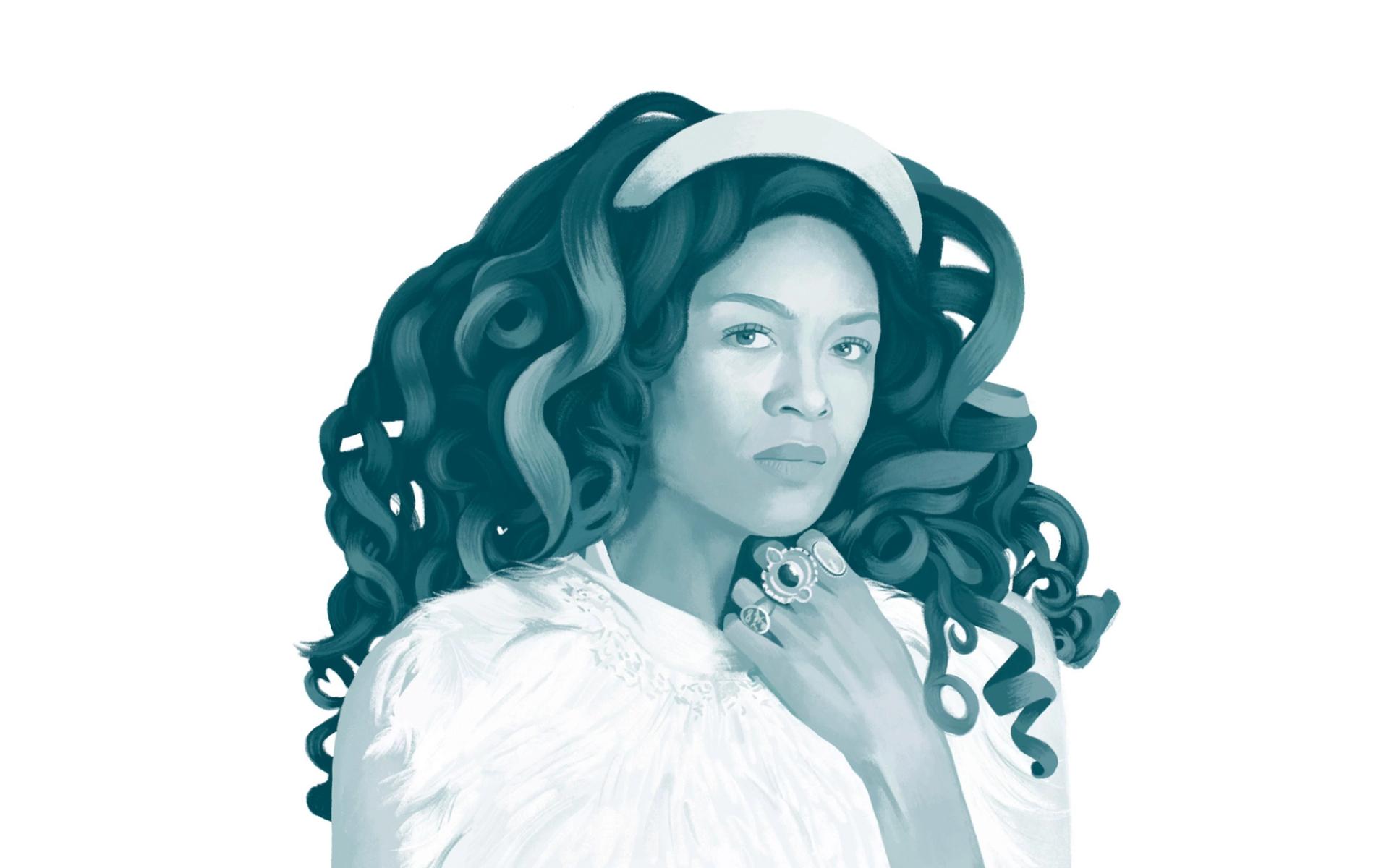
This interview was recorded in The Slowdown’s New York City studio on January 26, 2026. The transcript has been slightly condensed and edited for clarity. The episode was produced by Olivia Aylmer, Ramon Broza, Mimi Hannon, Sam Platt, and Johnny Simon. Illustration by Paola Wiciak based on a photograph by Brights.