Follow us on Instagram (@slowdown.media) and subscribe to our weekly newsletter to receive behind-the-scenes updates and carefully curated musings.
TRANSCRIPT
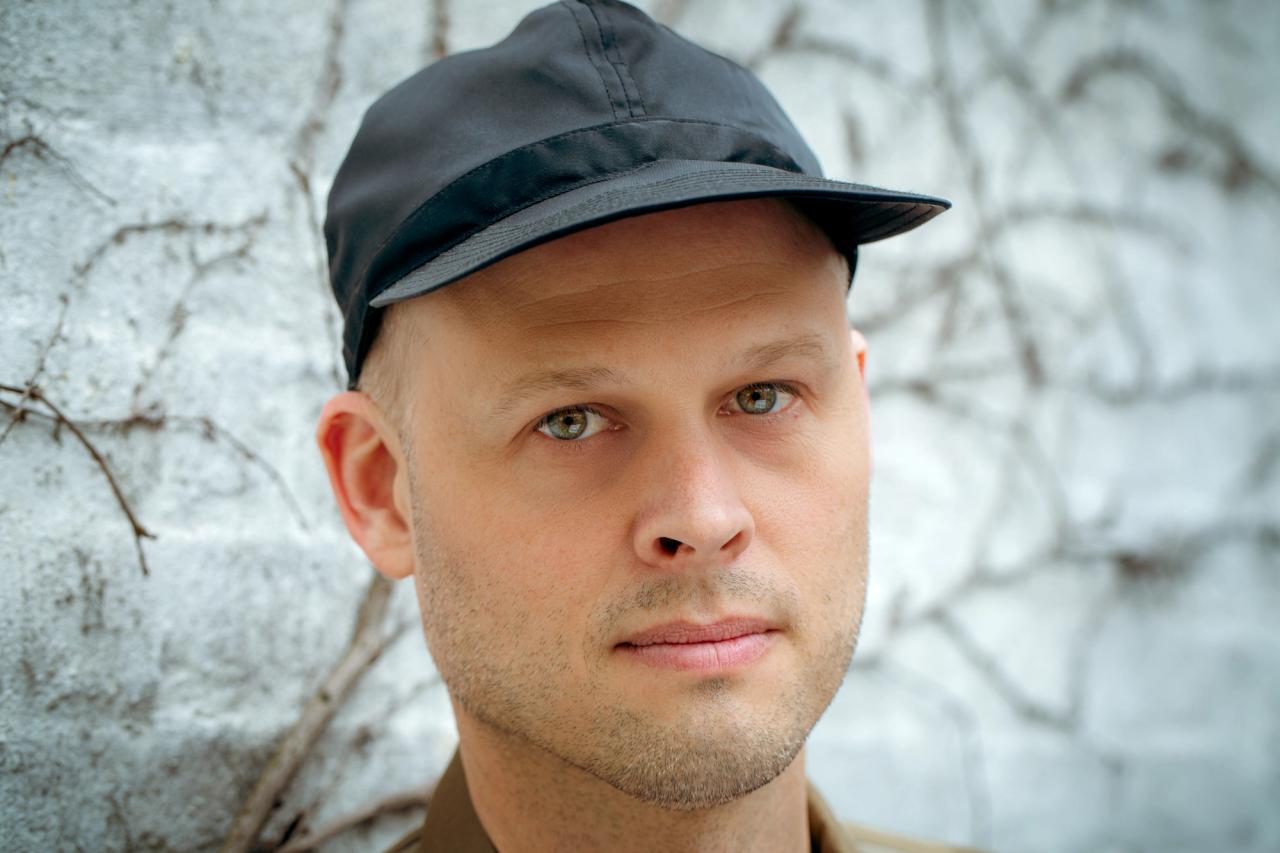
Devon Turnbull in 2023. (Photo: Jonathan Mannion/Copyright Devon Turnbull (OJAS)/Courtesy Lisson Gallery)
SPENCER BAILEY: Hey, Devon. Welcome to Time Sensitive.
DEVON TURNBULL: Thank you so much for having me. I’m excited to be here.
SB: Just to start—and I don’t want to get all woo-woo at the front, but—I would say that what you do with speakers, and really as an artist and sound practitioner, I guess we could say, verges on the spiritual. Stereophile recently described you as “more spiritual guide than brazen salesmen.” [Laughs] Do you agree with that? How do you view the spiritual realm in the work that you do?
DT: I did like that quote in Stereophile mainly because I really reject the brazen salesmen. I don’t have to try hard not to do that. But I never started an audio brand or really started making any kind of audio works to sell. I make the work because I enjoy making it.
The spiritual-guide side of it, I understand why that comes up all the time, but I also kind of try to dodge that one often. I was aware that I was creating that landscape as I was doing it. But the reason I say that I try to sidestep that title is because there are also a lot of people who just read too deep into it.
“Music does this really real thing. It makes us feel things. It has a powerful ability to alter our sense of emotion, of comfort, of reality. It can inspire in so many ways.”
I grew up in—you could describe it a lot of different ways: in a spiritual community, in a cult, call it what you will—but I very much grew up in the TM [transcendental meditation] community and lived in a remote town in Iowa where the K–12 school and the university and the whole town was very much a part of this community. I know that that’s a huge part of the fabric of who I am, but I have had to do a lot of work as a young adult, and now. Especially, there was a time in my twenties where I had to rewrite my spiritual identity, and anyone who knows me well knows that, like, my sort of personal goal is to just cleanse myself of all superstition and spiritual nonsense.
SB: Yeah. It’s not make-believe what you’re doing.
DT: Exactly. The thing for me is that music does this really real thing. It makes us feel things. It has a powerful ability to alter our sense of emotion, of comfort, of reality. It can inspire in so many ways. So there’s nothing superstitious about it. There’s nothing make-believe about it. But, as this thing has grown, there are people who put a bit too much. What I’m trying to say is that I want to, at all costs, avoid the guru complex. And it’s a thing that does happen in audio.
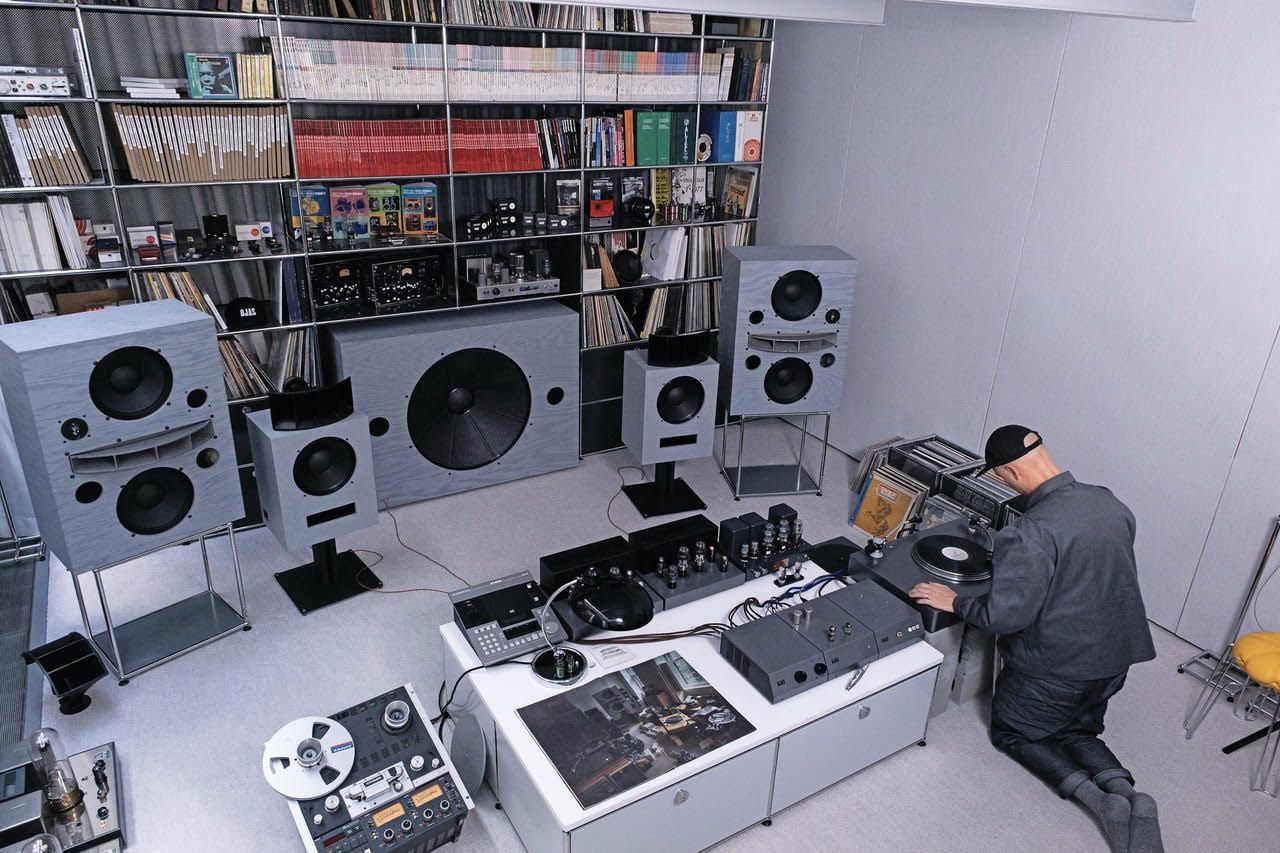
Turnbull playing a record on one of the sound systems he built for his company Ojas. (Courtesy Devon Turnbull)
SB: I’d say it happens in anything, right?
DT: In anything, exactly. Since I kind of wrote that script in a way, because it’s very true, I also try to, as much as possible, I don’t know. I can’t solve anything I can’t solve. I don’t know the answers to any questions that I don’t know the answers to. So, yeah, I liked that Stereophile quote, but with a slight reservation.
SB: You’ve previously described musicians like shamans, and I think, in that sense, what’s interesting in the context of the work you do is like... And I should say here, for those who haven’t experienced your speakers, and I say experienced because it is as much, I think, listening as it is feeling and being present in a room. I think what’s most profound about them is the presence that’s created out of them. Rooms come alive, tonally, when you’re in the presence of your speakers. It’s almost like the musicians are playing for you in the room. I guess that’s a way of saying spirituality—or it’s like metaphysics. There’s a metaphysical element here.
“I just want to create an environment and a system that is going to create as close of a connection to the sort of emotional content in the music as possible.”
DT: Yeah. There’s a twenty-five-or-so-year evolution of: How do I want to listen to music? For me, it’s all about this emotional conduit with the music. The players are the real magicians, and I just want to create an environment and a system that is going to create as close of a connection to the sort of emotional content in the music as possible. A lot of it is just following my heart and my ears and everything else.
It’s hard to pinpoint what it is about the way I do these presentations. I really did not think that people would respond to it in such a powerful way. It’s really hard to say what it is that makes people just sit down and listen and kind of go into a zone. I can tell that people go into a zone, they’re experiencing emotions, but they also just put down their phones, stop talking, and listen. And that is really difficult to do. I don’t say that because I’ve had a difficult time doing it. It’s not that it was even my goal, and I tried through a system of process and elimination to figure out how to make people do that. But the first time I set up one of these presentations in completion, which was the 2022 show at Lisson Gallery in Chelsea— Unlike most people who would be showing in a gallery at that level, I didn’t have like—
SB: You weren’t framed as an artist at that point, right?
DT: Yeah. I didn’t have decades of showing this kind of work to lean on. Basically, Alex Logsdail [the CEO of Lisson] invited me to participate in a group show where I had my own space that they were willing to build out for me and do acoustics and everything else. I didn’t know if people would like it, first of all. I really didn’t know if people would just sit and listen. I sort of expected that people would view it much like they view another artwork or maybe a video-art piece. Most people don’t really watch video art in its entirety, right? You walk, you look at a bunch of paintings, a sculpture, “Oh no, there’s this video art thing” and you get an impression of it similarly to the way you’d get an impression of a painting or something like that.
But the fact that people immediately just planted themselves and didn’t want to leave. When it gets very busy, unfortunately, we have to make people cycle through or people will just stay there all day, basically. Immediately, I realized, “Okay, there’s something unique about this.” Because I’ve been in and around the audio industry enough to know that this is kind of an unattainable goal in the audio industry. When you go to hi-fi showrooms, stores, or these audio fairs that happen—or just any kind of presentation—it’s really hard to get people to tune in.
SB: Yeah. The closest analog is probably the listening bars in Japan.
DT: Yeah, that’s true. That’s always been like a reference for me, but not like a primary reference. My practice is so rooted in Japanese audio culture, and the jazz kissa thing has become so widely known in the last like five, six, seven years, that people kind of assume that I’m like an expert on the jazz kissa.
Sure, I go to those places, but they’re not where the apex audio culture is. That’s more in the D.I.Y. world and the high-end audio world there. There are festivals and gatherings where all these craftsmen, builders, engineers get together and share their work and they happen around the world. There are a few things like that in the U.S., but not really anymore. There have been in the past. In Europe, there are a couple big ones that I go to as much as I can, and in Japan there are quite a lot—and I’m sure many in other parts of Asia. But they’re very different than an audio fair, where manufacturers are showing off the latest gear and trying to sell stuff. There’s very little sales happening, if at all, at these kinds of gatherings.
That’s where I get super inspired. This is audio culture. This is where people who are doing the work come together and exchange ideas and argue with each other and sell weird, rare vintage components. Things like what we call “Hamfests” in America, where like ham radio people get together and there are tube dealers and stuff like that. That’s way more interesting to me than like CES or something like that.
SB: Yeah, exactly. It doesn’t feel like a trade show. It’s closer, maybe, to a craft fair or something. I did want to ask here about the craft element of what you do, because these amps are really artworks. They’re built by special craftspeople, often using these, like, time-honored traditions. What do you think the handmade element does to the sound? Because it’s inherently handmade, what you do. This stuff can’t be mass-manufactured.
“Even a very smart person can’t even build a functioning tube amplifier, point-to-point wired, unless they’ve put some work in, unless they’ve done some studying.”
DT: That’s correct. Yeah. So the hand-built audio amplifier is absolutely the highest form of the craft, I would say. Pretty much anyone can make at least a bad speaker. It’s not that hard to build a box and put drivers in it, especially now that we have digital signal processors built into amplifiers and stuff like that. You could pretty much take a bad speaker and make it sound decent with signal processing, but even a very smart person can’t even build a functioning tube amplifier, point-to-point wired, unless they’ve put some work in, unless they’ve done some studying.
A printed circuit board has its place in these things, as well. I’m learning that I can solve a lot of my problems with printed circuit boards. But really the true craft of it is the point-to-point wired tube amplifier. Or not necessarily a tube amplifier, but a point-to-point wired audio amplifier… Particularly, most iconically, there’s something called a single-ended triode amplifier. It uses the oldest type of amplification device, the triode tube, and it uses it in its simplest, purest way. It is something that is very Japanese in its... The Japanese audio hi-fi culture did not invent this type of amplifier. It’s something that Bell Labs and Western Electric, RCA engineers were using back in the thirties, but it was superseded by more powerful and efficient amplifier types. It’s hard to go on record and talk about dates and stuff like that because—
SB: This stuff just isn’t documented.
DT: Especially in English. I learn what I can, and I’m constantly a student of this stuff. There was particularly one guy named Isamu Asano, who I think in the sixties or seventies, started building these single-ended amplifiers, single-ended triode amplifiers and publishing the circuits in a magazine called MJ. MJ is, I think, the most important audio journal ever. It’s a hundred and two years old this year.
SB: You’re now writing for it?
DT: I’m a regular contributor, every issue now. So, Asano wrote the bible on the single-ended triode amplifier, and it’s very Japanese in its aesthetic, because it doesn’t make any attempt to correct for errors. It uses so few components that the quality of those components is paramount. If the amp doesn’t sound good, instead of trying to fix it with correction circuits or introducing feedback and things like that to eliminate distortion, it kind of leans into that as the feeling of the amp. So, imperfections are just part of the character of the amp, which is, to most traditional audiophiles, particularly in the West, that’s just heresy. That’s like, no, you just disqualified yourself. You can’t say that you “like” imperfection, but the Japanese—
SB: It’s like wabi-sabi.
DT: It’s absolutely wabi-sabi. Yeah. Kanso, shibui, wabi-sabi, all these principles of aesthetics in Japan are applied to audio going back fifty-plus years. To me, they’re a folk-art craft on par with bonsai or—
SB: The mingei movement.
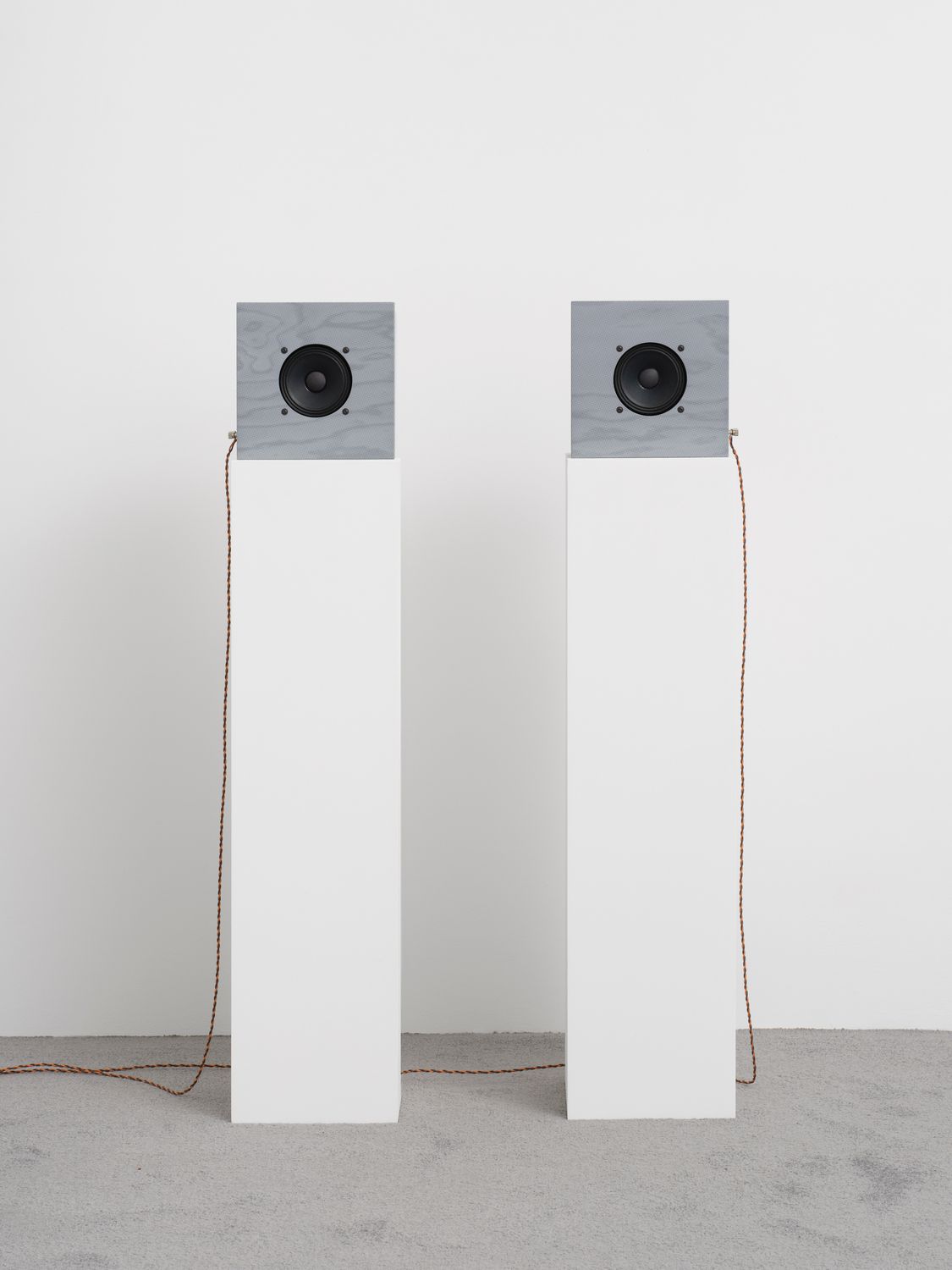
Turnbull’s “Klipsch 2.1 Prototype” (2023), an edition of three speaker cabinets shown as part of “HiFi Listening Room Dream No. 1 and Other Works” at Lisson Gallery in London in August 2023. (Copyright Devon Turnbull/Courtesy Lisson Gallery)
DT: Yeah, absolutely. Exactly. Theaster [Gates] and I talk about this. I try to learn about the ceramics movements from him and then kind of kick back my perspective on audio crafts from similar perspectives and stuff like that. So, yeah, absolutely. I see it as a really important Japanese craft culture, but I don’t think it’s really recognized that way yet.
This is something that surprises a lot of people, is that there’s been this huge explosion of interest in, I would say, custom sound systems in the last four or five years in the West. There are—I don’t even know how many—new brands making horn speakers or custom boutique speakers and stuff like that. While in Japan, where I have been getting inspiration for this stuff for over two decades, it’s virtually dead. It sort of peaked in the early nineties, and by now, that generation of Japanese that were really obsessed with audio, where audio was a very prevalent culture in Japan, they’re aging out of it entirely.
Every few months, it’s just another… The iconic brands that make up that scene are just disappearing one by one. The probably most beautiful publication, called Tube Kingdom, which is a division of Stereo Sound. It’s like a periodical division of Stereo Sound, where they just do the most incredible job of photographing, listening [to], documenting, vintage audio gear mostly, and this boutique audio gear. Their final issue was printed a couple months ago, so the magazine is over, unfortunately.
Tamura Transformer Company, which was the biggest audio transformer company in Japan, just discontinued all audio transformers. MJ went from being monthly to quarterly for the first time since postwar, basically. The great masters are dying off without disciples. Obviously, I think that I’ve done a lot in the West to create a cultural shift toward more interest in this kind of stuff but, in Japan, still, there are not a lot of young people participating in it. So, that’s really one of my main goals right now—because I’m investing a lot in doing more stuff in Japan—is just to inspire people… And there are a slowly increasing number of young people that are getting into it. But it’s tough, too, because there’s not a lot of money in this. Pretty much all these great masters, it was never their job. Isamu Asano was a banker. Professor [Shozo] Kinoshita, he’s like a university professor. A lot of these guys are physicists or electrical engineers, but no one says, “Oh, I’m going to make a living making handmade tube amps that take me two months each to build.”
You spend so much time on these things and they max out at what I think is way too low of a price, and anything that’s built commercially is much more expensive. The same is true of making speakers. It’s very hard to make money making handmade audio products. I think it’s going to be interesting to see how all this stuff shakes out. I know that people are coming at this now to make money, and I think most of it is going to shake out in the next few years, because I just know from experience, it’s a very, very hard way to make money.
SB: Yeah. You’ve stayed intentionally small and focused for that reason.
DT: For at least fifteen years, I was operating Ojas as an entity and doing commissions and never made any money. It was never my full-time job until just a few years ago. Even in that time, it’s not something that someone would look at, an investor, and be like, “That’s a great business.”
SB: Yeah. Well, I wanted to ask you about Ojas, because the evolution is super interesting for those who don’t know that the name translates roughly into Sanskrit as “life vitality.” It goes back to the nineties. You were using this moniker in your early days, deejaying, as a graffiti artist. You’ve been using it for a long time, and appropriately, I would say, it has organically evolved from the graffiti and the streetwear into hi-fi audio.
DT: Yeah. I just used to write it. I’d write it on the street, make myself T-shirts. It was just my creative pseudonym, my nom de plume, I guess, for a long time, going back to high school. I had studied audio engineering and just kind of thought that my career would be in recording, because that’s what I really studied. I never studied design, art. Everything that I do that’s visual is just self-taught.
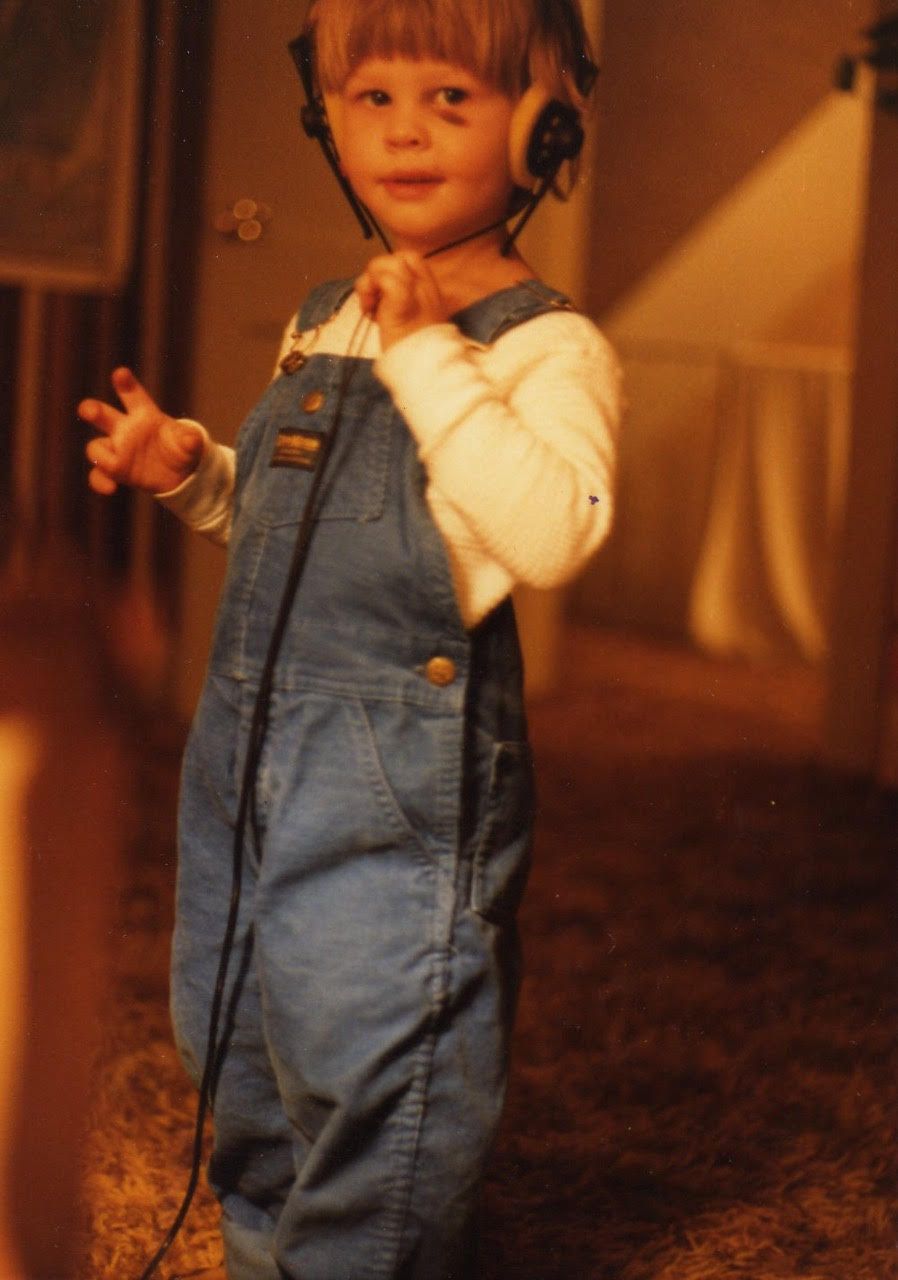
Turnbull listening to music as a child. (Courtesy Devon Turnbull)
When I was young, of course, I thought, you have to go to school and learn how to do something, and that’s what I’m qualified to do is audio engineering, and that’ll be my career. So I was really surprised when, for my first decade as a working person, I was designing clothing and graphics and art directing and creative directing and stuff like that, because I didn’t go to art school.
I started a brand with three other partners and a bunch of other important contributors in 2003, a menswear brand [called Nom de Guerre]. We started trying to make clothes in New York. It’s so hard. None of us were trained clothing designers. It’s very hard to make clothes in small quantities at high quality in New York. I had been to Tokyo a few times and I was like, “There’s a lot of small brands making really good stuff over there. I should just go there and see if I can find production, clothing production there”—and I did.
So our development and production studio was in Tokyo. I was spending a lot of time in Tokyo. I stopped deejaying, recording music, anything like that, and listening became a really important part of—it’s always been an important part of my life, but given that I sort of left my identity as a music-maker in the past, I channeled that energy into music listening. And, yeah, just all this stuff about wanting to have a close connection to music.
I was also obsessively reading this underground audio magazine that was published in the nineties here in New York called Sound Practices. Actually, let me take that back, because it wasn’t from here in New York. A lot of the writers were here in New York, Herb Reichert, who’s sort of a mentor and hero of mine. JC Morrison, who’s another one of my friends and mentors now.
SB: Yeah. Herb was the one who talked about the idea of a shrine, right?
DT: Yeah.
SB: Making a shrine to music.
DT: Yeah. Herb’s way of listening really made an impression on me. I wanted this to be a practice. I wanted this to be a part of my life. Listening to music is something that I wanted to take much more seriously than just buying a bunch of boxes, hooking them up, and sitting there listening. Not that there’s anything wrong with that, but I guess I’m just a very... I love making stuff. Maybe sort of like hot-rod culture in the fifties or something like that. I was like, “I’m not just going to go buy a Chevy and just drive the stock Chevy. I’ve got to bore the cylinders. I’ve got to drop the engine. I’ve got to get into this thing and make this thing mine.” It’s a little bit like Han Solo and the Millennium Falcon, right? It’s like, “Only I know how to use this thing.”

A view of Turnbull’s 1993 Mercedes Gelandewagen (a.k.a. G Wagen), which he converted almost entirely by hand into to a one-of-a-kind, self-contained camper. (Courtesy Devon Turnbull)
SB: [Laughs] Yeah. You’ve likened your systems to a mechanical car and you have this incredible G-Wagen, which maybe we’ll talk about. But it makes me think of that book Zen and the Art of Motorcycle Maintenance, which I know a lot of people don’t like for various reasons, but it still is an interesting analogy. This idea of craft as a means toward, I don’t know, deeper meaning, a form of Zen almost.
DT: Yeah. Also, when the audio system is a little bit of a puzzle that you can never finish putting together—
SB: It can either be super frustrating for some, but like—
DT: Super engaging, too.
SB: Other people love that.
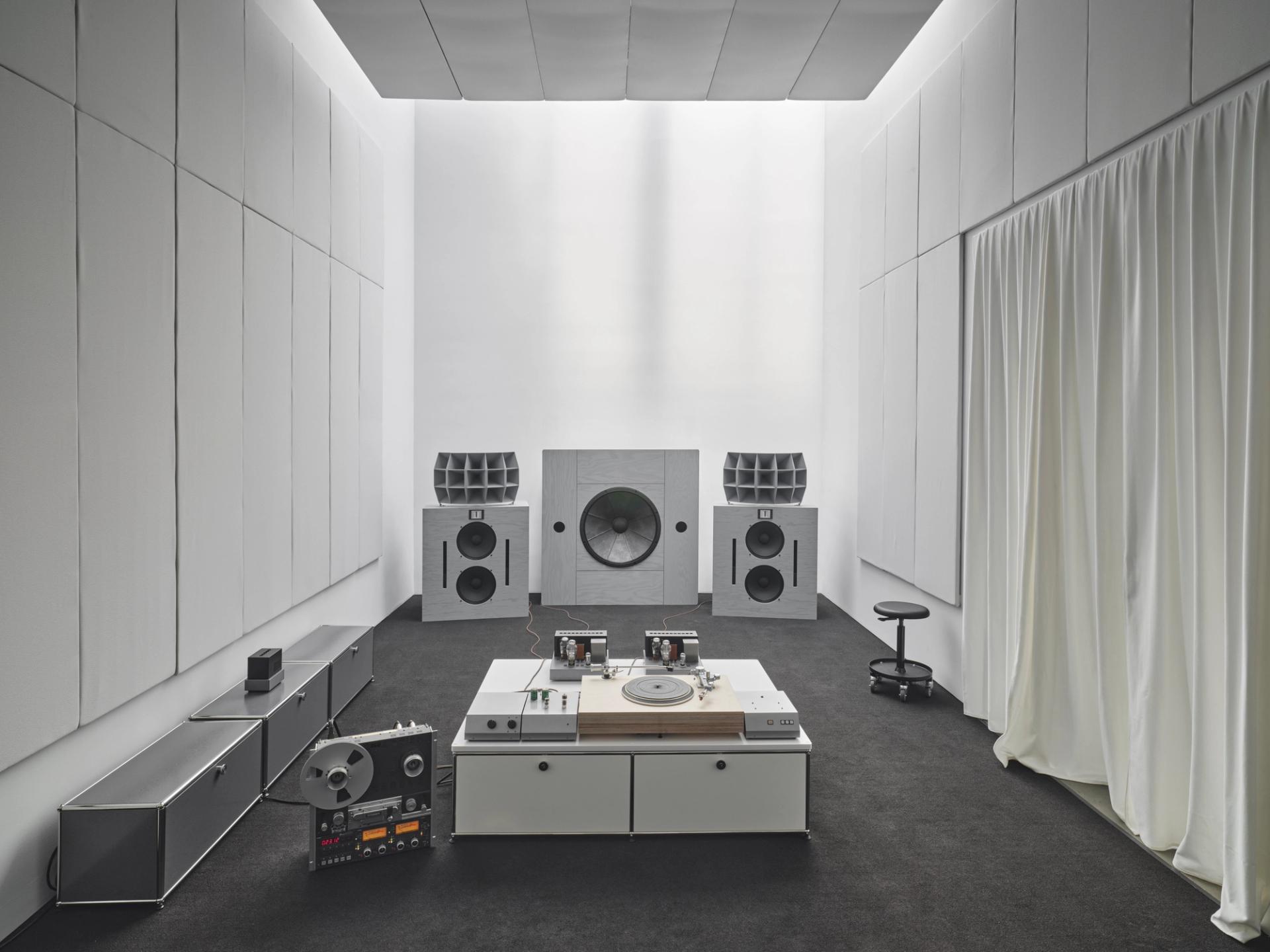
Installation view of Turnbull’s “HiFi Pursuit Listening Room Dream No. 1,” shown as part of “The Odds are Good, the Goods are Odd,” an exhibition at Lisson Gallery in New York in August 2022. (Copyright Ojas/Courtesy Lisson Gallery)
DT: Yeah. And I want to re-listen to all my favorite records when I make some kind of breakthrough. I’m like, “Oh my God, this thing now, wow, it sounds so much better.” Whatever that piece of gear is. And it’s like, “Oh, I wonder what all these records are going to sound like now.”
SB: I just remember being in your living room a few years ago listening to … I don’t remember what it was, Nils Frahm or something, but it was something that I wanted to hear on your system, because I knew it was just going to sound unlike anything I’d ever heard before.
DT: Yeah. So, back to your question about Ojas, about that identity. Basically, when I started building all my own gear, I had put together a turntable, built a tube phono stage, power amp, and my first set of speakers. I just wanted to sign it, but also, aesthetically… Originally I liked the idea that I wanted this stuff to kind of look manufactured. This was in the early iPhone, iPod era, where things were looking really polished, and I wanted my stuff to look really polished, and I thought it was kind of funny to put my logo on it. So, given that I obviously had been a graphic designer for a really long time and this is during Nom de Guerre, so we’re making—I have a screen printer that I still work with.
SB: Nom de Guerre is the name of the fashion brand.
DT: Yeah. Nom de Guerre was the name of the brand. I have this close friend, an amazing screen printer out of Grand Rapids, Michigan, who I just happened to make my first run of T-shirts with. He made a bunch of T-shirts for the Cooper Hewitt show [“Art of Noise”]. I was like, “Tom, could you screen-print all these amp chassis that I’m building?” And he was like, “Yeah, send them out here.” So I immediately was like, “Yeah, cool. I’m going to apply graphics to these things.” I thought it was kind of funny that I was making it look sort of branded, or the brand that really didn’t exist because for... This is in the early 2000s, probably like 2005-ish that these things were... I was starting to put my brand on them, but no one cared.
Again, I wasn’t like, “Oh, I’m going to make a living doing this. This is going to be my career.” But of course, I was very proud of the work I was doing. So I would tell friends about it like, “Oh man, I just built this tube phono pre-amp and it’s so cool. You got to come hear it.” And honestly, very few people wanted to listen to me, especially because most of my friends were in the art, design, and fashion world. I don’t know, they just thought of it as some kind of weird, nerdy hobby that I had, I guess. And it took twenty years for the right people to become interested in it, to start to give it a platform where it got recognized as being something other than just what I was doing in my basement.
SB: It’d be interesting here to hear a little bit about Ojas’s beginnings, which are connected to Alex Calderwood, the late founder of Ace Hotels, who—I think he was your first commission?
DT: Yeah. Alex was the best, man. That guy was just such a legend. He was one of the few, most powerful enablers of great creative work. I can think of a handful of people who have that level of—
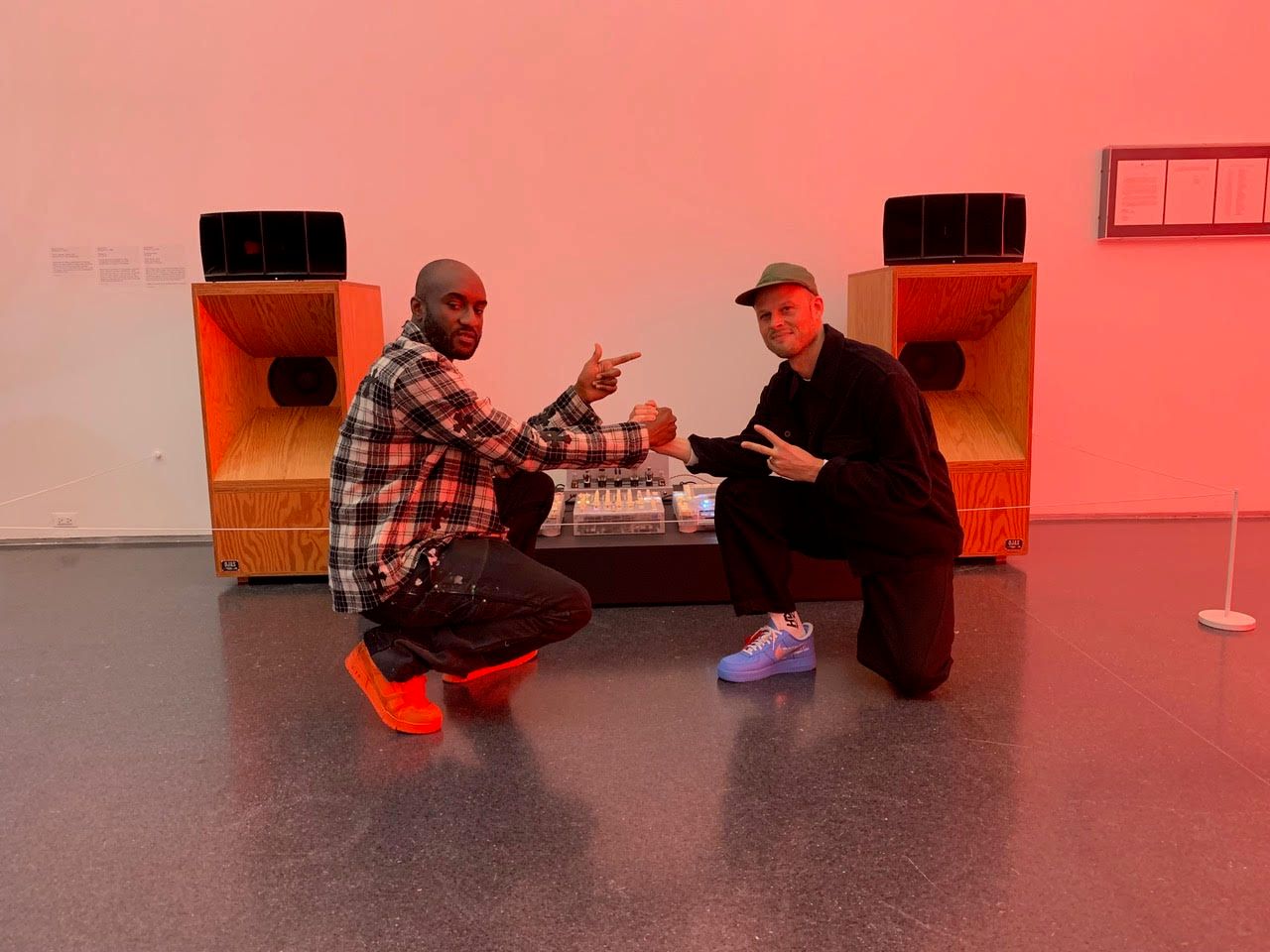
Turnbull with his friend the late fashion designer Virgil Abloh. (Courtesy Devon Turnbull)
SB: You were connected to two of them, him and Virgil [Abloh].
DT: I’ve been very lucky to be connected to a bunch of them. The people who are geniuses. Virgil was obviously a creative, but people like... I don’t know, do I want to go onto a listing thing?
SB: [Laughs] You don’t have to name-drop, but I—
DT: People like Sarah [Andelman] from Collette, or Alex Calderwood, or Virgil.
SB: The Supreme Team. What they’ve built.
DT: Absolutely. I was going to say James [Jebbia]. These are people who—they’ve created these incredible bodies of work by enabling other creatives to make things within their bodies of work and give them a platform. Alex, I met when I was... I moved to Seattle when I was 17. I dropped out of high school. I was really into snowboarding and deejaying and making music. I moved to Seattle because I wanted to snowboard, but I didn’t want to live in a tiny mountain town or a resort town. I wanted to live in a city. I had made a lot of friends in the snowboarding community there. That was initially what brought me there, was the snowboarding community. And I was like, “This is a great city where I can make an identity for myself as a D.J. and person in the music world, but also snowboard all the time.” I didn’t really know which one would be the dominating force in my life at that time, but those two things I was super passionate about—and still am.
I moved there and Alex lived a block away from me. I met Alex when I was like 17, 18 years old, so this would have been in 1997 or ’98. Alex was doing all the coolest stuff in Seattle. The Ace opened the first tiny, little—I would call it a hostel, the first Ace, in Seattle. He had this chain of barbershops that still exists, Rudy’s Barbershop. But at the time, more importantly, he had this incredible nightclub and production company and a bunch of little super amazing dive bars and ran club nights and restaurants and little bars. He was just the cultural mayor of Seattle. He put me on from a really early age, gave me opportunities to play music and all of his parties and clubs and everything. So, I was quite busy. When I was too young to get into these places, my “in” was that I just had to get in and set up all my D.J. stuff and then play music all night. It was a super cool way of kind of getting jumped into a big creative community in a great-size city.
That was my school, you know what I mean? That was my cultural and creative school. That was my freshman class, I guess. I lived in Seattle for about three years, and then moved to New York, where my family was, and this is where I was born. This has kind of always been home.
SB: Except, as you said, that hiatus in Iowa, but…
DT: Yeah. I moved to Iowa when I was 11 and then Seattle when I was 17, but this has always been like where my family’s from.
SB: You’re a New Yorker.
DT: Also, we always spent a couple—two, three months a year—out east in New York. My dad bought a house in Amagansett in ’82 or ’83. We spent every summer of my life out there. I was culturally connected to New York in a lot of ways. And got back here and Alex was just starting to really blow up beyond Seattle. When they started working on the Ace in New York, Alex had pretty much moved here and the Ace atelier was kind of… Ace moved to New York and we reconnected, basically. Initially, he was like, “Cool, maybe Nom de Guerre can design the uniforms for the Ace,” this and that. And I was like, “Listen, my real creative passion now is, like, making this audio equipment.” He was like, “All right, well, what can we do with that? Can you make something for the hotel?” So I built this big transcription broadcast-type turntable for the lobby at the Ace, and that was my first commissioned piece.
SB: It’s wild. And that lobby basically shifted lobby culture at hotels. I feel like you didn’t have the co-working, kind of “vibe lobby” until that lobby.
DT: True, true. Yeah.
SB: Wild.
DT: Yeah. It’s very sad when we lose those people, not just because we love them, but also just because they just throw fuel on the creative fire of the world.
SB: Yeah. You could have the best makers, but if you don’t have those catalysts...
DT: Yeah.
SB: We also skipped over the fact that music was practically in your DNA from birth. I know your dad had speakers in the house and stuff, but you also were studying keyboard, right? Piano?
DT: Yeah. I took piano lessons from a really early age. I had a music teacher in that community in Iowa that was a really important person for me. We had a chapel on campus, which they eventually tore down, because it was not in line with the Vedic architecture principles. Which I thought was quite sad. It was a beautiful old chapel that had a pipe organ in it. I could go in there during my lunch break at school and walk into the chapel.
SB: So you’re just ripping on the pipe organ?
DT: Yeah. I used to be able to play Bach’s Toccata [and Fugue] in D minor by memory, and I would just go in there at lunchtime. There’d be a couple stoner high-school kids hiding kind of in the bleachers in the back, and I would go in there and I would fire up the pipe organ and jam. It was amazing.
I’ve seen a couple of publications miscredit me as being a classically trained pianist. I haven’t played a keyboard in years and every once in a while I’m like, “Oh, I know how to do this,” and I do not know how to do it anymore. But definitely by the time I was 10, I had like a synthesizer and like an old Hafler power amp and some old component speakers that …
Wiring up sound systems is something that I never didn’t do. I always had a component system, like a power amp, some kind of mixer or a pre-amp. Obviously, I later got into deejaying and I was always the kid that would set up the system and had turntables and stuff like that. So yeah, to me, especially with younger people these days, it’s apparent when someone doesn’t know how to wire up a basic sound system. I just have to remind myself people don’t really know how to even just do this anymore, often. It’s just very intuitive for me how signal flows in an audio system. Then, of course, going and studying in studios and learning recording and how to operate a music studio took that to a much farther level, but I’ve just had audio equipment around me forever.
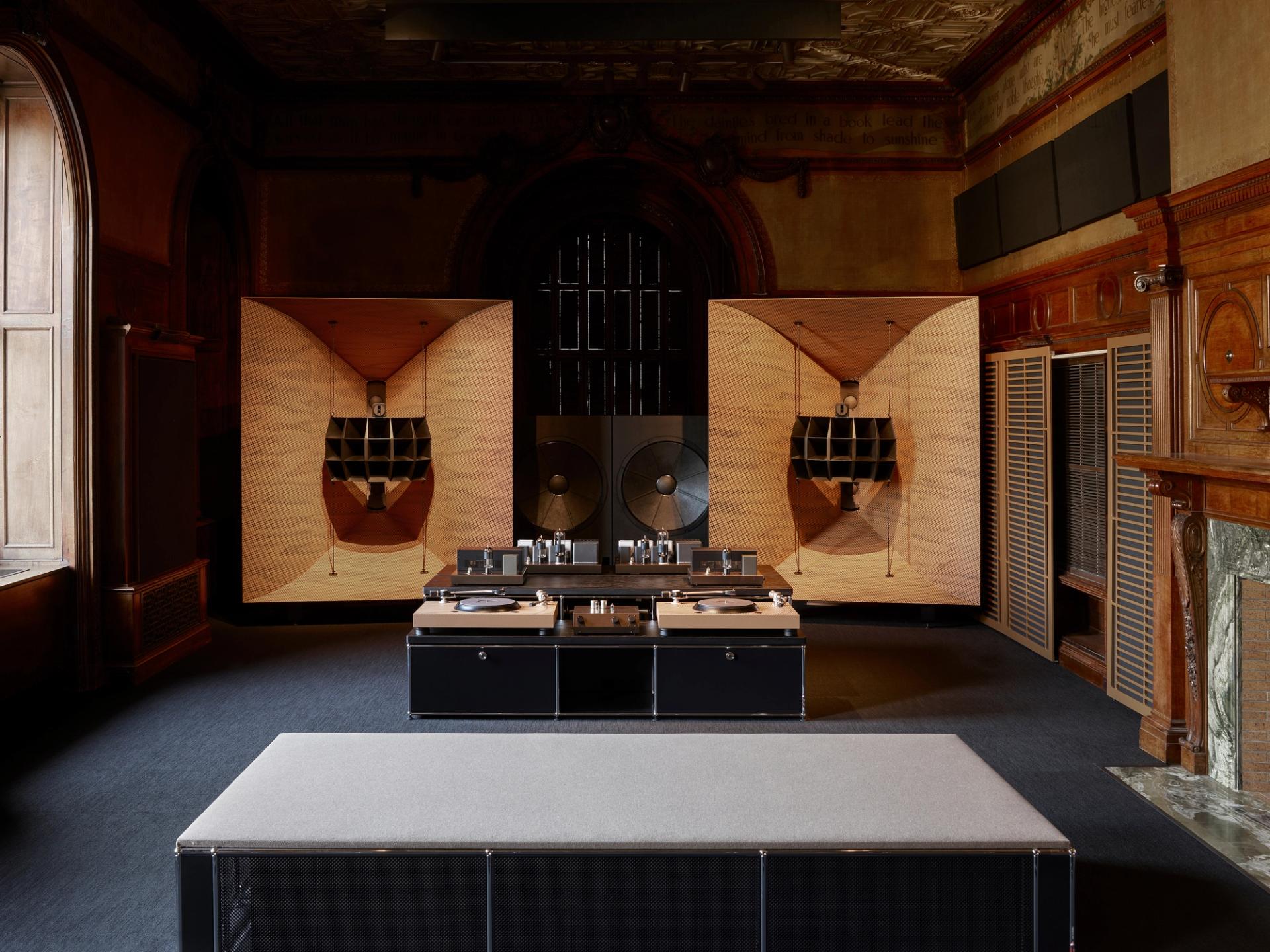
Installation view of Devon Turnbull’s “HiFi Pursuit Listening Room Dream No. 3,” shown as part of “Art of Noise,” an exhibition at the Cooper Hewitt, Smithsonian Design Museum. (Photo: Mark Waldhauser/Courtesy Devon Turnbull and Lisson Gallery)
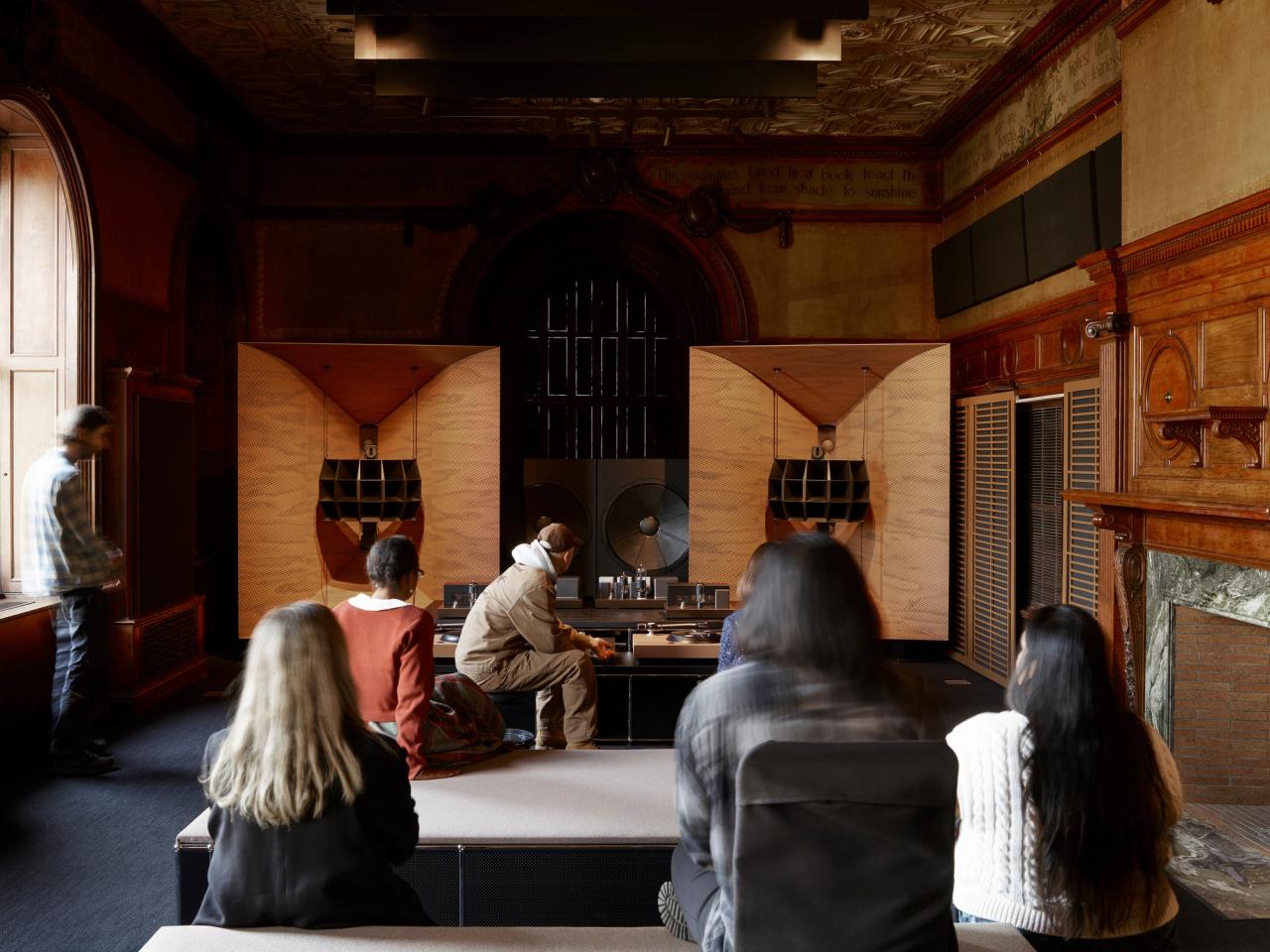
Turnbull (center) with visitors at his “HiFi Pursuit Listening Room Dream No. 3,” shown as part of “Art of Noise,” an exhibition at the Cooper Hewitt, Smithsonian Design Museum. (Photo: Mark Waldhauser/Courtesy Devon Turnbull and Lisson Gallery)
SB: Yeah. Well, it’s interesting you bring that up because I was thinking about that. How do you describe what you do to a lay person? How do you tell the non-audiophiles?
DT: I like that you did my intro for me, because often, when I get interviewed, people are like, “Okay, so just start with your name and what you do.” I’m just like, “Okay, you just asked me the hardest question.” And I just sit there for five minutes and try to figure out how to say it.
I’ve kind of landed on “artist and audio engineer,” although I think you could argue that I’m neither of those things, but I do those things. My mom has no idea what I... My mom’s always like... I think my mom listens to the podcast, so she’s going to be like, “I do so.” But she’s always just like, “Who’d have known? You’ve just been making speakers forever and now that’s what you do.” And it’s true. Who would have known that this thing would become that I’d be sitting here talking to you about it or anyone other than just like—
SB: Even when we met, I feel like it was at a totally different place than it is now.
DT: Yeah. How long ago would you say that it was?
SB: Five years, six years.
DT: Five, six years ago, yeah. Then if you go back ten years, it was at a really different place. I was making things for people. The Ace was, I think, about twenty years ago, now. I don’t know if it was 2008 or something when the Ace opened downtown. Maybe it was around then, anyway. [Editor’s note: The Ace New York opened in 2009.] So it was almost twenty years ago that I started making things for people. But like I said, if you ask me what I did at any point, that wouldn’t be the first thing I said, because I lost money on almost every job I got. I just do it because I love to do it.
SB: Well, in this course, things just occurred. The Lisson show happened and then all of a sudden you’re at SFMOMA and now you’re at the Cooper Hewitt. I think it’s fair to call you an artist, totally. What do you make of this transition into the listening room aspect of what you do and these installations and this project, also, a Sound House that you did with Karimoku that’s up in Tokyo?
DT: So, the listening room is just something that is fundamental to my practice, right? Even when I lived in a one-bedroom apartment with my partner and my wife, going back to the very beginning of this—we’ve been together that long—and we lived in a one-bedroom apartment on the Upper East Side when I started really building a lot. I had a workshop in a shared shop in Bushwick that I’d shoot out there after work. I worked for MTV at the time, as an art director. I’d finish work at six o’clock. I would shoot on the subway out to Bushwick. I’d work all night making whatever it is, amp chassis, speaker cabinet, whatever, and get home super late at night.
With what I had, I created a listening room in our living room back then. Especially because I had been exposed to all this stuff in Japan, the idea of a dedicated space was something that I very much wanted from the very beginning. But of course, it’s a big thing to want, but that was a big part of…A big part of building this was moving from Manhattan to Bed-Stuy, buying an old brownstone. There’s a chunk of my life that looks kind of like a creative hiatus. It was building my listening room at home. We renovated this house for like seven years and having this kind of listening-room studio was a big part of what drove me to do that.
I finished it and Casa Brutus did this issue. My friend Kun, Kunichi Nomura, put together this issue called “A Room with Sound.” I had a double-page spread of this listening room in it. That was, I think, kind of the beginning of people [saying], “Oh, this guy’s actually really making this listening room.” I would put pictures of aspects of being in, using, working in this space, and a small number of people were really excited about it. Then that’s just how I’ve always wanted to present my work. Anything else feels very compromised. You make stuff. Of course, I make a lot of stuff for people that just goes off into their hands and it goes somewhere and I can’t control how it’s used, what they connect it to, what they play through it. People all the time are like, “Oh, I went and heard this system of yours in Dubai and the tuning is off,” or something like that. And I’m like, “Look, don’t give me a hard time. Please don’t give me a hard time. I can’t be everywhere at the same time.” I don’t own these things often. They go out into the world and people use them in various ways. I don’t want to say that I can’t be accountable for the way everything gets used in practice, but I also don’t want to force people to use things in a certain way. It’s their journey at that point.
For me, to present something where I don’t control all the aspects of it, even when I make a system and a room, which is entirely a complete work—honestly, even when someone else is playing music on it, and that’s a valid part of that whole exercise—I’m not totally in control of it, and I have to relinquish that control and just let it do its own thing.
“The listening is the work, not the making really. The making is the process, but the listening is the important part.”
When Lisson invited me to show, and Alex had come over to my house—same way you did a long time ago, was in my listening room, I think—at least I like to think—I recognized that I was approaching this practice in very much the same way a lot of their artists approach their work, and my home listening room was very much like, I think of that as my studio. It’s where I’m A/B’ing different components and modifying things and listening. The listening is the work, not the making really. The making is the process, but the listening is the important part.
He invited me to... He first was like, “I have an idea, but I’m not quite ready to discuss it with you yet. I’ll get in touch with you.” I thought he just probably wanted to commission something. He was renovating a home. I was like, “That’d be cool. The guy has a lot of incredible art and so to sit in his home would be cool.” When he asked me to participate in this group show, I was super surprised and incredibly excited. I was like, “Okay, but I want to make a controlled environment.” The title for the series is a word-for-word translation of a column that’s in every single issue of MJ. If you just Google Translate the title, it translates to “Hi-Fi Pursuit Listening Room Dream,” and then they’re on number five hundred and eighty-three or something like that. I was like, “Okay, so this work that I’m doing is basically what all these guys are doing in their hobby, in their craft.”
I wanted to approach making this one work as one of these exercises—of making a listening room and the whole system—as one work, as one exercise. I wanted to submit it to MJ for the listening room column, so I approached it. The listening-room column was written in first person. It’s like someone’s account of, “How did I get here?” Obviously, there’s a lot of photos and diagrams of their system and they go into when they started listening to music. A lot of them are much older. They got into it before records. A lot of them got into it when it was like, “Oh, I built my first AM radio set.” Then when FM came around, I made an FM radio, and then when the LP came out, that was huge, and then hi-fi started to become a thing. Really the story of the audio scene in Japan, it traces back to postwar, when radio was like this exciting new technology. That’s the story. It starts there, and then there’s sort of an arc, obviously, and one could probably argue that streaming music is like the end of that story, in a way.
SB: Or you’re kind of rising out of that particular end of the iPod and Napster and Spotify.
DT: Yeah, totally.
SB: Tell me about the installation you’ve put at the Cooper Hewitt, because I know that, that’s custom-made, right?
DT: Yeah. I know that I’m going on long here, but I’ll get to this, because this is a cool story. The way I connected with MJ was, while doing the show, I wrote the listening room piece and I asked several friends of mine who are editors in Japan to submit this to MJ and no one could get a response from them. Or it got a “No, we’re not interested” response. Because they’re very insular, like, that Japanese audio scene is their scene and I just am not one of them.
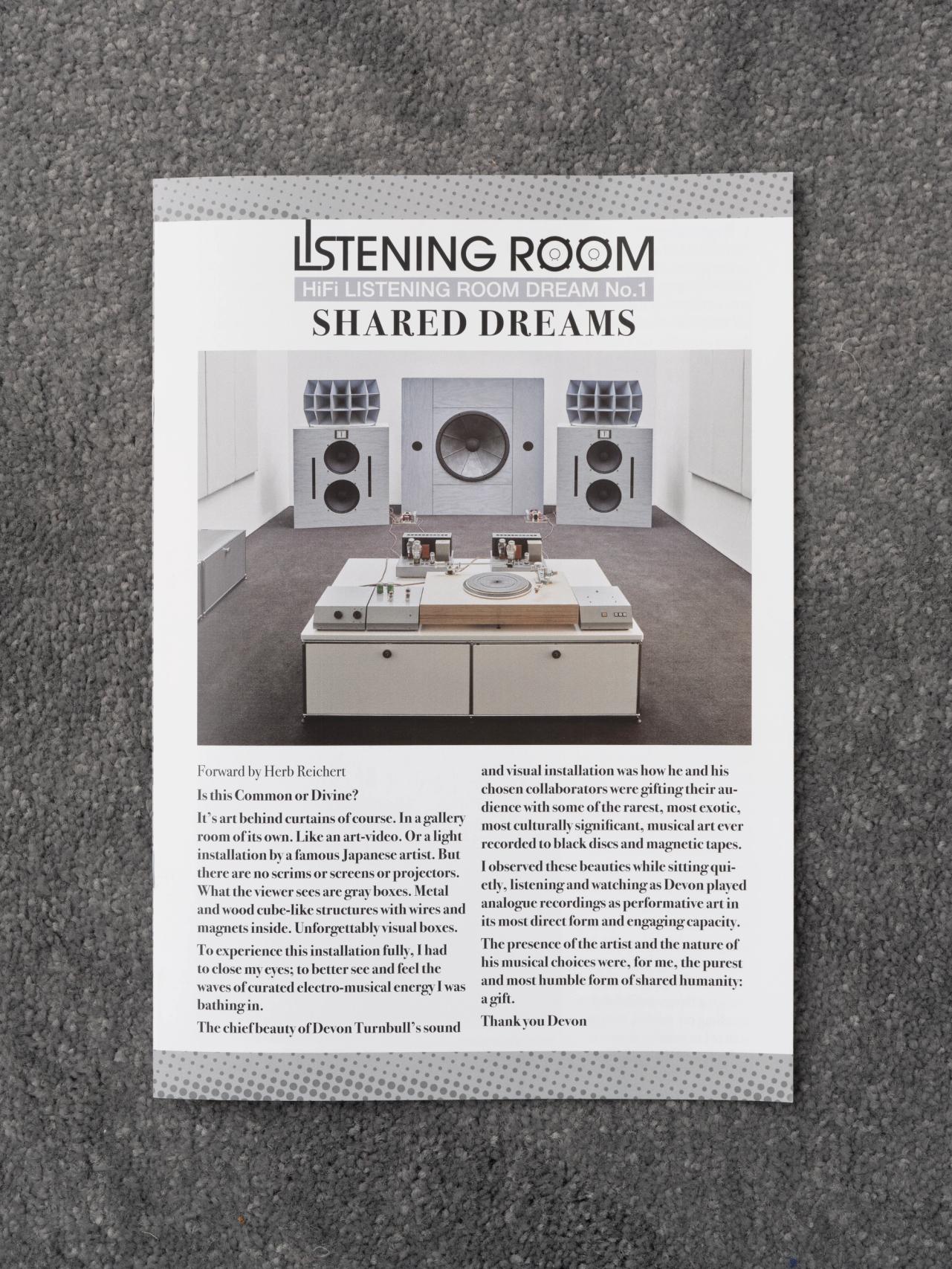
Cover of the zine published to accompany Turnbull’s “HiFi Pursuit Listening Room Dream No. 1,” presented at Lisson Gallery in summer 2022. (Courtesy Devon Turnbull and Lisson Gallery)
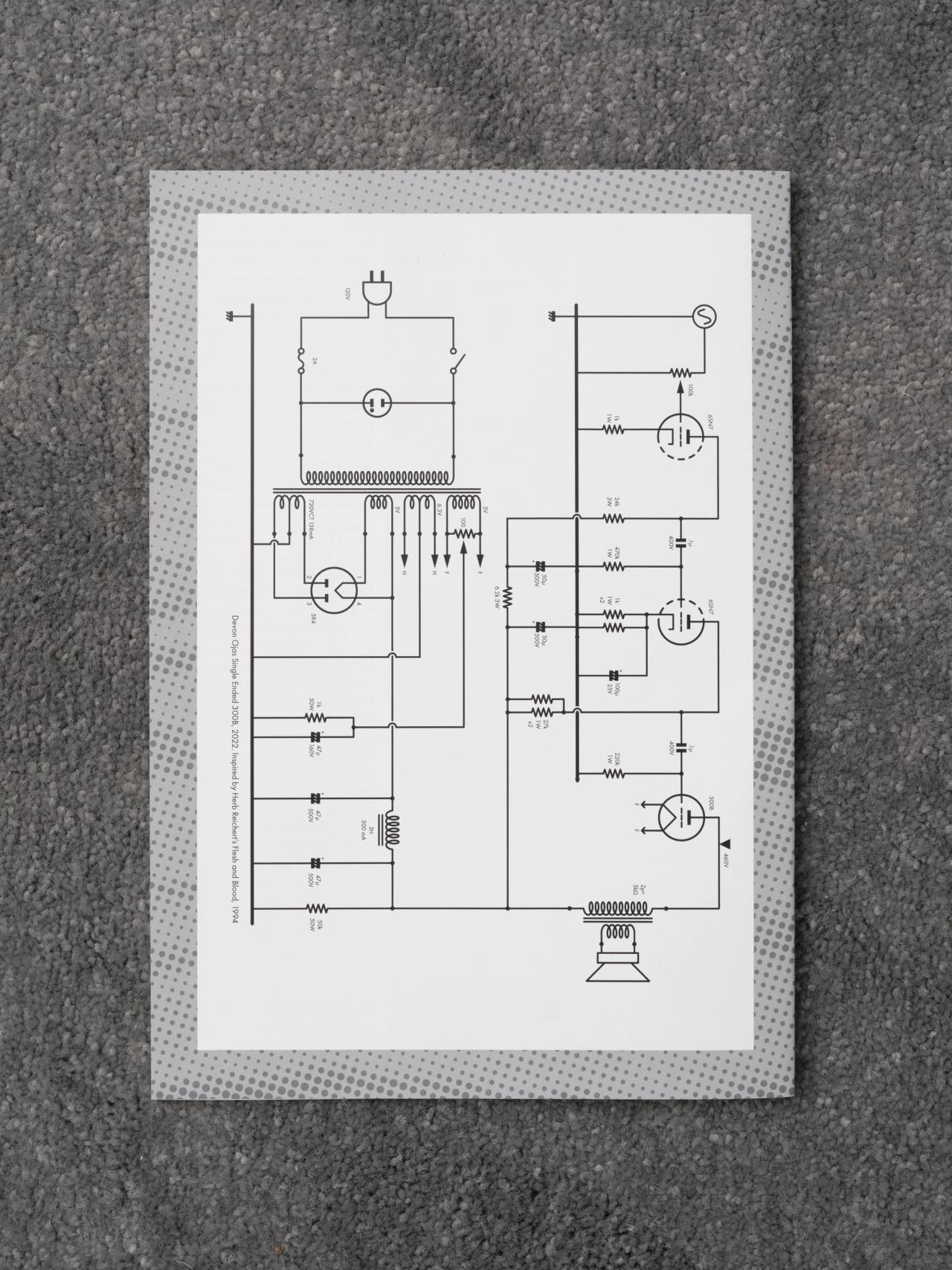
A page from the zine published to accompany Turnbull’s “HiFi Pursuit Listening Room Dream No. 1,” presented at Lisson Gallery in summer 2022. (Courtesy Devon Turnbull and Lisson Gallery)
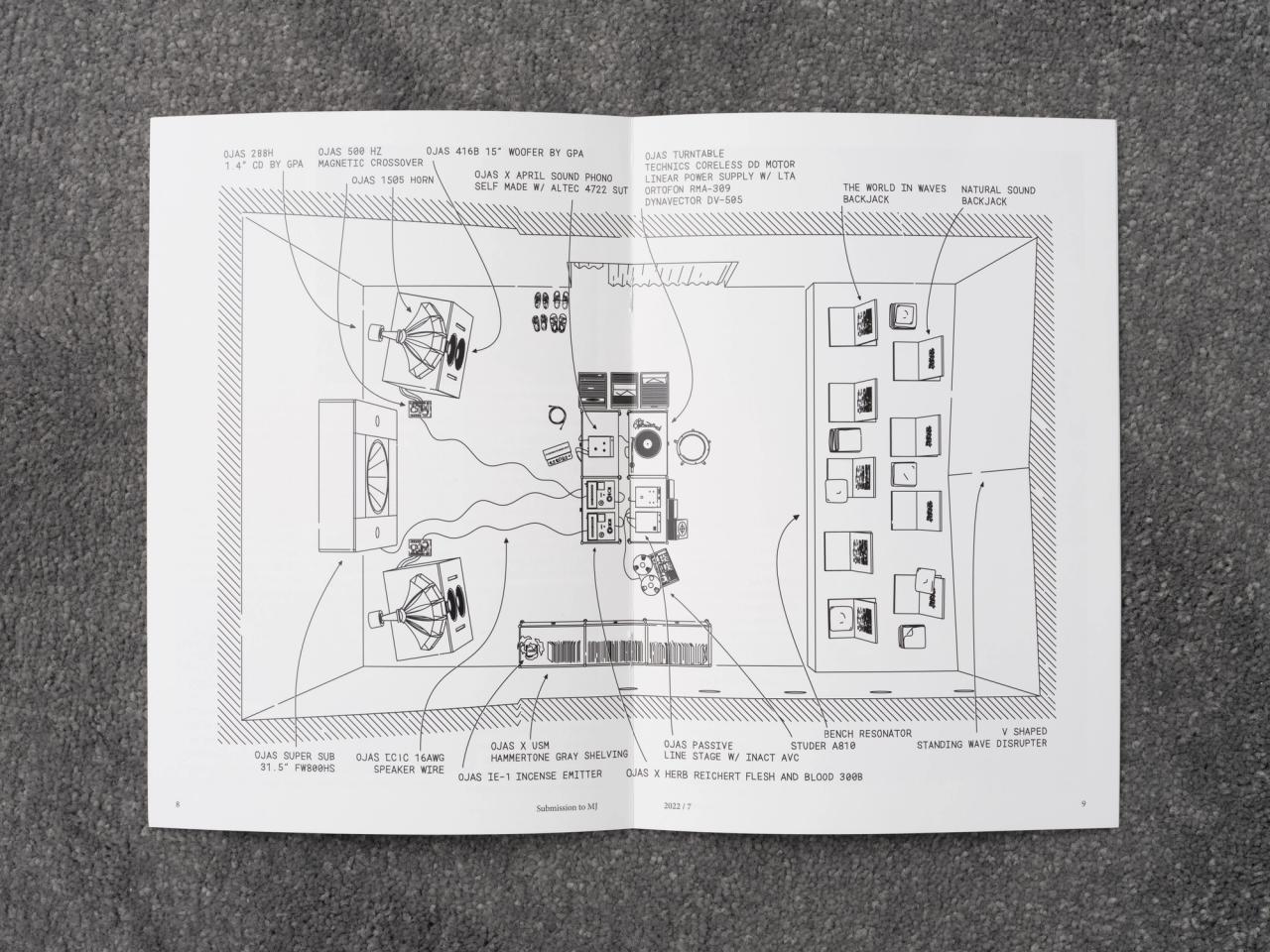
A spread from the zine published to accompany Turnbull’s “HiFi Pursuit Listening Room Dream No. 1,” presented at Lisson Gallery in summer 2022. (Courtesy Devon Turnbull and Lisson Gallery)
Cover of the zine published to accompany Turnbull’s “HiFi Pursuit Listening Room Dream No. 1,” presented at Lisson Gallery in summer 2022. (Courtesy Devon Turnbull and Lisson Gallery)
A page from the zine published to accompany Turnbull’s “HiFi Pursuit Listening Room Dream No. 1,” presented at Lisson Gallery in summer 2022. (Courtesy Devon Turnbull and Lisson Gallery)
A spread from the zine published to accompany Turnbull’s “HiFi Pursuit Listening Room Dream No. 1,” presented at Lisson Gallery in summer 2022. (Courtesy Devon Turnbull and Lisson Gallery)
Cover of the zine published to accompany Turnbull’s “HiFi Pursuit Listening Room Dream No. 1,” presented at Lisson Gallery in summer 2022. (Courtesy Devon Turnbull and Lisson Gallery)
A page from the zine published to accompany Turnbull’s “HiFi Pursuit Listening Room Dream No. 1,” presented at Lisson Gallery in summer 2022. (Courtesy Devon Turnbull and Lisson Gallery)
A spread from the zine published to accompany Turnbull’s “HiFi Pursuit Listening Room Dream No. 1,” presented at Lisson Gallery in summer 2022. (Courtesy Devon Turnbull and Lisson Gallery)
“People sometimes will be like, ‘This is like the best sound system in the world!’ I’m just like, ‘No, no, no, no, no, that’s not what this is.’ This is my journey as a sound creator.”
I wound up publishing it as a zine and sold quite a lot of them as like a ten-dollar, fifteen-dollar zine that we were printing and co-published it with Lisson Gallery. I started this Instagram account called Listening Room, where I have a pretty big collection of MJs that I’ve imported from Japan. Of course, these things are like my bibles. So I started an Instagram account where I had been just digitizing the listening-room articles and like doing a really basic Google translation of the copy and just posting those things. That thing kind of blew up at one point.
I got to this point where I had shown the New York show, I think I was maybe doing the London show, this thing had gained enough visibility that I was like, “They’re probably aware of this stuff by now.” I managed to finally get a meeting with them, and I went into the meeting with… I gifted them all a copy of the zine, and I’m just going to tell them, “I am your biggest fan outside of Japan and I see this culture kind of dwindling, and it is my mission to breathe new life into this.”
They were so puzzled by me at first. They had also printed out the listening-room Instagram account. And I was like, “This obviously, no one even knows that I’m behind this account. If you want this account, I’ll just give you the credentials right now and you can have the account.” But the account by then I think grew to like thirty-plus-thousand followers in a few weeks, and they have an Instagram account, and at the time I think they had like less than a hundred followers on their Instagram account. So I was like, “Let me just give you this thing. And if you guys would consider accepting this submission of this zine in the magazine, that would be, like, amazing.”
I left, and my friend who was there kind of helping to navigate the whole thing with me was like, “Whoa, that was so tense.” A lot of business interactions in Japan, if the person doesn’t have a response for you, there’s no way of reading it and you get ... You’re like, “How do I act right now?” So I left just being like, “Wow, that was terrifying.”
Then one of the main editors sent me a Facebook message maybe a month later and said, like, “We’d like to accept your submission and we’re going to... It’s too big for one issue, so we’re going to print it between two issues, like two months in a row. It’ll be like the listening room feature.” That was an incredible honor, a full-circle moment.
Then, less than a year later, they asked me to become a regular contributor and to start doing presentations at their MJ Audio Festival in Tokyo, which I’m going to be doing in April, I think it’s April 26 in Tokyo. So that’s the whole story behind the listening room as the way I’ve branded the series of works, or titled—you could say branded, because there’s actually like a visual component to it that’s inseparable from it, as well.
SB: Right. But each one can sit on its own, too. At the Cooper Hewitt, you’re taking this 19th-century Carnegie Mansion and the speakers you did there are massive.
DT: Yeah. The thing is not interesting, to me, at least, if each one is not somewhat experimental. That’s something that gets confused a lot by viewers, especially by critics, meaning people who are critical of the work for whatever reason, is that people sometimes will be like, “This is like the best sound system in the world!” I’m just like, “No, no, no, no, no, that’s not what this is.” This is my journey as a sound creator. The same way I would hope that you wouldn’t describe any other artwork as being a perfect thing. “This sculpture is perfect”—that’s not the goal of this. The goal of this is not to be in competition with anything else and say, “This is the right way of doing it." Because that’s what the audio industry does. The audio industry tries to innovate.
SB: It’s all about precision and—
DT: Innovation, and then discrediting whatever it superseded. That’s one of the reasons the Japanese audio culture really attracted me early on, is that they don’t have this, “Let’s discredit the thing that we said was the best last year, and then say, Oh, that’s obsolete now. This new thing is better.” You see people in comments on Facebook or even YouTube, which is really where the most troll-y nerd trolls are like, “Oh, this technology is old. It’s been superseded.”
SB: This so comes out of that Apple, iPod, planned-obsolescence culture.
DT: Yeah. The audio industry has done that as a fundamental thing. It’s like this new thing is “You need the new one, because the new one is better than the old one.” Of course, that’s true of an iPhone.
SB: Yeah, a lot of technology.
“There are things that have not been surpassed in their beauty in audio that are almost a hundred years old now.”
DT: A lot of technology, but there are things that have not been surpassed in their beauty in audio that are almost a hundred years old now.
SB: Yeah. You’re dealing with tools that are from the early industrial age. In an interesting way, it isn’t totally disconnected from how we think about Indigenous technology, too. I feel like sometimes the old things become new again and they’re actually better or more interesting or more complex and rich than the latest technology.
DT: Yeah.
SB: A lot of places we could go, but I want to just hear you talk a little bit about the Cooper Hewitt room because, to me, that’s also kind of a fun full-circle moment. You’re born here. I’m sure you’ve been to the Cooper Hewitt many times and have a relationship with that place.
DT: It was an incredible, full-circle thing that happened with this show. The first apartment that I lived in with my now wife was on 87th between Lex and Park, just four or five blocks from Cooper Hewitt, and I would go there all the time. I love the museum. I love the mansion. There’s just so much about it that just as a New Yorker is like... The historic gravity of that mansion and Fifth Avenue and this bygone era that’s an inevitable part of the fabric of New York City, and then it being like an educational … and just an institution in the world of design, which obviously I love very much.
I spent a lot of time there in these early years of building audio equipment. I remember going to see a show about flatware there, and I think this is probably, I don’t know exactly what year it was, but about just tableware. I also happen to love all aspects of objects that are in the home. I’ve been a chair nerd for practically my whole life. And I already had, like, an Arne Jacobsen cutlery set and I was collecting Poul [Kjærholm]. And I went there to see this show and just thought, “Man, it’s just so cool how we can immortalize the design of objects that so many people take for granted. It’d be amazing if I could one day play some role in this greater story of design, functional art, art objects, whatever it is.”
Massimo Vignelli is another one of my... Massimo Vignelli, Dieter Rams—these guys are my heroes going back to my youth. They find some really creative way of making a massive impression on the greater aesthetics of our world in ways that could almost be overlooked. They become part of the legacy of human aesthetic design. Of course, it occurred to me, I was like, “Man, if I could apply what I want to do with audio to this, it’d be amazing.” But I really did not… I wasn’t like—
SB: It wasn’t calculated.
DT: Not at all. It just didn’t seem feasible. It didn’t seem [like a] reasonable thing to think would be possible. Anyway, that as an institution has always been one of my favorites. The other thing is that, like I said, I’d shoot out to Brooklyn. I’d work until late at night and I would come back into the city and I’d listen to New Sounds on WNYC, John Schaefer’s show. So when I was invited to show at the Cooper Hewitt, John Schaefer is someone who I’ve wanted to collaborate with or just shake the hand of for a really long time, because he has been one of my music heroes forever.
I’d tried to figure out how to reach out to him over the years, but Cooper Hewitt was like, “Oh, we can get in touch with John Schaefer.” He was the first guest operator at the museum. One of the first nights [of the Listening Room] at the museum, he and I did a talk and then we listened for a couple hours to music that he brought in. Now, it’s just an incredible full-circle moment, because it was like these late nights working in the woodshop in Brooklyn, listening to New Sounds and thinking like, “There’s a whole world here that I’ve just never seen put together.” This kind of avant-garde, either New York or adjacent avant-garde music, is the music that I’m listening to on these systems and building these kinds of systems.
I saw all the building blocks back then, in the very beginning. My work hasn’t changed much in that time, but the fact that it all really came together at the opening of the show at Cooper Hewitt was just a total dream come true. And to be able to take Andrew Carnegie’s private library as the canvas for the listening room, it’s just wild. It’s so cool and such an honor.
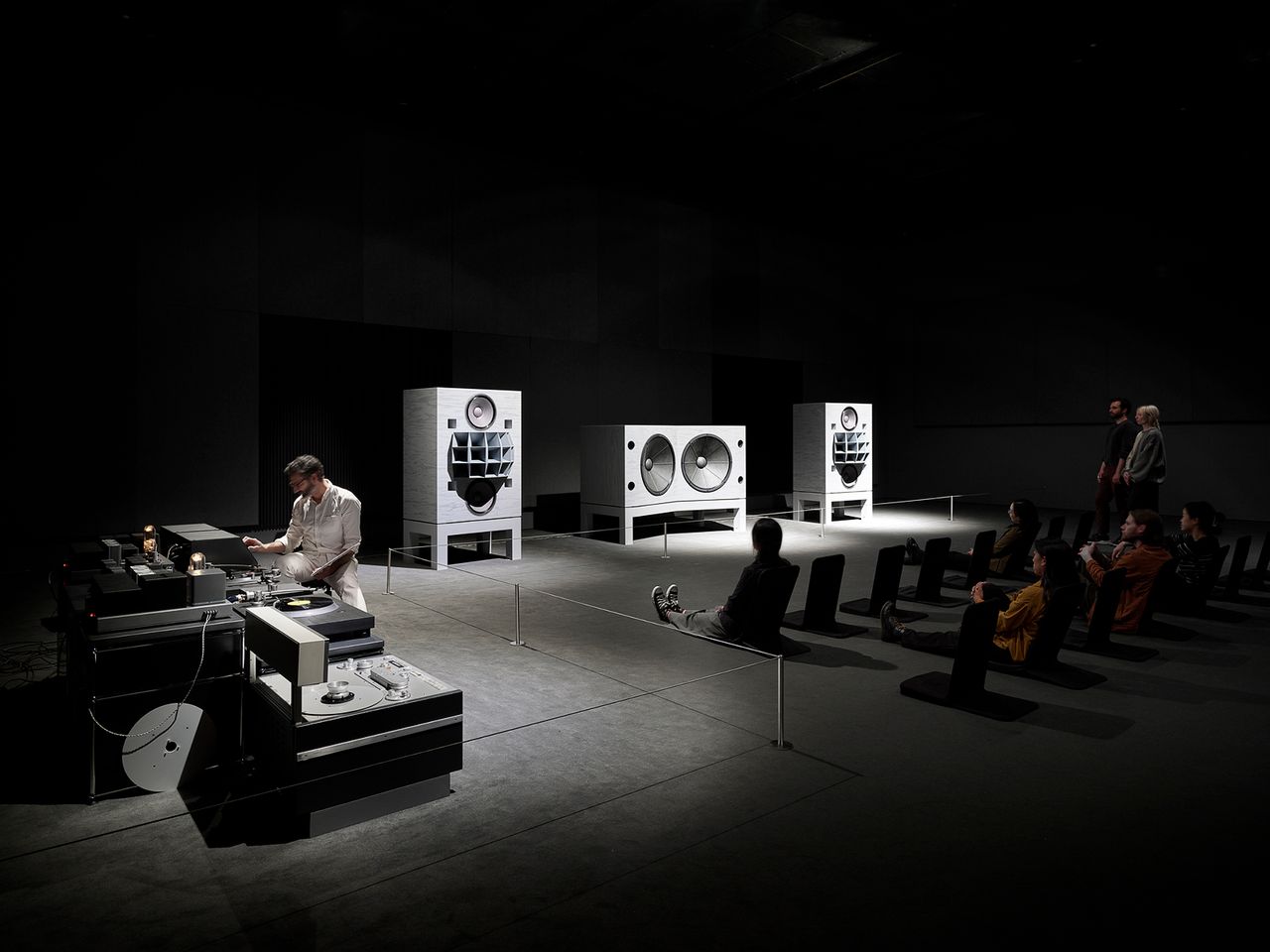
Installation view of Turnbull’s Listening Room shown as part of the “Art of Noise” exhibition at SFMOMA in San Francisco in 2024. (Photo: Matthew Millman/Courtesy SFMOMA)
SB: Yeah. Between that, SFMOMA, the Lisson shows, it’s been so wild to me to see the community that’s formed around this. While I think, obviously, it’s about this beautiful sonic experience, it’s about listening. Your project’s also kind of about education and community. You’re teaching people about this world, you’re giving them a way in, and you’re also doing it with your friends. Sometimes not even your friends, just people who are paying attention to what you’re doing and show up. I know Fred Again just randomly showed up at the end of the SFMOMA [exhibition].
DT: Yeah, I wasn’t there, but he was in San Francisco, and I guess he just reached out to the curator at the museum and was like, “Could I just pull up tomorrow unannounced and play some music from my laptop?”
SB: Which is the beauty of this thing: People can just plug in to it. I think you had Beck also show up, right?
DT: Yeah. Beck’s been a really fun person. He comes and hangs out in the listening room that we have downtown.
SB: You had Laraaji perform recently, right?
DT: Yeah, Laraaji. Yeah, I don’t want to even get into like a listing of all the people, because I think there are so many great ones to come and it’s also like it’s not about—
SB: Bold names.
DT: Bold names, but of course, it’s really rewarding when some of your musical heroes want to just listen to music with you.
SB: Who wouldn’t want Questlove rolling up?
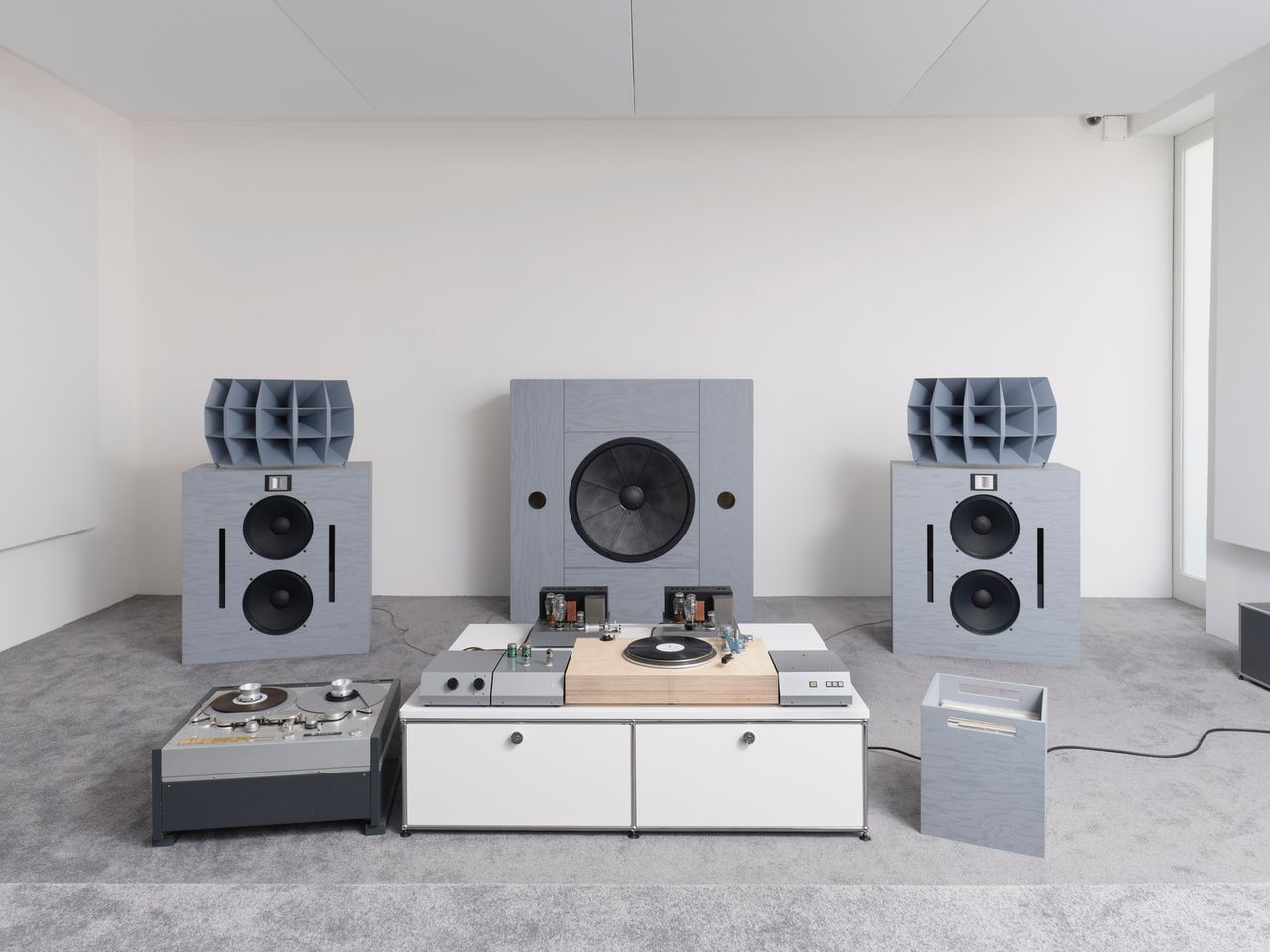
Installation view of Turnbull’s “HiFi Listening Room Dream No. 1 and Other Works,” shown at Lisson Gallery in London in August 2023. (Copyright Devon Turnbull/Courtesy Lisson Gallery)
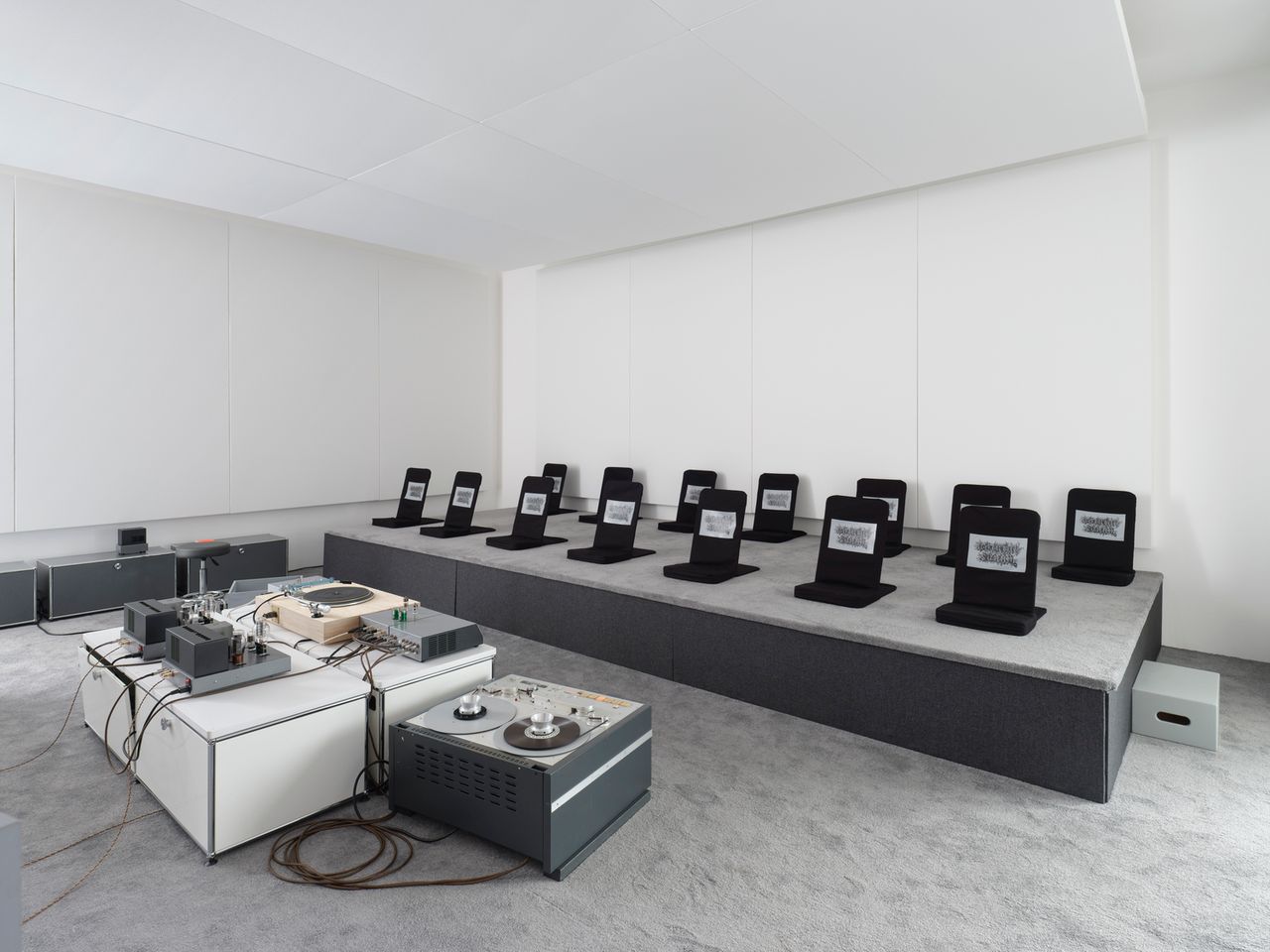
Installation view of Turnbull’s “HiFi Listening Room Dream No. 1 and Other Works,” shown at Lisson Gallery in London in August 2023. (Copyright Devon Turnbull/Courtesy Lisson Gallery)
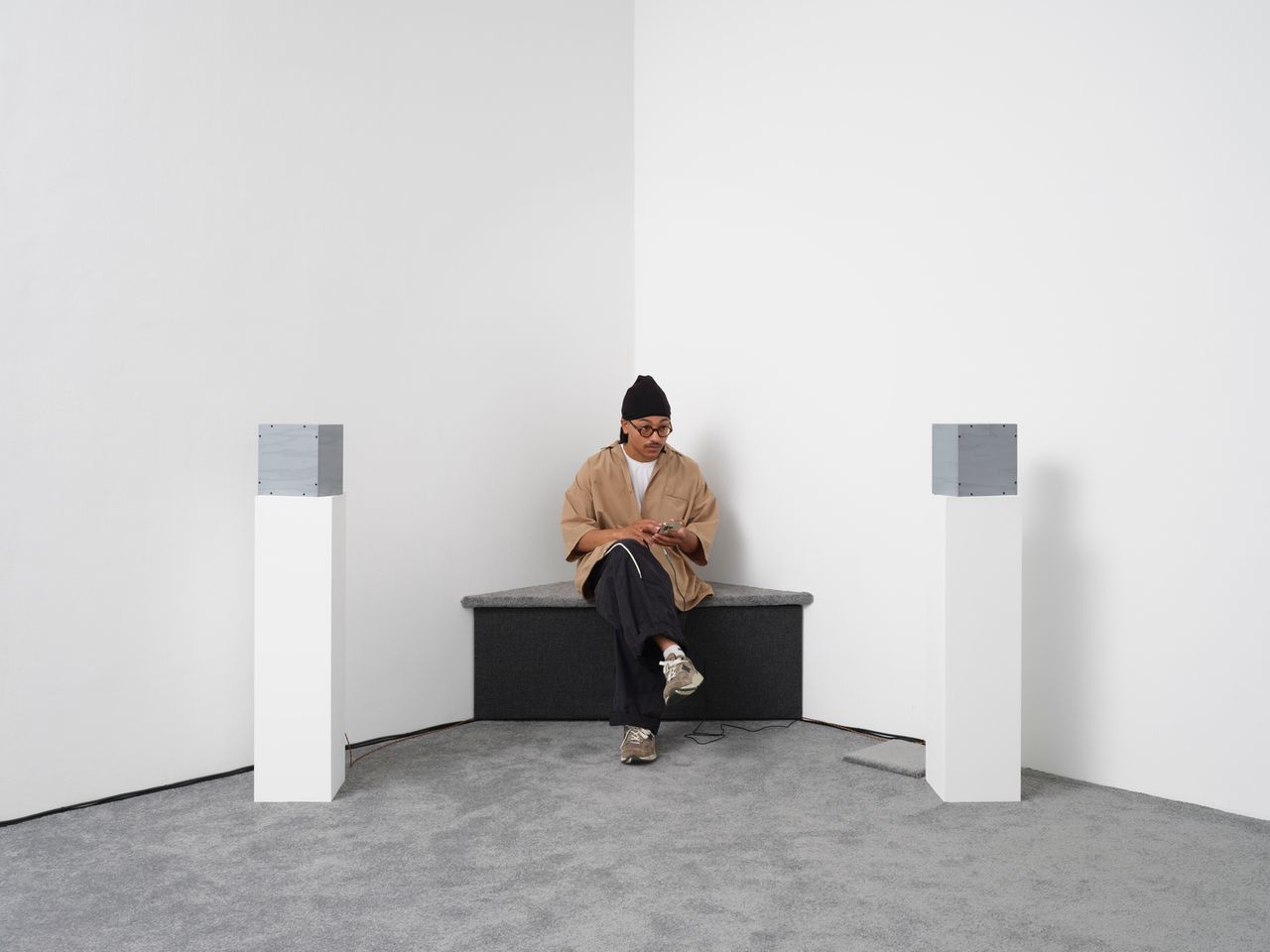
Installation view of Turnbull’s “HiFi Listening Room Dream No. 1 and Other Works,” shown at Lisson Gallery in London in August 2023. (Copyright Devon Turnbull/Courtesy Lisson Gallery)
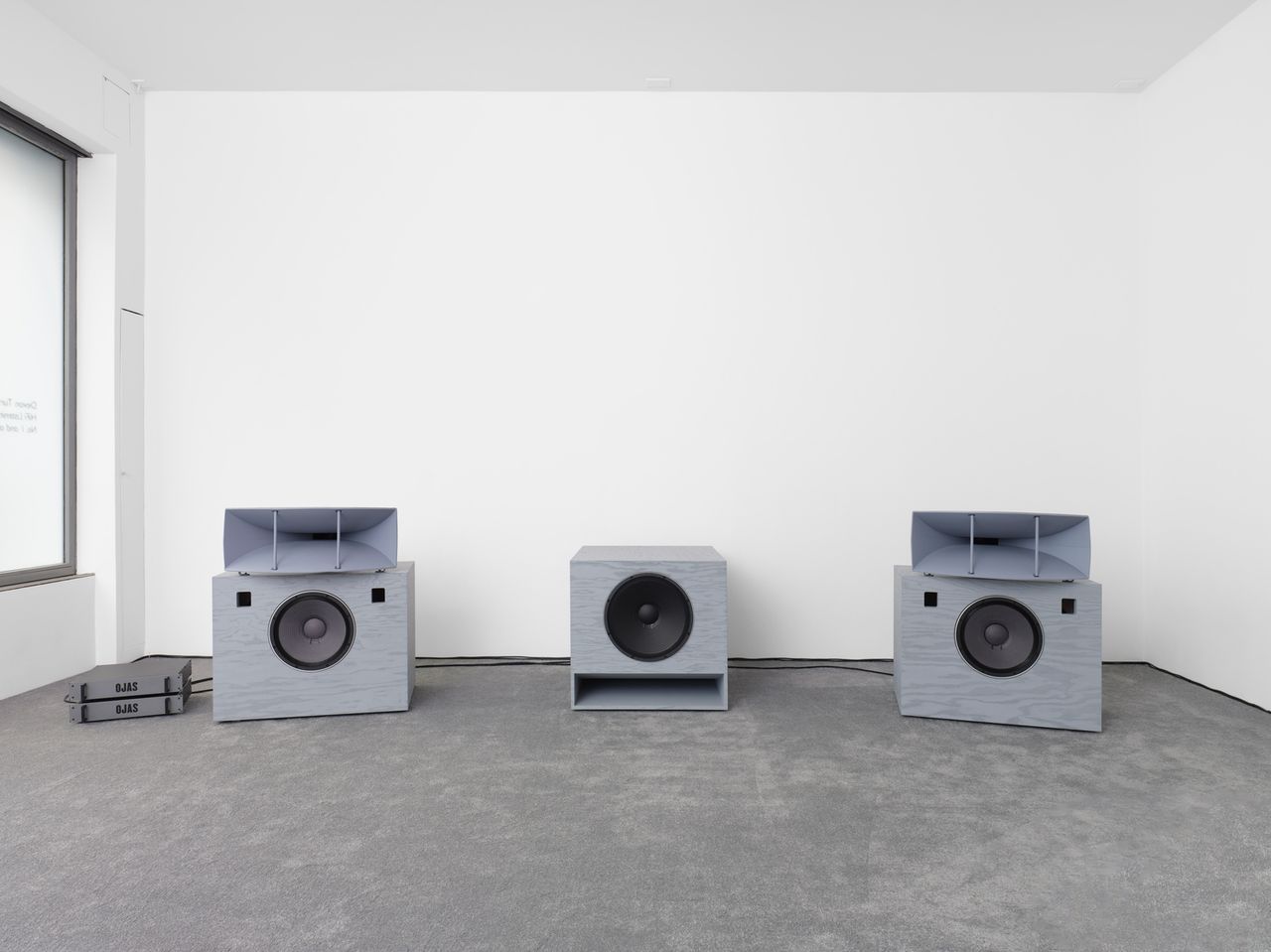
Installation view of Turnbull’s “HiFi Listening Room Dream No. 1 and Other Works,” shown at Lisson Gallery in London in August 2023. (Copyright Devon Turnbull/Courtesy Lisson Gallery)
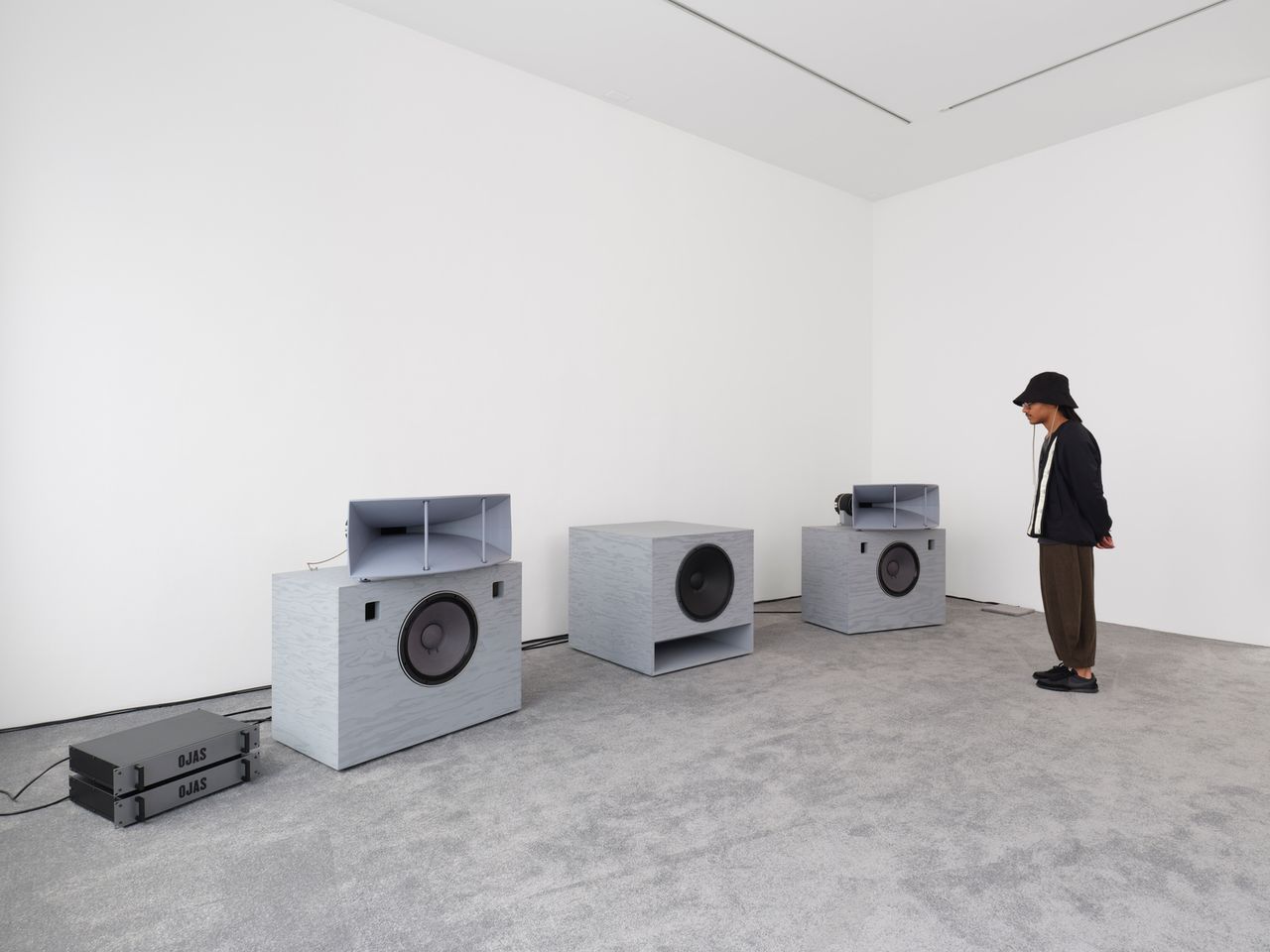
Installation view of Turnbull’s “HiFi Listening Room Dream No. 1 and Other Works,” shown at Lisson Gallery in London in August 2023. (Copyright Devon Turnbull/Courtesy Lisson Gallery)
Installation view of Turnbull’s “HiFi Listening Room Dream No. 1 and Other Works,” shown at Lisson Gallery in London in August 2023. (Copyright Devon Turnbull/Courtesy Lisson Gallery)
Installation view of Turnbull’s “HiFi Listening Room Dream No. 1 and Other Works,” shown at Lisson Gallery in London in August 2023. (Copyright Devon Turnbull/Courtesy Lisson Gallery)
Installation view of Turnbull’s “HiFi Listening Room Dream No. 1 and Other Works,” shown at Lisson Gallery in London in August 2023. (Copyright Devon Turnbull/Courtesy Lisson Gallery)
Installation view of Turnbull’s “HiFi Listening Room Dream No. 1 and Other Works,” shown at Lisson Gallery in London in August 2023. (Copyright Devon Turnbull/Courtesy Lisson Gallery)
Installation view of Turnbull’s “HiFi Listening Room Dream No. 1 and Other Works,” shown at Lisson Gallery in London in August 2023. (Copyright Devon Turnbull/Courtesy Lisson Gallery)
Installation view of Turnbull’s “HiFi Listening Room Dream No. 1 and Other Works,” shown at Lisson Gallery in London in August 2023. (Copyright Devon Turnbull/Courtesy Lisson Gallery)
Installation view of Turnbull’s “HiFi Listening Room Dream No. 1 and Other Works,” shown at Lisson Gallery in London in August 2023. (Copyright Devon Turnbull/Courtesy Lisson Gallery)
Installation view of Turnbull’s “HiFi Listening Room Dream No. 1 and Other Works,” shown at Lisson Gallery in London in August 2023. (Copyright Devon Turnbull/Courtesy Lisson Gallery)
Installation view of Turnbull’s “HiFi Listening Room Dream No. 1 and Other Works,” shown at Lisson Gallery in London in August 2023. (Copyright Devon Turnbull/Courtesy Lisson Gallery)
Installation view of Turnbull’s “HiFi Listening Room Dream No. 1 and Other Works,” shown at Lisson Gallery in London in August 2023. (Copyright Devon Turnbull/Courtesy Lisson Gallery)
“You don’t hear Philip Glass in a single nightclub or bar. There aren’t a lot of places where the music that I listen to is appropriate.”
DT: The thing that’s cool, too, is when friends, now friends who are new friends, come in and these guys are like your musical heroes and you realize that like—especially because I don’t play a lot of pop music in the listening rooms. I don’t not play pop music at all, but the music that I listen to is music that doesn’t really have a home in many other venues.
You don’t hear Philip Glass in a single nightclub or bar. There aren’t a lot of places where the music that I listen to is appropriate and there aren’t a lot of... Yeah, so I think it’s kind of also inadvertently given me an opportunity to develop an identity as a music director or selector, as well, in that I can play a lot of music that a lot of people are discovering when I’m playing it, just because there’s not like a lot of outlets for that music. They’re not like, “Oh, so-and-so played that at wherever.” Because where would you play Erik Satie in... it’s crazy because I grew up listening to Satie, but I don’t know, a lot of young people, where are they exposed to classical music these days?
SB: Yeah. You don’t go to a bar and listen to organ music, right?
DT: Yeah.
SB: But in a funny way, I love hearing that story you told earlier about you playing that pipe organ in the church in Iowa, because you’re kind of still doing the same thing.
DT: Yeah. I do play Bach’s Toccata in D minor in the listening rooms often. That’s my bass test track. When people are like, “So what do you play when you want to really show off the bass?” Pipe organ is like what I play. When I want to test bass, absolutely, and when it’s really good, when I want to show it off, because the pipe organ can generate these subsonic bass frequencies that no other acoustic instrument can. Just the visceral power, but also the timbral, realistic qualities of an organ, it’s super powerful. I chuckle inside a little bit, too, when people are expecting, I don’t know, some kind of synth bass and I’m like, “This is the illest bass you’re going to hear on this system.”
SB: I feel like we should just end the episode with that song. I think we have to put that on. That’s how we’re going to end today—unless you have any final words. [Laughs]
DT: No, that’s a good place to finish.
SB: Thanks, Devon.
DT: Thanks, Spencer.
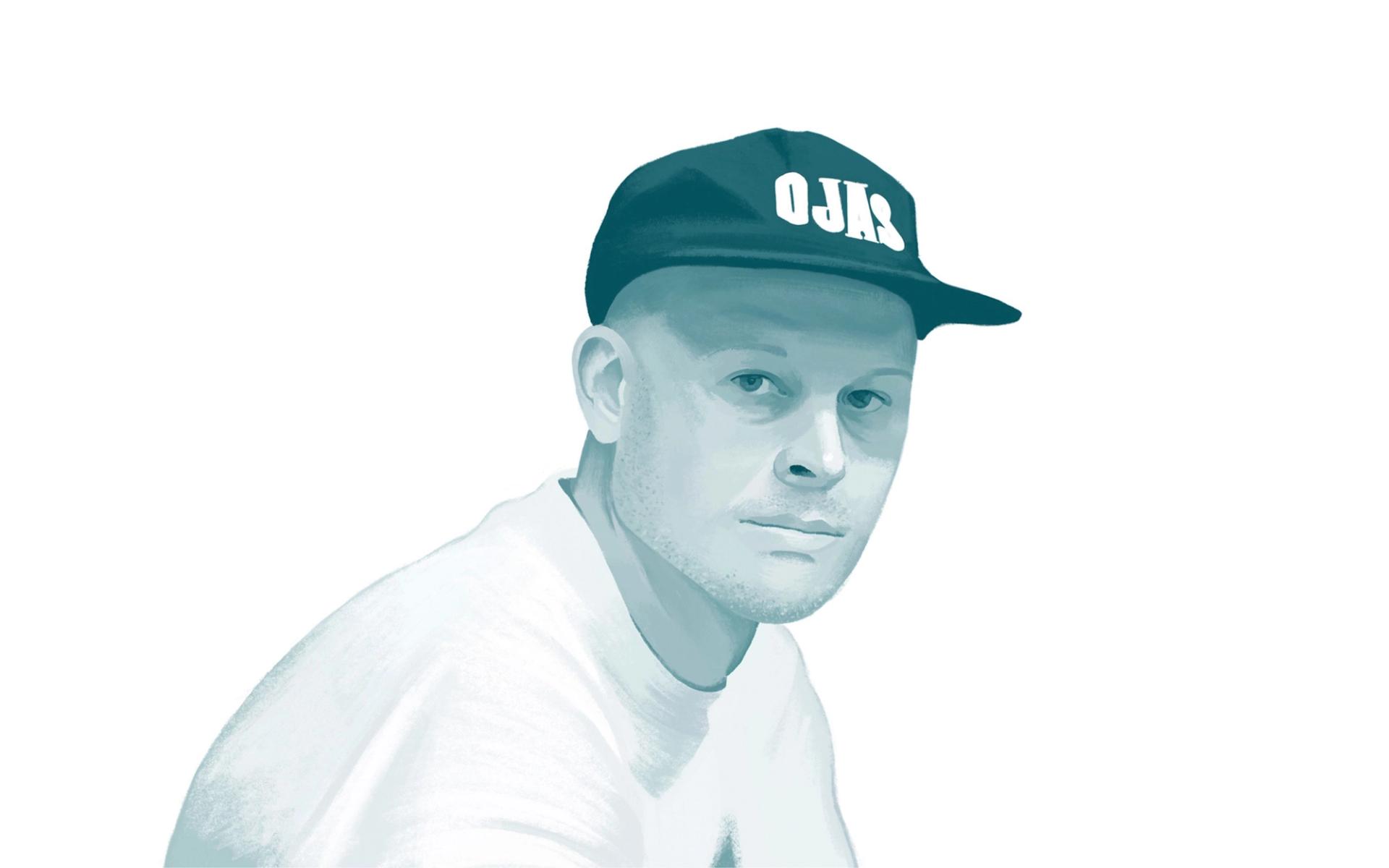
This interview was recorded in The Slowdown’s New York City studio on March 13, 2026. The transcript has been slightly condensed and edited for clarity. The episode was produced by Olivia Aylmer, Ramon Broza, Mimi Hannon, and Johnny Simon. Illustration by Paola Wiciak based on a photograph courtesy Devon Turnbull.