Follow us on Instagram (@slowdown.media) and subscribe to our weekly newsletter to receive behind-the-scenes updates and carefully curated musings.
TRANSCRIPT
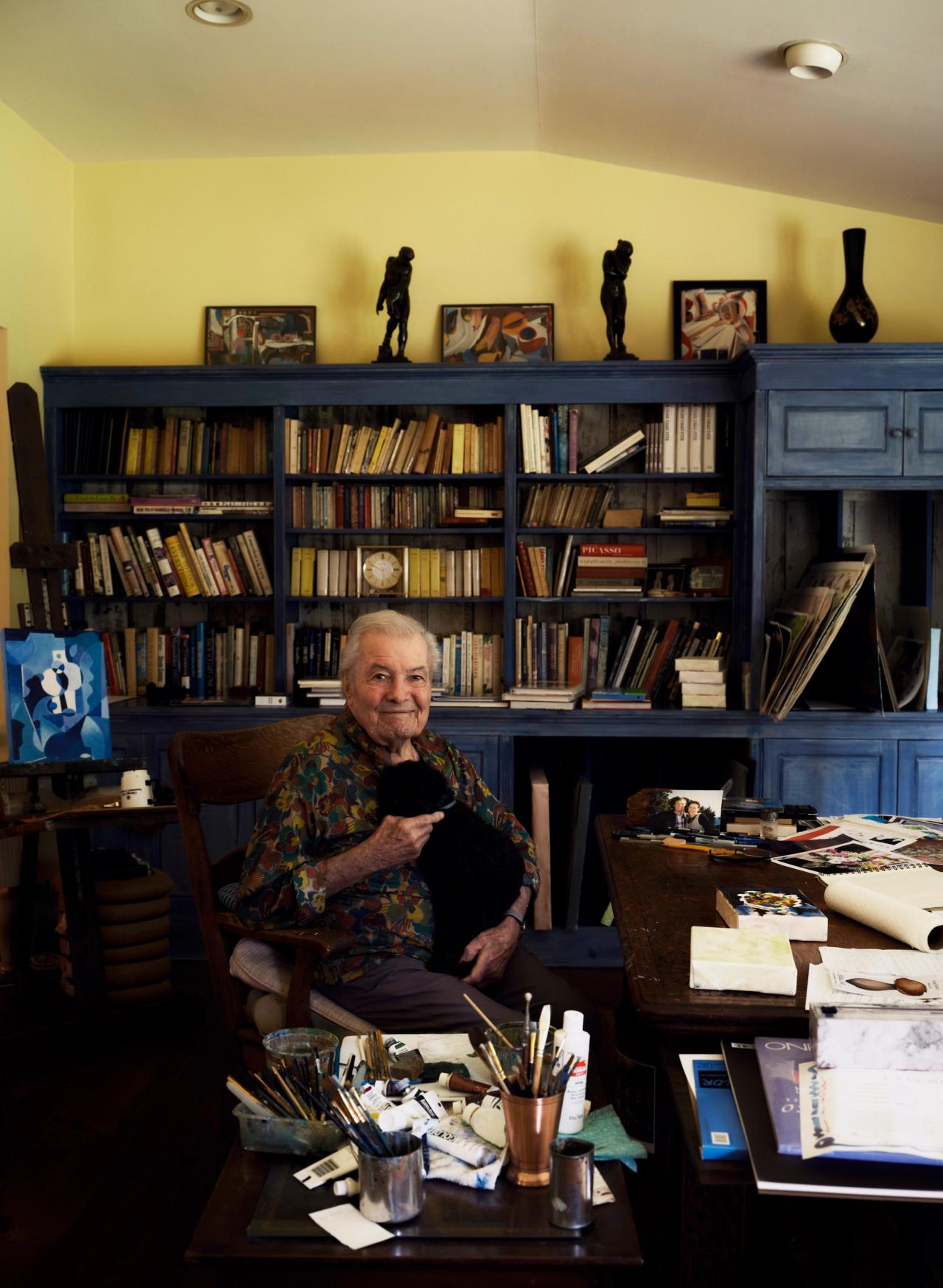
Jacques Pépin with his dog, Gaston, inside his painting studio at his home in Madison, Connecticut. (Photo: Matthew Harrington for The Slowdown)
SPENCER BAILEY: Hi, Jacques. Welcome to Time Sensitive.
JACQUES PÉPIN: Hi, how are you?
SB: Good. Thank you for inviting us here into your home. I wanted to start with your home, this little utopia you’ve built here in Madison, Connecticut. You moved here in 1975. Tell me a bit about this place, this history.
JP: A while ago, yes. This used to be a brick factory. If you step out here, the bricks are still exposed in the back end. You can see those are sand brick, grainy and not too good. So anyway, this was a brick factory. Three old ladies—well, they’re three sisters, actually. The youngest one died and the other one they took away. It was sold by the nephew or something like this. It was quite different than it is now. The ceiling was much lower. But anyway, we redid the whole house... I mean, I redid the whole house. Most of the work I did myself at the time. The wall, the Sheetrock, the tile, and all that stuff. I used to do a lot of that stuff.
SB: Your father was a carpenter.
JP: My father was a cabinetmaker.
SB: This is also the home where you and your wife, Gloria— You were married for fifty-four years.
JP: Yeah.
SB: You’ve written that you had this almost wordless way of working together in the kitchen that we’re sitting right next to. Tell me a little bit about the life you built together and that connection to this home.
JP: I never knew whether we had money or no money, whether we owed money or were owed money. My wife took care of all of that all those years. I’m very thankful for that. I never really worried about one or the other because she was handling it. Occasionally she’d tell me, “Do you want to know what we have?” I said, “Yeah, okay, fine, but not particularly.”
So, we had a good life. We had a good life together. We went along together and she cooked as well as I did. It’s not like I’m a great chef and I came into the kitchen. It’s not like she would stop or anything. She usually would say, “Don’t touch anything,” when I came into the kitchen. [Laughter] Yes, we had a good time. We actually started in upstate New York, in the Catskills. I used to be a ski instructor on weekends and that’s where I met her. We eventually got married there and bought an old farm, an abandoned farm house there, which again, I worked on and redid mostly by myself for years.
At some point I had a very bad accident, a car accident. I had twelve fractures and broke my back, [both] hips, leg, arm, and shoulder.I couldn’t ski anymore. So we had to move away.Gloria decided—we talked about it, and she said, “Let’s move to the sea on the coast. It’s better in winter, usually.” It was basically the coast of Connecticut or the coast of Jersey or whatever, so we decided to move here. At the time, I think I had already started maybe doing stuff at B.U.
SB: Right. The gastronomy school at Boston University, right?
JP: Yeah.
SB: But it was really this car accident that led you here. Without that, maybe you would never have come to Madison.
JP: Probably not. Yeah.
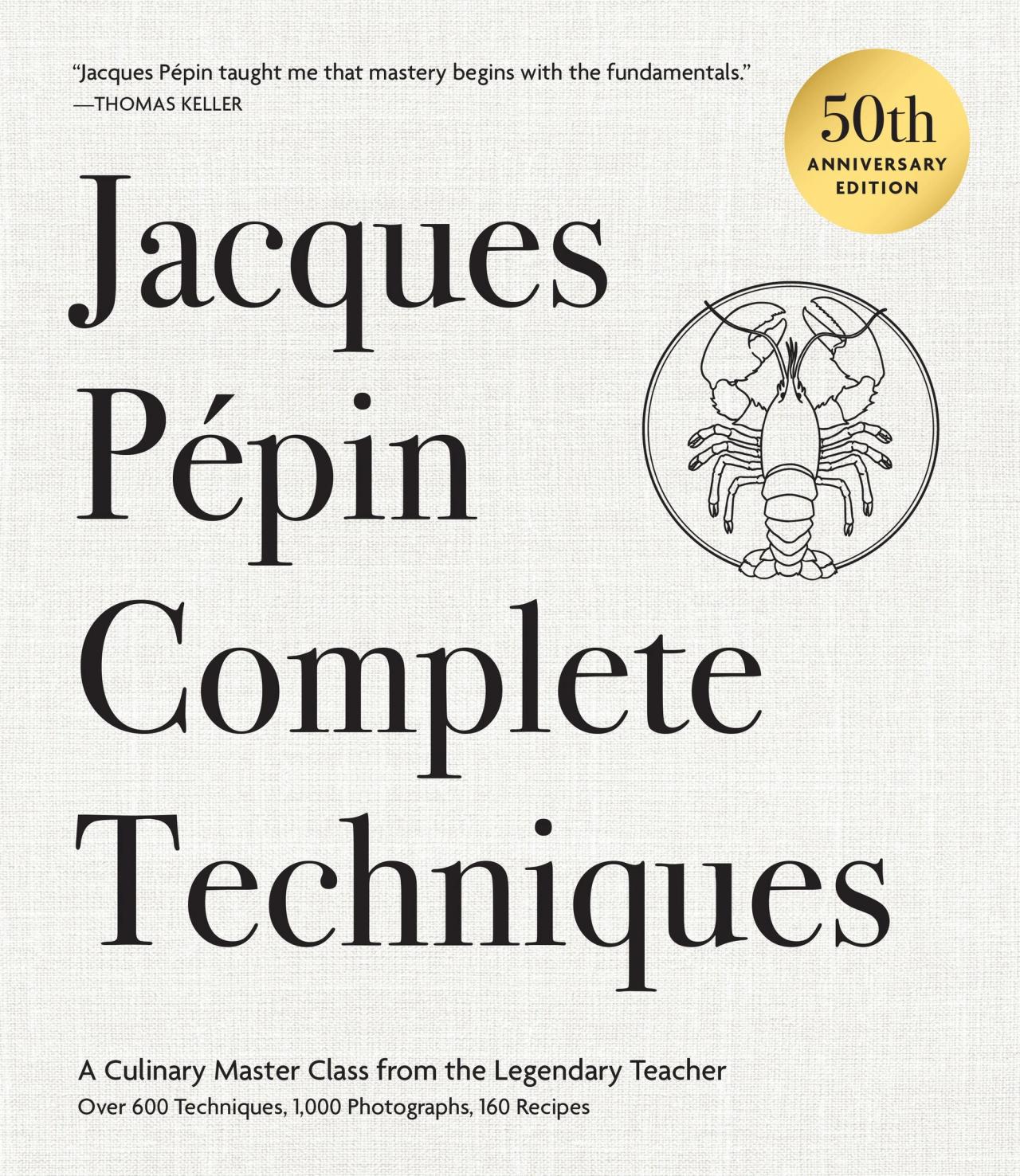
Cover of Jacques Pépin Complete Techniques: 50th Anniversary Edition (2026). (Courtesy Black Dog & Leventhal)
SB: This year also marks the fiftieth anniversary of your 1976 book, La Technique, which you recently rereleased as an expanded Complete Techniques edition. When you published it, you were attempting to put photographs and texts together—words really—for something that you learned verbally, that you had learned almost as an apprentice through years of watching, just doing.
JP: Right.
SB: Now that you have had fifty years of thinking about this book or having this book alive in the world, how much of it do you think is really about time? The relationship between technique and time?
JP: I never thought that book would last that long or become a specific book for a professional. I started giving classes, actually, after I had my accident. It was the time when the cookware shop opened, and a woman opened a little cooking school in the back... I was invited to do that. I did that for a number of years, actually.
I would be surprised when people... I’d peel a carrot, people would say, “Jeez, that’s how you peel a carrot?” I would peel a carrot or an onion or a leek or whatever. I was surprised. I thought, “Maybe I should do a book on those basic techniques that people don’t really know.” That’s how it started, basically, showing a step-by-step way of doing it. At that time it was in black and white, of course.
We started right here at that counter. I met [publisher] Herb[ert] Nagourney, who was on the board of The New York Times, and his wife, [editor] Ann Bramson—at that time they were not married, anyway—and Craig Claiborne, who was the food editor of The New York Times.
SB: Basically the first real restaurant critic, right?
JP: Yeah. Restaurant critic and so forth. Craig became a good friend of mine after I came to this country. I was there one day, and they came to discuss a book with [Claiborne]. We talked. I said, “Well, I’m doing a book.” He said, “You’re interested in publishing that book?” I said, “Sure.” That’s how it started.
He said, “How many pictures do you think you’re going to have?” I said, “I think I probably need at least five hundred.” After I started doing it, it turned into a thousand. [Laughter] Then we called and he said, “Okay, fifteen hundred, no more.” So, I did that book, which I called La Technique in French for some reason. After the fifteen hundred, there were still many more. So, I continued. I said, “I’m going to do a second volume.” I didn’t want to call it La Technique Number Two. So, we found a synonym, La Méthode, and continued doing the same thing.
Eventually, we had two books together with a series, actually a very nice color picture in there, which they only used once, at the first printing. It was for a year or two, and then they removed them. But they never removed the reference to it. Very often you will have a dish, and it finishes, and I said, “To see the finished dish, look at page such and such.” That [picture] doesn’t exist anymore. [Laughter] That was funny.
It was redone, together with some additions. At some point I decided to redo it in color. I did those books in color; eventually the whole thing was merged together, certainly in that book. Some are in color, some are in black and white, originally, at the time. It’s maybe a bit confusing for people, but there is a lot of material in that.
SB: It’s worth saying that no book really existed like this at the time. Or few, if any. You’ve said great cooking favors the prepared hands, and a great chef is first a great technician.
JP: Yeah, that’s true.
SB: That’s what this was about, right? Really teaching the fundamentals.
“There is no question that if you’re in a kitchen, it’s eleven o’clock and you have a hundred people sitting down at twelve, you have four crates of artichokes to do, you’d better move it. Speed becomes very important.”
JP: There is no question that if you’re in a kitchen, it’s eleven o’clock and you have a hundred people sitting down at twelve, you have four crates of artichokes to do, you’d better move it. Speed becomes very important. As an apprentice, you learn and go faster and faster and better and so forth.
That being said, I know a fair amount of chefs who are very good technicians, can go very fast, and are relatively lousy cooks. [Laughter] [The] food is not necessarily fantastic. But basically, if you see a great chef like Thomas Keller, he will be a great technician, but also behind that, someone who has taste and imagination and creation and so forth.
SB: When you were coming up as a young chef—and I read this in The Apprentice, your memoir—there was a book, Le Répertoire de la Cuisine.
JP: Yes. I still have it somewhere.
SB: Which was first published in 1914. It contains more than seven thousand recipes.
JP: Right.
SB: Tell me about that. It was something you would consult as you needed, or if somebody wanted a specific dish that you didn’t know how to make, it was almost like—
JP: Yes. It was mostly for the garnish because... I still have it. At that time, I worked in Paris, and I worked in certainly over a hundred restaurants in Paris. I worked at Hôtel Plaza Athénée, mostly. On my day off I went to... There is an organization called the Society of the Chefs of Paris [Société des Cuisiniers de Paris}, which I was a member of. You go in the morning, you sit down there, and they send you for the day. People call the association because one chef didn’t come up or that guy is off. You go there for the day.
When you come and work at those restaurants for one day or two days, it’s not like you have time to get used to it and all that. You’re there for one day. The chef says, “Look at the menu.” You look at the menu, and you see a fillet of sole Florentine, for example. And you say, “What the heck is Florentine again?”
That’s when you look at Le Répertoire de la Cuisine.You add sautéed spinach to that, too. It doesn’t really tell you how to do it, but it tells you in two or three lines what the dish is. That was a very classical book, which is still used by professionals.
SB: Yeah. It’s another one of these books that’s stood the test of time and has lasted. You mentioned this accident you were in. I wanted to go back to that. This was July 21, 1974. You were 38.
JP: Yes.
SB: Do you think of your life having a before and an after?
JP: Yes, certainly. Because after that, I don’t know what I would have done. All the shows that I did on television, all the techniques and all that, hundreds of shows I did on PBS, I did after my accident.
People don’t realize that that arm is much shorter than the other one and, because I fell on one side and exploded that elbow here, it was broken. My wife signed, actually, in the hospital [for the] removal of the left arm. There was only a piece left. Fortunately, there was a young surgeon there who said, “Maybe we’ll try to save it.” So, they saved it, too. Then it came back. I cannot bend it more than that. [Bends elbow slightly]
But that was what happened after the accident. I did all of those pictures, all of those things, after that, because I put on a shirt like this and enough to start working. So yes, that was my life after.
It was coincidental with the time after that when cookware shops, as I say, started opening little places in restaurants. They asked me to come and give classes. I did, and automatically, usually they said, “We can book you for next year.” I was booked thirty weeks out of the year doing those classes, and I was making good money with it. It was certainly less taxing than working in a restaurant six days a week.
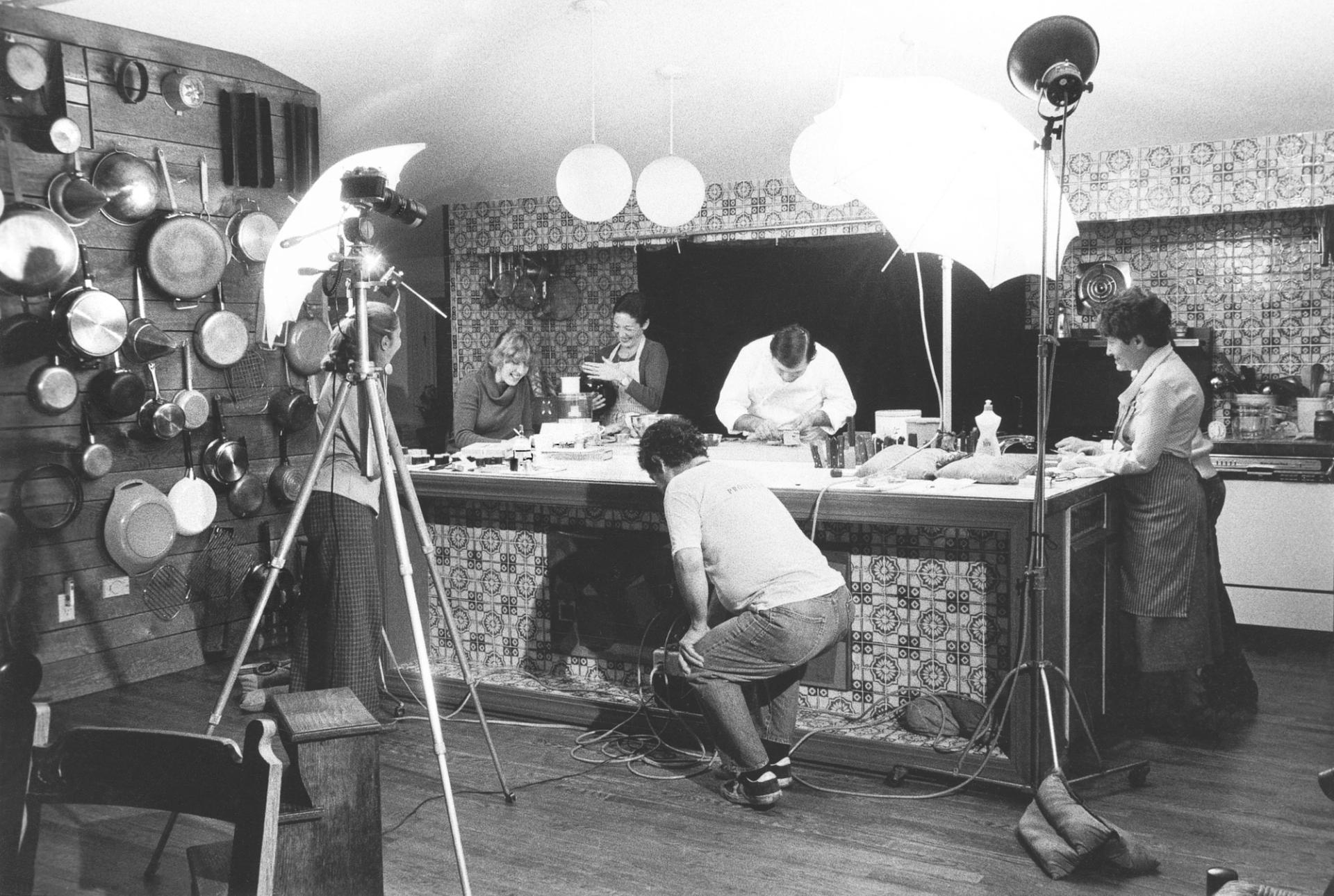
Shooting the photographs for Everyday Cooking with Jacques Pépin in his home kitchen with (L-R) Ann Bramson, his editor at Harper & Row; his wife, Gloria; and photographer Léon Perer in 1982. (Courtesy Jacques Pépin)
SB: Do you think you would have stayed a restaurant chef if you were—
JP: Probably, yes. For at least… I mean at that time, yeah, probably. I don’t know for how long. It’s hard to speculate on that type of thing, because things happened after. That’s when the cookware shops, as I say, happened, and things started going on television. Julia [Child] started cooking on television and other people that didn’t exist before.
I was lucky to be part of it, to be asked to do that. There are hundreds of chefs as good as I am who were never asked to go on television. I was lucky.
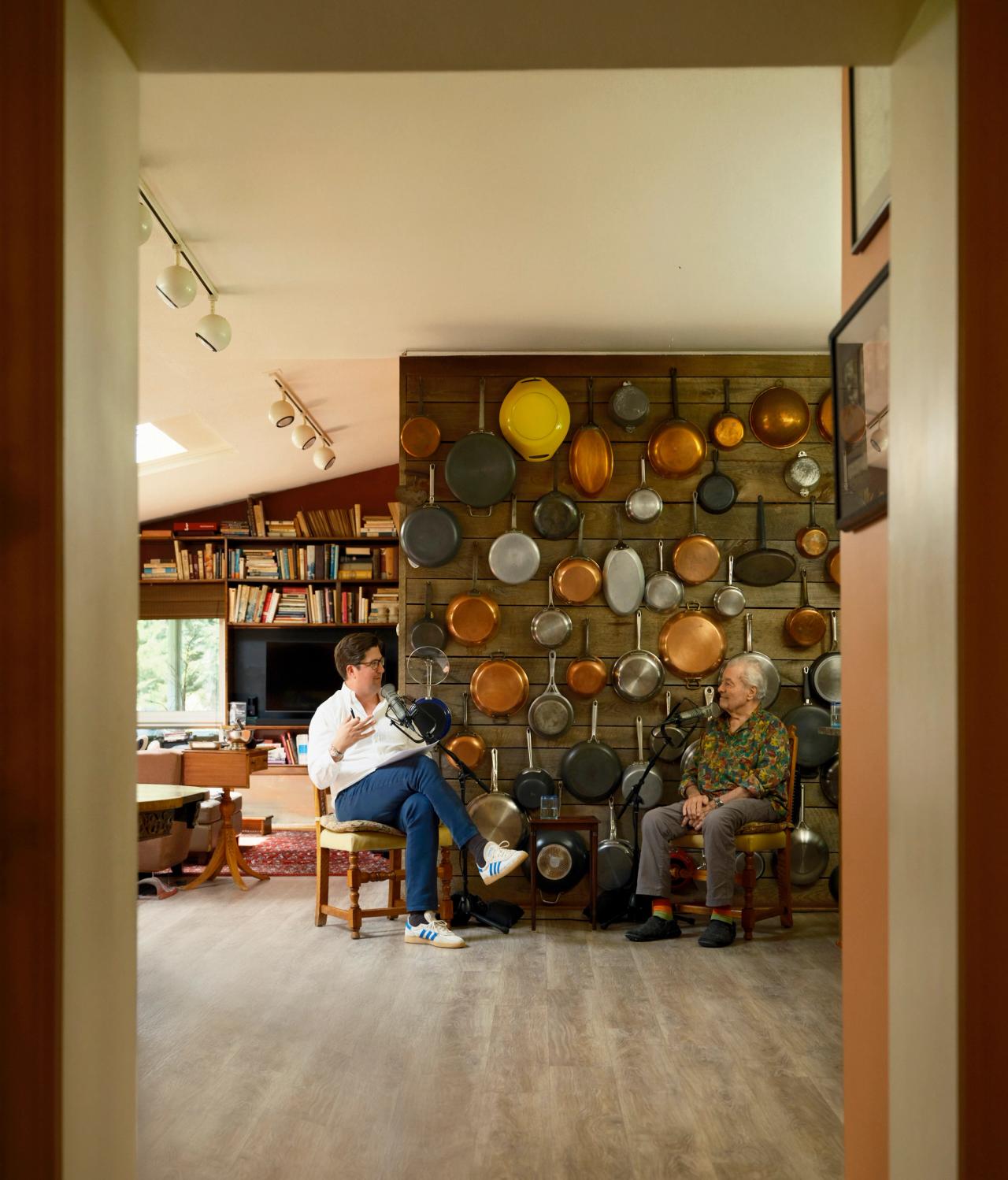
Spencer Bailey in conversation with Pépin during the recording of Ep. 158 of Time Sensitive. (Photo: Matthew Harrington for The Slowdown)
SB: You’ve never really planned your life. Things have just happened along with them. Where do you think this go-with-the-flow sense of openness and also resilience comes from? How would you describe the Pépin philosophy of life?
JP: Life is a series of things which happen and one leads to the other and that leads to this. I never expected it. I never planned this. I never intended it. The occasion came; I said, “Yeah, that’s a good idea. Maybe I’ll try that.” And so forth. That’s how my life worked, basically.
SB: You started cooking when you were 13—well, before that, technically, but in a kitchen, really. Kitchens have been your home since you were born. Take me back to some of the kitchens you grew up in. Describe some of these kitchens.
JP: Certainly where I come from in France, the women are very well known and very powerful in the kitchen, way before what happened in the last few years here. My mother had a restaurant, and I think in my family I count seven or eight restaurants, all with women, my aunt, my cousin, and so forth. So yes, women were very good in the kitchen.
Certainly to step ahead between ’56, ’58, when I was chef to the president in France, I remember going down to Nantua [the French commune] where my aunt had a restaurant there and getting into the kitchen with her. She’d throw me out. She’d say, “Get out. You use too much butter,” or whatever. They were not really impressed by what I did at that time and so forth. This is what started.
Prior to me leaving home, my mother had a restaurant. Of course, we worked in the kitchen with her at that time. There was no telephone, no television, no radio. We helped in the kitchen, whether it’s peeling potatoes or doing one thing or another, coming out of school. You learn this way. When I left to go into apprenticeship, I was pretty used to the ingredients and so forth.
“You had a set of rules, but it’s not like it was written; it was only verbalized. The chef said, “Do this,” and that’s it.”
It’s not like you had a set of rules... You had a set of rules, but it’s not like it was written; it was only verbalized. The chef said, “Do this,” and that’s it. So, that’s how you do it. You look at it, the way he does it, and you repeat as much until you can do it properly. This was really the learning of techniques like this, using the ingredient in one form or another.
At that time, you would use the ingredient and the chef would tell you, “Do this, do that, do this.” So, you follow. You would never have thought of improvising. You cut a tomato in that direction; you never thought of cutting it in the other direction. It was pretty strict this way.
Even in Paris, where I worked at the Plaza Athénée, that was, again, an idea for those techniques. You could go into a restaurant like the Plaza where there were forty-eight chefs and feel at ease right away because people were cooking the same way. Those techniques were the same. It’s not like in some other cooking, [where] sometimes there is a lot of difference between one cook or another. In France also, but more in the finishing of dishes than in the basic proper technique.
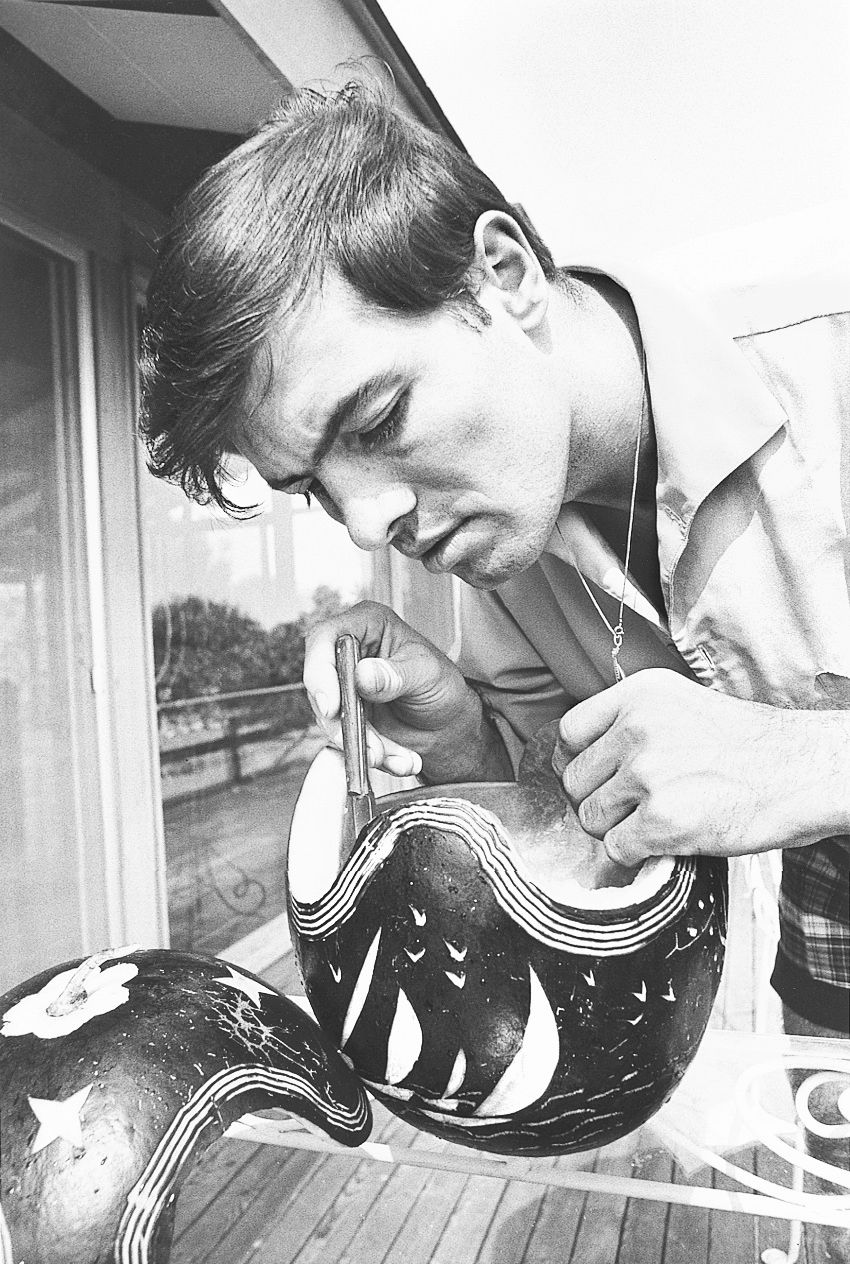
Pépin carving a watermelon. (Courtesy Jacques Pépin)
SB: Tell me about this time in the kitchen, because I imagine from 13 to, well, 38, you probably spent more time in the kitchen than anywhere else.
JP: Oh yes, absolutely. I worked, as I said, in different parts of France. Eventually, when I was 17, I decided to go to Paris and I became a member of the society there so I could have a job. I worked in many different restaurants. In Paris, some of them I stayed longer, like at Le Meurice, the Plaza Athénée, whatever. But on my day off, I usually would work in other restaurants. That’s basically the way you learn.
On Wednesday or Thursday afternoon, there was still the meeting of the chefs on Rue Saint-Honoré. Somehow in France, we still worked at that time, when I was there two shifts. Start at nine o’clock, usually, in the morning, around then; finish at two o’clock, out; start at five-thirty until ten o’clock. La coupure, what we call “the cut” in the afternoon, between two to five. Usually you go sit on the bench, there’s not much you could do. But on Wednesday, the chefs would meet there with hundreds of chefs from Paris. There you have all kinds of deals going on: “You need someone,” or, “I need someone.”
SB: Chef trading. [Laughs]
JP: Yeah. That was that type of life. At some point I decided to come to the U.S. I thought that I would stay here for a year and learn…
SB: Here you are.
JP: America. I learned jazz. I learned… That’s why I came to America. Sixty years later…
SB: You touched on it, but I think for the listeners who aren’t familiar, you were the chef for Charles de Gaulle.
JP: Yes.
SB: What was that like, working in that kitchen? This is a kitchen where … it had been Napoleon’s kitchen once upon a time, right?
JP: Yes. But the point is, at that time, the cook didn’t have the prestige that he has now. The cook was the cook. So, I was in the Navy. I was called in the Navy.
SB: During the Algerian War.
JP: In the Algerian War, yes. I was lucky enough to do my basic training in Paris. Eventually I could not go to Algeria right away, because my brother was there already, and they didn’t send two of the same family at the same time if you were “two called,” that is.
I was sent to the center of Paris, which was the main Navy center, too. I ended up in the kitchen there, of course, with cooking. At some point, I was asked to do a special dinner for one person or another, and I ended up with the minister of the Navy and I ended up with a few big people like this.
At some point I was asked to go to the prime minister’s residence, which was at that time [Félix] Gaillard, not Charles de Gaulle. I remember that day because they picked me up with a car, rushed me there. I basically had time to go to the market for an hour to get the lunch, and I created a lunch for six people—a simple lunch, whatever, veal chops…
I stayed there. Eventually I had a friend who joined me, Jean-Claude, who eventually came to the U.S., and he died a few years ago, but he was my oldest friend for many, many years. I said, “I need a pastry chef,” because I was alone in the kitchen; it was the dishwasher and me and eventually Claude. It was, in a sense, very free. We were free to do what we wanted.
SB: It wasn’t like you were a celebrity or anything.
“At the time, there was no celebrity. That didn’t exist. The cook was at the bottom of the social scale.”
JP: At the time, there was no celebrity. That didn’t exist. The cook was at the bottom of the social scale. Eventually, the government changed. The government was changing at a relatively rapid pace under the Fourth Republic in France, and they had a second one [...] who lasted a few months. Eventually de Gaulle came, the 12th of May, I remember, 1958. And so Madame de Gaulle was the only other... Because it was a big apartment there, so they lived there. I dealt with her to do the menu, the regular menu for every day. Then usually, with a couple of other people when it was a state dinner, you have a state dinner and you have the prime minister of Algeria, so you’re not going to do lamb. They tell you, “Don’t do pork.”
So, that’s the way it was. I stayed there, dealt with Madame de Gaulle, and I served people like [Dwight] Eisenhower, [Jawaharlal] Nehru, [Josip Broz] Tito, [Harold] MacMillan, many others. But I was never once on television or radio. That didn’t exist. The cook was, as I said, at the bottom of the social scale, and that was it. Even after I went back to the Plaza Athénée, people knew that I was with the president. They said, “How was it?” They were more curious... They were not really impressed by it.
I had a friend there at the Plaza Athénée, the big pastry chef who had been to America, and he told me, “You should go to America. It’s great. It’s fun. It’s this and that.” So, I said, “Yeah, I’d be interested.” He said, “Well, I have a friend coming this summer. He can talk to you and sponsor you if you want.” I said, “Great.” And that’s what happened.
SB: You got on a boat... You didn’t even have a job here, right?
JP: No, no. That man had a restaurant called La Toque Blanche on 50th between First and Second Avenue. And he said, “You want to come here? I’ll sign for you.”
At that time— I have to say that it wasn’t like now, [when] all the Europeans are together and so many Europeans can come to America. At that time, it was all separated. So, for example, the Italians would wait five years, because in the thirties there were millions of Italians who came. So to come and get the thing, it was difficult.
The French never really immigrated that much, so it wasn’t... When I asked, especially at the time, I went to the American consulate. I got my papers in three weeks, four weeks. I wasn’t even ready to go. I had to wait. So, fine, I had my green card, so I decided to go. As I said, I thought that I would stay here a year.
SB: As you’re coming up in these kitchens, you’ve described developing what you call a “taste memory.”
JP: Yes.
SB: I wanted to ask you about this. Could you elaborate on taste memory? How do you think about this?
JP: Yes.
SB: Yeah.
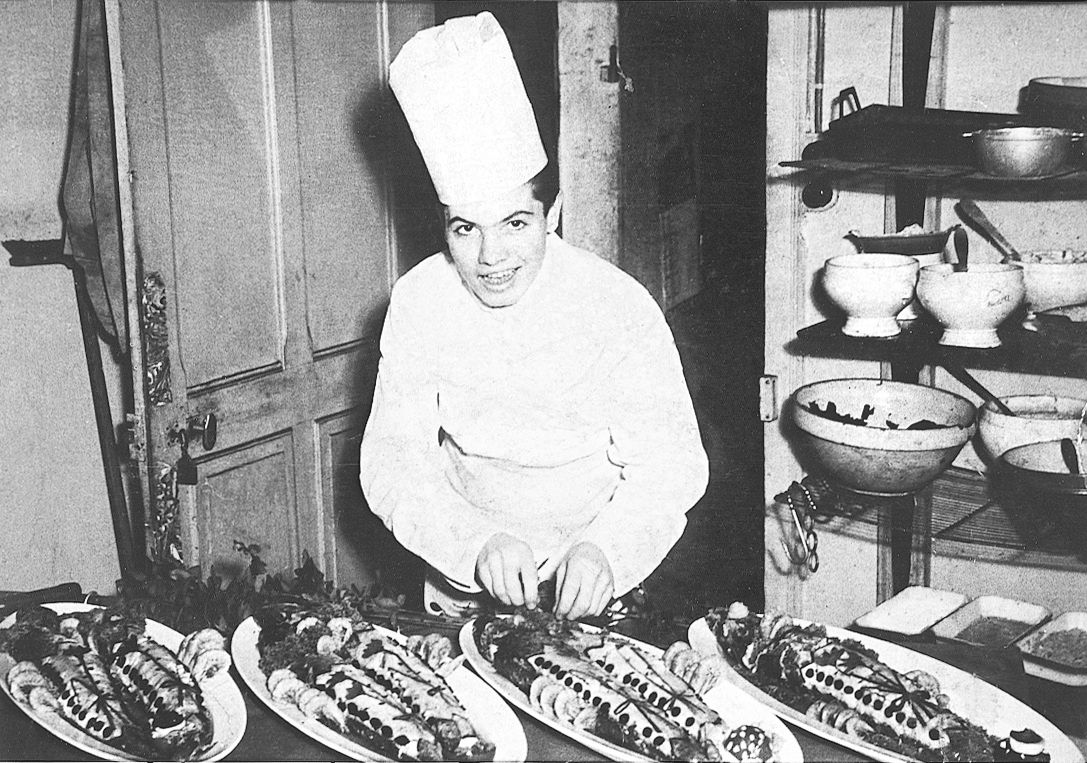
Pépin at 16, as shown in a newspaper photograph, with the banquet he prepared for the Fireman’s Ball in Bellegarde, France. (Courtesy Jacques Pépin)
“Taste memory is really the way you create a dish. Say, ‘Add that to that. Put some of that in there.’ You taste, and you taste, and you say, ‘No, not yet. You need a little more of this. You need a little more of that.’ Until that taste can reverberate or come back to your mind and say, ‘Yeah, that’s about it. We are there now.’”
JP: Taste memory is really the way you create a dish. Or let’s say you show people how to do a dish and say, “Add that to that. Put some of that in there.” You taste, and you taste, and you say, “No, not yet. You need a little more of this. You need a little more of that.” Until that taste can reverberate or come back to your mind and say, “Yeah, that’s about it. We are there now.”
So the taste memory was very important at that time because there was no recipe or written recipe. You work at the Plaza Athénée, this is the way you did it. The lobster soufflé at the Plaza Athénée was this way. And as I said, probably in my book, the forty-eight chefs could have done it. You wouldn’t have known which one had done it, but that was the way it was.
SB: One of your earliest taste memories from age 6 was during the war when your mother sent you to stay on a farm and you drank a glass of warm milk.
JP: Yes. I mean, my mother dropped me there for the summer vacation, two months. And she knew at the farm I would have something to eat. The woman, the farmer, took me to the barn to see the cow, and she milked the cow. I was never that close to a cow. Then she gave me a big glass of warm milk, full milk, which I drank. I remember that taste specifically.
SB: Was that when you decided you wanted to become a chef?
JP: Well, I don’t know if it’s this, but certainly I was doing good in class. I had to go to school until age 14. That’s required in France, the primary school. I was in that class when I was 12. At 13, I asked to take the final exam and so forth. I passed it.
I’m saying that to say that I didn’t have any problem in school. I could have continued in school. But I wanted to pass it and go to work. The kitchen was something which was important in my mind through all those years with my aunt, cousin, mother.
We ended up going back to where I was born, in Bourg-en-Bresse, in the biggest hotel there, which was a beautiful hotel. Actually a beautiful kitchen with big open window doors, so people could see the kitchen and people cooking and all that. It was very clean and neat and so forth. That was my first experience in a professional kitchen, and a good one.
SB: What are some other taste memories that come to mind for you now that you think about that?
JP: Well, a taste memory kind of assails you or attacks you when you expect it least. You’re eating somewhere, and you say, “Wow, this reminds me exactly of whatever.” So yeah, you have those memories which come back, which stay in your mind.
The way the one dish was at the Plaza Athénée in Paris—it was different than at Le Meurice, which was a very fancy hotel and restaurant. In fact, I had dinner there... I had a friend who had dinner there not too long ago, and they called me from the kitchen there with the chef at Le Meurice hotel. Now it’s a three-star restaurant.
So, those restaurants, after you do them one after the other, each one of them, you have certain taste memories come back from those restaurants.
SB: As you mentioned, your mother was a cook and restaurateur, so I’m sure you have a lot of taste memories from her establishments.
JP: Oh yeah, without any question. I mean, the most is probably from her when I was a kid.
SB: I think about the eggs Jeannette.
JP: The eggs Jeannette, yes. Sometimes I took those recipes that she did and elaborated on them and did something with it, or left them the way they were. The eggs Jeannette was just the way she did it. It’s a very simple hard-cooked egg, where the yolk is mashed with some garlic and parsley, a bit of milk, and restuffed. Then it’s sautéed in a skillet with the stuffed side down and done with the mustard sauce on top. It’s pretty simple, but it’s good. It’s very good.
SB: As you mentioned also, your father was a cabinetmaker. I know he could be very meticulous.
JP: In the kitchen.
SB: In the kitchen, but also just in his work, he was very precise.
JP: Yes.
SB: Do you think you’ve inherited a bit of both of your parents when it comes to how you work in the kitchen?
JP: Probably. I worked fixing up houses, fixing up old stuff in the style of my father, but it wasn’t unusual at the time. In France when I was a kid, and even after, even when I came back here... I went back and spent time in France, I would go back and help my mother decide to repaint three bedrooms and so forth.
I never remember ever having anyone professional coming to do those things. It was always the family doing repainting, repairing that, redoing that. It’s part of the tradition, I suppose.
SB: So, you board the ship to America, you come here. Do you remember what was going through your mind when you left for America?
JP: No, I think... My parents drove me from Lyon to the harbor in France, in the north of France. I remember sitting on the deck, looking at the coast of France, leaving, and my parents there and the car. But that was very exciting.
At that time, I didn’t speak English and the boat was full of students, American students coming back from spending the summer in different parts of Europe. It was very exciting. I found someone who spoke French, one of the teachers and so forth, and started practicing my English. It was exciting, yes.
SB: 1959, the precipice of the sixties.
JP: Yes.
SB: You’ve spoken about this particular drive and determination of being an immigrant that also comes with leaving, the joy, excitement about what’s ahead, but also the loss of what you leave behind.
JP: Yes.
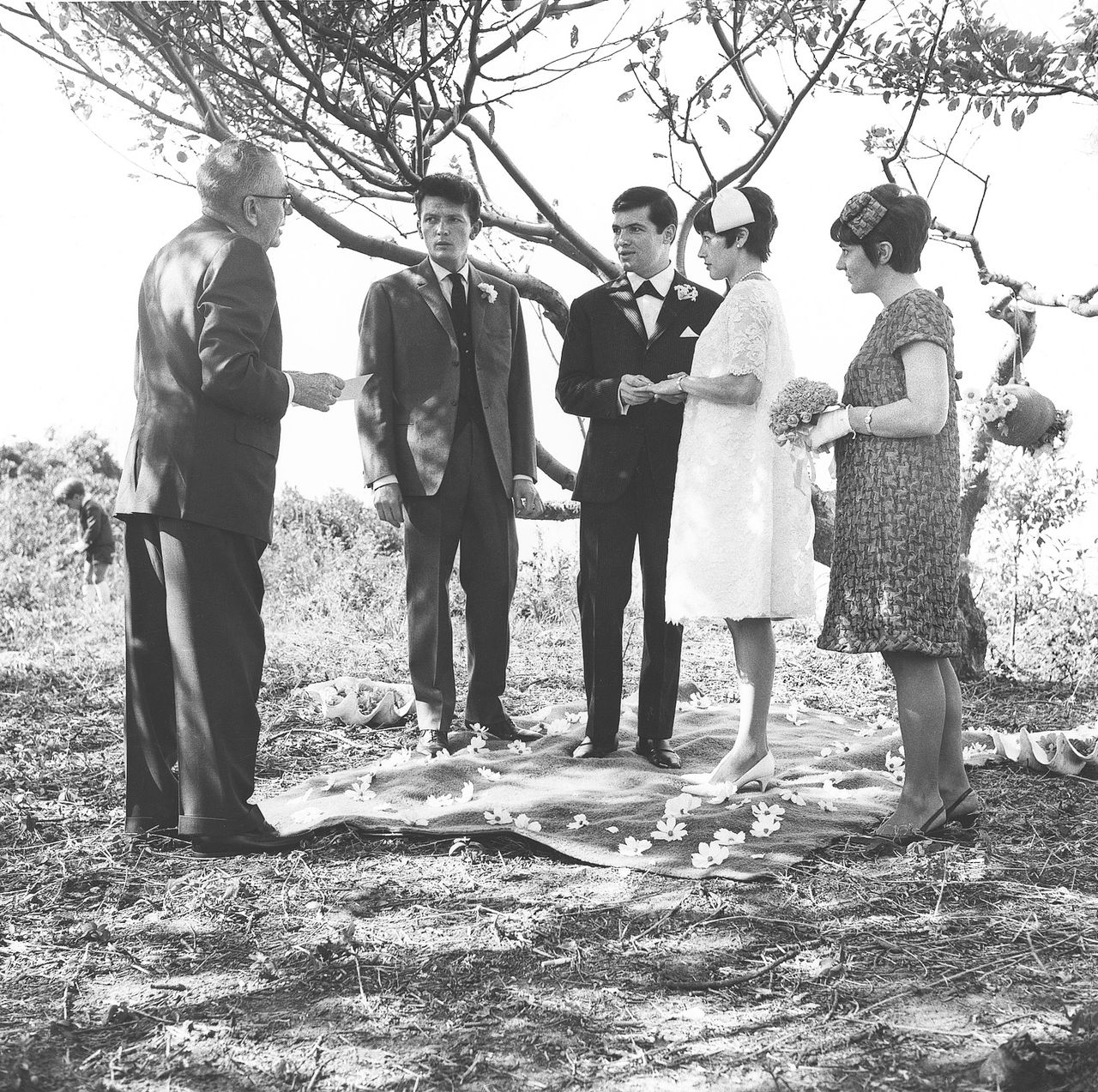
Pépin and Gloria on their wedding day in Sept. 1966, at Craig Claiborne’s Long Island home. (Courtesy Jacques Pépin)
SB: When did America start to feel like home for you? What was...
JP: Actually, quite early. I know people ... many French people that I know, friends, who talk about France for much longer than I do, and go back to France, too. I never really... Yes, I went back on vacation, I did, too. But I never really thought that I would move back there. I became American pretty fast. [Laughter]
SB: You famously turned down this opportunity to work for the Kennedy White House to take a job at Howard Johnson’s, which—
JP: Again, the cook at the time was still at the bottom of the social scale. That’s when I came here. I worked at Le Pavillon, which was supposedly the greatest restaurant in America. It was a great restaurant. With Pierre Franey, who was the executive chef, I became friends with him.
Eventually, we had problems with the owner, so we all left, and he had to close. One of the clients of Le Pavillon was Howard Johnson, the old man. Then he asked Pierre to work for him, and Pierre asked me, “You want to come with me to Howard Johnson’s?” So, it was a totally different world of cooking.
At the same time, I was asked to go to the White House, yes, for the Kennedys. But I said having done that, the Howard Johnson type was more exciting to me. As I say, at that time, the cook was still at the bottom of the social scale, so there was no big—
SB: I mean, it seems unthinkable in today’s food culture, right?
JP: Yes.
SB: That you would turn down such a job or go from working at Le Pavilion to working at a Howard Johnson’s in Queens flipping burgers. [Laughter] You weren’t literally doing that... Well, you did do that for a minute.
JP: Yeah, I did. I did do that.
SB: Yeah.
JP: Mr. Johnson said, “If you want to work for us, first you have to go work in the kitchen for a while, the restaurant.” So, I worked in Queens at the restaurant there. The speed, too. And within a couple of weeks, I could go as fast or better than anyone in the kitchen, moving. So, that was another training in the same idea as the training I had in Paris, working in different restaurants on my day off and so forth. So it was that type of thing.
After, we went to the commissary in Queens Village, and that was the three-thousand-gallon kettle, a big, big thing. That was exciting too. It was different, too.
SB: Yeah, it was getting into food science and—
JP: Yes. Food science, too. I never had done recipes before. It was all usually in my head and so on, or taste memory. But there I started writing, writing, writing recipes all the time. So that was something new. I was ten years at Howard Johnson’s. When I left Howard Johnson’s, I opened a restaurant on Fifth Avenue called La Potagerie.
SB: The soup restaurant.
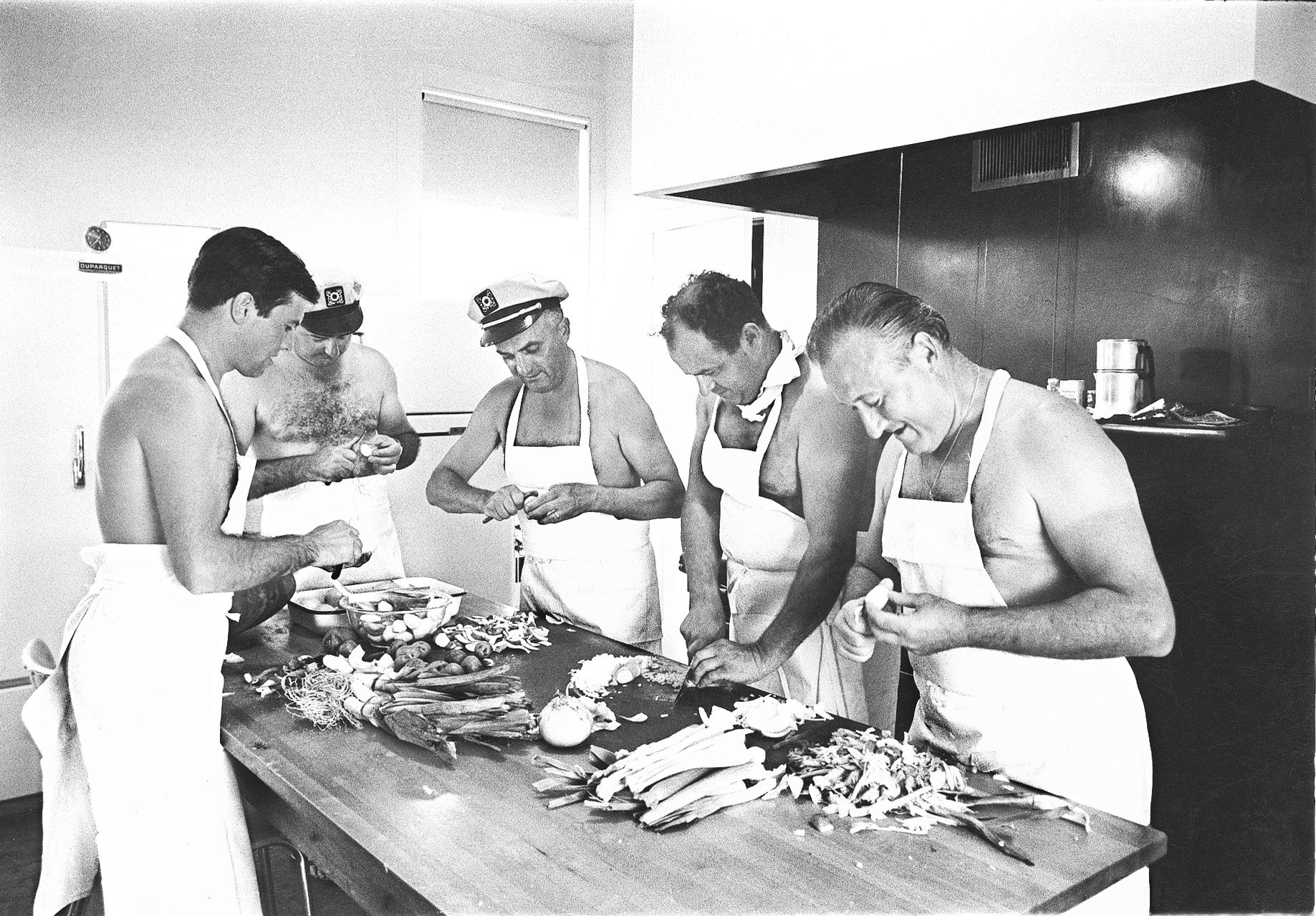
A young Pépin preparing for a party organized by the New York Times food editor Craig Claiborne in his East Hamptons kitchen in 1965. With Pépin (L-R): Roger Fessaguet, chef at La Caravelle; Pierre Franey, chef at Le Pavillon; Réné Verdon, chef at the Kennedy Whitehouse; and Jean Vergens, chef at Le Colony. (Courtesy Jacques Pépin)
“I would never have been able to do what my life became without the training of Howard Johnson.”
JP: Yeah, a soup restaurant. Then, eventually, I did the commissary for the World Trade Center and so forth. I have all of those memories that I did after. I would never have been able to do what my life became without the training of Howard Johnson. If I had been to the White House, I would have been to the White House, but I would never have gotten that training, of doing a thousand pounds of this. So Howard Johnson was very big in my life training.
SB: This might seem like a side tangent, but I wanted to bring up literature, because at 17, when you were in Paris, you began reading Camus, Beckett, Simone de Beauvoir. You were reading them because they were literally your customers at this restaurant, La Rotonde.
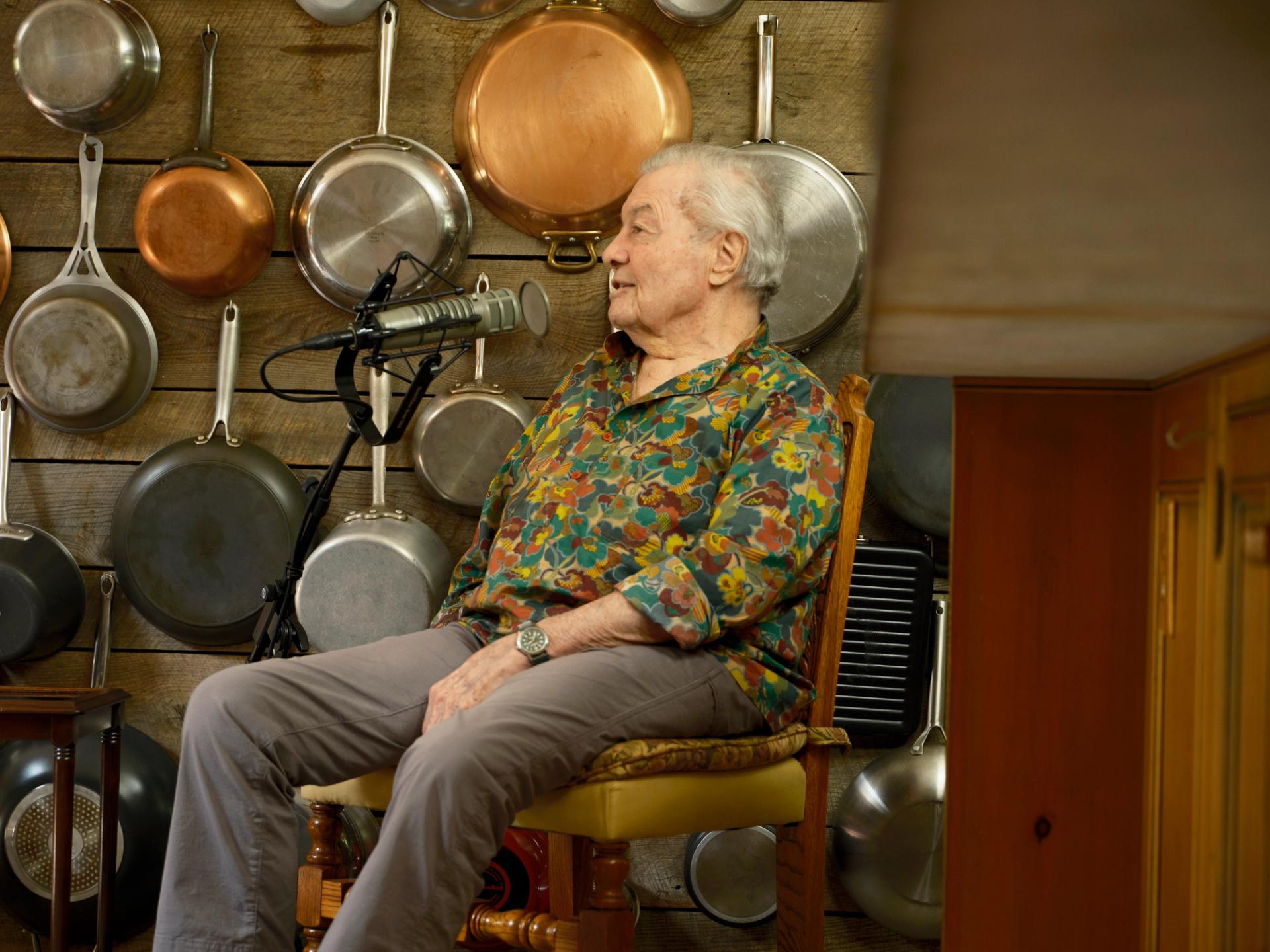
Pépin at his home during the recording of Ep. 158 of Time Sensitive. (Photo: Matthew Harrington for The Slowdown)
“I went through the whole [library], from Foucault to, certainly, Camus. I got into that type of habit and realized that I should go back to school.”
JP: Yes. Not only that, but as an apprentice, in Paris, there was a big library for the employees, like four thousand books. You could borrow a book for two months. I got into a bit of borrowing books. So I went through the whole [library], from Foucault to, certainly, Camus. I got into that type of habit and realized that I should go back to school. That’s one of the reasons that I was happy to go back to school in many ways.
SB: I think it is remarkable. You left school at 13. You go work in all these kitchens, then you come to America and you get into Columbia University.
JP: Right. But when I was onboard that ship coming, I found somebody who spoke French, one of the teachers there. And I said, “I left school when I was 13. I don’t speak English. So what do you think that I should do?”
He said, “You should go back to school.” He said, “Where are you going to be?” I said, “I’m going to be in New York.” He said, “Well, the best school in New York is Columbia University,” which of course I’d never heard of.
The week after, two weeks later, I took the subway. I wound up at Columbia and somehow there I found someone who spoke French. I said, “I need that, too.” They took me from an office to another office. Then I came back and eventually I registered for English for Foreign Students. I did that for three seasons, I suppose. I didn’t get any points or anything for that.
But after I did it for a couple of years, I said, “Maybe I should start investigating whether I can get some other…” So I went to see again an advisor and said, “I never went to high school, but I would like to do a refresher course.” He said, “Well, yes.” Once a year, they give a class for seven hundred people about. A class that was three hours where you start in mathematics where they say one and one is two... I mean, very, very simple. But with all subjects, it was like this, and they give, I suppose, a reading of who you are or whatever. And you were accepted in that program.
So, I was accepted in that program, a validation program where I had to do, at that point... I had to do that class, that class, that class, keep a B average, which I did. That lasted three years or so, three, four years. Then I was accepted into the School of General Studies. So I went to Columbia from 1959, when I came, until 1972…
SB: [Laughs]
JP: …working in New York, but going back at night in school and—
SB: Got a master’s along the way in French literature, right? Not a Ph.D. because... Well, that’s a funny story. Maybe you could share that.
JP: Well, the Ph.D., I mean, I had my master’s. So, at that point I wanted to go back to what I knew the best and all that, which was the study of food. And there was nothing written about food.
I proposed a doctoral dissertation starting with the Greek cooks at that time up to Voltaire and many others in the eighteenth century, a study of food in the context of civilization and literature.
I saw a couple of teachers, they said, “You cannot write about food like that.” I said, “Why?” They said, “This is not a... No, this is not a—”
SB: It was considered frivolous, right?
JP: Yes.
SB: Yeah.
JP: “It’s too frivolous. It’s not something serious. You cannot write something about…” So, at that time I said, “Okay, fine.” So I gave up. And then Columbia gave me a Ph.D. later on.
SB: Many years later.
JP: Yes. They realized that the study of food was actually important.
SB: You later became very involved with that in New York, in Boston.
JP: Yeah, at B.U. So, we created the Master of Liberal Arts at B.U., which is still on. Julia came and taught with me. Yeah, the program—
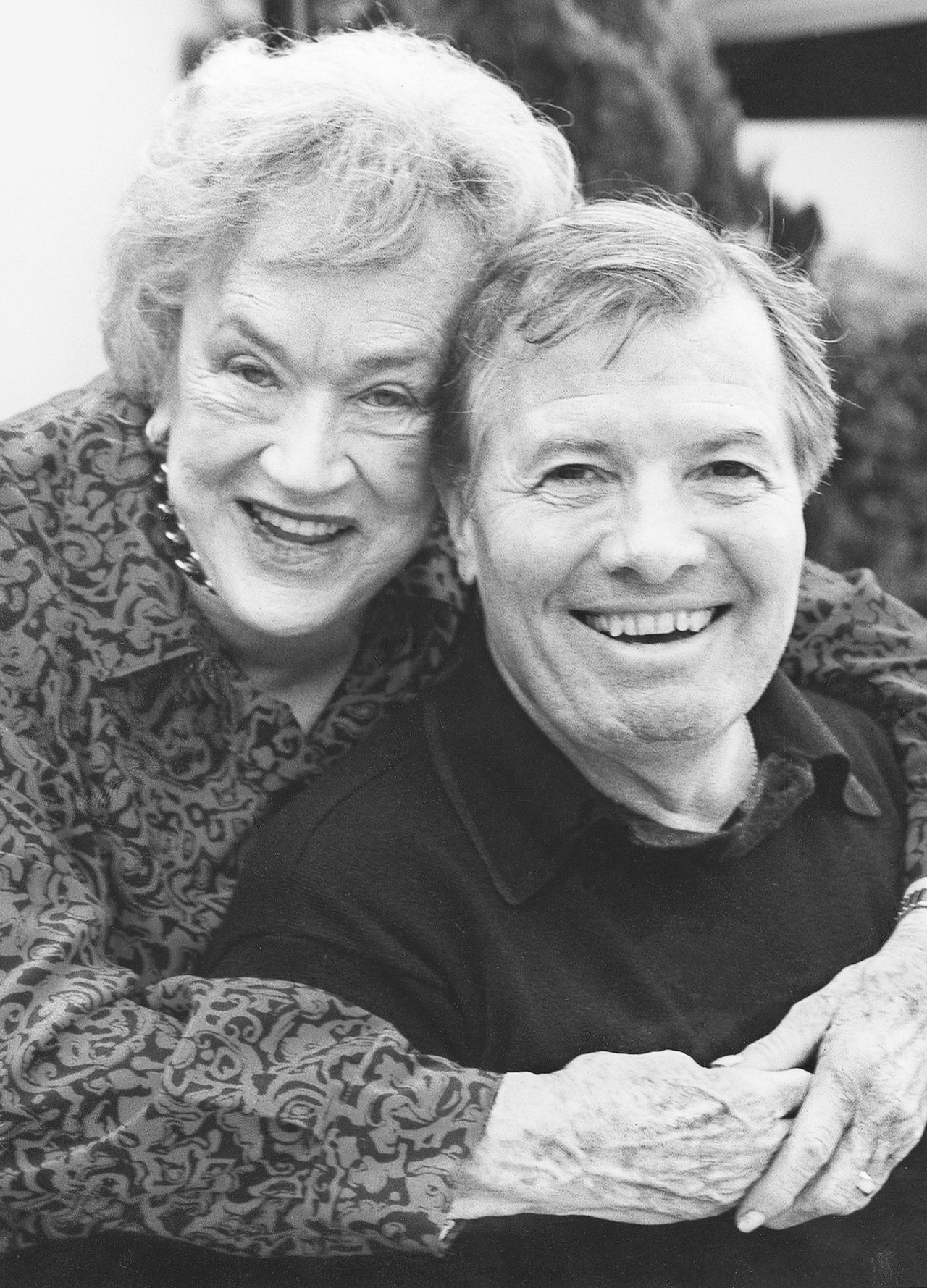
Pépin with fellow chef, author, and friend Julia Child circa 1998. (Courtesy Jacques Pépin)
SB: Julia Child—
JP: Yeah, Julia Child. So the program is still on and at Columbia, also the program is on.
SB: I’d like to ask you about this transformation in American food culture, because it’s fascinating hearing you talk about how low the chef was just a half century ago. When you arrived, in 1959, food was in this totally different place. There were no celebrity chefs, practically no food television, very few cooking schools.
JP: Yeah. I don’t really remember when a cooking school or anything [was] on television at all, or on radio or whatever.
SB: You’ve literally been at the front line of this, helping create this culture, this transformation.
JP: I was lucky to be there at the beginning and lucky to be part of it. Yes. I started giving classes in a little cooking school, and people would say, “Okay, we’ll book you for next year.” That was great. Someone asked me to write a book.
I was at Craig Claiborne’s, [whom] I met through Pierre Franey at Le Pavillon. Craig came and did a big article on Le Pavilion, and I met, and he lived next to me on First Avenue there. We became friends. I used to go to his apartment, cook... He’s the one who incited me to write about food.
So, one day I was at Pierre Franey’s in East Hampton in his house. And Herb Nagourney came, who was the publisher of... I forget which company... With Ann Bramson. Did I mention that already?
SB: No.
JP: No. With Ann Bramson, who was not his wife at the time, who became, and Craig was doing another book with them, with The New York Times. So he said, “So, what do you do?” I talked about it. I said, “Well, actually I started doing those technique books.”
And he said, “Well, if you’re interested, do you want to do a book with that?” I said, “Yeah, it’d be great.”
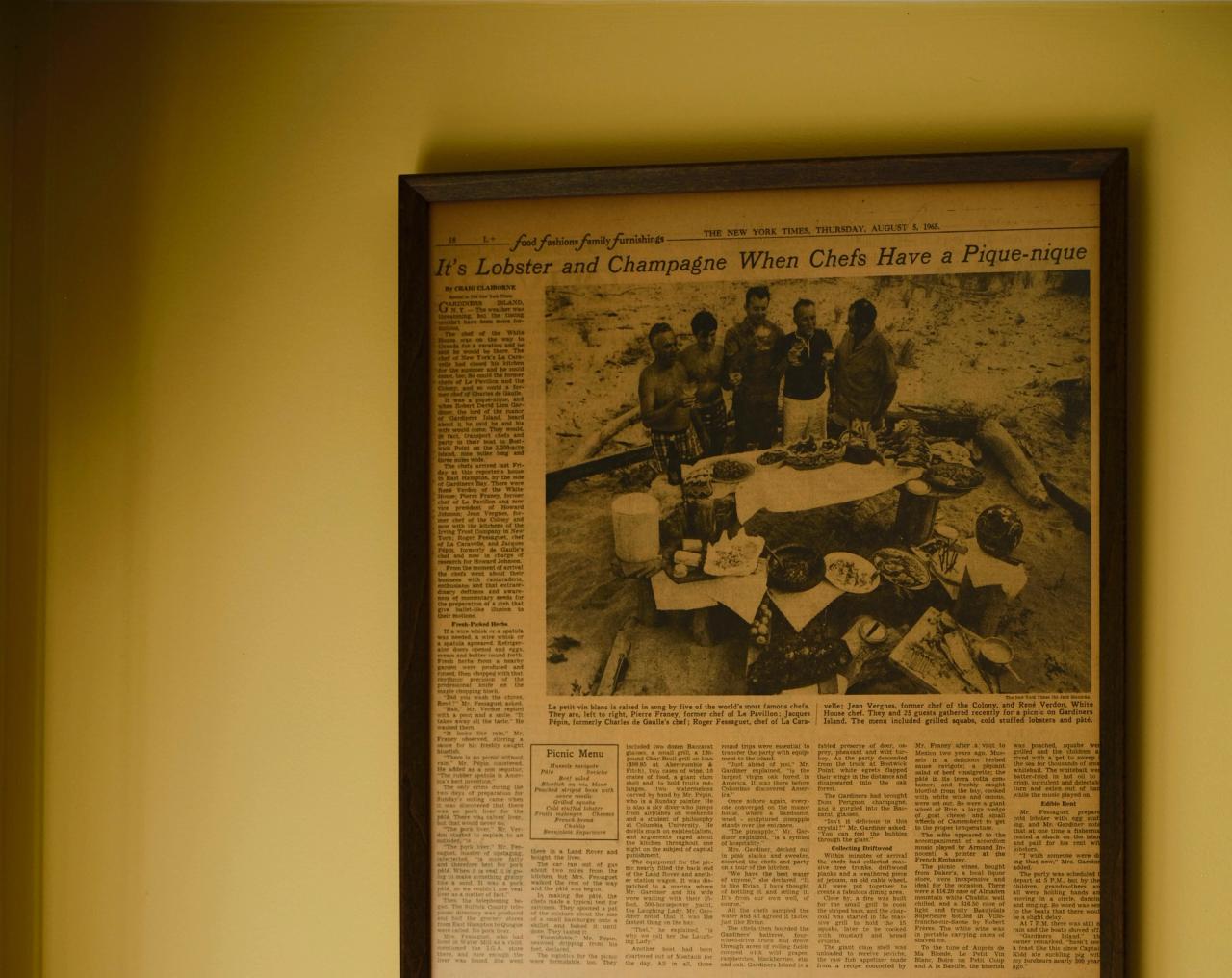
A framed newspaper clipping of a New York Times article about a picnic on Gardiners Island in New York in 1965, organized by Pépin, Pierre Franey, Roger Fessaguet, Jean Vergnes, and René Verdon, among the most acclaimed chefs of their time. (Photo: Matt Harrington for The Slowdown)
JP: Yes, certainly. Craig was a very interesting person, very open. He was gay, too, and not hiding it or anything. He had a very open mind on food. So, we came to his house very often with Pierre, and I ended up cooking there.
He went to the market; he’d buy food. He said, “What are you going to cook?” He would write down a recipe, and we started cooking and all that. I had never done that before. We did that big picnic on the island on the...
SB: Right. It was the New York Times article, right?
JP: Yes, right. That was the New York Times article. So, Craig had a very open mind this way, which—I was never exposed to it. Someone important like Craig, who lets you cook in his kitchen and cooks with you and shares the food with you and fun like that.
It was much more controlled in France. I never did that with important people in France, of course. Craig was very important in my life. He opened my mind and [was] probably one of the reasons that I stayed in America, also.
SB: I’m curious, too, to hear about Julia Child. You met her in the sixties as well?
JP: Yes. I met her almost right away after I was here, because I met Helen McCully, the food editor of McCall’s and House Beautiful, at the time. She lived also a couple of blocks from me on First Avenue. I met her through Craig. Helen invited me to her house. I cooked in her kitchen and all that. She was already in her sixties at the time, too. So she introduced me to a couple of chefs, but... What were we talking about?
SB: Julia.
JP: Yeah. So yes, one day she called me and she said, “Oh, that woman is going to come. I have a book here. I want to show it to you. That’s her book. She just had that book, but she’s coming next week. Do you want to come?” I said, “Yeah, sure.”
“Julia just came back from France. Her French was better than my English. That’s what we spoke in— And we became friends right away.”
Julia came, and then she introduced me. At the same time, the food editor of The New York Times or whoever... I mean, there were a couple of other people. I met Julia there. Julia just came back from France. Her French was better than my English. That’s why we spoke in— And we became friends right away.
That was in 1960. It was right after I came here. I was friends with her for all those years.
SB: As your teaching and career took off, it then joined up with hers.
JP: Yes, yes. We did. She did that book, Mastering the Art of French Cooking. She was showing me the manuscript a few times and working on that. We became friends around the food. Yeah. At that time, there were not that many people who were writing books or known food people. It was a different world.
SB: Particularly after your accident, and I would say in the eighties and nineties, you started doing a lot of TV yourself.
JP: The TV went way after, a long time after. As I said, I met there Julia and James Beard, who was a friend of Helen McCully, and he lived downtown.
Helen often told me, “Do you want to give some classes? People ask if you can give classes.” I said, “Yes.”
James always needed money. He was always broke. I said, “James, can I use your kitchen? I have a group coming from Florida or from California.” So, I would use his kitchen, and he would come down, of course, and sit with us. But that’s how I became friends with James, too.
SB: Wow. Did you ever imagine your cooking classes would take off the way they did?
JP: No.
SB: You went on national tours. Like you said, you were booked a year in advance.
JP: I would never have thought that it would come about this way. It was crazy.
SB: The millions, thousands, millions of people who...
JP: Yes.
SB: I was mentioning to my dad that I was interviewing you this week, and he told me that my mom took your cooking class at the Broadmoor Hotel, in Colorado Springs.
JP: Oh, yes. I worked at the Broadmoor, which was really great at the time. They invited me for several years. I went for a number of years. This and the West Coast. So people were doing that yearly schedule. I was part of it. That was great. Yes.
It was relatively easy for me. I would work out a menu of, like, five dishes and do the same one for each of the class. Sometimes it was actually relatively easy.
SB: What would you say became your most famous dishes? The omelet, the chicken?
JP: Or maybe a little more complicated, puff pastry and things like this, puff pastry and soufflés, certainly. We did soufflés regularly, and people were not really aware of soufflés.
SB: Beyond teaching, you’ve also, along the way, picked up painting.
JP: Yes.
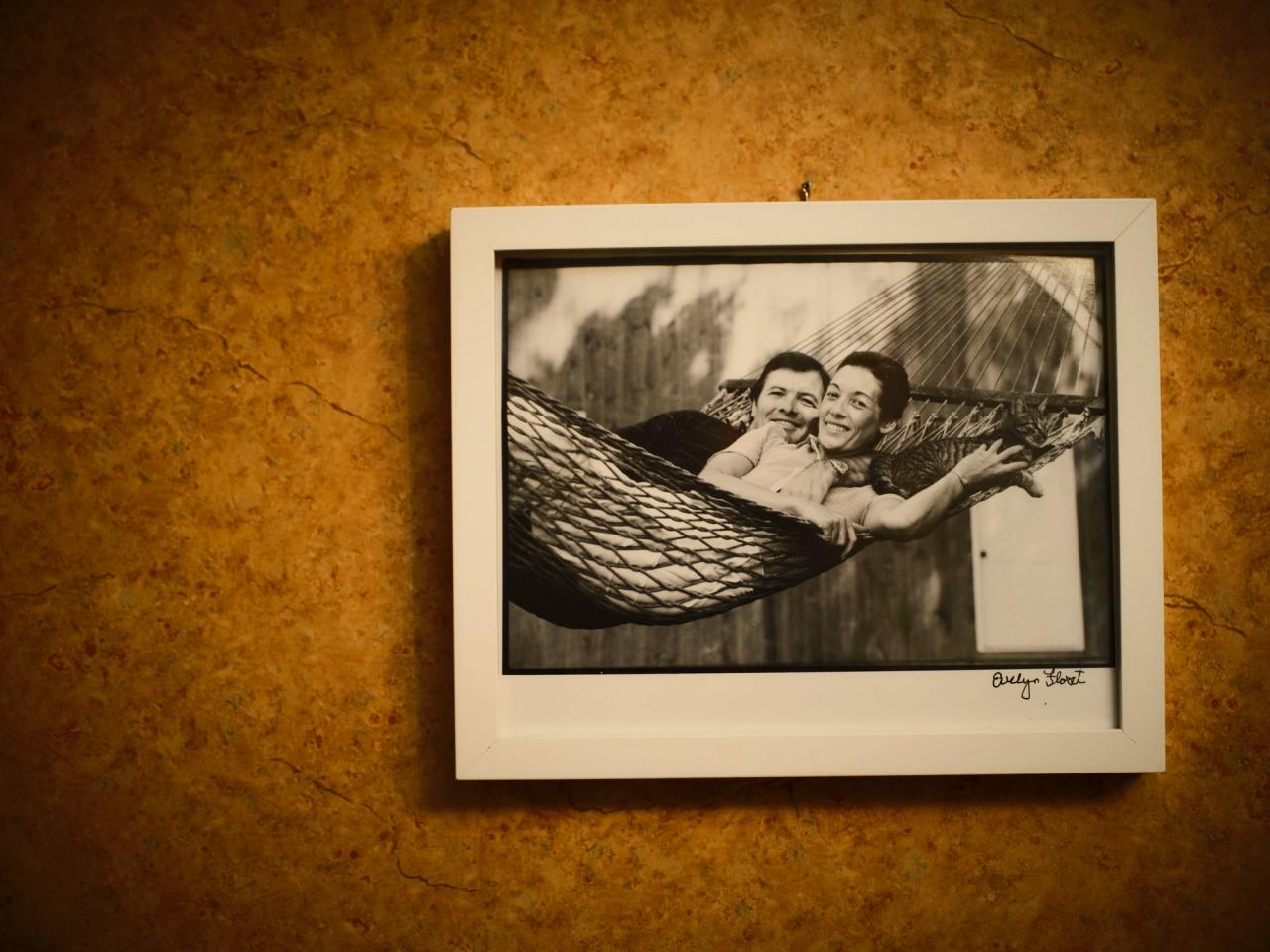
A framed photograph of Pépin with his wife, Gloria, in a hammock. (Photo: Matthew Harrington for The Slowdown)
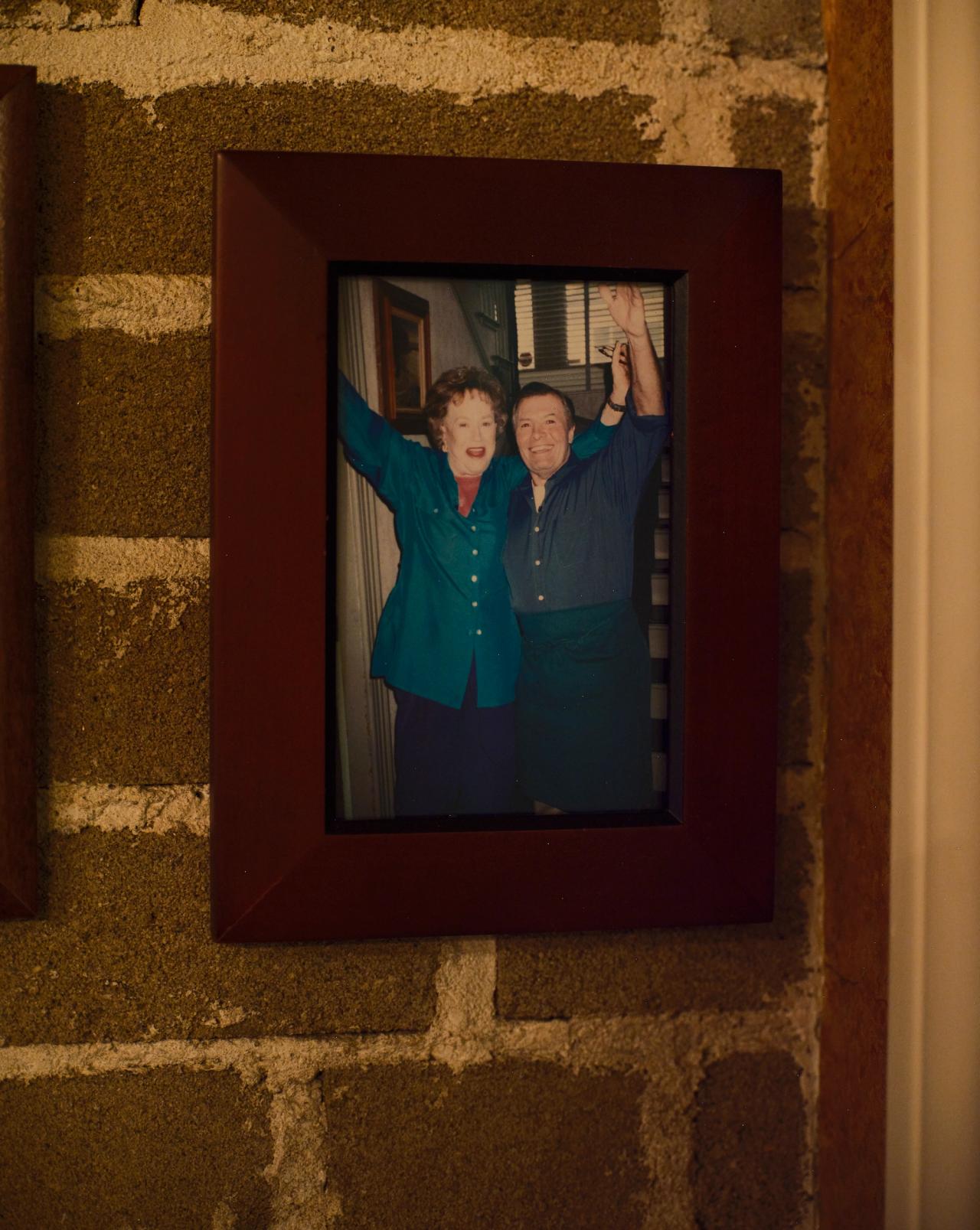
A framed photograph of Pépin with Julia Child, his friend and fellow chef. (Photo: Matthew Harrington for The Slowdown)
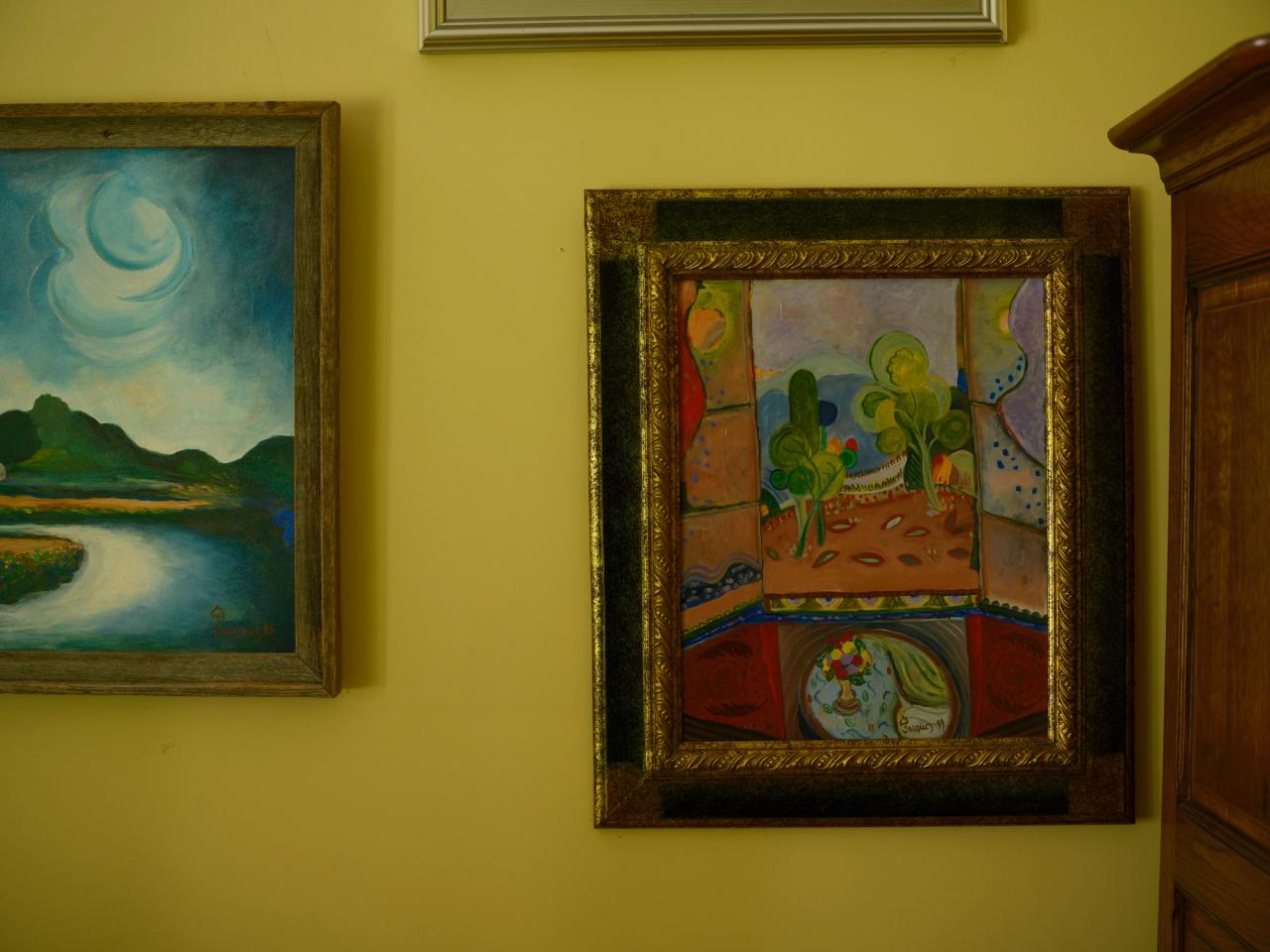
One of Pépin’s paintings at his home in Connecticut. (Photo: Matthew Harrington for The Slowdown)
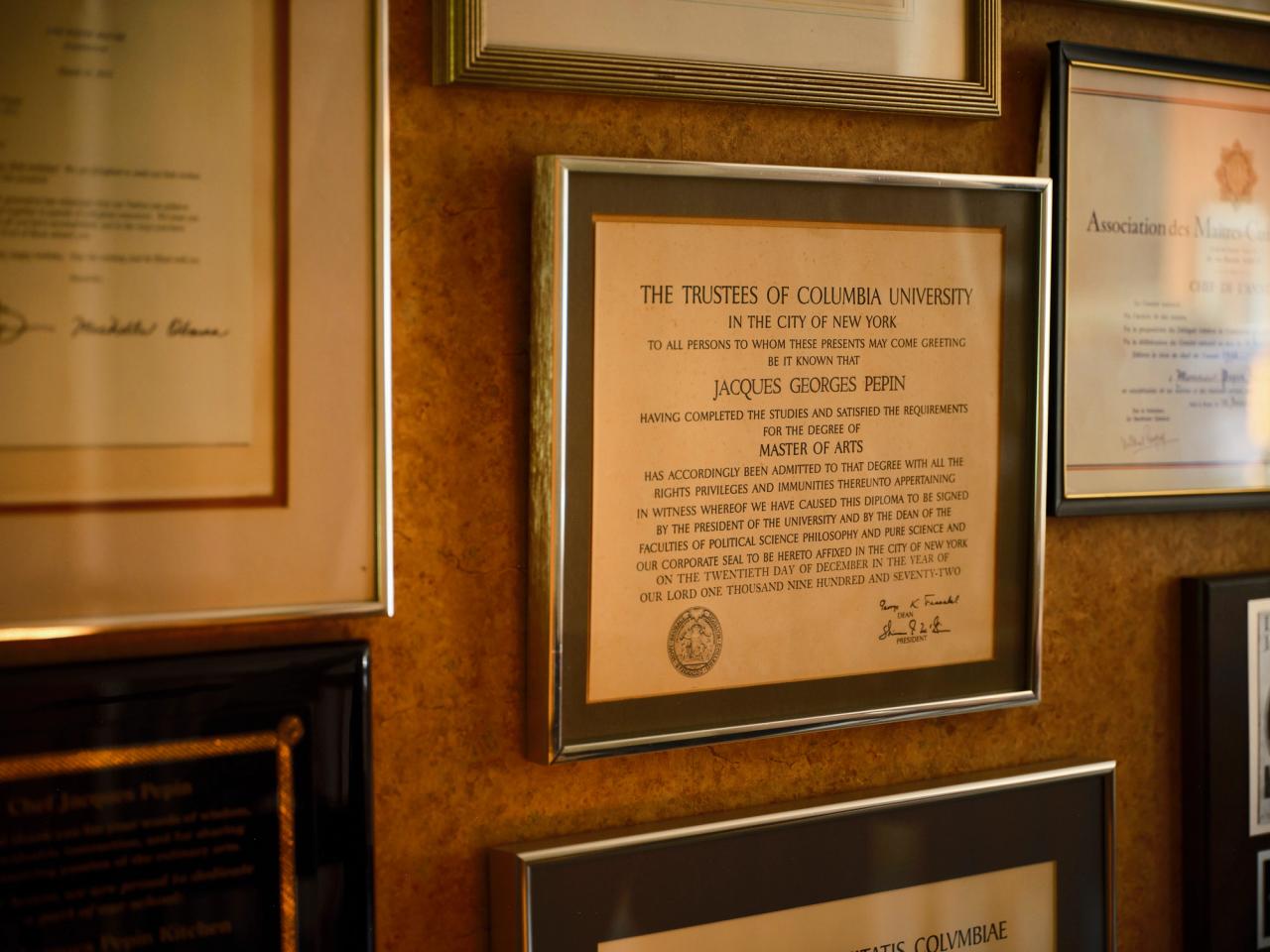
Pépin’s framed M.A. degree in 18th-century French literature, which he earned at Columbia University in 1972. (Photo: Matthew Harrington for The Slowdown)
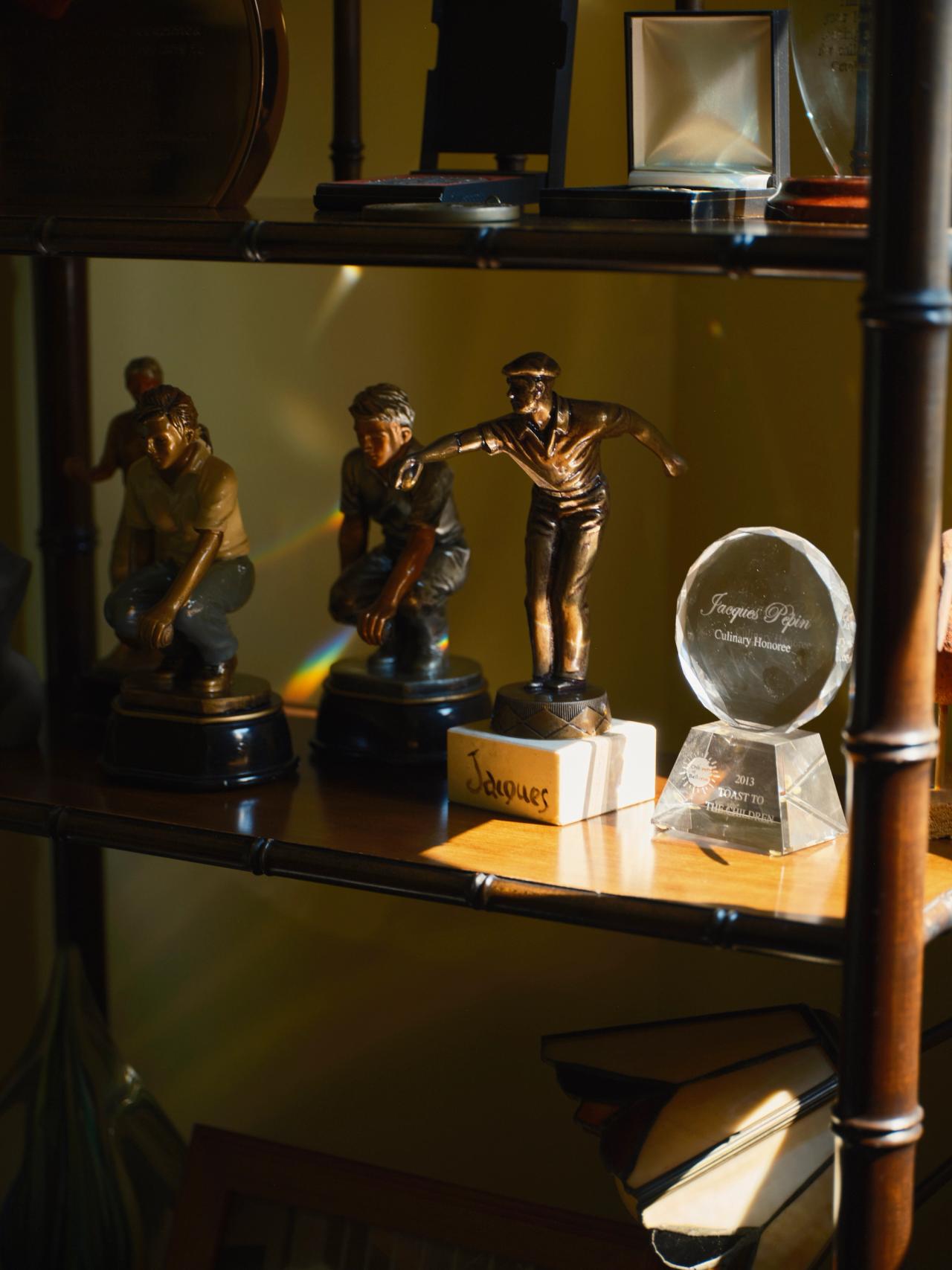
Various awards on display at Pépin’s home in Connecticut. (Photo: Matthew Harrington for The Slowdown)
A framed photograph of Pépin with his wife, Gloria, in a hammock. (Photo: Matthew Harrington for The Slowdown)
A framed photograph of Pépin with Julia Child, his friend and fellow chef. (Photo: Matthew Harrington for The Slowdown)
One of Pépin’s paintings at his home in Connecticut. (Photo: Matthew Harrington for The Slowdown)
Pépin’s framed M.A. degree in 18th-century French literature, which he earned at Columbia University in 1972. (Photo: Matthew Harrington for The Slowdown)
Various awards on display at Pépin’s home in Connecticut. (Photo: Matthew Harrington for The Slowdown)
A framed photograph of Pépin with his wife, Gloria, in a hammock. (Photo: Matthew Harrington for The Slowdown)
A framed photograph of Pépin with Julia Child, his friend and fellow chef. (Photo: Matthew Harrington for The Slowdown)
One of Pépin’s paintings at his home in Connecticut. (Photo: Matthew Harrington for The Slowdown)
Pépin’s framed M.A. degree in 18th-century French literature, which he earned at Columbia University in 1972. (Photo: Matthew Harrington for The Slowdown)
Various awards on display at Pépin’s home in Connecticut. (Photo: Matthew Harrington for The Slowdown)
SB: So, that’s how it happened.
JP: So, that’s how it happened. So he asked me, “How many pictures do you think?” I said, “Well, I think I’m going to need at least five hundred pictures.” He said, “Fine.” So that turned into a thousand.
SB: Yeah, you mentioned that.
JP: At that point when we started earning, I say, “Fifteen hundred.” He said, “Okay, that’s enough. Fifteen hundred, no more.” So I did La Technique. The first one, I put fifteen hundred and then I continued and called it—
SB: Le Méthode.
JP: Le Méthode and continued for the second volume. That’s how it started.
SB: I read that, in the late 1980s, you described in the last fifteen to twenty years, people have been getting more sophisticated, more demanding about their food. What do you think was causing that? Was it nouvelle cuisine?
JP: A great deal of it, too... I went back to France the first time in 1962—I came here in ’59—on a student plane. That did not exist before. Student planes, it was three hundred dollars or something like this.
This was the time where a lot of Americans who had been to France or Europe, different parts of Europe during the war... All of the young people started taking those summer planes to go back to Europe and learn about the wine. So, some people started getting interested in the wine here, and cheese, and wine. There was an exploding interest in food in different directions.
SB: Air travel.
JP: Yes, and air travel. I think so. It was a great part of it. I was part of that, too.
SB: And you mentioned Craig Claiborne, but there were these other people, Helen McCully, Julia Child, Howard Johnson, all these figures who were so paramount to shaping this food culture.
JP: Yes, absolutely, in this country.
SB: It’s amazing that your life interacted or you managed to connect with all of them, and so quickly, it seems like. How much do you think a life is shaped by these chance encounters?
JP: Shaped a lot by those encounters, as I said. When I was asked to go to the White House, I asked Pierre, and I ended up working with him. He introduced me to all kinds of… American chefs at the time were not... There was no television, nothing like this, but Pierre knew some restaurants. But actually most of the chefs that I knew in New York... I knew a bunch of chefs in New York, [at] big hotel restaurants, were all... I don’t think there was one American at the time. It was Swiss, German, French, of course, Italian... A lot of Italians and so forth. All chefs who had become chefs in the hotels.
The American chef started in the sixties, I guess. All of a sudden a young chef started here, and now there are extraordinary chefs, of course.
SB: Share a little bit more about Craig and meeting him and how that changed your life. I know you’ve said that he was a big part of how you learned about America.
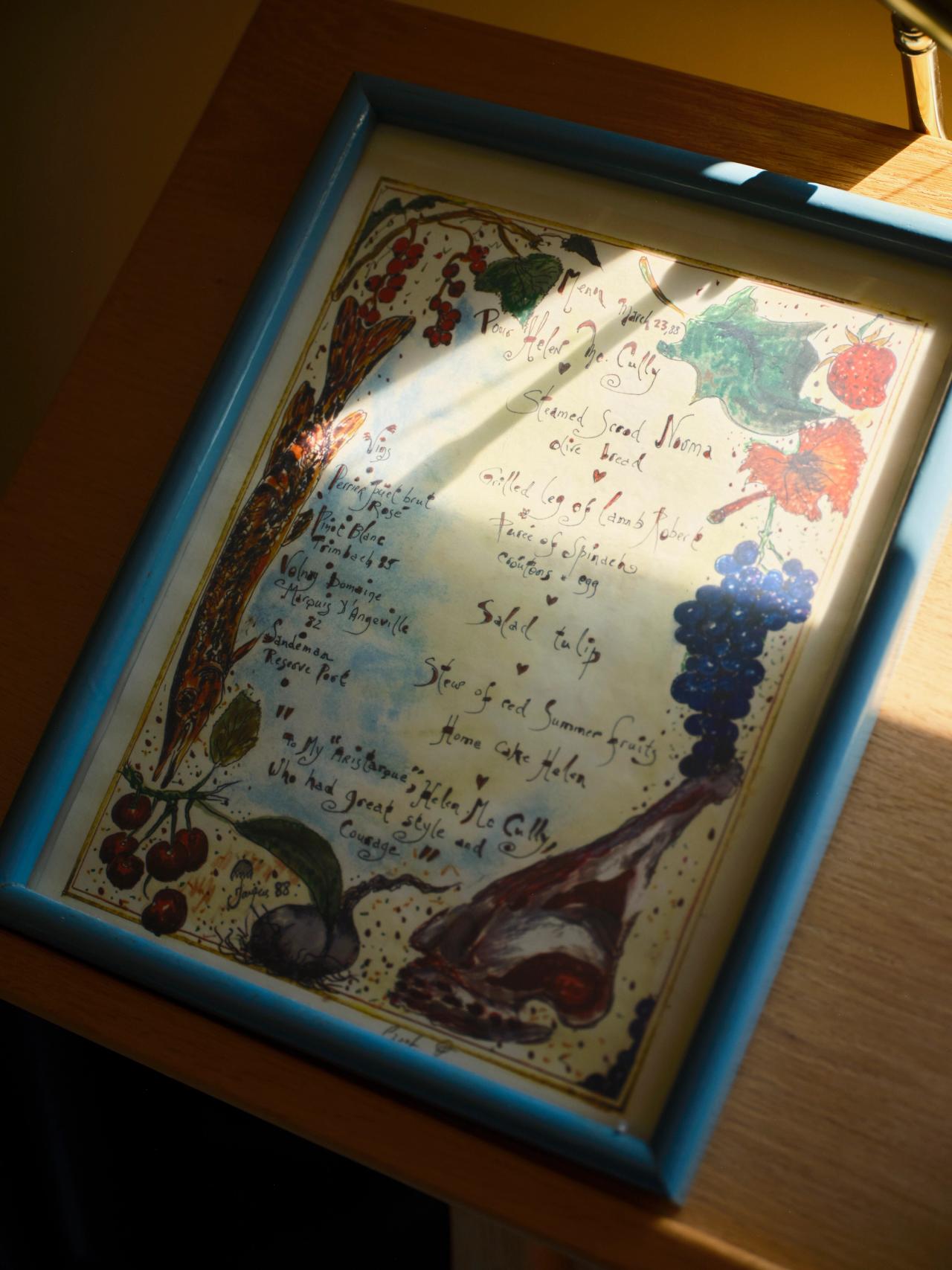
One of Pépin’s illustrated menus. (Photo: Matthew Harrington for The Slowdown)
SB: Do you view painting in some sense as an extension of this life of cooking, of teaching, of learning, of reading, literature?
JP: Yes. Extension. When I started at Columbia, I had those two or three years where I had to redo myself, in a sense. I had a few empty spots, and there was a class in painting, and I said, “Yeah, I’m going to take that.” I did a class in sculpture—I have several sculptures over here—and in painting. I started there, and I loved it. Then I always painted after a little bit, sometimes a lot. And I started illustrating menus that I did. And from menus, it went into books. And I have ten books of menus that are illustrated. Not all the menus, but many of them.
It was the idea of my wife, Gloria. She said, “Why don’t you write the menu that we have people coming and we’ll sign them to remember that?”
I remember, not that long ago, [my daughter] Claudine looked, and she did a menu for her fourth birthday. She’s the one who did the drawing and so forth. We looked at that menu. So she’s 40.
SB: What has your time painting taught you?
JP: Well, certainly to relax... Also a way of concentrating on one thing and relaxing. The cooking, in a sense, came with the same idea, that food, very often ... a dish ... I don’t know where I’m going to go when I start a dish sometimes. Well, I know I’m going to finish that dish, but I mean in the details that may come, that I open the refrigerator and I have some artichokes there or some stuff that I will add to it.
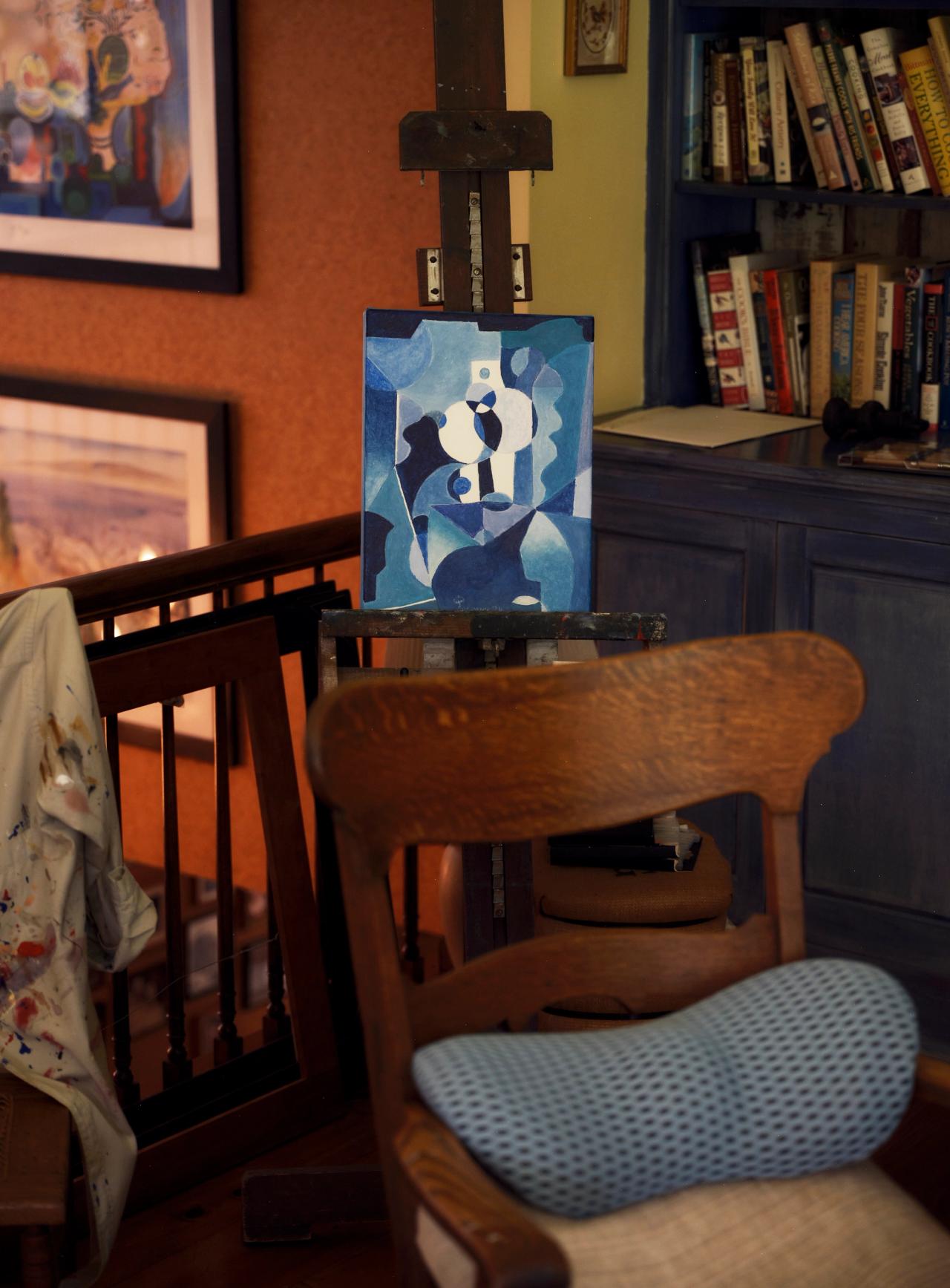
A painting by Pépin at his home in Connecticut. (Photo: Matthew Harrington for The Slowdown)
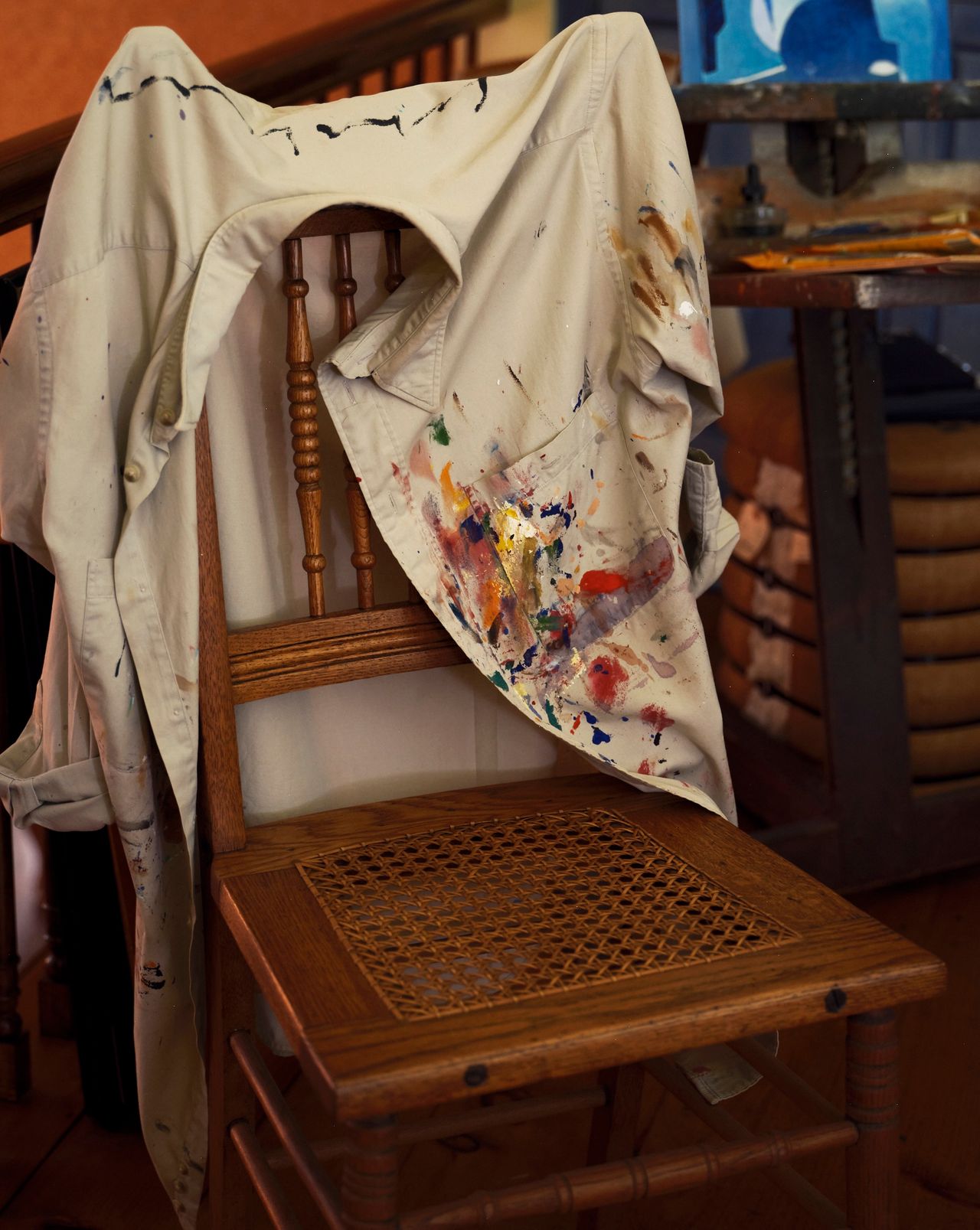
Pépin’s painting smock at his home in Connecticut. (Photo: Matthew Harrington for The Slowdown)
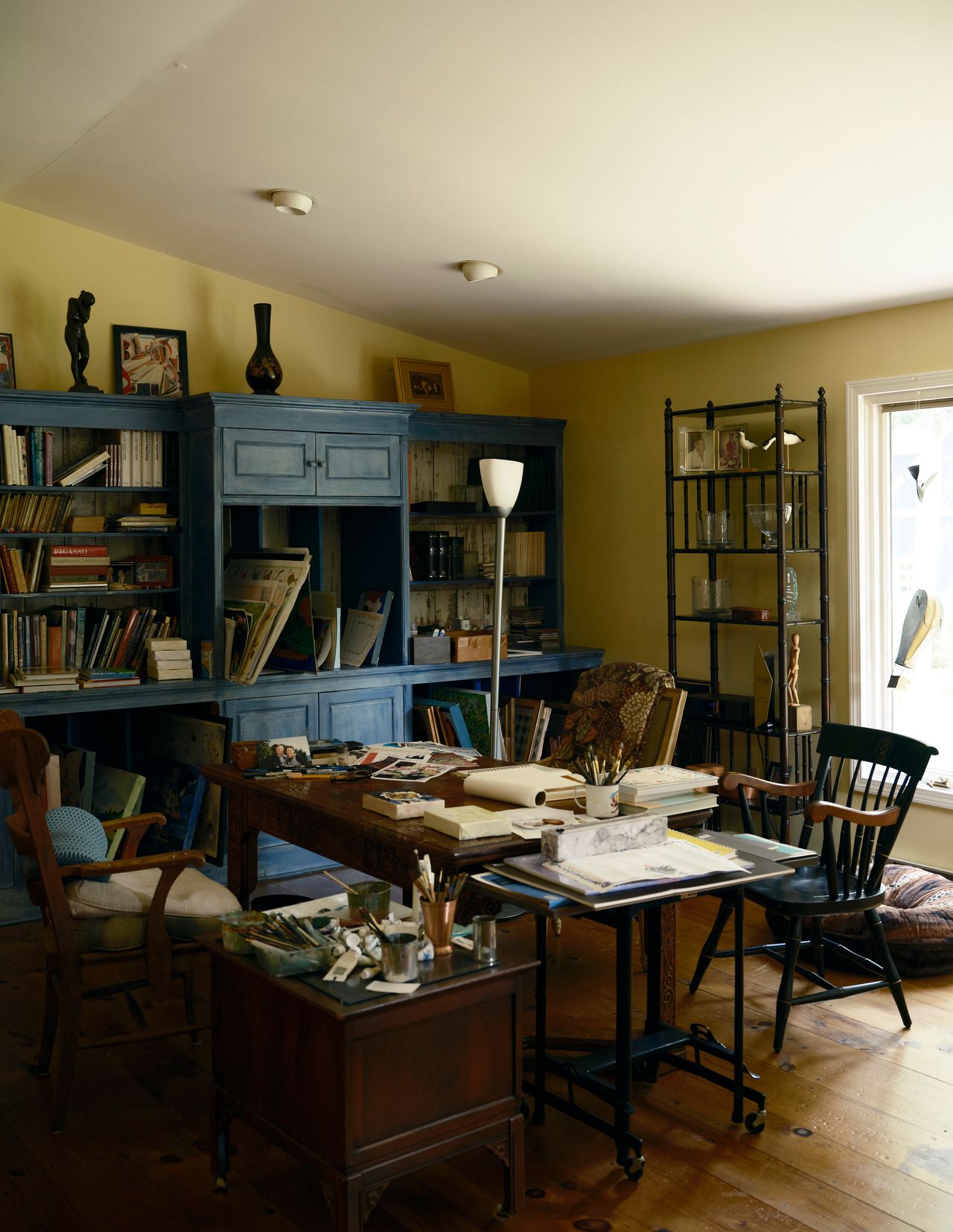
Pépin’s office, filled with books and painting supplies, at his home in Connecticut. (Photo: Matthew Harrington for The Slowdown)
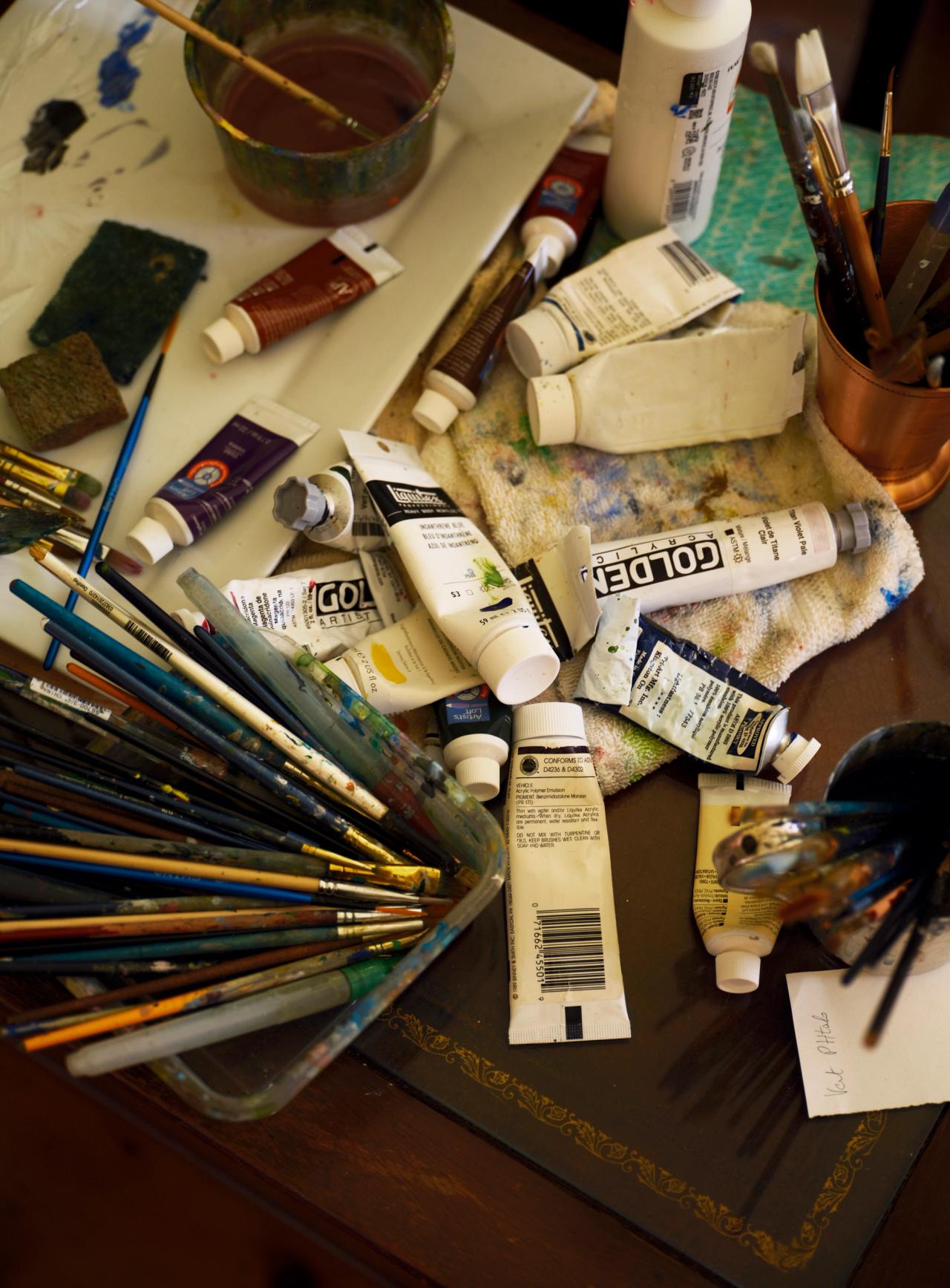
Pépin’s painting supplies in his office. (Photo: Matthew Harrington for The Slowdown)
A painting by Pépin at his home in Connecticut. (Photo: Matthew Harrington for The Slowdown)
Pépin’s painting smock at his home in Connecticut. (Photo: Matthew Harrington for The Slowdown)
Pépin’s office, filled with books and painting supplies, at his home in Connecticut. (Photo: Matthew Harrington for The Slowdown)
Pépin’s painting supplies in his office. (Photo: Matthew Harrington for The Slowdown)
A painting by Pépin at his home in Connecticut. (Photo: Matthew Harrington for The Slowdown)
Pépin’s painting smock at his home in Connecticut. (Photo: Matthew Harrington for The Slowdown)
Pépin’s office, filled with books and painting supplies, at his home in Connecticut. (Photo: Matthew Harrington for The Slowdown)
Pépin’s painting supplies in his office. (Photo: Matthew Harrington for The Slowdown)
“With painting, I start with, often, no idea. After a little while, often the painting will take ahold of me, and then I move in one direction or another.”
The same idea with painting, I start with, often, no idea. After a little while, often the painting will take ahold of me, and then I move in one direction or another. And that was always enjoyable for me, to do that.
SB: So it is sort of like cooking. You have the technique, you have the method, you have the tools, but you’re open.
JP: I’m not such a good technician in painting. [Laughter] I never spent years and years on learning the technique.
SB: I wanted to ask about doubt here, too. In your 2003 memoir, The Apprentice, you called doubt “a familiar companion throughout my life.” Do you think doubt is something that’s necessary to keep learning, to keep building?
JP: Yeah, of course. Of course, you’re never sure. Any menu that you have could always be improved one way or the other. And any painting could always be improved one way or the other.
There is always a doubt, and you could always go further most of the time in a recipe—add, add—and in a painting, as well. So yes, there is always that. Nothing is perfect.
SB: It is so tempting to connect the dots between all these things that you do. But I think one of the things I’ve enjoyed learning about your work and just following your life is that it feels like so much of it was not planned, that so many... What do you think about chance, and do you see doubt and chance colliding?
JP: I’m an existentialist this way. Yeah, nothing is planned. It happens. You deal with it, and things happen again, and you deal with it again, and you change, you move. That’s what life is. I don’t think that I ever planned any big thing in life, except maybe having a child.
SB: Yeah. You kind of have to plan for that. [Laughs]
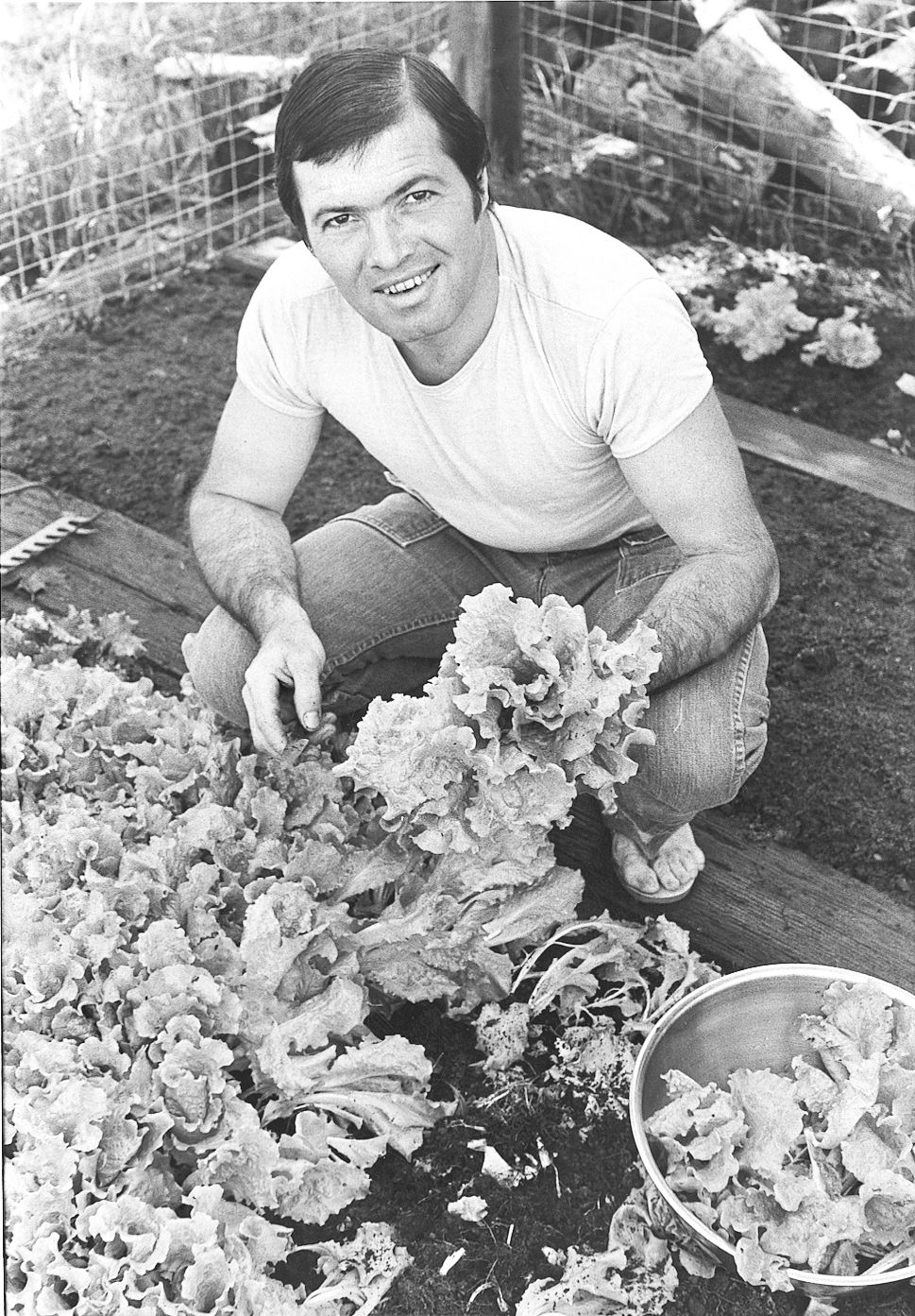
Pépin gathering greens in his garden. (Courtesy Jacques Pépin)
You’ve created thousands of recipes. You’ve called them “the diary of my life.” Which stand out to you as trademark Pépin dishes, or tastes at least?
JP: I don’t know. Probably simple recipes. Some soup, some stew. Yes. Simple recipes of mixing certain ingredients to get a one-pot meal type of thing is, to a certain extent, what I may like to do the most.
SB: Simple, delicious, fresh, not too fussy.
JP: Yes. I mean, I go to the garden and it’s always a question of quality of ingredients. When you have a tomato which is just ripe out of the garden, I get it. It’s still slightly warm and a dash of salt on top of it and a few drops of good olive oil, you cannot beat that taste. I mean, this is it. It’s perfect.
SB: I think one thing that really struck me in thinking about this conversation was that there are millions of people who have literally watched your hands over the years. How do you think about this legacy? Do you consider your life’s work in terms of passing on something from one generation to the next? Maybe this is where the Jacques Pépin Foundation comes in as well.
JP: Yes. Well, I am very lucky. I would never have done a foundation if not for my daughter or for my son-in-law. I’m not too good at those things. So they’ve done, too. The same thing with the different recipes that I had. But I mean for me, Claudine at some point, a few years during the...
During the pandemic, she had started doing a thing on Facebook. So we had fifteen hundred people or whatever. And she said, “Why don’t you do a recipe of two minutes, three minutes, four minutes for me?” I started doing those, too, and we ended up with one and a half million people.
“People will probably remember me not for the very complicated or extensive recipes that I do, but something simpler. Even showing you how to cut a lemon the right way.”
People will probably remember me not [for] the very complicated or extensive recipes that I do, but something simpler. Even showing you how to cut a lemon the right way or one thing, saying, “Wow, that’s a good idea. Fine.”
SB: I watched a video of you with garlic and it was very helpful. [Laughter]
JP: Yes. I don’t remember what I did, but...
SB: One of the things you’ve always been an advocate for is that “everyone is equal in the eyes of the stove,” right?
JP: Yes.
SB: The kitchen is a democratic place.
JP: Exactly. This is what we find out with the foundation, because the foundation was started with my son-in-law. At some point he told me, “You have hundreds of recipes, you have books, so many books. What do you think you should teach now?”
So he came, he said, “Do you think that teaching people who come out of jail?” I said, “That’s a good idea.” That’s a good idea. That’s why we came out with, “Everyone is the same in the eye of the stove.”
We started teaching the basic techniques, simple recipes, and so forth. I can change someone’s life, I think, in six or eight weeks of cooking in the kitchen, by showing people how to peel a potato, wash salad, peel an onion... very simple, basic stuff. If that person stays there... Well, maybe a year and a half later, she or he is the chef of the little restaurant there doing this, learning those basic recipes and staying with that. So that changes your life, changes your life, that changes everything. This is what I’ve been going on in many ways.
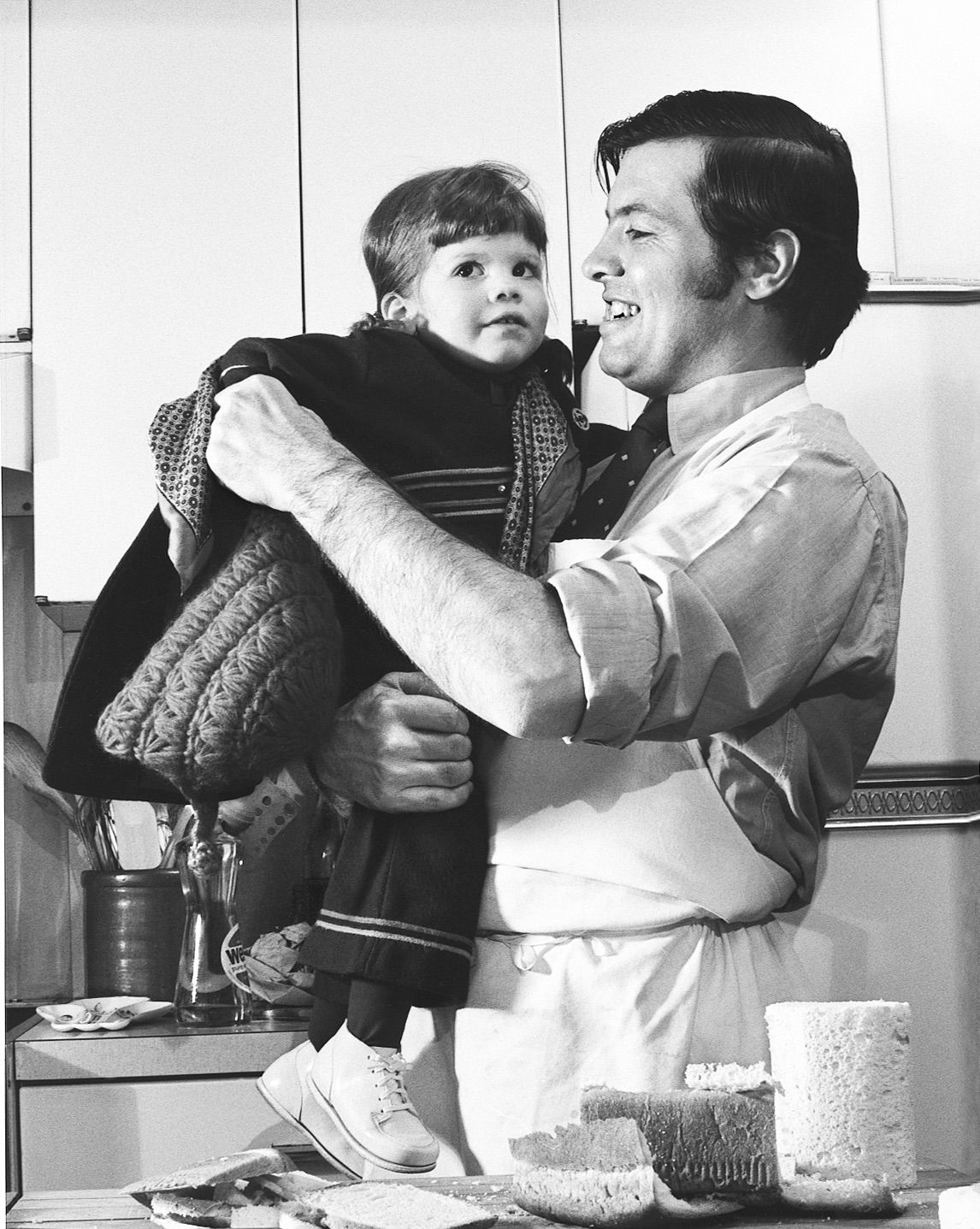
Pépin with his daughter, Claudine, in the House Beautiful food editor Helen McCully’s kitchen circa the early 1970s. (Courtesy Jacques Pépin)
SB: Food is more than just sustenance in the literal sense, but also becoming a much larger force.
JP: Yes, definitely.
SB: I love how Food & Wine magazine described you as “a gentle gravity at the center of the culinary universe.” High praise.
JP: I don’t know about that, but... [Laughter]
SB: But what I liked about that is the “gentle gravity.” I feel like part of what you have long done with Claudine, and also now with Shorey, your granddaughter, is this idea of transmission, of passing down. You even did a cookbook, A Grandfather’s Lessons, about a decade ago, with her.
JP: Yes. Of course, when you have a child, the way you eat at the table every night and the way you do very simple stuff, from a soup to whatever, the kid doesn’t really realize that it’s special. That’s the way it is. But yes, it is special to cook for the kid and sit down at the table and eat together and enjoy food.
SB: What would be a meal that you remember, recall, that changed your life?
JP: I don’t really think of any meal that changed my life, but certainly a great meal where I have, either from my aunt or my mother or a friend... Not too long ago I was at Per Se, and he’s one of the greatest chefs in the country.
SB: Thomas Keller.
JP: Thomas Keller. So yes, the way you taste something and say, “Well, that’s really good and well done.” Yes, very satisfying. In many ways, you get satisfied.
SB: It’s that floating feeling, in a way. “What did I just taste?”
JP: Right.
SB: Final question. This is also from The Apprentice. You write, “I have never been one to focus on the past. As time goes by, I concentrate on doing the things I love the most with the people I care about most.” You wrote that more than twenty years ago. At 90, what does that quote bring up for you?
“I still feel that the dinner we’re going to have tonight, which I don’t know where it is yet, is important.”
JP: I still feel the same way. I still feel that the dinner we’re going to have tonight, which I don’t know where it is yet, is important. And important to sit down together, and for Claudine to be here, and for us to enjoy the food.
Then we plan a menu for people next week or the week after, and say, “We’re going to have people coming. Let’s plan that.” There’s always the future. Yes. Moving forward with the food. It’s part of our day. It’s part of who we are. It’s part of what we do. It’s part of my life in many ways.
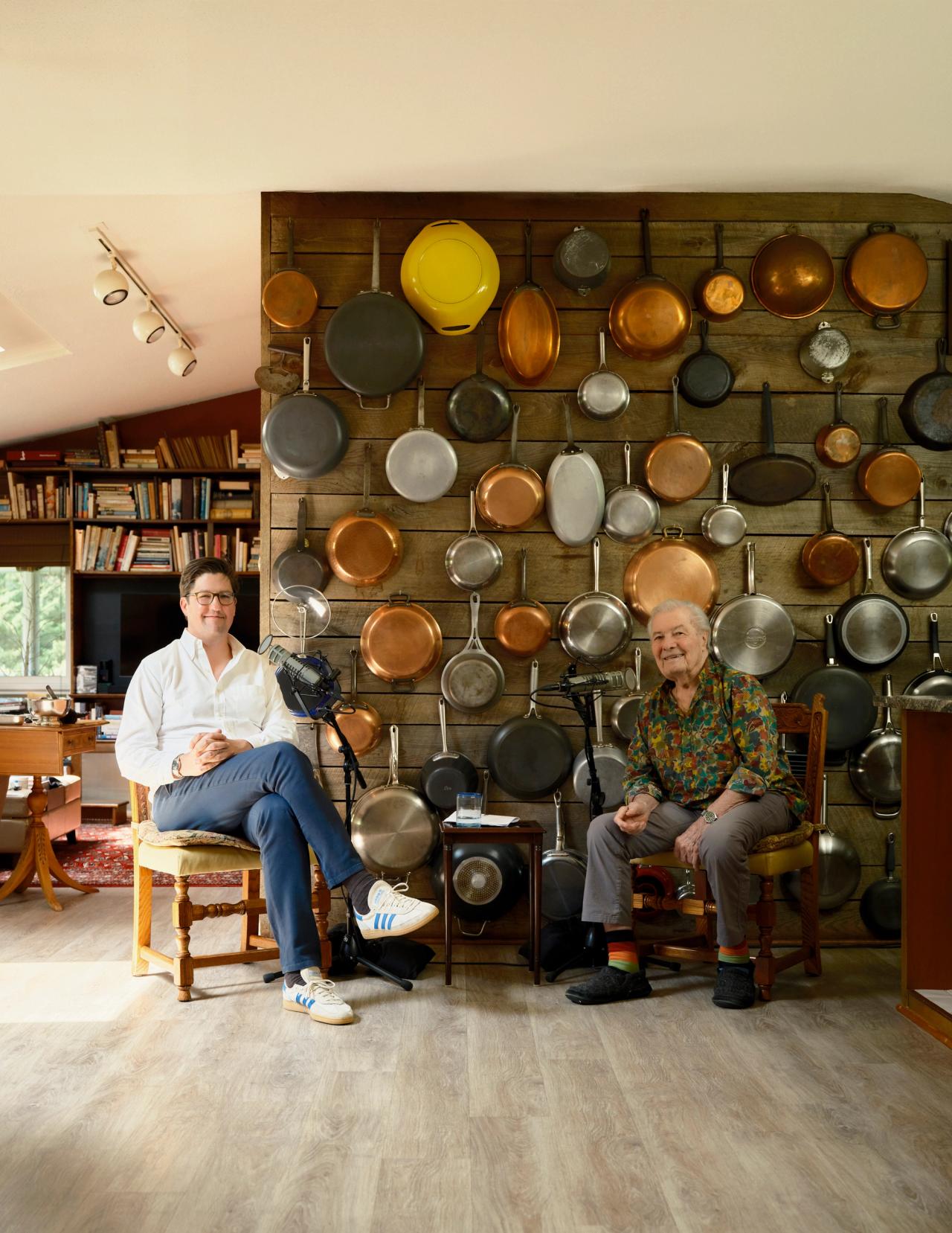
Bailey with Pépin during the recording of Ep. 158 of Time Sensitive. (Photo: Matthew Harrington for The Slowdown)
SB: Food, family, and taste memories.
JP: Yes, absolutely. And your tastes change. As you go, I think that you get maybe to something simpler, less sophisticated, less elaborated, straighter as you get older. and Your tastes change, in a sense.
SB: Yeah, direct.
JP: More direct, yes.
SB: To the point.
JP: More elaborated, more decoration.
SB: And still a good glass of wine, I imagine.
JP: Yes. You cook more like if you’re blind, it doesn’t really matter what it looks like.
SB: True.
JP: You want to taste.
SB: Well, thank you, Jacques. It was a pleasure to sit down with you.
JP: Thank you. Thank you very much. And happy cooking to everybody.
SB: Happy cooking.
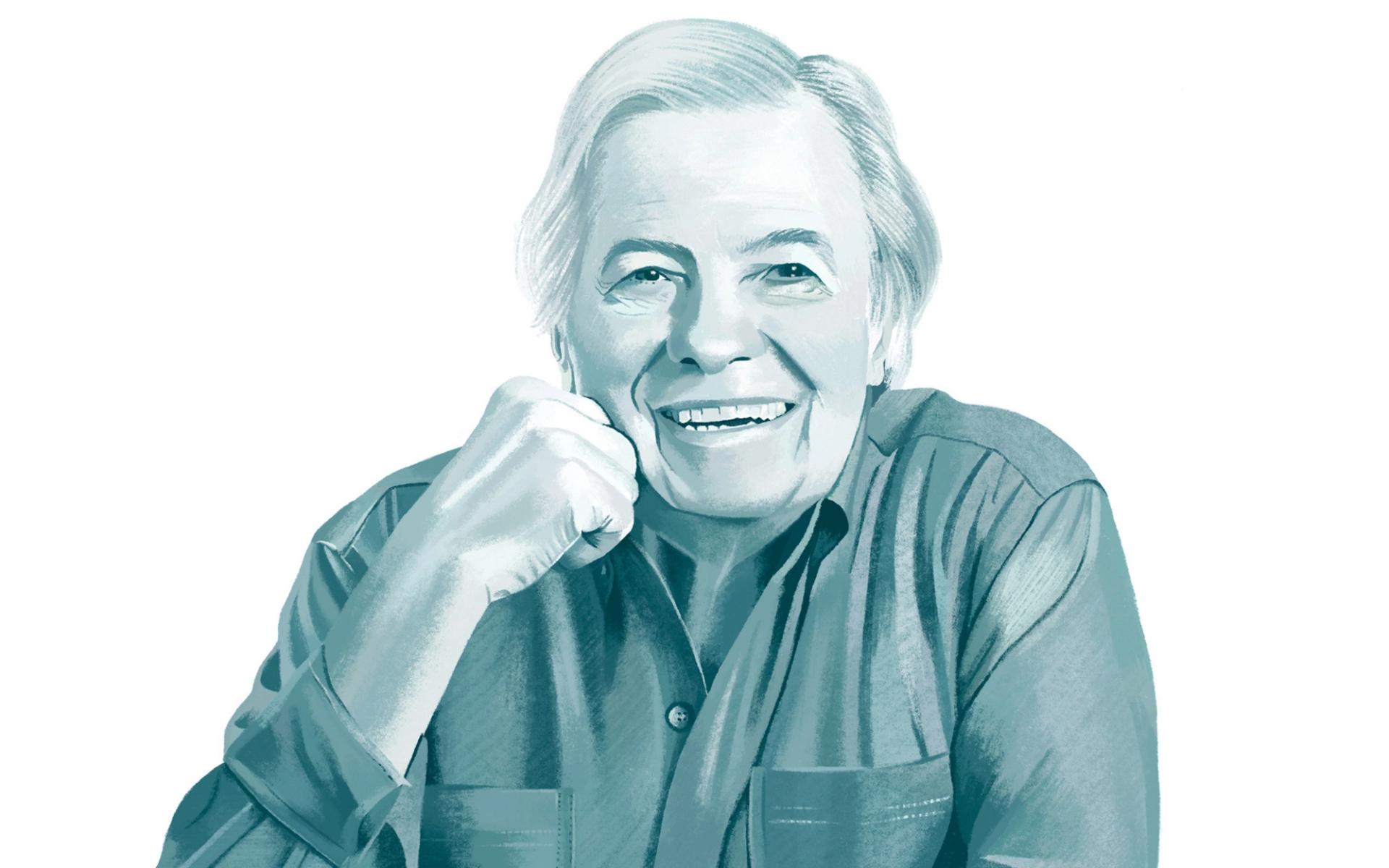
This interview was recorded in Jacques Pépin’s home in Madison, Connecticut on Thursday, August 13. The transcript has been slightly condensed and edited for clarity. The episode was produced by Olivia Aylmer, Ramon Broza, Mimi Hannon, Sam Platt, Drew Arndt, Matthew Harrington, and Johnny Simon. Illustration by Paola Wiciak based on a photograph by Tom Hopkins.