Follow us on Instagram (@slowdown.media) and subscribe to our weekly newsletter to receive behind-the-scenes updates and carefully curated musings.
TRANSCRIPT
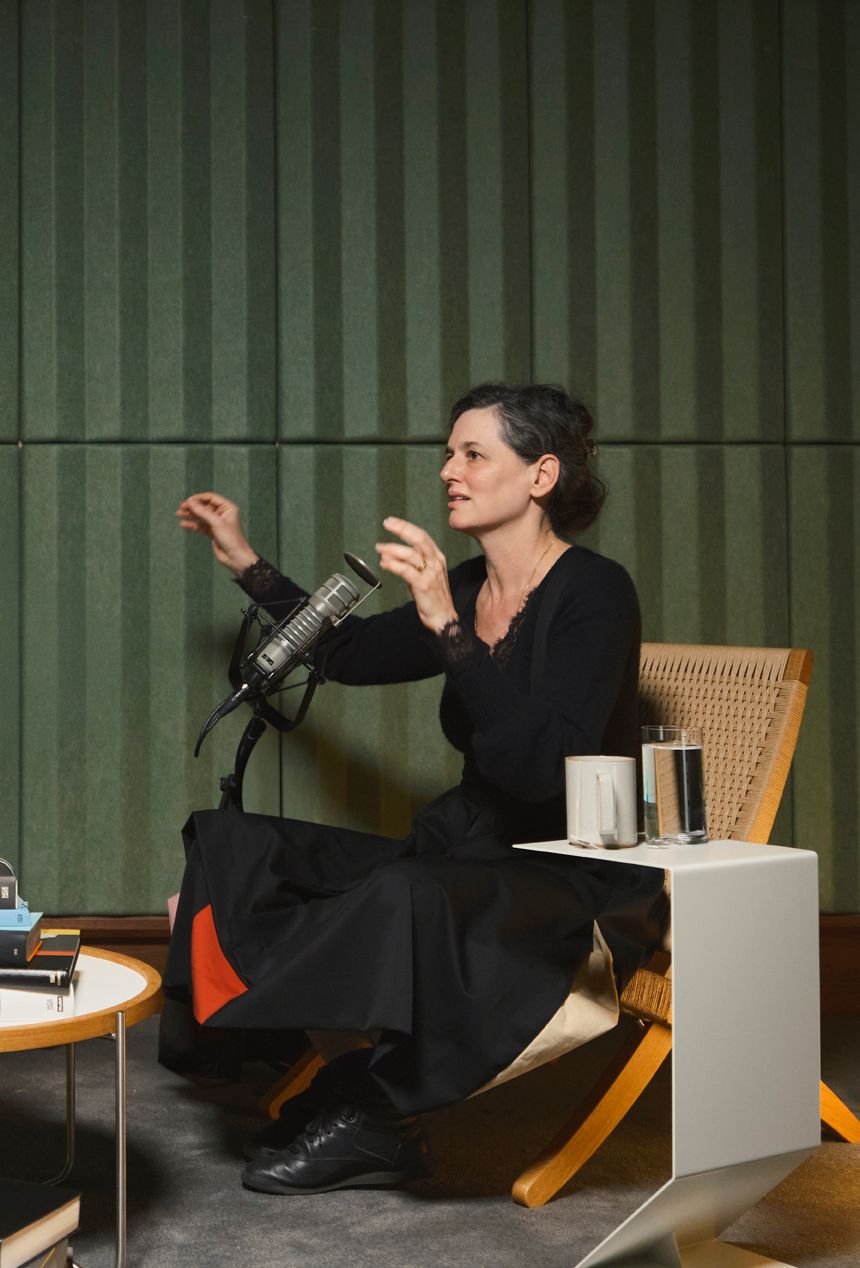
Taryn Simon in the Time Sensitive studio during the recording of Ep. 160. (Photo: Matthew Harrington for The Slowdown)
SPENCER BAILEY: Hi, Taryn. Welcome to Time Sensitive.
TARYN SIMON: Hi!
SB: So, there are so many places we could begin today with this extraordinary, expansive, mind-bending new exhibition, “Father Country I Do Love You,” at the Guggenheim. But first—and I guess this does connect to the exhibition, but I also view it outside of that; I think it’s just a fascinating place to start—I wanted to ask you about Thailand.
TS: Okay…
SB: Before you were born, your parents lived there. Your father photographed the country extensively. Growing up, you knew Thailand partly through these thousands of Kodachrome slides that he had brought home and through the stories that he told around these slides.
TS: Mm-hmm.
SB: So I wanted to start there. What did Thailand represent to you before you had ever actually been there?
TS: Interesting. No one’s ever asked me that. I grew up with... Well, he built a replica of Jim Thompson’s living room in my childhood home, and so that was my immediate introduction to Thailand. There was the furniture and the gridded-teak walls and the Buddhas and the paintings and all of the kind of signatures of what I was told was a version of Thailand and [of] a single man in Thailand. But I had no understanding of all these faraway places. I learned about tons of different countries and cultures through his descriptions and through his images, which were, of course, distorted storytelling versions of all of it.
SB: Dad stories on their own are a thing.
TS: Exactly.
SB: But then dad-in-Thailand stories...
TS: And dad-conspiracy-theorist-Thailand stories are even taking it to another level. [Laughter]
SB: Yeah.
TS: That was how I learned the world, as we all learn the world through our parents in some way—or the absence of a parent. But yeah, I was living in it in very vivid, direct ways.
SB: You’ve spoken about this disconnect between some of your father’s photographs, which could be quite ordinary…
TS: Yep.
SB: ... and then these extraordinary stories he would tell. What did that teach you, consciously or otherwise, about this image-to-story or -text relationship?
TS: I believed him. The stories were wild and didn’t necessarily match up with what I was seeing, but it all came from a space of complete awe and belief. There was always this disconnect and reliance between those two poles. The image was relying on the story, the story was relying on the image, and, between the two, something fuzzy and bendy was happening. But that was this kind of space that lived in my head, and in my understanding of the world and in imagination, so that was the art, in a way. So you take these two poles, and then something happens between them that’s invisible.
My parents both also spoke fluent Thai, so there was an invisibility there, too, because there was this language whirring around me all day long, and they sort of used it as their secret language. It was this thing that I never fully understood, but heard constantly and could recount in different ways, but it was almost like music. I had all these kinds of illusions where I had to let go of knowing, and it just was.
SB: Then you’re living in this architecture that is based on something halfway around the world.
TS: Yeah. And a mystery.
SB: I think it’s worth mentioning Jim Thompson here. He was this collector and former intelligence officer who disappeared without a trace.
TS: Yes.
SB: And your dad knew him.
TS: Yes. He was also the luxury Thai Silk King.
SB: Yes.
TS: ... of a luxury fabric company.
SB: What was your understanding of Jim Thompson growing up?
TS: I thought it was interesting that he was either eaten by a tiger or kidnapped by the Chinese, and would listen and try to determine which one it was. I never considered an alternative. [Laughter] That’s what I was told and that’s what I grew up in, and it seemed completely normal. Everybody had a living room of Jim Thompson in their childhood home.
SB: You actually helped your father reconstruct this one-to-one...
TS: We built it together. We literally cut down the teak, stained it, gridded the walls, nailed them in. It was a family project.
SB: And your father, in taking this thing that he found or engaged with halfway around the world and bringing it home, I wanted to ask, do you recognize anything in your own way of working in that impulse—the collecting and the recontextualizing and this desire to understand something by... You’re almost rebuilding these things in your pictures.
“No matter how carefully you construct something, it’s going to have incredible distance from a viewer, and that can be problematic and that can be risky and blurry.”
TS: Yeah. Maybe you bring that experience home or you bring it to another place and it can never actually be fully understood or explained. So, in a way, it’s better if it’s music in some form. I try my damnedest to constantly build it in the exact form I’m experiencing it in, and find all of these boundaries to respect what I experienced, what I felt at a distance from, what I didn’t fully understand. But I think no matter how carefully you construct something, it’s going to have incredible distance from a viewer, and that can be problematic and that can be risky and blurry. In many ways, it’s like me growing up in that living room.
SB: At 11, your father took you to Thailand into these hill-tribe villages because he wanted to show you something that, as you’ve put it, was radically different from Long Island.
TS: Yeah.
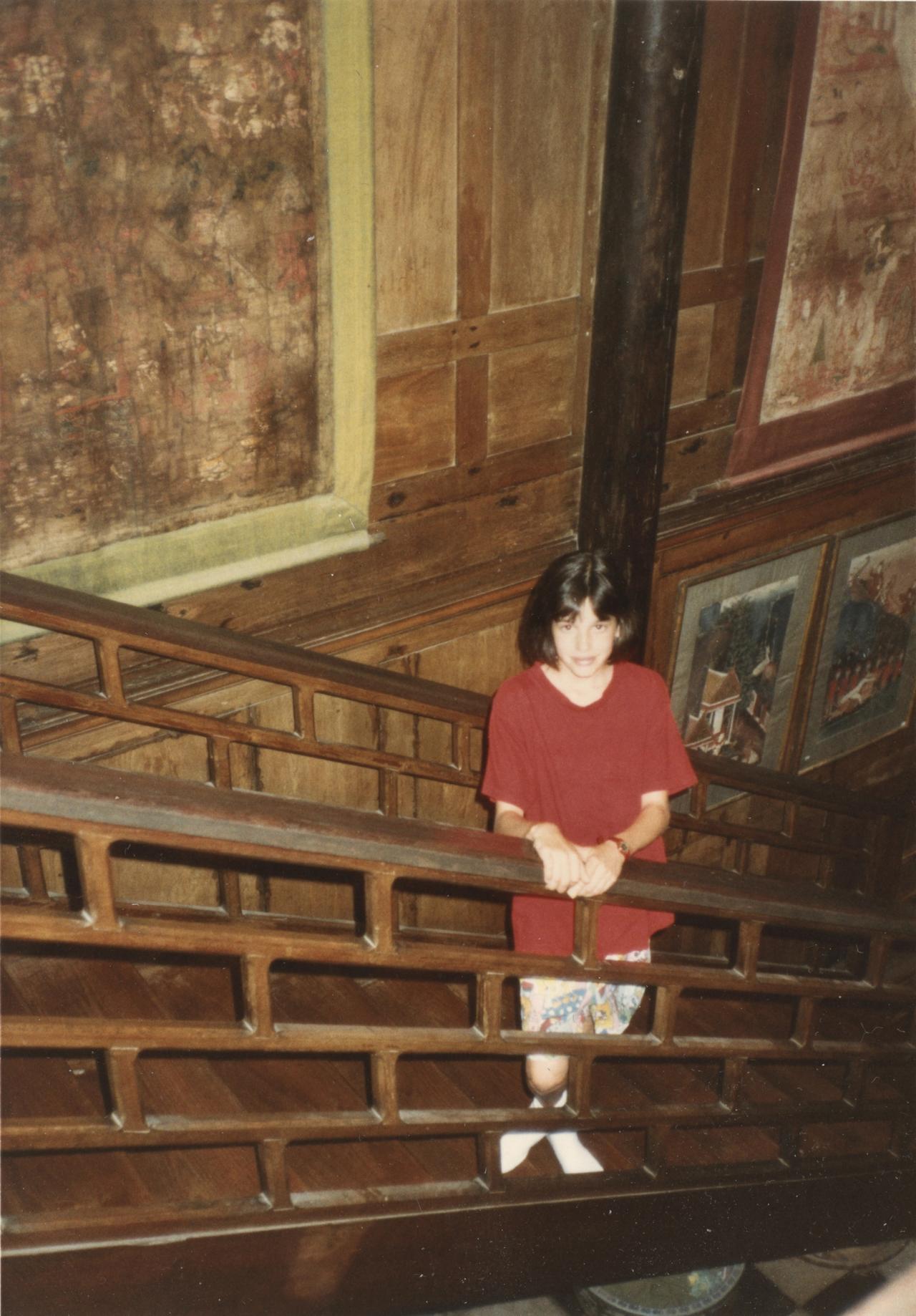
Simon as a child in her home, standing in her family’s life-size replica of Jim Thompson’s living room. (Courtesy the artist)
SB: What do you remember from that trip? [Laughter]
TS: Opium… Opium. [Laughter] I don’t know.
SB: Do you remember looking through the camera there? He was handing you this thing to make pictures, right?
TS: Yeah. I took a lot of photographs. It was a big part of how we connected with each other, through using the camera and him teaching me how to use cameras, and looking at things and questioning them, and looking in the corners or in the dust and in the darker edges that wouldn’t necessarily be what you would take the picture of. He was always finding that space, and I was constantly trying to catch up to him.
SB: Do you see what you’re doing now in those days in Thailand at all?
TS: Um. [Pauses] I don’t know. They feel so far away. It feels like he was a different person and so was I. Sometimes, I think we all have it, it’s just difficult to even capture who we both were.
SB: I think we should jump to your exhibition, “Father Country I Do Love You.” You begin this exhibition by reconstructing the reconstruction of Jim Thompson’s house. Beyond being dedicated to your father, this exhibition feels like true homage. It feels like an ongoing dialogue with him in a lot of ways. I should say here, you haven’t really ever brought the personal into your work.
TS: Never.
SB: So why this moment? Why now? Why this exhibition?
“In past projects, I could prescribe, in a way, how things would unfold, and really worked in a more rigorous form to create these mathematic equations around them and stick to them. In this one, life was colliding with those structures.”
TS: I think maybe in past projects, I could prescribe, in a way, how things would unfold, and really worked in a more rigorous form to create these mathematic equations around them and stick to them. In this one, life was colliding with those structures. My father had always been a big part of the making of all of these other works and was the main person I would talk to, to decipher all the different subjects that were the content of them, and in this one, I lost my father somewhere along that path. So, that happening through Alzheimer’s, not death, but literally a vacuum sucking every bit of that conversation out of the body that I turned to at every moment in the making of my work and relied upon so deeply. It just happened. It invaded in a completely unexpected way and became... Maybe it’s the first work just by me, and not by both of us.
SB: Wow. So your father was really... Would you call him a collaborator of your previous work?
TS: He was in many ways, yeah. He was somebody I would turn to at all hours to just talk things through.
I think there was also something about me being 51, getting older, feeling… In my earlier works, I was so aware of being a woman in this world and trying to assert something, and not going into a diaristic vein and falling into these traps that I saw a lot of women around me pursuing. I wanted to make a space for me that was something else. Maybe I was holding so tightly to that in a, I don’t know, annoying way. [Laughs] And then I just let it go a little bit, I guess.
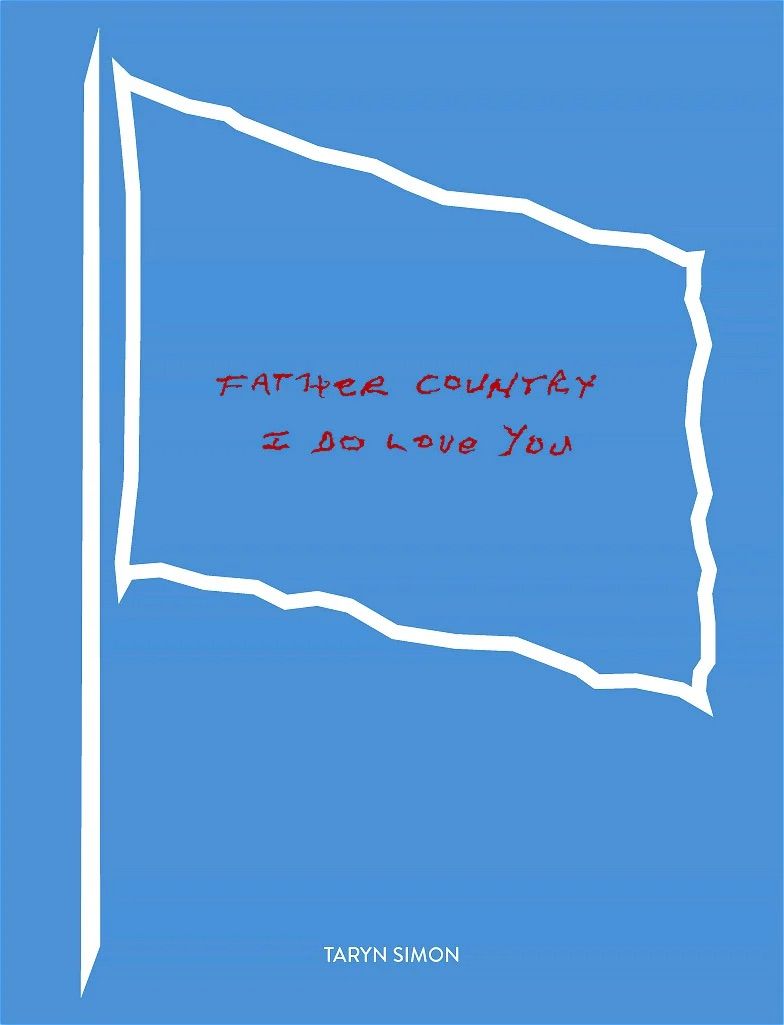
Cover of Simon’s Father Country I Do Love You (2026). (Courtesy Solomon R. Guggenheim Museum and Hatje Cantz Verlag)
SB: I should make clear here that “Father Country,” while dedicated to your father, is actually largely about this unnamed F.B.I. agent, or his stories anyway. It follows his stories. You came across this agent’s name almost by accident, on an evidence receipt.
TS: Mm-hmm.
SB: What was it about him that made you reach out, and then keep pulling this thread?
TS: Right. I mean, I’d never met an F.B.I. agent, and I was just intrigued to see what the conversation would be and what would unfold. We arranged to meet on the side of a highway at some nondescript Mexican restaurant and sat down together and went through the kind of questionings of who we each were.
Then he started just telling me these stories of things that he had touched along the way in his career, and it was just one after another. If I just pulled a thread, another one came, and it kept going. I could not believe how it was every major point of history in my lifetime all held in this single body. It felt like deep fiction, and yet it was wholly real. So, I just kept following it, and then it collided with Covid and just a complete embed into the files and life of this man, and all of that time allowed me to probably go too deeply into this hole.
SB: Right, you had a decade to work on it, but then there was Covid time in the middle of that.
TS: Exactly. I couldn’t actually make the work so much. The making of my work is in the world, and because I was locked in, there was no opportunity to be in the world and make the work or distract from the research of it with the making. So it was just full development of this life.
SB: Wow.
TS: I think what you’re seeing ten years later is a product of that.
SB: You’ve said, “I thought his life was unbelievable, but anybody’s is when you dig into it.”
TS: Yeah.
SB: His life intersects... I mean, it’s not comical, but it is surreal. There’s this surreal cast of characters that unfolds in your show. You’ve got Jodie Foster, [Mayor] Marion Barry, Valerie Plame, Karl Rove, Vince Foster, an Iraqi diplomat, the child of alleged Russian spies, a woman whose film was confiscated after she photographed the Pentagon on 9/11. Did this project at some point stop being about the F.B.I. career and become, in a sense, about what it means to look closely at any human life?
TS: Yeah. I mean, that one of the Pentagon crash is a perfect example, because the F.B.I. agent was working the crash site, and some woman on vacation in Martha’s Vineyard heard that the plane had gone into the Pentagon and wanted to take a picture of it, drove over to the Pentagon, and was snapping shots. The F.B.I. agent who I was working with seized the film from her camera, gave her back her camera, sent her on her way, kept the film in a bedside table, which I then developed twenty years later and found pictures of [Dame] Johnnie [Melinda] Walker.
SB: Amazing that he kept it.
TS: Yeah, exactly. Following all these crumbs, then I go and find her. She shows me the camera she used that day. It’s jammed, so it has film in it that has been stuck in there for who knows how long. I took that out and developed it, and it’s a ceremony of the Knights Templar. She’s not just Johnnie Walker, she’s Dame Johnnie Walker of the Knights Templar. There are these images of this ceremony where people are in robes and it’s about preserving the road to Jerusalem and all these acts of chivalry and values. It goes off course. So, you start at 9/11 and you end up at a Knights Templar ceremony with the grand photographer, and it couldn’t be more unpredictable and yet fully joined.
SB: Yeah. The show is so messy in a beautiful way. I think the fact that it’s landing also at the two hundred fiftieth anniversary of America, there’s something very profound there about the power, the violence, the memory traces. There’s so many different layers to this show.
TS: Yeah. And accidents, because I think its arrival with the two hundred fiftieth is an accident…
SB: A beautiful accident.
TS: Exactly. Yeah.
SB: The exhibition is structured as forty-two chapters, moving more or less chronologically through his life, but each chapter has this explosion outward, as we just alluded to. How did you determine how far to take each story? When did you decide, okay, this one’s enough?
TS: They really are hard-worked and sometimes for years on end. The end point is always so clear to me. I can’t give you the reason or the pattern, because there isn’t one, but, for each chapter, I know when it’s there and it’s really about a certain kind of noise or almost like the walls are moving in and out or something that’s not really articulatable, but it is articulated in the work because it’s written and there’s data given with it and images and everything, but it needs to have that noise. It’s hard to explain what that is.
SB: Were you looking for coincidence? Or was there a causality thing that you were also searching for? Or perhaps both?
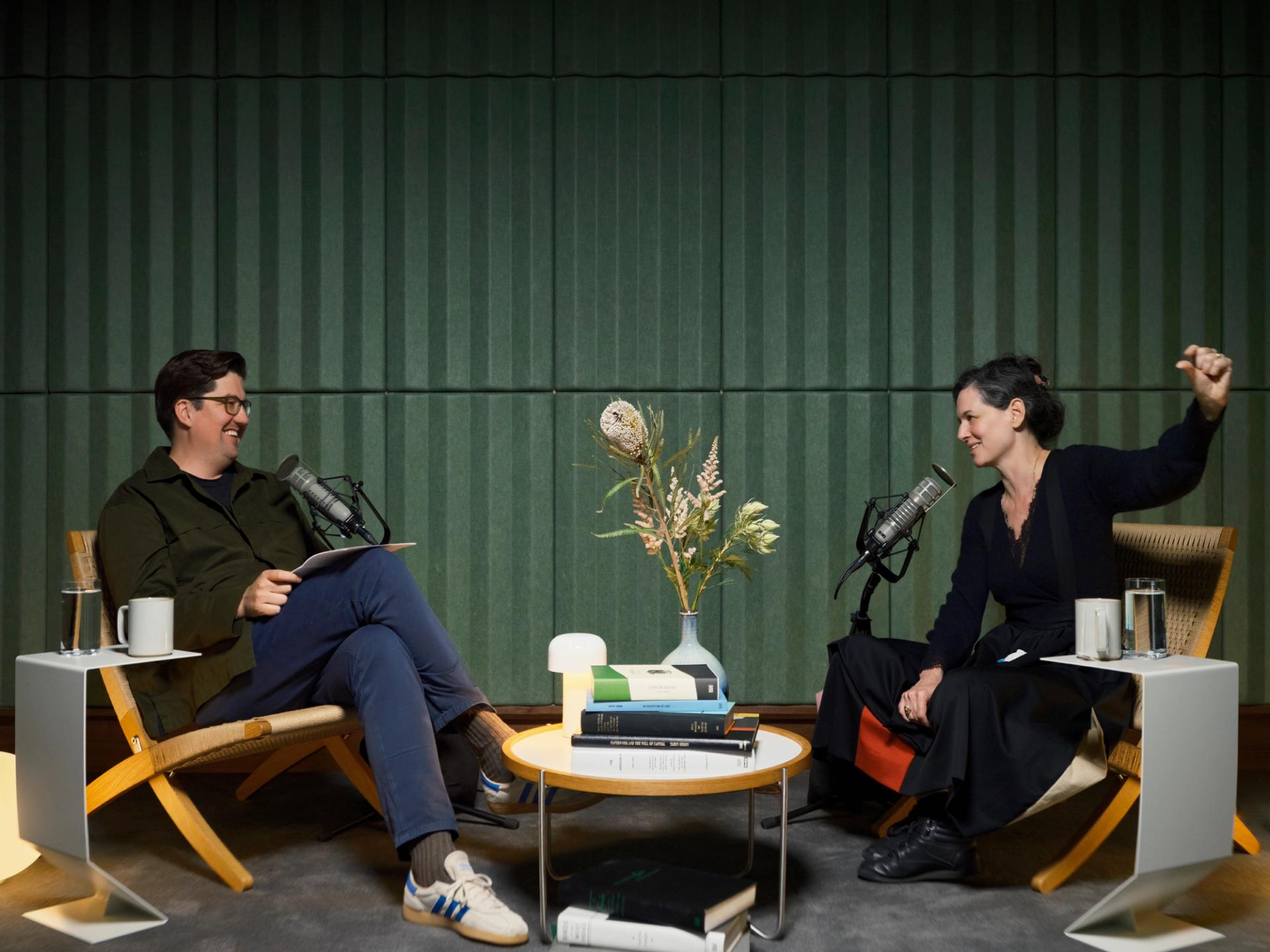
Spencer Bailey in conversation with Simon during the recording of Ep. 160 of Time Sensitive. (Photo: Matthew Harrington for The Slowdown)
“I was following crumbs, but then also creating crumbs, finding a detail and knowing that it had something prismatic in it or had these weird shards coming out of it and going into it knowing that I would have that wild effect.”
TS: Yeah. I was following crumbs, but then also creating crumbs—
SB: [Laughs] Yeah.
TS: Finding a detail and knowing that it had something prismatic in it or had these weird shards coming out of it and going into it knowing that I would have that wild effect. But it’s hard. I can’t sum it up.
SB: I don’t blame you. It’s hard to make sense of the whole show. Even now, I mean, I was there ten days ago and my mind still can’t... It’s still rolling over itself in a way.
TS: I think in many ways, it’s like the child in the Jim Thompson house is trying to make sense of that room of a father, of a man, of authority, of a country. All of these things are kind of unknown. Then you have all of these chapters which are an attempt almost to put an order to it all. They’re disparate points, but that’s all a kid can do, is try and take what they’re given and put it into some semblance of order to create an understanding. So, that’s really what it is. It’s this extreme expulsion of all these points splattered—and then somehow making it coherent. There is the linear nature of it all that helps in some form, but it’s like a legibility out of something that is, I don’t know, buried and blurry and messy.
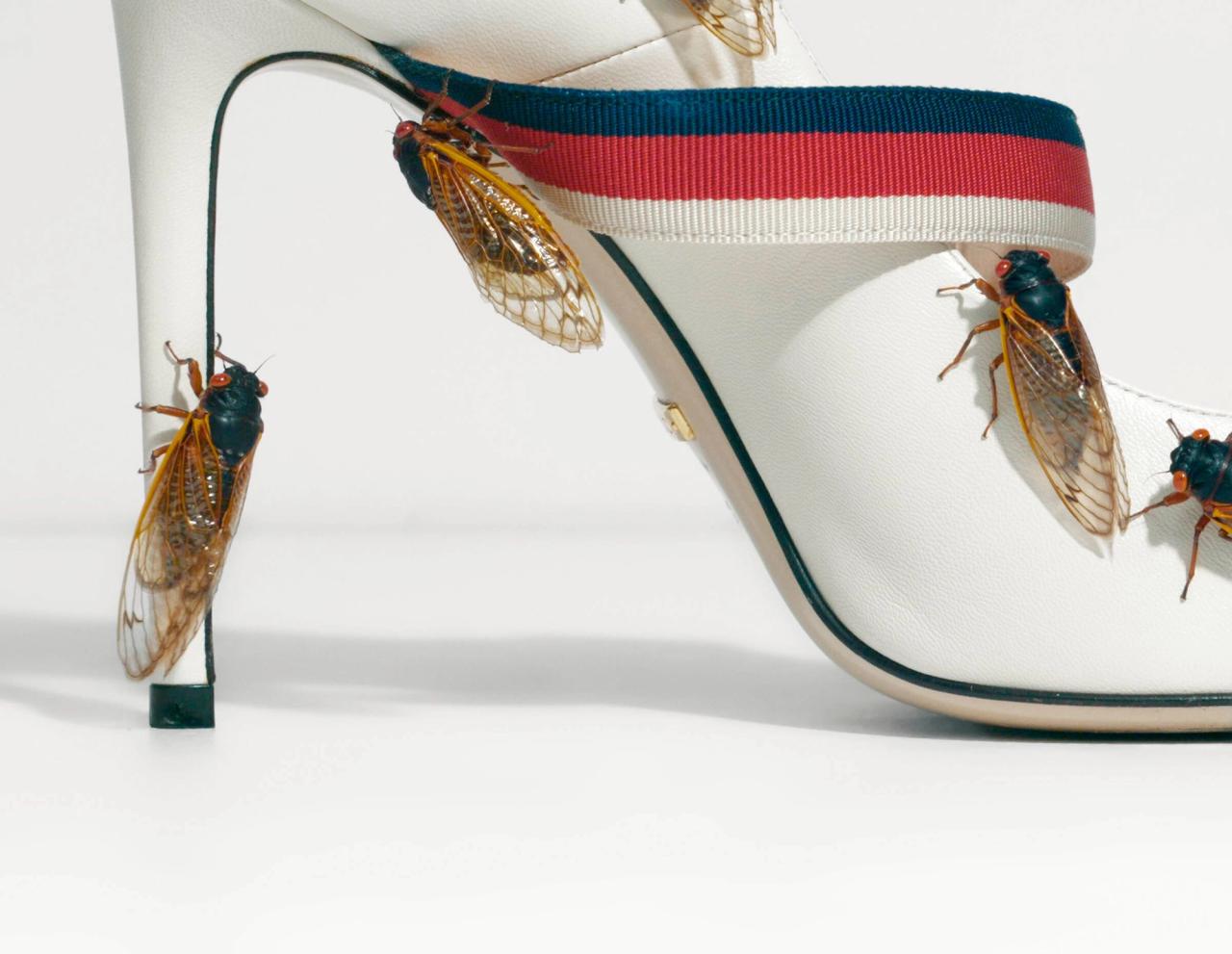
Simon’s “You Have to Backfill It” (2026). (Courtesy the artist)
SB: Given we’re sitting here and I’m interviewing you, I was really curious to ask you this: You spent basically ten years interviewing this guy and then you edited these first-person accounts in his voice. How did you think about that responsibility? And perhaps maybe the impossibility, also, of choosing which stories to tell. How much of him are we actually encountering in those texts, or how much of it is your construction or framing of him?
TS: Right. It’s a patchwork, and some may be leaning in one direction more than another. It’s also taking into account information in the files, information in media reports, text messages, phone calls, feelings, my own understandings, any other people who were involved in it who may not even be named or in the story directly or photographically. It’s all of these things colliding.
Then I spent a lot of time trying to capture this voice that, initially—well, not initially, always—was somewhat frustrating because it was not dramatic. Every time I would call or try and get a detail and think, “Oh, this is going to be fit,” I would be met with a very direct and non-dramatic response. I think there’s something in that voice that is eventually built through the whole thing that’s surprising, because it’s not giving you what one would expect from the TV-show version of this or what—
SB: There’s a matter-of-fact-ness to it.
TS: Yeah. Like I say in the beginning, a commitment to the Constitution and to a certain order and law. I had to use restraint and not go with expectation. I think that happens a lot in my work. You go to these things that are extremely dramatic in our understanding of them, and then you arrive and you experience something very different. It’s being able to hold that restraint actually and somehow allow it to breathe.
SB: It’s almost a form of not projecting.
TS: Yeah, exactly. Sometimes that can be really frustrating, actually, but it’s true to the experience.
SB: Your earlier work often seems to strive for this almost impossible neutrality.
TS: Yeah.
SB: The grids, the taxonomies, the restrained language, your own presence completely omniscient or erased. Here you’ve said you wanted the voice to be “fractured and faulty and fun and wrong.” Why did this project relinquish some of that control?
TS: I think I was able to do it because it’s the story of a man. It’s not this third-person authority that is speaking truth. It could be true to the idea of a single life, which is messy and accidental and vulnerable and can think one thing one day and change their mind the next.
I think in this time where everybody is declaring so much certainty in every direction and all these emphatic statements and decisions and you have to stick with that, I wanted to show this person that was dealing with high-stakes events and content and decisions, but also was buying gifts for a girlfriend and making dinner and having an idea of doing something at work that is problematic, but kind of interesting in a complex way, and letting it all go and fail and be thought through. Just showing the fractured nature of a life and how it operates.
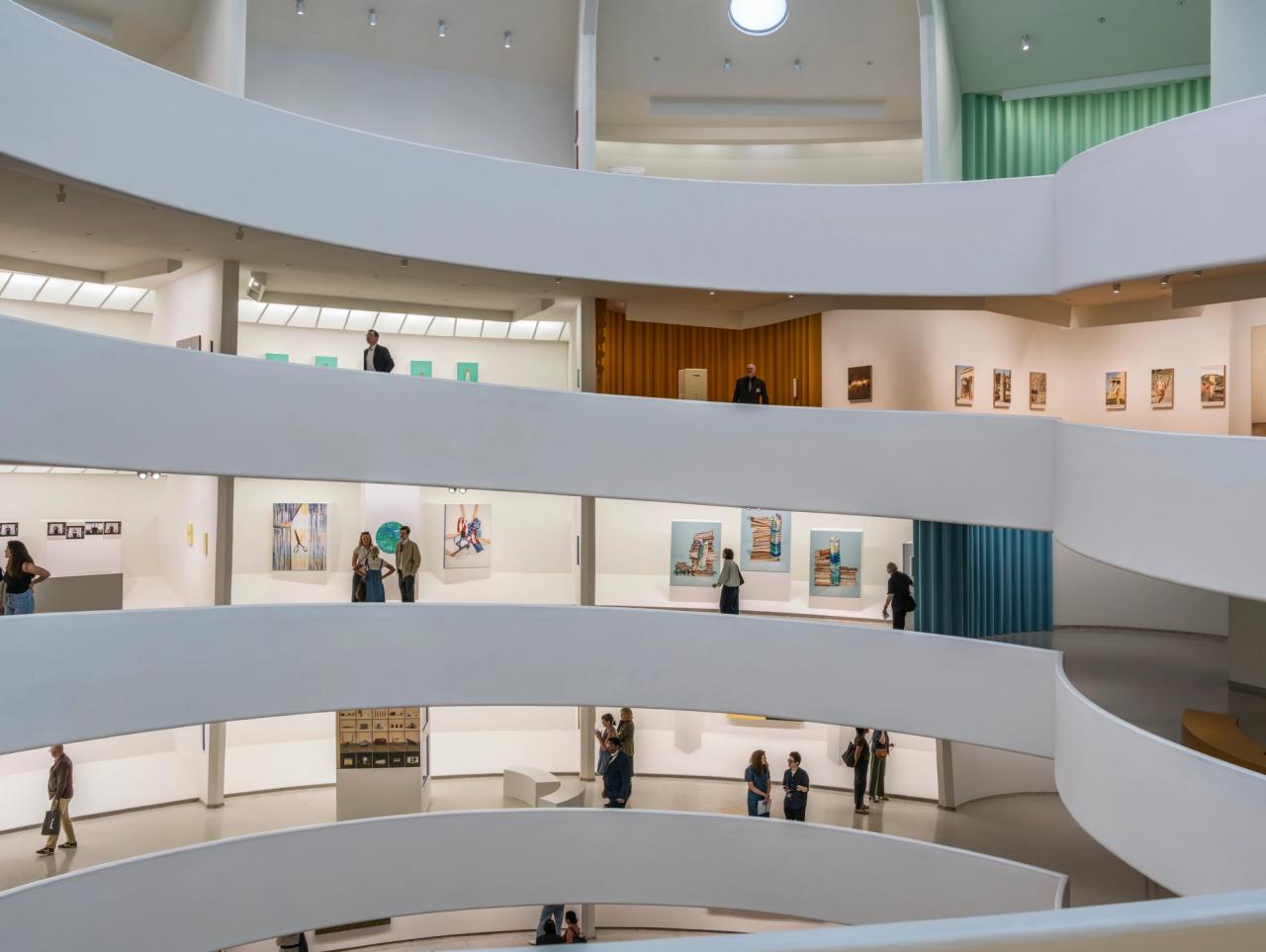
Installation view of Simon’s “Father Country I Do Love You,” which winds up the Guggenheim’s rotunda. (Photo: David Heald/Courtesy Solomon R. Guggenheim Foundation, New York)
SB: I have to bring up the architecture here, too, Frank Lloyd Wright’s rotunda. This exhibition’s a kind of time spiral, much like the architecture. Did the building change the way you were thinking about the project, or even the way you thought about how time would play out within it?
TS: There’s a snobbery in the art world, and every time I would tell anybody I was doing something at the Guggenheim, they would give me this look like it was a suicidal endeavor.
SB: [Laughs]
TS: It was originally in the tower galleries, in fact, and it would’ve been a mess in some broken form where you had to go in and out of it. Then when it moved into the rotunda, it was so clear to me that it was a perfect scenario for it, because it just matched up with these bays and I could have these web walls that divided time and divided chapters and you could move continuously through it and feel this leaving of earth, rising up above it, and heading toward this oculus and the sky. So, to me, it couldn’t have been more ideal.
I also felt very committed to Frank Lloyd Wright and treating this thing as a work in and of itself. It is this grand spaceship. I wanted to maintain as much of that as possible, which is why there are these protrusions where the work kind of juts out from the wall as opposed to interrupting it and building walls and dividing it and breaking it up in all these different ways. I wanted to let his intentions breathe as much as they could and acknowledge that I’m an ant.
SB: [Laughs] Then you’re using the vehicle that is his building to explode the room of your youth, this Jim Thompson house.
TS: Yes. That’s my one thing where I made my stamp loud and clear. [Laughs]
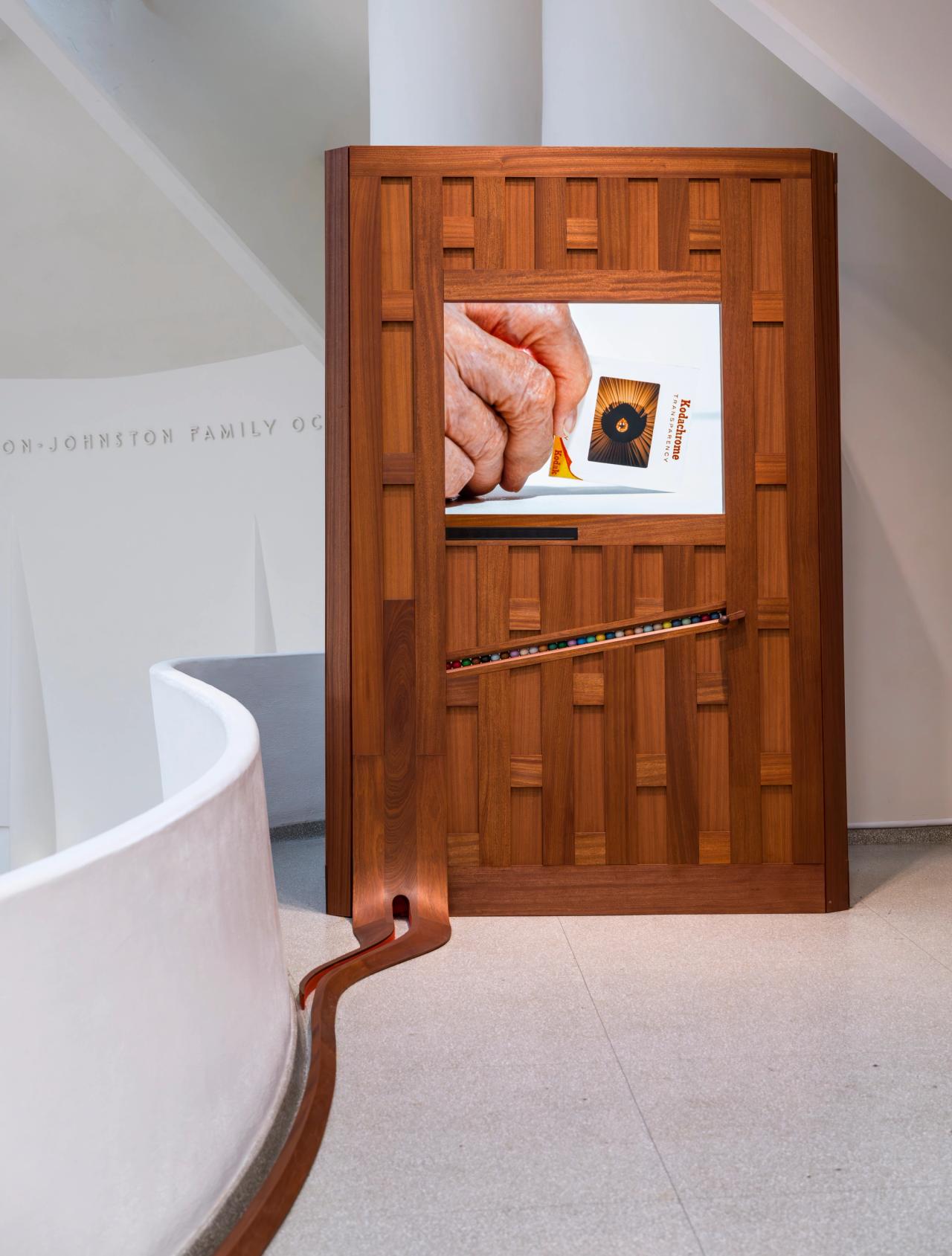
A view of the wind-up machine in Simon’s latest exhibition, from which a set of colored balls spirals down the museum’s ramp. (Photo: David Heald/Courtesy Solomon R. Guggenheim Foundation, New York)
SB: There’s also this wind-up machine at the top that connects to the basin. You release these colored balls, and they go down the Guggenheim ramp creating this low hum as they move down. There’s another family echo here that I should bring up, which is that your father and grandfather were both in the arcade game business. Where did this idea for the machine come from and what did the movement of those colored balls mean or represent to you? I was personally struck by the sound.
TS: It’s surprising, as you’re looking at one work, you turn around and there’s a ball whirring by you and they’re cued to all the colors of the different chapters. It was this idea that you could set something into action at the top, you could crank the lever and release a ball and who knows what story was going to fall out, what color, and it would wind its way down and you could never catch up to it and see what it was going to touch at its end, what shape it would take as it crashed into the other stories. Just thinking about the idea of a middleman and this guy who operated largely invisibly, as so many of us do, and yet is allowing for so much to happen and to be decided. So, trying to create an action like that where you set something off and the end point is unclear.
But I was also thinking about that history of arcading and game-making and my father and this teak threshold that winds its way down, reminded me of some of the thresholds that he would build that were replicating the ones in Jim Thompson’s house, which were to keep out, or so he said, bad spirits or water or rodents or snakes—who knows? There’s this threshold that winds down that the balls travel within, and just a childhood dream to roll a marble down the rotunda.
SB: [Laughs] Amazing. After all the time you spent with this agent, following his memories, meeting all these people whose lives intersected with his, and then reconstructing these pieces of that past, do you feel like you know him now? Are you closer with him? What’s your relationship like?
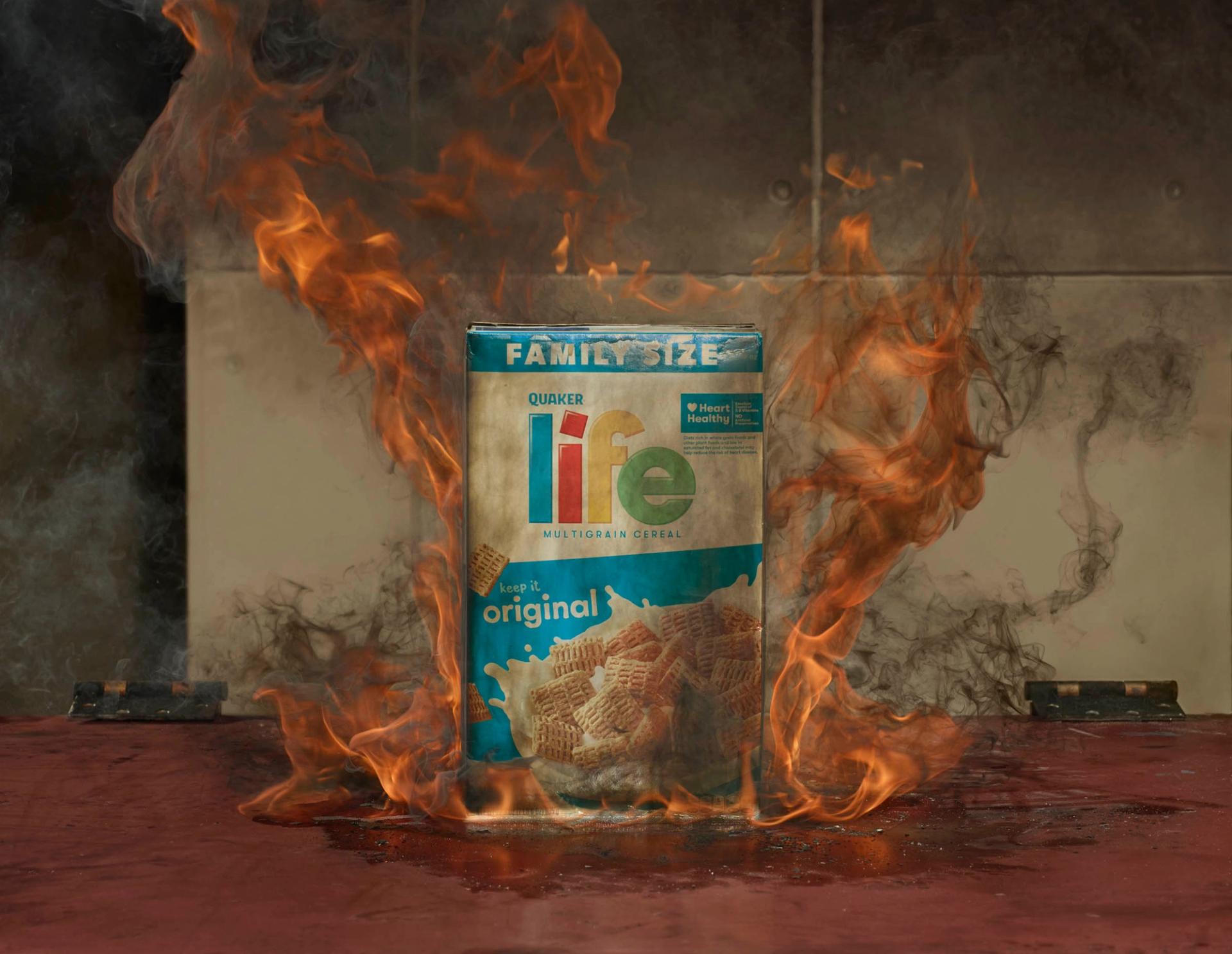
Simon’s “One Little Room on Fire” (2026). (Copyright the artist)
“Knowing is such a tricky thing. I immediately go to my child or something, but you can’t ever know anyone or anything. I think that’s probably at the core of a lot of what I do.”
TS: I think knowing is such a tricky thing. I immediately go to my child or something, but you can’t ever know anyone or anything. I think that’s probably at the core of a lot of what I do.
I’ve said it before, but when you have a baby and you push it out, it’s like the thing is so close to you, bound to your body with an umbilical cord, your blood and flesh, and you can’t see what’s coming out of you. You have no idea what’s coming out of you, and somebody has to show it to you. It’s like, these things are just not known to us. So, he’s… I know the version that I made.
SB: In a way, it’s like he’s that ball rolling down the ramp...
TS: Yeah.
SB: Has the agent seen the exhibition?
TS: Yeah.
SB: Do you know what he thought of it?
TS: I would never speak on behalf of anyone, but yeah.
SB: I can imagine that being quite a trip to be the subject of and see your life roll out that way, up a ramp.
TS: Yeah. [Laughter]
SB: Going back to your youth, you’ve described being raised in what you call a “practice of doubt.” You were taught by your father essentially from birth to almost mistrust everything. You’ve also said, “I have a lot of fears, which guides the work.” How much of your work is an attempt to give form to that doubt or to manage that anxiety or fear?
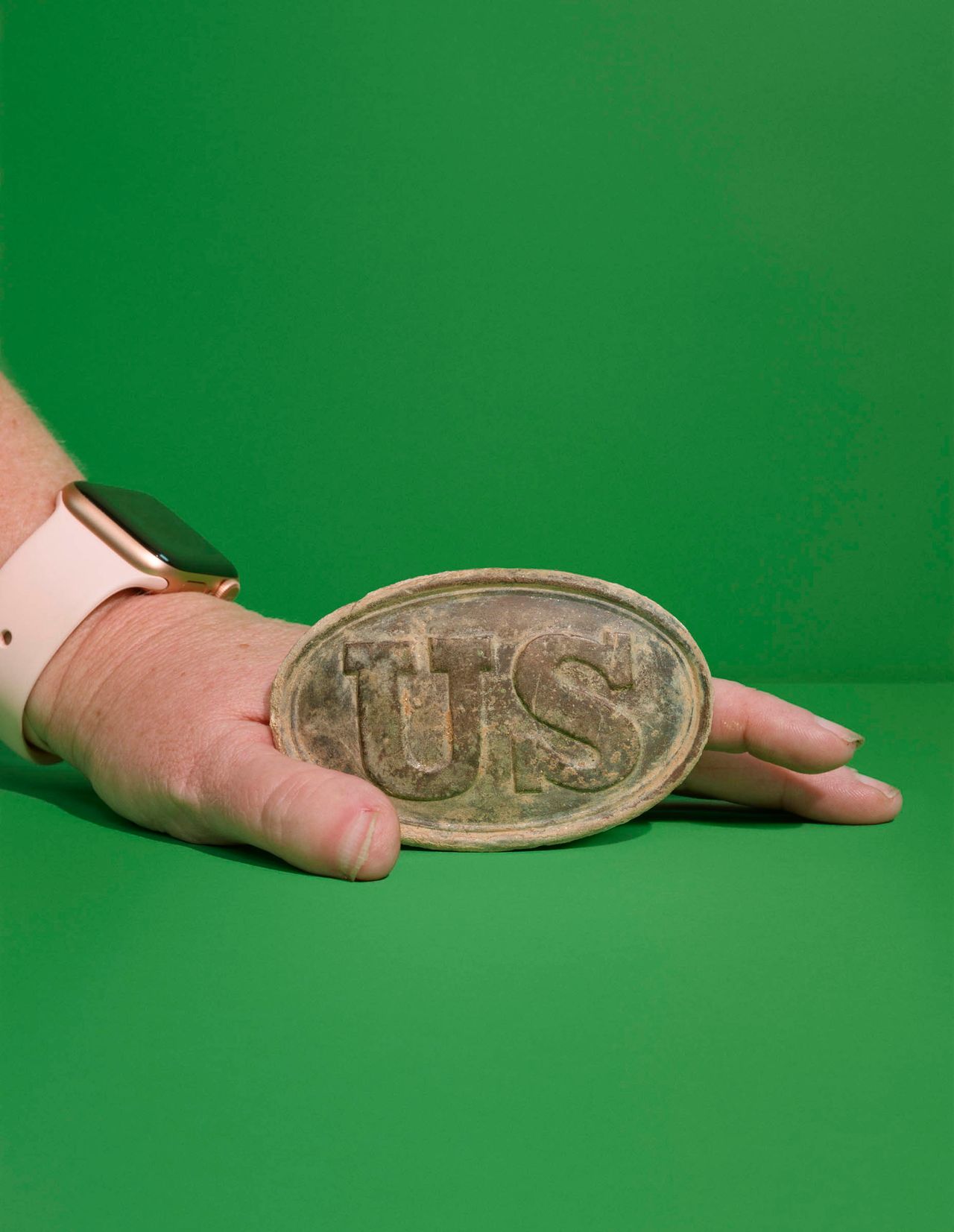
Simon’s “We Were the Diggers” (2026). (Courtesy the artist)

Simon’s “I Sleep Under It Every Night” (2026). (Courtesy the artist)
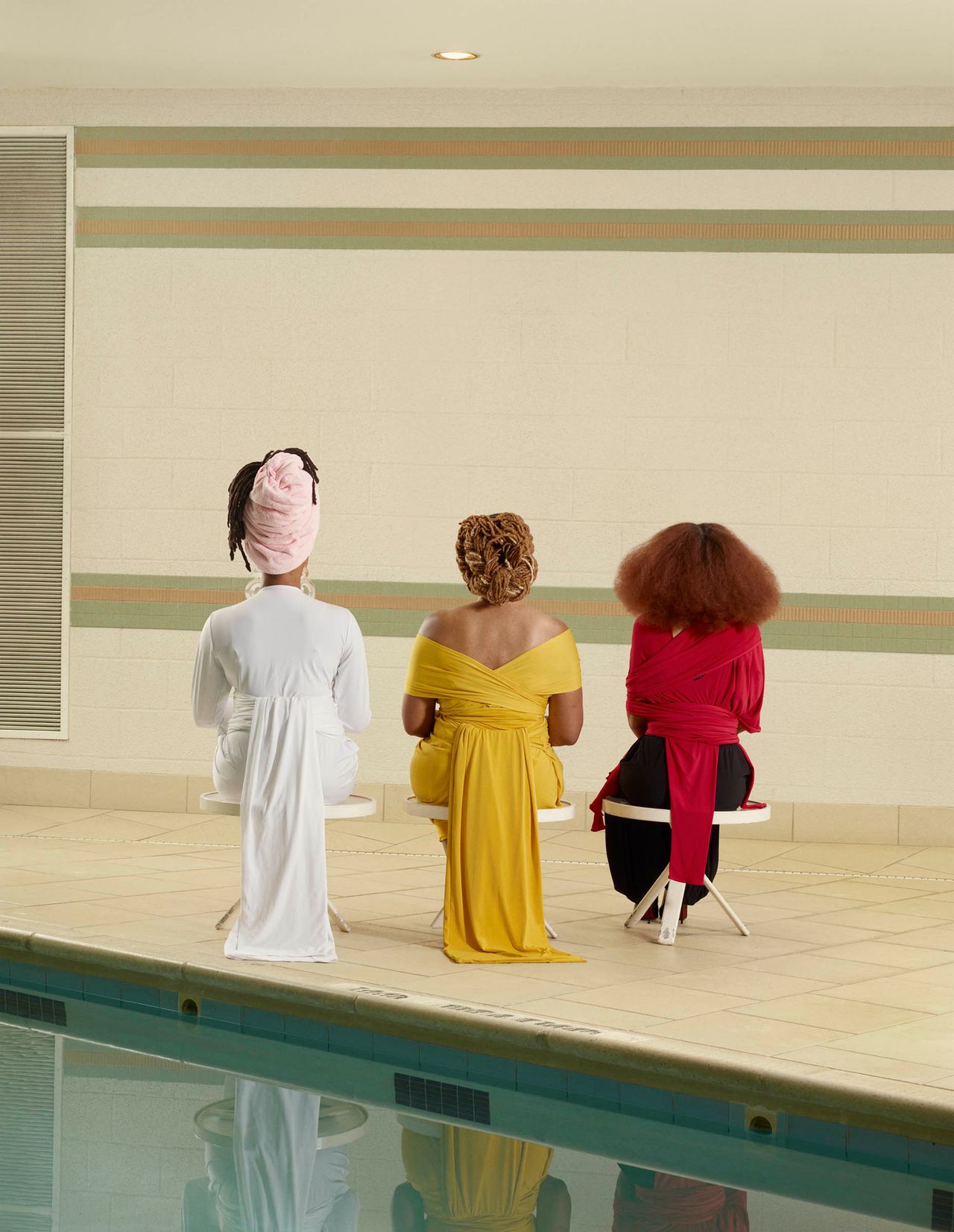
Simon’s “A Squad Agent Informed Me I’d Be Babysitting” (2026). (Courtesy the artist)

Simon’s “Like Kryptonite” (2026). (Courtesy the artist)

Simon’s “You Have to Backfill It” (2026). (Courtesy the artist)
Simon’s “We Were the Diggers” (2026). (Courtesy the artist)
Simon’s “I Sleep Under It Every Night” (2026). (Courtesy the artist)
Simon’s “A Squad Agent Informed Me I’d Be Babysitting” (2026). (Courtesy the artist)
Simon’s “Like Kryptonite” (2026). (Courtesy the artist)
Simon’s “You Have to Backfill It” (2026). (Courtesy the artist)
“I think I face a lot of my fears through my work and go to places and have experiences that I wouldn’t otherwise have. I also live out a lot of fantasies through my work, and my life is so much bigger because of the work.”
TS: I feel like I should ask you that. What do you think? [Laughter] I don’t know how to... I think I face a lot of my fears through my work and go to places and have experiences that I wouldn’t otherwise have. I also live out a lot of fantasies through my work, and my life is so much bigger because of the work. So, there’s that, and I think anxieties probably increase through the work.
SB: Oh wow, they increase through the work rather than...
TS: I think they’re both… I can fight it and face it through the work and then I can amplify it through the work, exponentially.
SB: Interesting. I mean, I feel like a lot of artmaking, or at least for certain artists, is a form of... Therapy is maybe not the right word, but it is dealing with a certain mode of anxiety. There’s a wound or there’s something.
TS: Right, right.
SB: Yeah. I also wanted to ask you about “The Innocents,” going back to your earlier work, because it does seem to be this idea of doubt in that project. It’s there from the start. You began that project in 2000. You were looking at people who had been wrongfully convicted, in some cases because of photographs or eyewitness accounts. What did the making of that teach you about authority and who has the authority to understand an image, or what about photography’s ability to just make something false appear true?
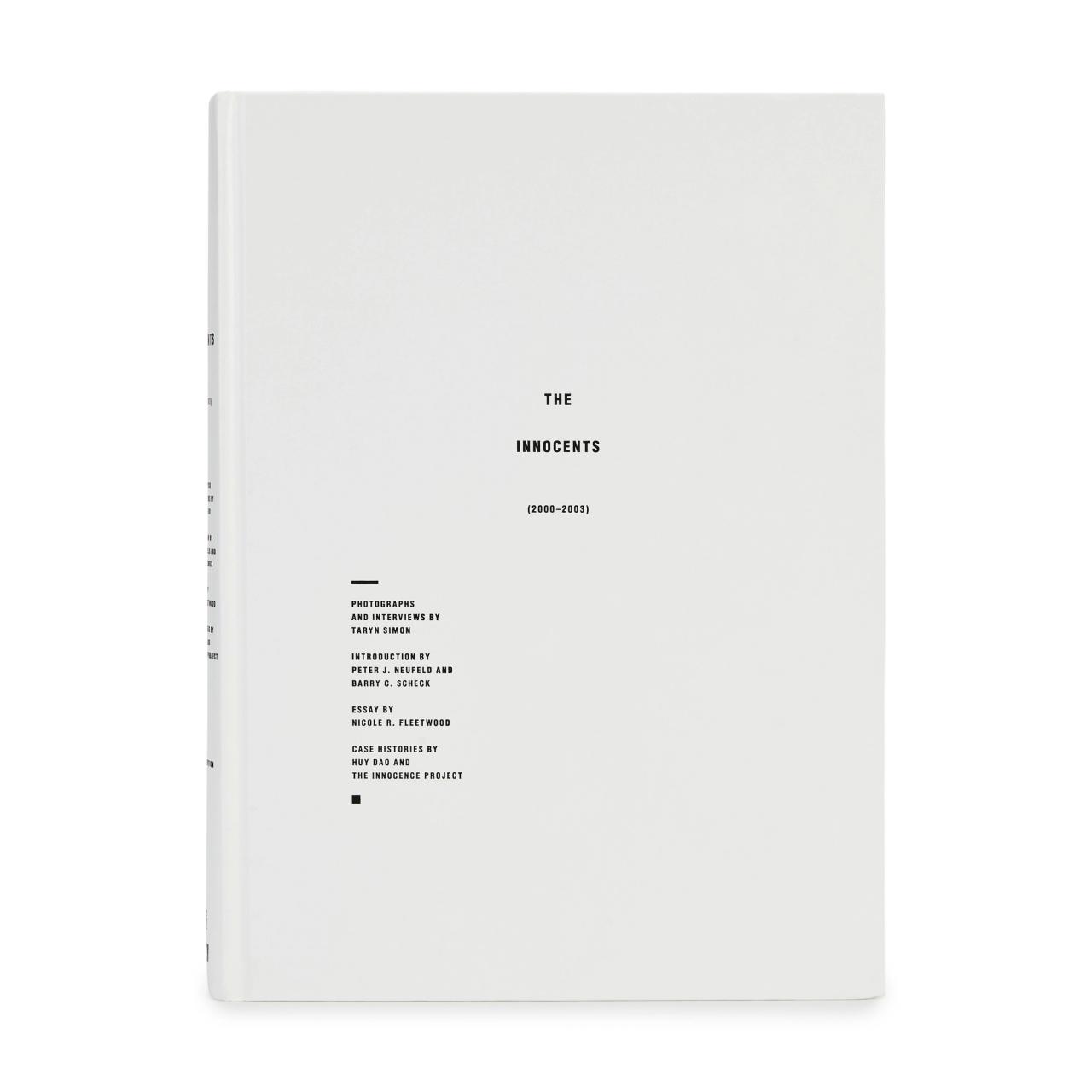
Cover of The Innocents (2003) by Taryn Simon, published by Hatje Cantz and The Museum of Modern Art. (Courtesy The Museum of Modern Art)
TS: I think that project left an indelible mark on everything I did thereafter. There’s no project that I’ve done that isn’t bound to “The Innocents” and the experience of that work and the ways in which text can change an image, an image can change a text, and both can change a life, and the consequences can be huge.
In “The Innocents,” for example, someone losing their life on death row as a consequence of misidentification through a photograph and a creating of a false narrative—that stuck with me, and I think that’s why I’ve always incorporated text into my work. Ever since I did that project, it became more and more formalized. When we talk about anxiety or the effect of work, I think that it definitely marked every move I made thereafter.
SB: Tell me how that project came together. It an assignment from The New York Times or…?
TS: Yeah, I did an assignment for The New York Times on people who had been exonerated but not through DNA evidence, and I was spending time with somebody in Alabama and they were showing me images and talking about how photography had affected their case and all these acts of misidentification and the misuse of a photograph and all the judgements that came to it because it was considered “proof” and how that could seal a false fate. It was the beginning days of DNA evidence being used more and more to lead to these exonerations.
I joined up with the Innocence Project and started documenting those early cases of wrongful convictions that had been proven through DNA evidence, and thinking about DNA evidence as this absolute and something that people were turning to as a definite that almost felt like a photograph, the way there was this belief in it as an absolute. It was leading to amazing truths coming forward, but also that could be subject to abuse and misuse, as well. Then I set out across the country and started documenting those stories.
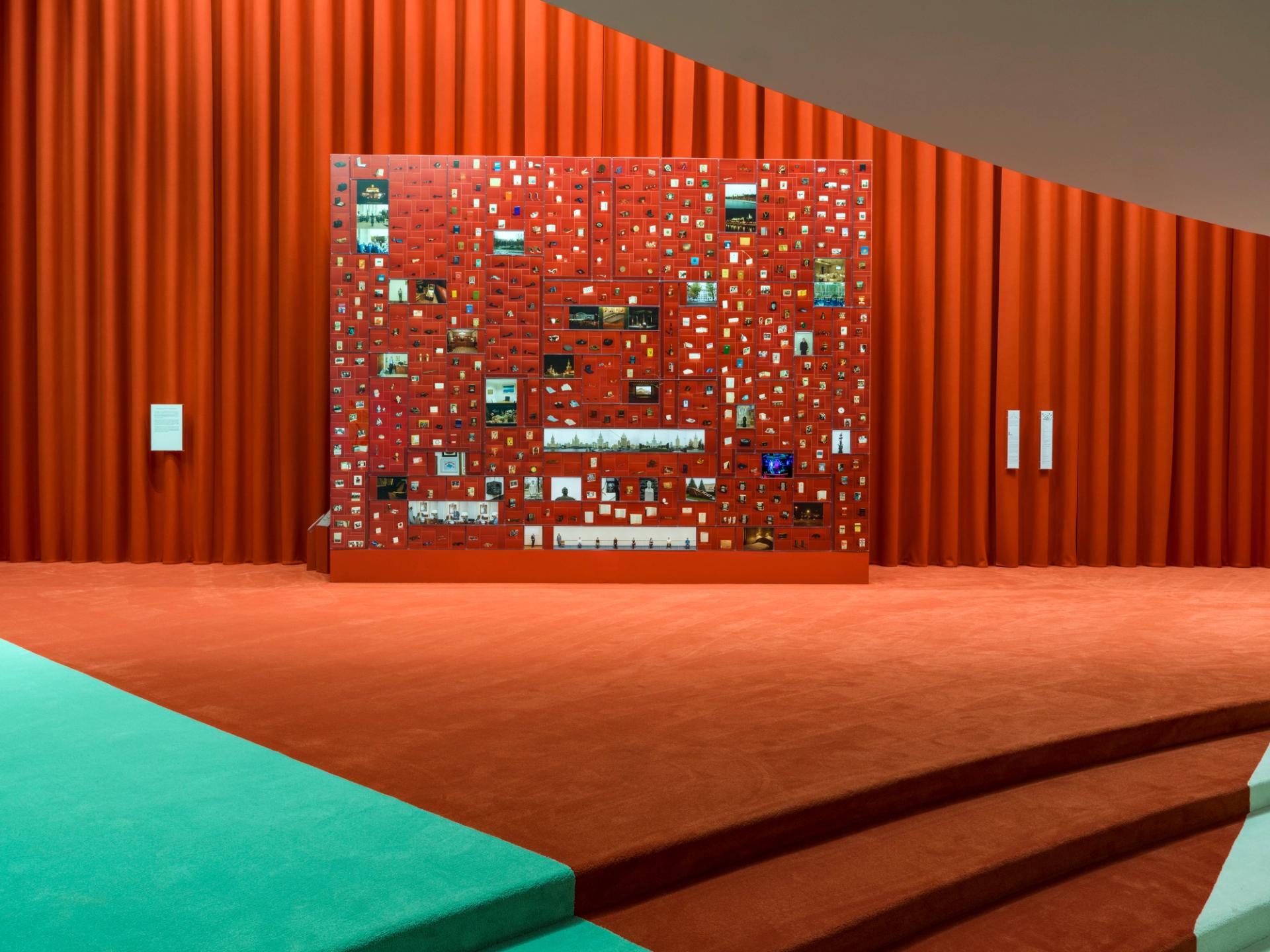
Installation view of Simon’s “Father Country I Do Love You.” (Photo: David Heald/Courtesy Solomon R. Guggenheim Foundation, New York)
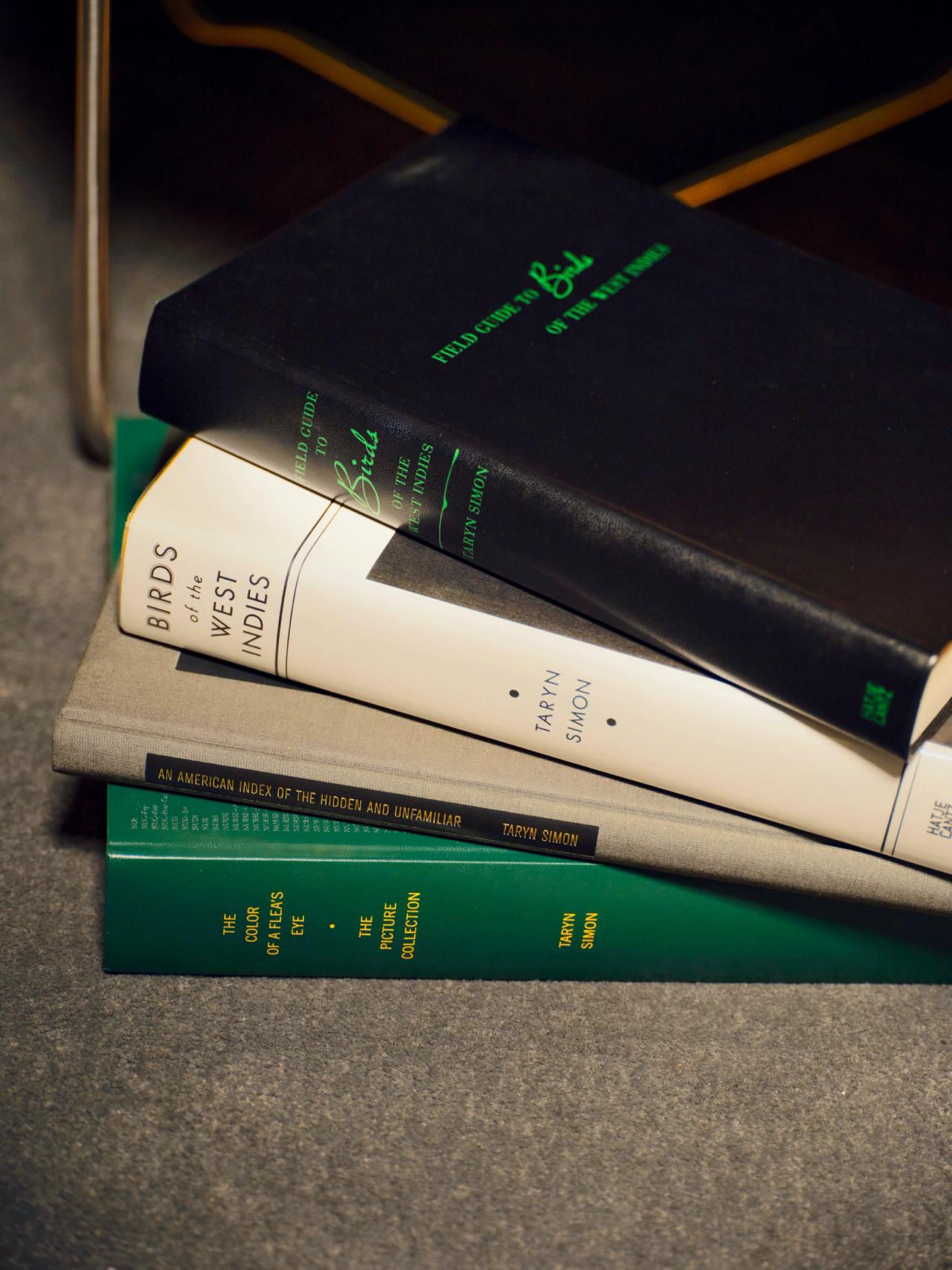
A stack of Simon’s books, including (second from top) her Birds of the West Indies series (2013–14), a visual inventory of recurring “women, weapons, and vehicles” in the James Bond film franchise. (Photo: Matthew Harrington for The Slowdown)
SB: I think it’s probably clear to listeners by now that your work is incredibly rigorous and time-intensive, and that, though there’s this end result, eighty or ninety percent of the work is the research and the phone calls and the wrangling and all of that. So, I wanted to ask you a question about that—the time the viewer has to take in your work or look at your work versus the time—
TS: [Laughs]
SB: —you spend making it. A viewer might spend a couple of hours with it, as I did at the Guggenheim the other day, but that’s a decade’s worth of work. Do you think about this enormous imbalance between the making and the—consumption seems like a crude word, but the viewing?
TS: No, it can be brutal and it’s a somewhat masochistic endeavor, I guess, but now I go into it with an expectation and I build into the work these different layers upon which you could engage with it. You could just go through “Father Country I Do Love You” and just read the titles. Also, to protect myself from that brutality, I prepare the work for an A.D.D. read and a more concentrated read. There’s the side captions, which have all this data, and then there’s the more fun story text that we spoke about earlier, and that is more fractured and off-base in many ways. I even set up the video works as pass-bys, as opposed to a seated experience. There’s something where I’m trying to embrace a fast and fractured read with something that could take days.
It’s like Mertine Moore Brown at the beginning in the case where the agent was asked to babysit some kids and figure out on the late-night news what had happened and what he’d participated in, and you have this woman who went into witness protection who dropped off her kids to be babysat, and it was all in a framing of Mayor Marion Barry and a crack cocaine sting. But she has this clothing company called MooreWrap and you can wrap these things in so many different ways. She says “a MooreWrap is like a story, you can wrap it so many different ways.” She does it again and again, and says it again and again, and keeps wrapping this clothing in all these different forms—over your head, around your waist, tying it in this beautiful way, it becoming a skirt and then a pant and then a shirt. I try to think of the works also like MooreWraps, they can just be wrapped in so many different ways.
SB: Guggenheim for the body.
TS: Yeah. [Laughter]
SB: You once said, “It’s a question of time. Do any of us have the time to dedicate to all of this data?” And that what we actually absorb are snippets, little things that we take away while doing all these other things in our day-to-day lives. That’s where these “fantasies,” as you call them, arrive. I love this idea—what happens to the truth when we no longer have the time? Or perhaps even the attention. Because we don’t really get to fully understand what we’re looking at, what we’re watching, what we’re listening to.
“Technology has caught up to that so you can quickly get a definition of what you’re listening to or watching so much faster than what humans could have done. But the processing time has changed because you’re onto the next, so you don’t actually let it sink in.”
TS: Mm-hmm. But it’s more that we… I feel like technology has caught up to that so you can quickly get a definition of what you’re listening to or watching so much faster than what humans could have done. But the processing time has changed because you’re onto the next, so you don’t actually let it sink in. The memory of it doesn’t embed. There’s no actual sitting with it. And that’s the bigger thing, right?
If you’re going to the bathroom and you’re on your phone versus going to the bathroom and having to sit and think about what that person just said to you and stewing it for a little bit instead of going off to, I don’t know, watching jelly be smooshed by hands and having some A.S.M.R. experience, it’s going to be a very different process for your brain to work through all that. [Laughs]
SB: It’s true. This is a funny anecdote, and I don’t want it to sound name-droppy, but you mentioned the bathroom, so… I once interviewed Burt Bacharach, and he told me that whenever he’s having a problem in the studio or creative difficulty, he goes to the bathroom and he sits on the toilet and he’s like, “Nine times out of ten, I come out a winner.” [Editor’s note: He actually said, “I work it through in my head, and four out of four times, I come out a winner.”]
TS: [Laughs]
SB: No cell phone—
TS: Exactly.
SB: I guess the lesson here for everyone is we need more bathroom time without the phones, without technology.
TS: Yeah.
SB: After “The Innocents,” you began turning increasingly toward things we’re ordinarily prevented from seeing: restricted sites, hidden systems, spaces accessible only to insiders like the C.I.A. headquarters. Where did this desire come from, the want to gain access into these worlds, and why and how did you feel it was important to go about that work?
TS: I think I was just so aware of my inability to see or access any of those things. This was before any of those sites even had press departments or a communications system where they could engage with the broader public. It was all these illusions, these Wizard of Ozs, and it was just after 9/11 where people were questioning a lot of those institutions and positions of authority, and I just wanted to see them—knowing that I was not going to get in fully and it was just going to be another perch—but I wanted to see how far I could get, not working for a newspaper, not doing something where they had brought me in, but actually just as a public citizen, how far could I get if I actually tried? That went in so many different directions. Yes, I went to the C.I.A., but I also went into a hibernating bear’s cave. I took those boundaries in all categories.
SB: What was that like in the cave?
TS: I was so focused on getting into the cave that I didn’t actually think about what happens in the cave. There were cubs, and there’s a whole ecosystem that goes on. Then the second I was in the cave, I just wanted to get out of the cave. I didn’t belong in the cave. Actually, the first cave we went to, because I was going with these scientists who go to these caves and enter in all the time and document and record how the bear community is behaving and growing, the first cave that they went into, the bear actually woke up and came out and started... Anyway, every time it was not what I expected.
SB: Then later, with “A Living Man Declared Dead and Other Chapters I – XVIII,” you spent four years on that project tracing bloodlines around the world, looking at what gets passed down through families, this idea of inheritance—back to DNA, actually, as you were mentioning earlier. It’s DNA as a lens into history, politics, geography, and chance. Did that project change how you thought about how much of life is actually ours to determine?
TS: In looking at bloodlines, I was thinking about this one thing that we all, in every country and gender and race and religion, it was something that people all believe in. This idea that there is a family line, that you do come from a mother, that you do then proceed on to having a child, and this line as being this one thing people seem to universally accept. Then thinking about how those things—just the ideas of chance and fate and disruption and all the programming and mistakes that create a story around that family line—and following those. In that project, there’s interruptions by a genocidal act in the Srebrenica massacre. There’s also blood feuds between two families that have been going on forever. There’s the body double of Saddam Hussein, where it’s somebody who is literally put into another bloodline in his profession but exists as someone completely different in his actual bloodline. There’s also an orphanage in Ukraine where [there was] a large number of children who have no idea what bloodline they’re attached to. It went in all different directions.
SB: It makes me think of an interesting connection to “Father Country,” too, since one of the first works in the show is this birthing scene, right?
TS: Yeah. I went back to the hospital where the agent was born in Exeter, New Hampshire, and found a woman who let me photograph her birth. It’s an idea of another life coming out and who knows what— You watch the head literally coming out of the vagina and who knows what that head is going to contain and what things it is going to touch. Alongside it is the placenta, which is functioning very much like a middleman. That thing is keeping the mother and child alive. It’s nourishing both. It’s doing all the things necessary, and then it’s thrown away, or sometimes eaten.
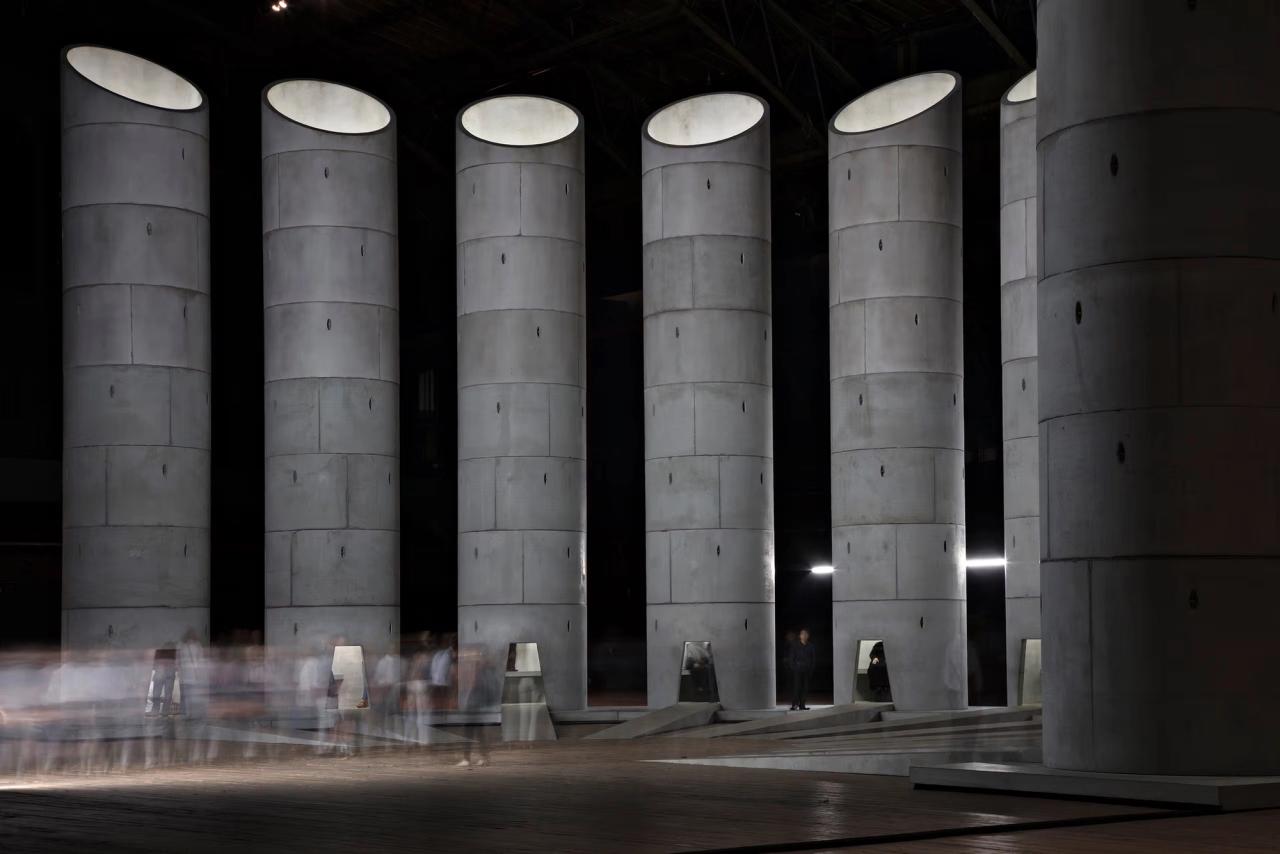
Simon’s “An Occupation of Loss” (2016) at the Park Avenue Armory in New York, with architecture done in collaboration with Shohei Shigematsu of OMA. (Photo: Naho Kubota/Courtesy OMA)
SB: All right. I can’t have a conversation without asking about “An Occupation of Loss,” which was in 2016 at the Park Avenue Armory and later went to London. You brought these professional mourners from around the world together to enact these rituals of grief and lamentation at the Park Avenue Armory inside of these hollowed concrete tubes that were reaching to the ceiling of the [Wade Thompson] Drill Hall. You’ve described loss as an abstract space, something language can’t quite communicate. So, with that, and maybe to a certain extent with some of your other work, some of the things you search for and try and do, were you trying to understand something about grief that you can’t get through photography alone? Was that part of…?
TS: It needed to be performed. I had tried to do something on professional mourners photographically and it’s not the right medium for it, so then I turned to performance for that piece. It needed to be sonic. It needed to be performed. It needed to be spontaneous. But I think I was trying—and maybe it is about the programming of it, because I was thinking of loss as a space that is really difficult to program, and it’s maybe the one time that we are a more authentic version of ourselves and perhaps not guided by all these things that make us behave and speak and talk and do in these scripted ways that we think are not scripted, but they are. And in loss, there’s an inability to be scripted, but then I wanted to simultaneously look at the script of that space and who we turn to, often strangers, to guide us through that most personal moment of loss. That collision of a stranger with your most difficult moment and feeling and where anarchy reigns and nothing can hold you, just thinking about what that is.
SB: Yeah, the emotions I felt when I went to that were hard to describe. That performance has to remain among one of the most extraordinary art experiences I think I’ve ever had. It heightened my senses. It felt like being inside multiple Taryn Simon photographs at the same time. There was also the sound of the mourners, of course, reverberating up and kind of mixing together, but then becoming more intense as you ducked under and into one of the tubes, or silos.Then, the thing that still sits with me to this day, which I never really saw written or spoken about much, if at all, was the smells.
TS: Mmm.
SB: I just remember going into each space and there being a different odor, probably related to the respective diets of each mourner, what they had for breakfast.
TS: Mm-hmm.
SB: But it really felt like this form of time travel. How did you think about or view the role of a relationship to time with that installation?
TS: It was going back to Zoroastrian ideas and all of the pursuits of the mourners and the histories that they were following and what they were trying to achieve in that moment, and also breaking time. Some of the laments are actually meant to guide a body or a soul to another planet or space and its return to earth as rain. There’s all these... Some are kind of guiding and reining in the living and getting them back to a certain order and belief; others are communicating with ancestors and a beyond that we can never imagine. So, it wasn’t a suspension of time, but it was something that was breaking linear time and taking these points in a far future that’s unknown and a very deep past. This person who is an actor on some level, but also someone so dedicated to this and who is so practiced in this ability to authentically express the emotions of the moment and guide in that moment. You have it all colliding in one. I can’t even... I’m doing a terrible job right now. It’s impossible to—
SB: As a viewer, there’s this jarring moment where, all of a sudden, the gate to the Armory starts opening and the light from the streets starts coming in.
TS: Yes, that was important to me.
SB: And you’re like, “What?!” It’s jarring...
TS: At the end of it all, I wanted that gate to just crash open and you’re spit out on the street and you have a nondescript street and you don’t know where you are.
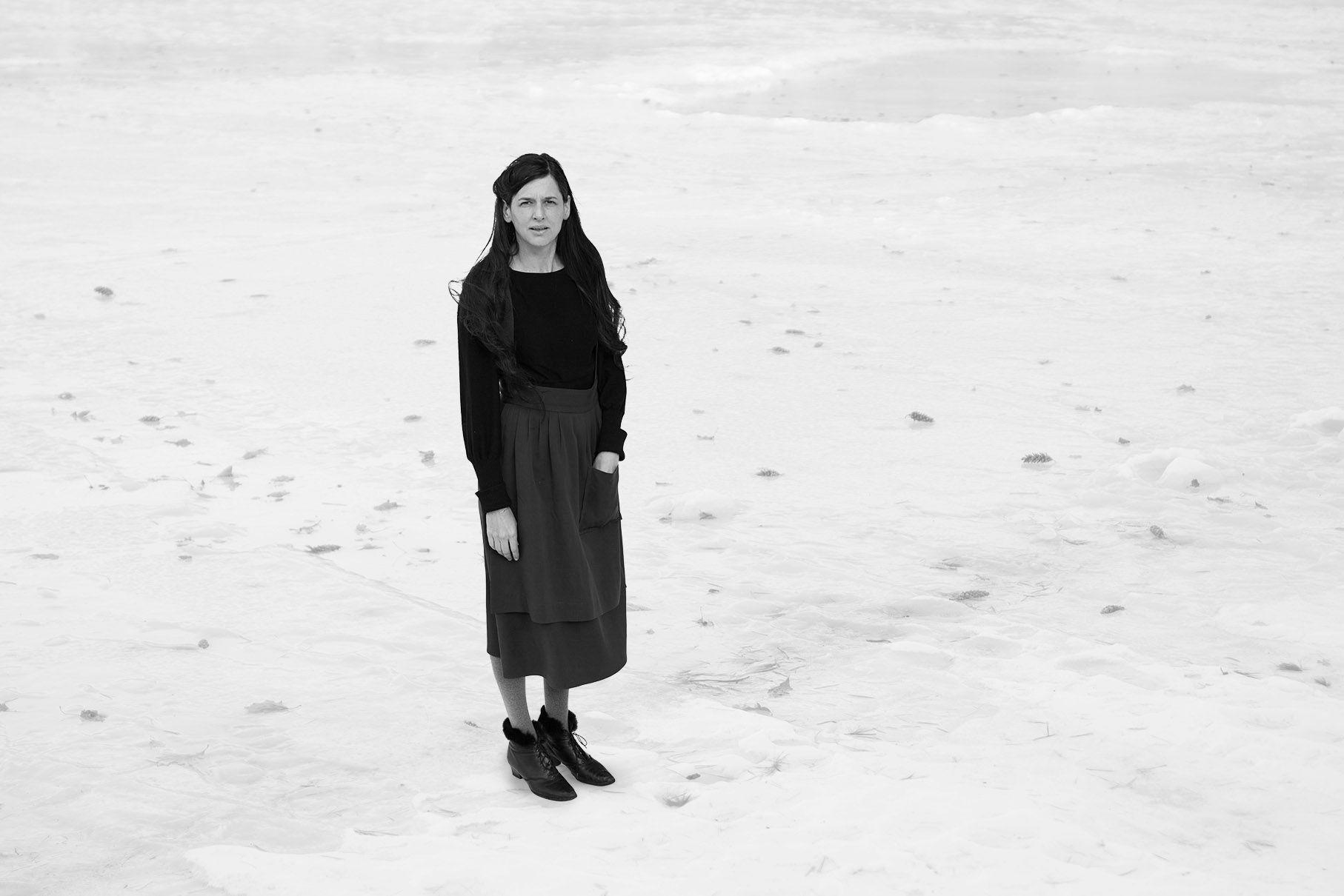
Simon in 2018. (Photo courtesy Mass MoCA and the artist)
SB: I walked out of there with my friend in a haze. We were like, “What just happened?”
Okay, I also wanted to mention “A Cold Hole,” this incredible installation you did at Mass MoCA in 2018. Here, you moved away from photography and toward something intensely physical. Though I should say, the installation was still photographic and filmic with this aperture you created in the wall for viewers to watch these plungers as they went into the icy abyss. First, describe the installation a little bit, and then I’m curious what you learned or came to understand about creating this particular work.
It seems to be a meditation on time on some level, both the plunger—what does extreme cold do to someone’s perception or understanding of time or language or the mind, memory? Then for the viewer who’s watching this kind of moving image, almost like a film, unfold within that opening in the gallery wall. How are you thinking about these two experiences of time?
TS: Well, I wanted to beat time and create a work that initiated the gasp that you would only otherwise experience on your death—or in sleep arrhythmia, maybe, for a few—but it’s primarily in death. So, this kind of gasp.
I was researching that, and I felt like, through the gasp that one does in extreme cold shock, you are creating that gasp of birth or death. I created this darkened room with this huge aperture and people would have to walk through, on the other side, in this snowy, icy lit room where they were constantly slipping. It was so precarious and walk around to this—
SB: It almost looked like an interrogation room.
TS: Yes, it did.
SB: It kind of had that aesthetic.
TS: Everybody was holding their camera to document the interrogation. That was the amazing thing that it created was this rabid community on the other side. So, you had the main event with the person who was jumping into the cold hole, but then you had this audience that was desperately trying to document it and then looking away right as somebody jumped and being so angry that they missed the moment, or being frustrated as hell that the person wouldn’t jump. So you had this impatience and anger and need to get it and all of that, and that was what ended up being the most interesting dynamic in it all.
Then, of course, the catharsis believed in experiencing that jump into that cold space and believing in this kind of awakening or rebirth, and thinking you had somehow achieved this quick fix that alters everything in some form. And it does in many ways. I think that was my own frustration with it, because when you do do that, you do feel changed, and I kind of hate that. [Laughs]
SB: Yeah. I mean, there’s the going in and coming out, the hot, the cold, the birth and death. It’s all imbued in that installation.
TS: Yeah.
SB: I want to return finally to those Kodachrome slides that we started with. What happens to a photograph when the person who knows the story behind it can no longer tell those stories? Maybe I was reading into it too much, but this is where I saw the cicadas in your exhibition, too, this idea that stories can disappear—they do disappear—but then somehow they manifest again. They, in another form, come back years later.
TS: Someone brings it up through a metal detector, or through something brewing underground for seventeen-year cycles and then suddenly emerging, or a daughter going in the slide closet, whatever it may be. These things don’t disappear, even if they’re buried over. An earthquake will pull it up and out.
SB: The jammed camera. [Laughs]
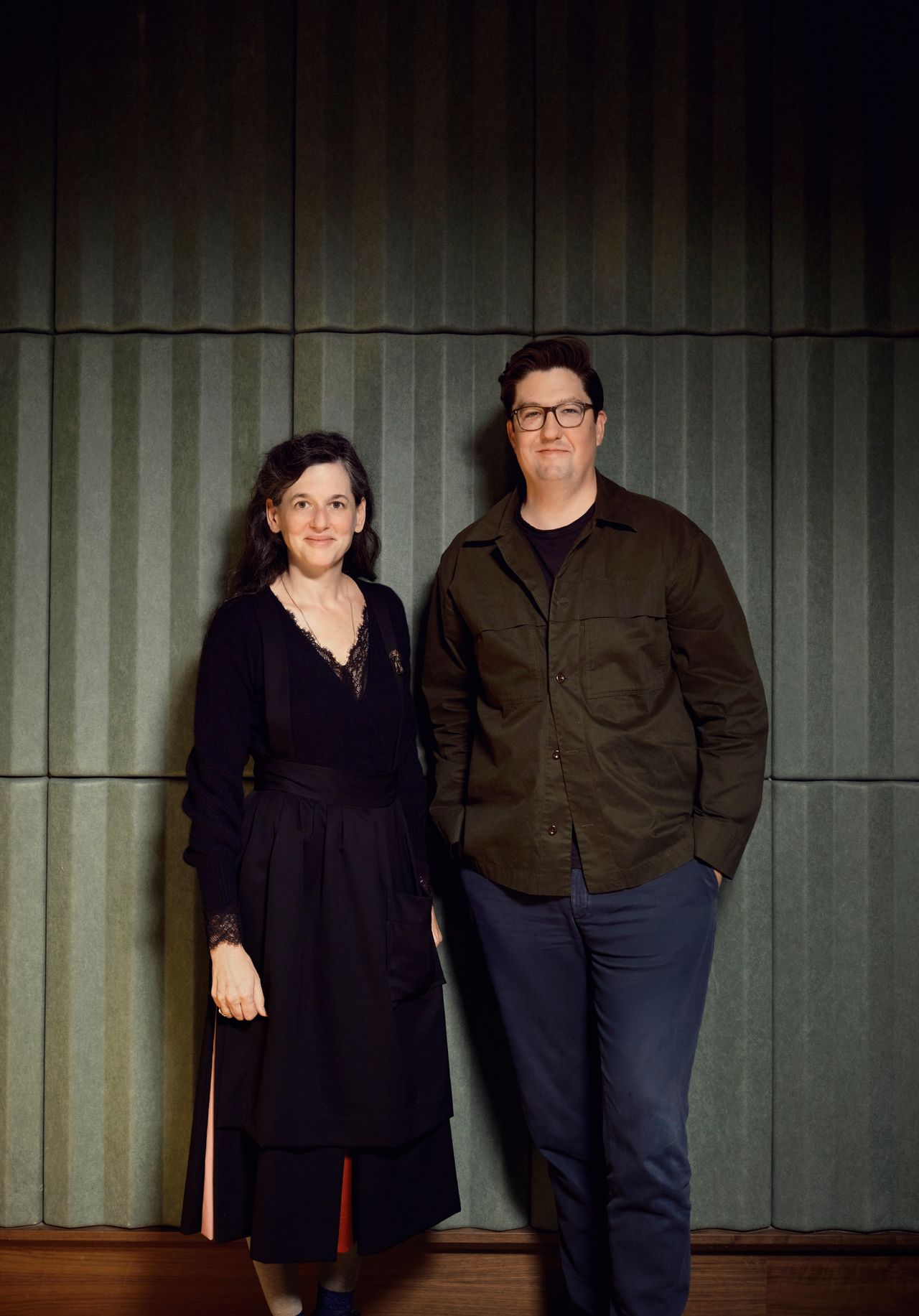
Simon (left) with Bailey in the Time Sensitive studio. (Photo: Matthew Harrington for The Slowdown)
TS: Yeah, exactly. So, there is an element of that. It’s all also alongside the agent experiencing transient global amnesia. So he, at the end of his career, loses his name, his religion, his memories, any sense of time. It’s all just gone. There’s this moment of amnesia that happens to some people. It’s almost like an abduction where time is broken and you have no record of it. The only thing you can do is backfill it with what somebody told you or what the hospital tells you, but you lose all sense of self.
So the agent had that happen to him alongside my father having Alzheimer’s and losing all of his ability, as you said, to understand those stories, to recollect all those spaces. Although that is the only space of a glimmer of memory is through those photographs, which I also think is pretty powerful with a lot of Alzheimer’s patients. That’s the thing that brings back something. It’s usually going back to the mother or childhood or some vivid experience from a very early age. So, it’s breaking time, too. There are all these ruptures and what you’ve been experiencing as linear and continuous and it suddenly... Human time and the way it’s unfolding is literally broken, and then returns and then breaks. So it’s zigzagging and rupturing, and it’s not continuous. That’s, in many ways, what photographs do.
SB: This is a perfect segue for my last question, which is, years ago, when you were asked about your greatest influence, you answered, “Just an awareness of time and its continuum and the kind of violence of that.” Could you elaborate a bit on what you meant? How do you think about that quote now?
TS: I kind of still agree, I guess. The violence is that it’s not going to stop and you’re going to die. So, I’m imagining that. I don’t know when I said that. [Laughter] I guess a photograph or a telling of a story is a way of trying to fight that inevitability and keep alive the things you love, right? It’s an act of love.
SB: Thanks, Taryn.
TS: Okay. Thanks.
This interview was recorded in The Slowdown’s New York City studio on September 29, 2026. The transcript has been slightly condensed and edited for clarity. The episode was produced by Ramon Broza, Olivia Aylmer, Mimi Hannon, Chelsea Debrot, Drew Arndt, and Johnny Simon. Illustration by Paola Wiciak based on a photograph by Eli Baden-Lasar.