
Follow us on Instagram (@slowdown.media) and subscribe to our weekly newsletter to receive behind-the-scenes updates and carefully curated musings.
TRANSCRIPT
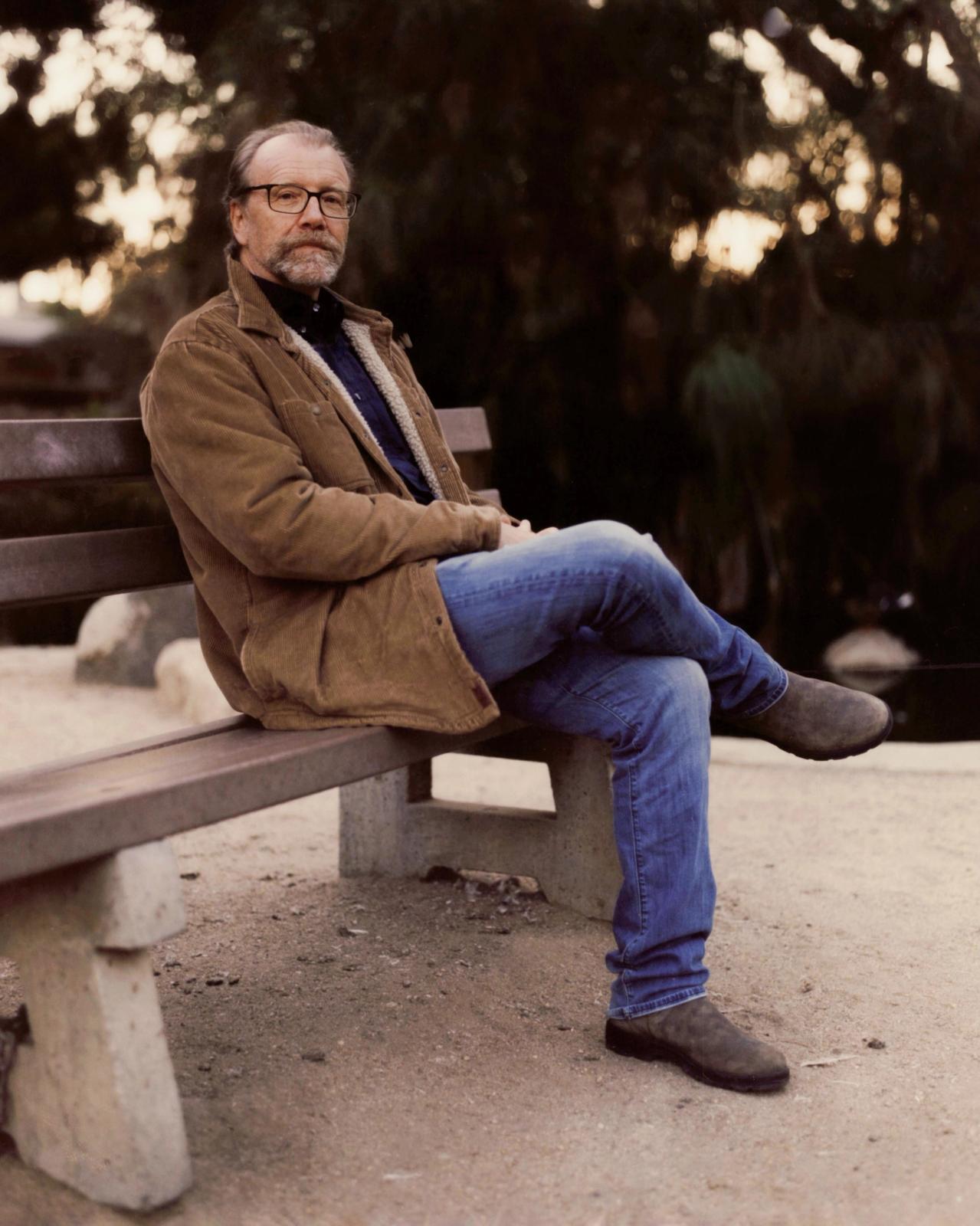
George Saunders. (Photo: Pat Martin)
SPENCER BAILEY: Hi, George. Welcome to Time Sensitive.
GEORGE SAUNDERS: Spencer, so nice to be here. Thanks for having me.
SB: You were recently on BBC for this great interview, and in it you said that you were really interested in the first ten minutes after one dies, what happens. Two of your novels, Lincoln in the Bardo and Vigil, both have to do with these spirits and these transition moments into the afterlife. Early in Vigil, the narrator, Jill “Doll” Blaine, readying to usher the powerful Texas oil executive K.J. Boone into the afterlife, goes, “Soon it would come, accompanied by disbelief and panic, and he would find himself on the wrong side of a rapidly closing door, everything he had ever known and loved out of reach, over there, beyond it.” I wanted to start there. Tell me about your interest in this transitional state between life and death. What about the first ten minutes after someone dies fascinates you so much?
GS: I think it would just be that this thing you’ve been wondering about your whole life, well, you just know. Maybe there’s nothing and Oh, shit. Or maybe it’s unbelievable. Maybe there’s some crazy thing. I kind of feel like if I could know that, I would have a different life. If it turned out to be nothing, okay, you can do that. Or if it turns out that, God forbid, you’re in a roast, you get supersized, and that’s heaven or hell, then that would give you something to work on.
On one level, I’ve just been fascinated by that ever since I was a little kid, just intuitively, How can it be that this guy who’s so central to me someday will stop? That’s crazy. Then also artistically, there’s a whole other reason, which is that I don’t... I got caught in a bog in my twenties where I was trying to be a realist writer and I could do it, but it wasn’t very fun to read. I stumbled on a way to get myself out of that rut, which in that case was writing about theme parks in kind of a comic vein. Ever since then, I’m just trying to find a topic that will let me not be dull. It has something to do with the ideas, but it really has more to do with the language. What I find is if I say, Okay, this guy just died. We’re in his mind. That opens up all kinds of doors.
“Ultimately, if you’re writing about the last ten minutes or the next ten minutes, you’re kind of writing about your whole life.”
In some ways, it’s just, I guess, a trick. Ultimately, if you’re writing about the last ten minutes or the next ten minutes, you’re kind of writing about your whole life, really, because everything... What we’re doing right now, it’s fraught when you consider that we’re going to die someday. We’re spending this time together, we’re making this choice here, so... I hope it’s not a bad decision. [Laughter]
SB: I wanted to ask you about the role of time in Vigil. I think it’s interesting how, in having a narrator who comes from this other time, the distant past—“those bygone days,” as she would call it—you almost can more fully look at the present. Could you speak to this element, how you’re creating this dialogue or conversation across generations?
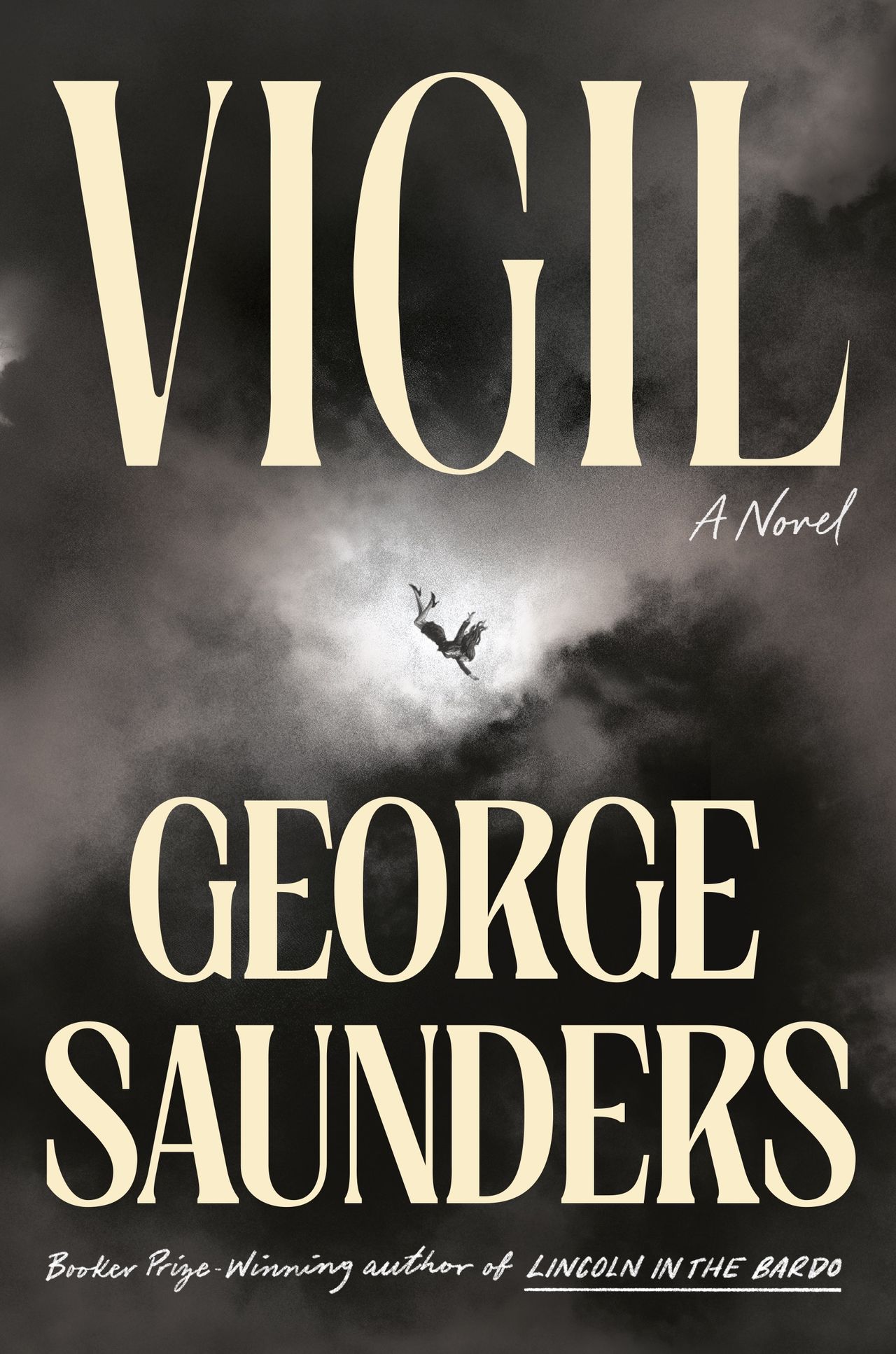
Cover of Vigil (2026). (Courtesy Random House)
GS: That’s a great observation. In my mind, she was somebody... I guess she’d be a little older—I’m 67. She’s a little older, but she died in ’76. So it was interesting through her to kind of think, “Well, what did the world look like to me in 1976?” Not just physically, but also kind of emotionally and culturally. It’s sort of sweet. In some ways, it’s so naïve. We didn’t know very much. At that time, the range of influence was quite small. There were only like three television stations and you got your music... I remember at that time there was one great FM station in Chicago, and I would listen to it all the time and go, “Oh, Shostakovich. Oh, Leo Kottke.” It was in some ways a tighter, like more constrained way of thinking. So she has that.
Also, at one point she comments on this thing that I’ve noticed and it’s hard to articulate, but something about greed and materialism. I think if someone could drop into the mindset of a 1976 person, you’d find it to be very kind of sweet...
SB: Feels quaint compared to now.
GS: Quaint, yeah. It’s like The Brady Bunch. If you could take a ’76 person and fast-forward to now, I think they’d be amazed by how much we’ve come to believe in the material as the only thing…
SB: There’s this moment where she observes a modern-day gas station, and it was with such clear eyes. Something that we pass every day, these mundane boxes selling gas. The way she phrased it, I wanted to quote here, because I think it’s so interesting. It’s, “The gas stations were not the simple cubes of my time but garishly lit fortresses of glass, the enormous signs looming over them seeming to quarrel with one another by way of hideous scrolling slogans… the commerce proceeding therein possessing a fierce yet desultory quality, as if all pleasure had been wrong from the exchange, the money below changing hands with a feeling of mutual resentment, as if obtaining it had been too hard on the one side and the need for it too great on the other for any joy to pertain around the transaction.” It’s funny. It feels very much like the kind of thing that we so often will just pass by in our day-to-day lives and not acknowledge. But I think seeing it through this lens of someone from a different time… She’s seeing it so clearly.
GS: Yeah. It’s one of the kinds of weird blessings of being older, is that—in glimpses—you can remember the way things, even very mundane things, felt back then. Of course, you have to be careful not to nostalgize too much, but in a sense, there was more, I would say, cornily perhaps, more room for human interaction because it wasn’t anything else. If you went into a restaurant, there you were with the person and there were no phones looming in the desire consciousness, “I want to get back to my phone.” There was an expectation, too, that you were going to... You show up. You had another person there in front of you and you’re going to talk. That was one of the hidden pleasures of the book, was to just blurt out that she died in 1976 and then you have to deal with that.
SB: Among other things, this book’s dealing with and looking at the climate emergency, extreme weather, greenwashing, and, as you noted, corporate power—or, I would say, late-stage capitalism, basically—and the relationship of big oil to all of those things. Could you speak to these concerns in your daily life and how they come alive for you through this book?
GS: My conceptual mind is pretty dumb. Fiction, for me, is a way to come at these things in a way that might be not so typical. I’m basically your left-wing uncle. I just have all the views one would have and the panic and the frustration, especially right now. But through the prism of fiction, you can kind of find parts of yourself that aren’t so common. You can kind of come at it from a slightly different angle.
“Fiction makes sympathy. It just does.”
The interesting thing was to trap myself in this guy’s mind. He’s this oil guy, of that generation, sort of the Bush-Cheney generation, when the evil guys still believed in enlightenment values. It was kind of fun to just say, well, a guy like that who’s done such harm, really—they knew. They knew all this stuff, and they proceeded as if they didn’t know. Does that person—and these are big, open questions—does that person have a conscience? If so, how does it function? How does the justification work? Is there justification? Is there a blind spot? You really come down to good and evil. If somebody has done something really reprehensible, did they wake up in the night thinking about it? Frighteningly, maybe they don’t. So to kind of try to get inside his head and let him narrate was really deep, because you have to say, “Well, when I’ve done things that weren’t so great, how did I talk to myself about them?” I guess to answer your question, if I think about climate change in a big, conceptual way, I got nothing really, but if I come in through the head of somebody who did it, then maybe we can have some fun.
SB: It’s worth noting, too, that your characters very often are not some big, evil corporate CEO. They’re typically more like people toward the bottom of the barrel or everyday Americans, let’s say, people who are living their sort of mundane, day-to-day lives.
GS: Yeah. It was funny. I could feel the stress of trying to represent somebody powerful because I don’t usually do that. Somebody who has money and influence and whose life has gone pretty well, that was actually kind of difficult for me because, on the one hand, fiction makes sympathy. It just does. If I narrate the worst guy in the world from inside him, you’re going to be more interested in him than you would be otherwise. So it was kind of cool to, at this stage in the game, try to represent a kind of person that I hadn’t done before.
SB: Power is something that... There’s a paragraph in particular that stood out to me where you’re writing about it. You write, “That’s what powerful men did. Stayed quiet. Held secrets. Ran things from inside a tight protective circle, making perilous decisions only they were savvy enough to make, leaving morality to the mere earthlings, who lived and ate and died dully down below, never knowing the extent to which they were being shielded by a beneficent distant pulling of strings.” Both in and out of the context of the novel, that particular text, I feel like really fits our billionaire age.
GS: Yeah, it really did. In my mind, where that originated from was growing up on the South Side of Chicago, and there was always this kind of idea that there were tough guys. I don’t know if it was quite mob-level stuff, but in the neighborhood, there were people that you didn’t mess with, and they were scary and kind of glamorous because they didn’t have to answer to anybody, and it was just the sheer power. Now we see that writ large. We’ve taken the kind of most pugilistic, dull members of the high school class and put them in charge of the prom.
SB: [Laughs] I love this phrase you recently said on Stephen Colbert’s show. You described it as “ambient cruelty.” I think that connects definitely to this power thing, this pulling of the strings that is occurring around us and creating that ambient cruelty.
GS: Yeah. In my mind, I kind of associate it with... I always think locally and try to extrapolate, but this present crew of “leaders” seems to me like people who in real life haven’t quite figured out power, because power is cooperative, really. If you and I get trapped in this studio, we’re going to have to figure out how to get out together.
SB: [Laughs]
GS: Most of us who have to live in the real world figure out pretty early that there’s nothing powerful about being alone. That’s the worst. I feel like almost to a person, this current leadership has a kind of— you sense a kind of loneliness, that they really haven’t worked with other people before, either because they haven’t had to or they weren’t disposed to. When you put in charge people who’ve never cooperated and worse, see cooperation as weakness, then you get the shit show that we’re in right now because they’re flailing because they’re finding out you can’t function alone in this world.
SB: Not that you’re some Svengali here, but...
GS: I’m not?! Wait a minute. [Laughter]
SB: Where do you see this situation going next, this one that you’re describing that we’re in?
GS: I think it can’t sustain because it’s... In Buddhism, you talk about karma. Karma is cause and effect. If you have lunkheads operating out of bad principles, it always goes to shit. This will go, it’s going to shit right now. We’ll pay for it and it’ll collapse somehow or another, hopefully in the midterms, and then people will have to put it back together, which, it’s a shame. It’s a shame, because there’s plenty of stuff we could be doing with all this energy and money that we’re just not doing.
“Cruelty, when you actually see it, there’s a mirror aspect of it where you go, ‘Oh, I could be on the other side of this.’”
I don’t think it’s going to last. It can’t last. It’s too stupid. It’s too cruel. I think most people, even people maybe who voted for this, they don’t like... Cruelty, when you actually see it, there’s a mirror aspect of it where you go, “Oh, I could be on the other side of this.” I think some of the people who supported him are starting to catch that backlash. Even a regular person who sees the kind of cruelty you saw in Minneapolis goes, “Hmm, okay, eventually that’s coming for me.” I think we react against it pretty viscerally.
SB: In writing about K.J. Boone, were you, in part, trying to contend with some of these feelings of people who, knowingly or not, bring cruelty into the world? In the book there’s this scene—and I hope this isn’t too much of a spoiler—where, “In that moment, amid sounds of praise and weeping, time had stopped, and he”—K.J. Boone—“had been flung forward by some irresistible force through the decades and shown the potential comprehensive effect of that which he had invented.” To bring it back to death, how do you think about the role of death in your writing, particularly as a lens for exploring morality and this K.J. Boone character kind of coming out of this toxic sludge we find ourselves in?
GS: That’s a big question. When you die, do you come out of your mindset? I think, who knows? We don’t know, but I can imagine that one version of hell is you’re Hitler and it seems pretty cool to you. Then you’re out of your body and you go, “Oh, shit.” And you get that… They talk about the experience of walking through your whole life with this kind of supersized, hallucinogenic mind, and in that mode, you would feel the pain of everybody that you hurt. That’s hell if you’re somebody like that. Or even if you’re a pretty good person, I would imagine, I like to imagine that you would feel every positive interaction and the pleasure that gave and also the ones you muffed.
So, in other words, what I imagine is some kind of moment where you are in a hundred percent relation to truth, which we never are in reality. It would be good or bad depending on what you did. But again, there’s a beautiful line in, I think it’s in the end of Master and Man, by Tolstoy. And Tolstoy has, in other works, has taken you past a moment of death, but in this one, he stops and he says, “So-and-so died. As to what happened next, we’ll all know soon enough.” That’s kind of our... You know? We don’t know. It’s nuts.
SB: I think framing it in that new afterlife, reflecting-on-the-decades way, it really does reposition how one thinks of their life.
“The crazy, frightening thing is every instant has import.”
GS: Yeah. The crazy, frightening thing is every instant has import. That’s weird. That literally every... If I move this cup a half inch over, that’s meaningful. I guess that would be the goal, is to get to the place where you really felt that yourself, as opposed to me careening through life, missing entire weeks because of anxiety. [Laughs]
SB: That just made me think about how we’ve never recorded one of these episodes not in person. I’ve always made it a very tangible thing, that it’s us in a room. I feel like if you were behind a screen, it would be a different experience.
GS: It is. You can do your best to make it not a different experience, but it is.
SB: Yeah. And I’ve never been able to—
GS: I can see your watch and I can see your ring and I can see...
SB: Yeah.
GS: You know what I mean?
SB: I’ve never been able to articulate the difference, but it is tangible and it’s there.
“We’ve all had those moments where the mind gets expanded, whether it’s artificially or sometimes through the death of a loved one, or a harrowing experience, or a beautiful experience. That tells us that there’s unlimited room in the mind.”
GS: The crazy thing is that we walk around in these minds that are very delimited, they’re shaped and they’re for very Darwinian purposes. That makes our experience. But we’ve all had those moments where the mind gets expanded, whether it’s artificially or sometimes through the death of a loved one, or a harrowing experience, or a beautiful experience. So that tells us that there’s kind of unlimited room in the mind. In that space, it is probably... Well, it is true that every action matters. It’s just that we can’t see it. We’ve got this kind of very… We’ve got blinders on. But if the blinders came off, which I sometimes think happens after death, then it would be crazy.
SB: I want to turn to your youth here. You were raised in Texas and Chicago and grew up Catholic. You’ve described it as “a seriously beautiful Catholic experience,” and noted how you would get into this meditative state during Mass. You’re now a Buddhist, also practicing. Could you speak a little to your spiritual life here, both then and now, and how meditation and a sort of sense of the spiritual comes to life in your work?
GS: I think what I was experiencing as a young kid was that I have a tremendous case of monkey mind, and I did then, too. I can remember my mind just spiraling, even from 4 or 5 years old, being really neurotic and really kind of self-blaming and speculative, and also some really beautiful, wild moments of imagination and stuff.
I think just mechanically, when we were kids, there was a time where, if you’re a Catholic school student, you went to Mass every day. That was at least an hour every day of sitting there. I can remember the restless energy—you couldn’t move, so you had to sit still. Okay. Then that would gradually give way to a kind of a think, think, thinking, your mind going crazy, and then that would wear out. Then somewhere around three quarters of the way, my mind would go kind of quiet, and it would get receptive to whatever was happening.
I remember the kind of sensory stuff, like the incense and the different raiments that the priests were wearing and the way the light would come in, or even like the shoulder of the person sitting in front of you, you’d kind of get, “Oh wow, there’s a spot on her sweater.” I think that was kind of a rudimentary meditation, which is just wearing out your monkey mind, and it was deeply pleasurable. At that point, I didn’t want to admit it, but I craved it. To go to church was really fun.
In that mode, some of the teachings that we were getting, they struck me very deeply, especially this idea that—and I don’t know whether I got it directly from the text or from the nuns or whatever—but that Jesus was kind of a novelist. In other words, he would meet you, and his mind was so quiet that he would see you a hundred percent. If you were the woman at the well who was normally castigated, he would go, “No, no,” and be able to see more deeply. I imagined him as being super open, like nothing was necessarily good or bad, but he could get in there and understand it. That was intriguing. I had a couple very small moments by osmosis of simulating that feeling myself, where somebody would come at me and I would just think, “Oh, poor guy.” Again, not very often. That was a deep thing. I think it made a craving for that forever, which then art came in to fill. In other words— And the craving was for my normal mind, which was sort of tormenting me, to recede and give me access to something else.
Then, at some point, in high school, I had stopped going to church. I just believed in Foghat and in Aerosmith. [Laughter] And then years later, that craving for something transcendent, and then I started writing and reading. Yeah.
SB: Then Buddhism at some point comes into the picture.
GS: Much later, yeah. My wife, Paula, also, she came from an evangelical background in South Dakota, so she also had that craving... We really bonded over that. We had our daughters, and we were going to church pretty regularly, and she wanted to learn about Christian meditation. That time, it was kind of pre-internet and there wasn’t much information. She went to a teaching by a Tibetan lama and came home kind of perplexed, like, “What was that?” Then she started doing a meditation practice, and I just watched her and there was something happening that was interesting. We kind of came in from that direction.
For me, it was powerful, because I could see the way that she was changing just in small, day-to-day things. I wanted that. I’d sit for an hour at night and I didn’t know what I was doing. I thought, Okay, I’m going to try to stop my thoughts, which—good luck with that. But it was still beneficial.
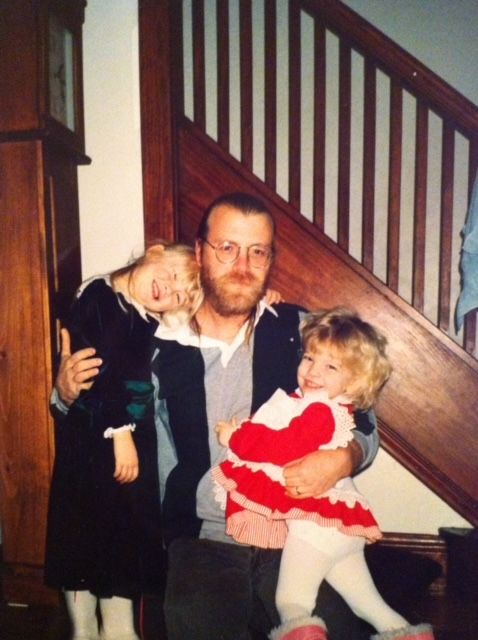
Saunders as a young father with his two daughters. (Courtesy George Saunders)
I could feel that I was changing in small ways, just like with the kids, for example—they were little—and I noticed that with that meditation, there was just a built-in little pause of like maybe a couple milliseconds between thought and speech with them, which, with little kids, is really helpful to say, “Well, maybe I can just let her keep going. She’s not hurting anything, or maybe I don’t need to intervene at this point.” It was kind of cool because it was all very practical. It was nothing esoteric or conceptual. It was just like, “Well, if I do this, I can literally feel my mind becoming more amenable.” In that process, of course, you become aware that you have a mind in the first place.
Mostly I go around and the world presents to me through the filter of the mind and I go, “Oh, that’s reality.” But with this meditation, I was like, “Oh no, actually you’re…” We had a friend who used to say, “It’s all your mind, man.” [Laughter] So when I was meditating, it made me just go, “Oh yeah, so you’ve got to…” We’re always wearing a costume and viewing the world through the veil of that costume. It was kind of fun to just pull the veil aside and go, “Oh, this is just your phenomenon, as opposed to the phenomenon.”
SB: How was this meditation impacting you as a writer when you would sit down at the desk?
GS: The kind of silly way is that everything would be so cool. For a while I was meditating in the morning and I’d go to work and I’d be like, “Yeah, that’s good,” which was fatal. So I moved it to later in the day, but long-term, I think what happened was just, because that veil got pulled away, I had a little more comfort with different modes that I didn’t know I could do. When I was writing Lincoln in the Bardo, I was doing a lot of meditation. What I found was, okay, so when I was a young writer, it took me—I didn’t publish until I was 38, and I published in a very narrow mode of CivilWarLand in Bad Decline, kind of edgy, first-person, fast, sarcastic stories.
Then having gotten some success that late, you don’t want to let go of it.
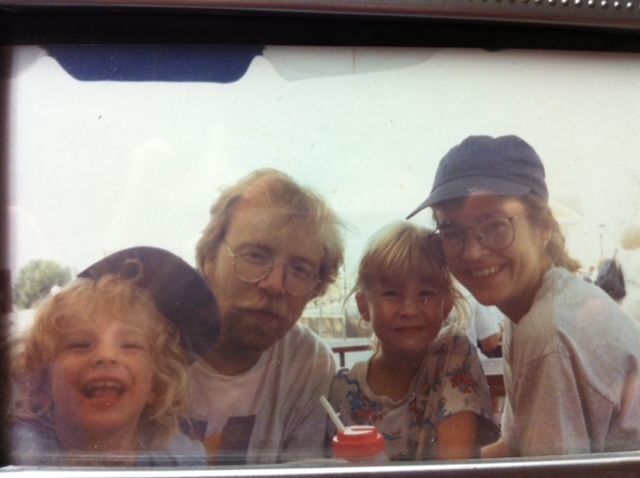
Saunders with his family. (Courtesy George Saunders)
You’re like, “Okay, that’s my thing. I’ll do that forever.” I think the meditation gave me a little more confidence to be a little more earnest, to not have every sentence be a show, like some sentence could just be doing work. It was literally like that veil got pulled back enough for me to go, “You could be a little more earnest, or you could have a whole passage here where your prose ability isn’t the main star, where you could trust your reader a little more.” That was really valuable. I’m not doing much practice these days, and I can kind of feel the mind comes back and the mind... But yeah, so, even though my natural inclination might be to be a little snarky, a little whatever adjectives you want to use, that’s just a temporary costume. Through meditation, you could get access to a couple other modes maybe, which is valuable.
SB: Staying here on your upbringing, and also turning a little to your early career years, I wanted to ask you about three books in particular and hear your connections to those books, how they shaped you. The first is Johnny Tremain by Esther Forbes, which you’ve written beautifully about, but I imagine most of our listeners might not be familiar with. Why this book? When did it come into your life and its importance?
GS: Sure. I was in third grade and was in love with these... Well, one nun in particular, Sister Lynette, if you’re out there, call me. But she was wonderful... must have been 23 at that point, and from Kansas, I remember. She pulled me aside one day and said this magical sentence for any Catholic kid, which is, “Me and the other nuns have been talking about you in the convent.” Like, “What?! You talk in the convent?” And she was holding a book kind of protectively and she goes, “Now, I want to offer you this book, but the other nuns don’t think you’re ready for it.” I’m like, “Oh, give me that fucking book.” And it was Johnny Tremain, and she actually was holding it with the Caldecott or whatever the prize it had facing outward.
She was saying to me, “I’ve noticed you’re a good reader. This stuff we’re reading is boring to you, so I’m going to let you take a shot at this.” And I loved it. Partly because she loved it, I loved it. But Forbes is a real... She was the first stylist I ever read, somebody who really took a lot of care with each sentence. Some of them were kind of weird and off and overpacked and weirdly punctuated. That was powerful.
The best thing was, it was the first time I ever got a prose style in my head. I would walk around and imitate that. I would describe my own life in Esther Forbes’s prose—or my best attempt at it. I didn’t realize till years later how formative that was, but I guess it showed me that I had a certain affinity for sound, for prose sound. When I was doing that describing, like walking around the Catholic school, describing things like Esther Forbes would, it altered reality. If you utter something in a different language, reality actually morphs, so that was a really powerful thing.
“If you’re perceiving the world with a dull mind, it’s a dull world. One of the ways you de-dullify it is to describe it in better sentences.”
Years later, when I started reading more seriously, I could feel my working-class mind, which had a lot of biases in it and a lot of oversimplifications responding to the language—and the world changed, which is so powerful. This goes back to the idea of, it’s all mind. If you’re perceiving the world with a dull mind, it’s a dull world. One of the ways you de-dullify it is to describe it in better sentences. That was huge.
SB: I like how you’ve described channeling your “inner nun” when it comes to revision and editing. I imagine some of that stems from this.
GS: Well, yeah. These sorts of sixties-era Chicago nuns were amazing. First of all, they’re very progressive. They’re in the Dorothy Day tradition, but they’re also rigorous. We did sentence diagramming. There was not much tolerance for error, for mispronunciation. That was not cool. They were, in some ways, dreamy people. They were very tuned in, I think, to what I would say were the more beautiful parts of the Christian tradition. But also they would whack you. And they were really...
I had one time—this is off the topic—but there was a nun who... She was having a hard time controlling us. These are just young women in a room full of wild kids. Her thing was she’d grab you, throw you across her lap, and have a ruler, and hit you really hard on the ass and the legs with it. That was one of her things. She grabbed a friend of mine by the neck, and I was kind of trying to stay out of it. And we were working with microscopes. She had taken my chair as she rushed to the front of the room. She’d pushed my chair. I grabbed... I just took it. I was like Switzerland. I didn’t want to be a part of... I take the chair over and just as I did, she went to sit down in that chair. And she hit the floor and her legs came up and everybody started laughing. She stood up and she saw that I had taken the chair and she assumed that I did it on purpose, which I really hadn’t. And yeah, I still remember the confusion in her face because I was a real straight arrow. I was a really good kid. She couldn’t believe that I was part of the rebellion.
So she’s coming for me with that ruler and I’m kind of backpedaling. I’m like, “Sister, Sister, it was an accident.” Something in that exchange, she didn’t hit me. She kind of like, even in that humiliation, she was able to go, “Yeah, he didn’t do it on purpose.” But then I was a hero for a week and sort of pretended I had done it on purpose.
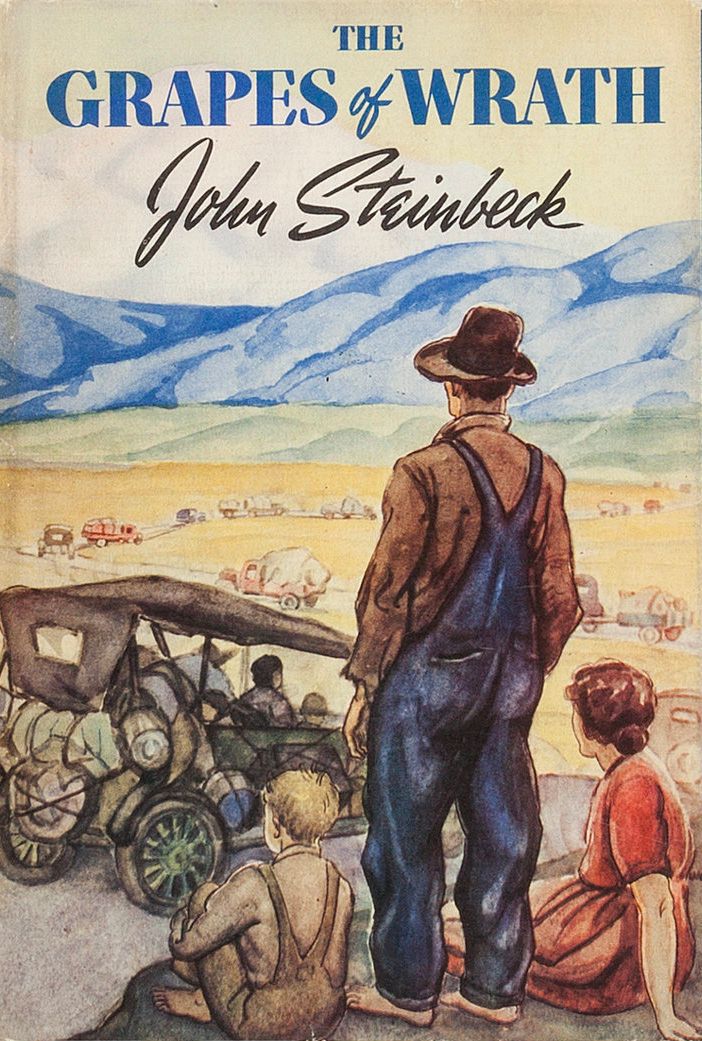
Cover of John Steinbeck’s The Grapes of Wrath (1939).
(Courtesy Wikimedia Commons)
SB: [Laughs] The next book I wanted to bring up is Steinbeck’s The Grapes of Wrath. Where were you when you read that book?
GS: Let’s see, it was the summer between a couple years of college and I was working on an oil crew in Amarillo, Texas—outside Amarillo. It was a heat wave that summer and it was really long days. We’d go out on a bus to this ranch and then lay out these geophysical cables all day. Literally cattle were dying in the fields from the heat. Then I would come back and my parents had just moved there and they had an RV in their parking lot. I thought it’d be cool to live in the RV for the summer, like my apartment. I’d come back from this really rough day, and the people on the crew were like—there was an ex-con and there was, Just out of jail. A couple of Vietnam vets who were in rough shape, and it was a good paying job that was really hard. It attracted a certain kind of scrappy but damaged person.
I’d come home at night exhausted and read The Grapes of Wrath. It was the first time that something I was living through and a work of literature connected. I could understand kind of like, Oh yeah, hence socialism, that kind of thing. Then I’d go back the next day and be running into kind of like real-life corollaries from The Grapes of Wrath. Even some of the speech patterns were the same, and a light went on that this literature stuff is not just reflecting in repose at something that happened many, many years ago. It could be like literally what was happening to your mind and your spirit in any given moment.
SB: It connects in such profound ways to that distant past, in a way. You’re almost finding another way to the past through the literature.
GS: Exactly. Yeah. Suddenly the thirties were full-color for me. Oh, okay. The depression and all of that foment, it all made sense to me in a very three-dimensional, full-color way.
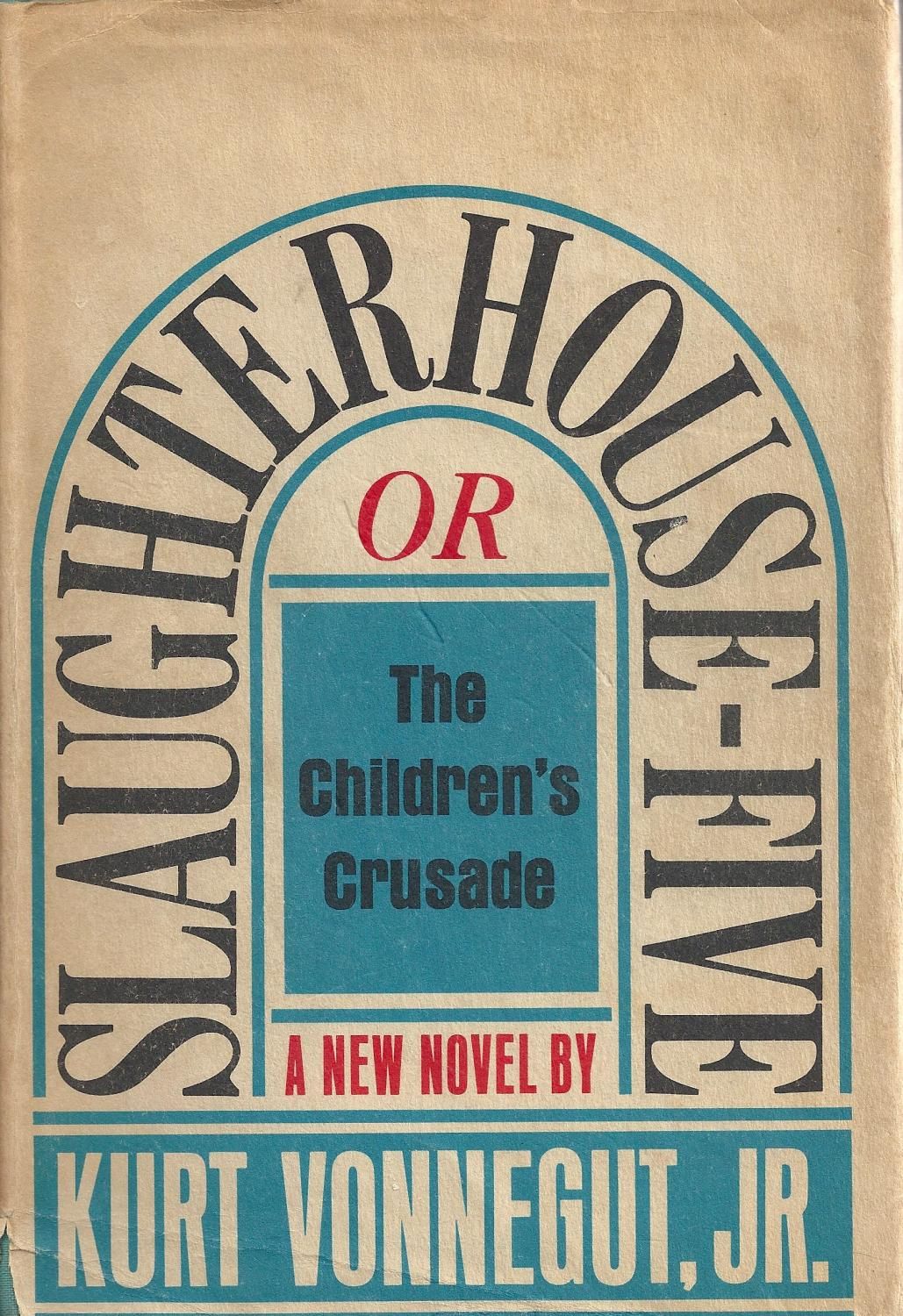
Cover of Kurt Vonnegut’s Slaughterhouse-Five (1969).
(Courtesy Wikimedia Commons)
SB: The third book I wanted to bring up is Kurt Vonnegut’s Slaughterhouse-Five, which I know connects to your time in the Sumatran jungle, so maybe share a bit about that, too.
GS: Yeah, because I was really kind of a boring, young old man when I was in college. I only liked the classics... I was kind of a big virtue guy. When I first read Vonnegut, I didn’t get it. It was too snarky—too funny, actually. I didn’t trust humor. As somebody who grew up surrounded by and in love with humor, when I became a literature person, humor was too low for me, so I didn’t quite get it. I thought, “Vonnegut, why would you go to a war and not use it the way Hemingway used it?” The first time I read it, I thought, “Oh, I don’t get it.” Then, when I was in Sumatra in the oil fields, we’d work four weeks on and two weeks off. The trick was, when I was in Singapore on leave, you just load up a whole separate suitcase with books and bring it back to the crew and every night I’d just read three or four hours a night.
I was doing a lot of catch-up work at that point. To my credit, although I was pretty closed-minded, I would pick up things that I knew I wouldn’t like. I didn’t think I’d like Mailer, got that; didn’t like Vonnegut, got that. Turns out, loved it. In my development, that Vonnegut was a move from my young, lunk-headed mode, which was, I’m the writer, I’ve had an experience you haven’t had, you dummy, and now I’m going to lecture to you about it. Thereby you’re going to admit that I’m a superior being, that mode, which never works, to another one, which is, we’re having an experience together.
As a writer, I’m going to use any means I can to make this feel like it’s happening to you. Even if I have to abandon reality, realism, I want us to meet in some shared psychological space and I trust that you’re going to be there and I trust that you’ve been there and we’re going to be good friends. When I read Slaughterhouse-Five again, that’s what I experienced. There’s not a truer book about war than that one if you really get down to the essence.
SB: Your path to becoming a writer was anything but straightforward.
GS: Very polite way of saying it. Yes, thank you.
SB: [Laughs] Some listeners are probably starting to understand that through these stories, but I think it’s clear that the work you did in your early life has really informed your writing.
GS: Oh, yeah.
SB: Not just subject-wise, but in all these different profound ways. Here, I should elaborate by saying that, among other jobs, you worked as a roofer in Chicago, a doorman in Beverly Hills at an apartment complex there, as a slaughterhouse knuckle puller, and then later, from 1989 to ’96, as a technical writer and geophysical engineer. I realize this question could be an entire conversation or episode, but what did these roles teach you about life and work and corporate America and ultimately yourself?
GS: I think I probably started out—well, I did start out—as kind of an Ayn Rand pro-capitalist guy, and for a couple of months in college I was really... But my background wasn’t that. My background was working class in Chicago. In retrospect, I can see that there’s just that kind of quiet desperation of people who understand that, if they run out of money, they’re fucked—and the system’s not going to help them. In fact, the system has a way of politely disregarding those people and making it seem like it’s their fault.
For me, those jobs were kind of a way of getting in touch with the kind of brutality of the whole thing. Then gradually it started to seep in where I was in that pecking order. We always like to think we’re above it, but from working those jobs and then kind of looking back at my earlier life to see that, Oh yeah, that was always an ambient pressure, that pressure that you better not fall out of the race.
That maybe led to a secondary realization, which was that the way they tell us it is, isn’t it necessarily. Like you mentioned earlier, a lot of the stories have people in there who are bobbling it, who are... I don’t like to say they’re losers, but they’re losing. I think that those jobs were a way of connecting me to that, like, Oh yeah, so in ways big and small, we’re all losing. I mean, nobody is so suave that they never screw up or that they can get through any situation undented. Nobody is. My stories started getting humorous or funny when I let that be true, that you can try to get through a day like James Bond, but you’re always accidentally farting in the elevator or... In a way, that’s a strange way of saying compassion. Compassion is to say nobody gets through this life undented. How are you dented? It’s okay.
Finally, it took me a long time to find a way to get that into the work, but in the first book, that’s what started happening. I’m like, “Oh yes, I’m not floating above this fray at all. I’m right in it and I’m kind of drowning. Let me share that with you. Are you drowning at all, dear reader?”
SB: Yeah. You make this point throughout your work, that we live in an existence in which, as you’ve put it, “Capitalism plunders the sensuality of the body.”
GS: That’s Terry Eagleton. Me quoting him so much that if you Google it, I come up.
SB: Credit where it’s due, Terry Eagleton.
GS: I’m “imperialist.”
SB: I also like how Mary Karr has described your work, which is as “a stiff tonic for the vapid agony of contemporary living.”
GS: I hadn’t heard that one. That’s pretty good. [Laughter] Oh, my God, Mary. Thank you.
SB: There’s this sentence from your short story “Sea Oak” that really captures this for me. It’s, “At Sea Oak, there’s no sea and no oak, just a hundred subsidized apartments and a rearview of FedEx.”
GS: [Laughs]
SB: I think it’s worth mentioning—you touched on the humor element of your work, but—that sentence, to me, is so dry and hilarious. It does remind me, tonally, a little bit of “Deep Thoughts” by Jack Handey. Maybe there’s a little Monty Python in there. Could you share the influence of comedy and the importance of humor in your work? How and what it achieves for you?
GS: Yeah. It was one of those things, it was the air that we breathed in the seventies in Chicago. That’s the way you communicated. That’s the way you bonded with people, like that moment of going really deep and dark in a joke with someone you didn’t know very well and to see if they would rise to it, and then they did and you were friends.
For me, the whole journey was that I absolutely lived and died by being funny. My first girlfriend broke up with me because I was always joking, she said, and then I made a joke and that confirmed the breakup. So for me, the journey was to finally, like—duh—realize that that would be part of my literature. You can’t have something that you use every day, day in and day out, and then put it aside when you’re trying to write a book.
Honestly, I think it’s just when you’re funny, you’re being more frank than is polite. Even that sentence you quoted, we would normally not say it that way, although you live it that way every day, you come out of your apartment and there’s the back of FedEx. I think for me, it was a relief to be able to say things as they actually felt to me. Then there was a really exciting linguistic corollary, which is: What does the language sound like when a working-class person is being as frank as they can? Sometimes it’s not entirely grammatical. Sometimes it’s maybe kind of grammatical in a new way, which, I would say, is poetic.
When you cut past the bullshit, the often polite speech is padded. We’re going to use a euphemism, and you and I agree that this is a euphemism: “That apartment complex is located near an industrial development area. It’s behind FedEx.” What I found really exciting, especially in the first couple of books, was to say there’s no air between honest speech and poetic speech and working-class speech. All those things can sometimes line up. I think a reader will sometimes feel a slight resistance at the, what I call it, normalcy of the prose or even the incorrectness of it, which will then be offset by them going, “Oh yeah, that’s how it is.” That was really fun, to see that poetry and truth weren’t separate.
SB: Sentence-making, like joke-making, is all about compression. It has to be super tight in order to work well.
GS: Yes. Even just a word will slow it down enough to make it stumble... Isaac Babel, the Russian writer, has this great line: “Every sentence is both good and bad and you can only throw the switch once to get the sentence into the right place.”
It’s funny, I’m working on something now and what I’m doing is going through it and trying to put into play this principle we’re talking about. It’s incredible how a paragraph that’s a six, which is telegraphing its humor and which nobody would tolerate for very long with a little bit of this lapidary work will come up to it eight, eight and a half. Suddenly, you’re being swept along through it. And it’s not conceptual. It’s not me having a better idea. It’s finding the truthful poetry, often by way of deleting something or substituting.
SB: Get your inner nun out.
GS: Yeah. [Laughter] No, I love her. Because basically, the inner nuns were saying, “I believe in you, but don’t fuck around. Because I don’t believe in you if you fuck around. If you phone it in, I don’t believe in you.” Well, that’s pretty good because that’s not saying I don’t believe in you. It says, “No, you have it within you, but you have to work.”
SB: You’re also a guitarist. Speak a bit here about how, for you, music, whether it’s tempo, pacing, compression again, or a sense of the lyrical, how does that enter your fiction?
GS: I’m a mediocre to slightly good guitarist. I’m impeded by my... My basic musicality isn’t that great, but I think, yeah, it has something to do with pace. Maybe the power of the nonobvious. For example, in guitar, if you’re an average guitarist, you use these normal chord forms and you use a couple of scales that are pretty identifiable. An average guitarist, you go, “Oh yeah, he’s using the pentatonic G scale. It’s a blues scale. Okay. Yeah. I hear he’s still doing it. Yep, there he is doing it.” That kind of obviousness is a buzzkill, because everybody can do that. That’s what we all do at first. Then you start moving up the food chain and you see that there are musicians who are choosing every chord form. They’re not just using the obvious ones—or maybe they’re omitting it. They don’t have to strum perpetually in this life.
That was a good lesson, to see the way that originality manifests as care. Or you listen to Hendrix, he’s playing in the pentatonic scale most of the time, but it’s not... You would never know that. So I think there’s something about when I finally hit my stride as a prose writer, it had something to do with that, with: Don’t offer the obvious care-worn thing to your reader. See if you can substitute in something that’s a little more truthful and original. That’s like ritual banality avoidance to say, “Well, yeah, you could say it that way.” Do we have to? Could we leave it out? If you say “Jim walked into the room” and then Jim says something, why don’t you just have him say it and then you avoid the banality of him walking into the room.
SB: Yeah. Whenever that happens in a story, I just stop and don’t want to read it.
GS: Yeah. It’s a cliché and it shows. I think the reason you stop is because it shows that the writer doesn’t really care about you that much because she left in that placeholder. And if you were... It’s like if someone said, “Please come into my apartment.” And there was a big old stool right there where you trip over it, like Dick Van Dyke. That’s a sign of some kind of thoughtlessness in your host. So that’s a principle that I really believe in. The kind of cool thing is if you, for me, if I put that principle into place, not only is it sort of courteous and efficient and not banal, that’s where I feel like my real voice comes in, is in the things I decide not to say or the things that I cut.
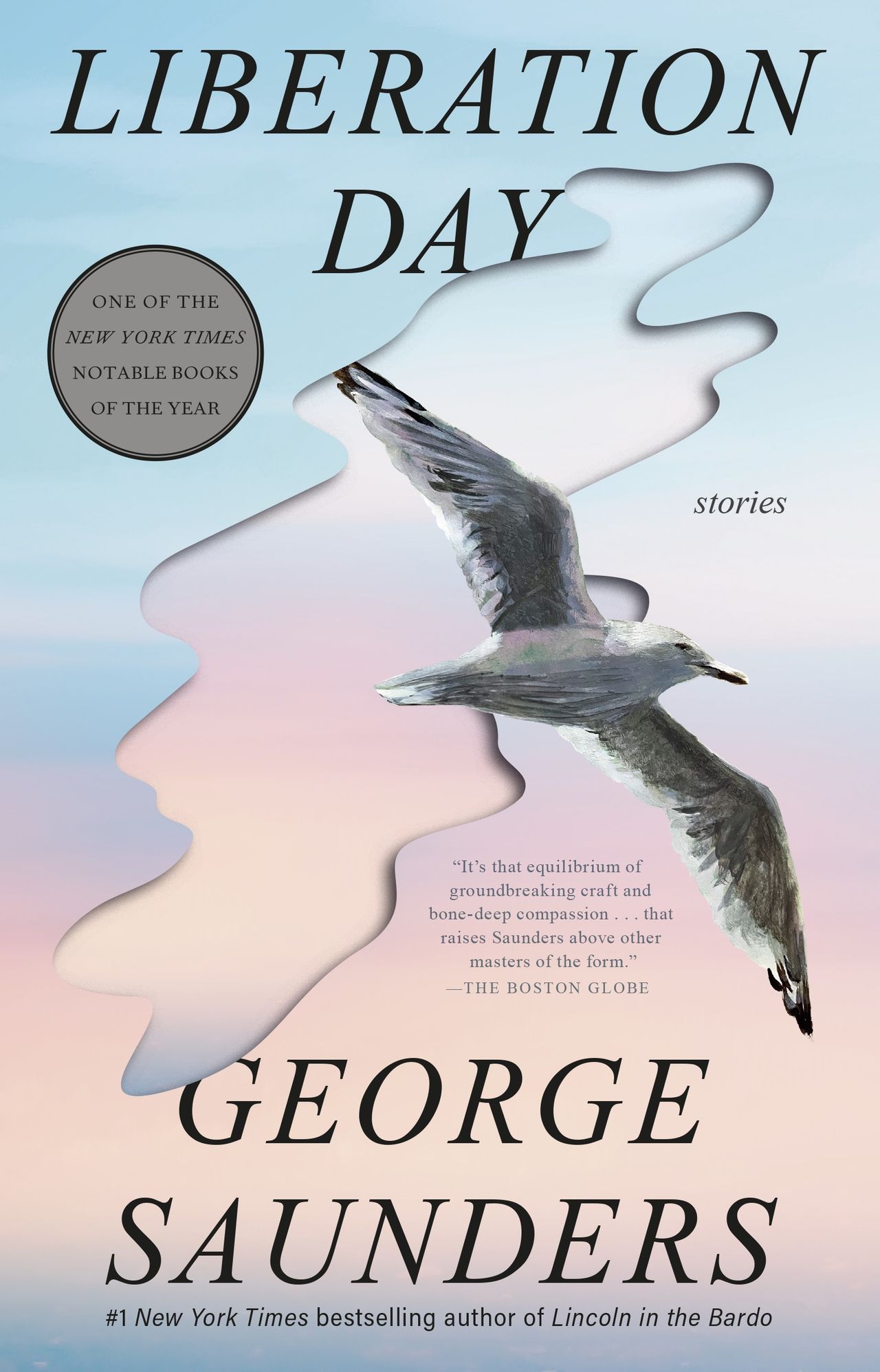
Cover of Liberation Day (2022).
(Courtesy Random House)
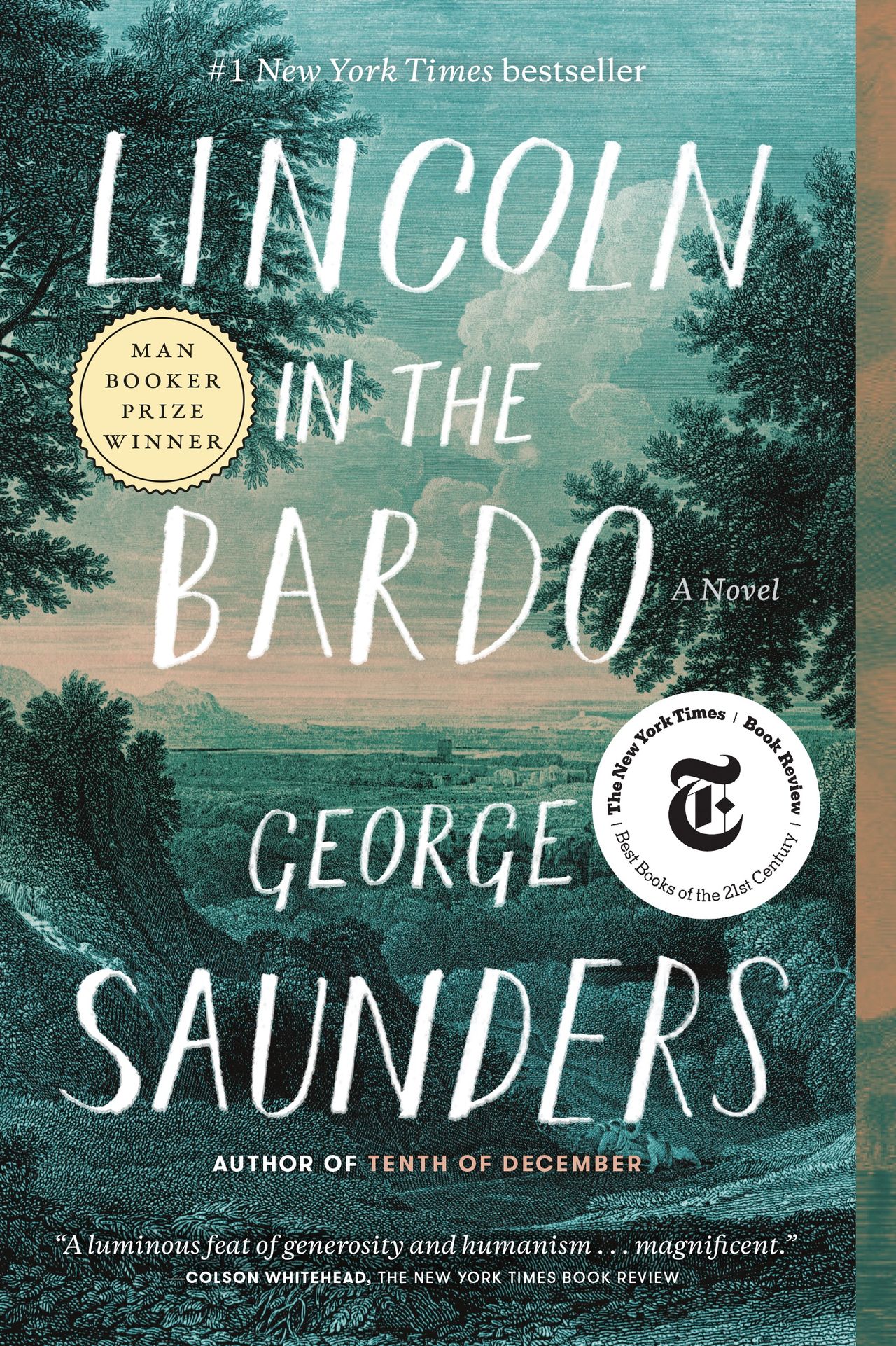
Cover of Lincoln in the Bardo (2017).
(Courtesy Random House)

Cover of Tenth of December (2013).
(Courtesy Random House)
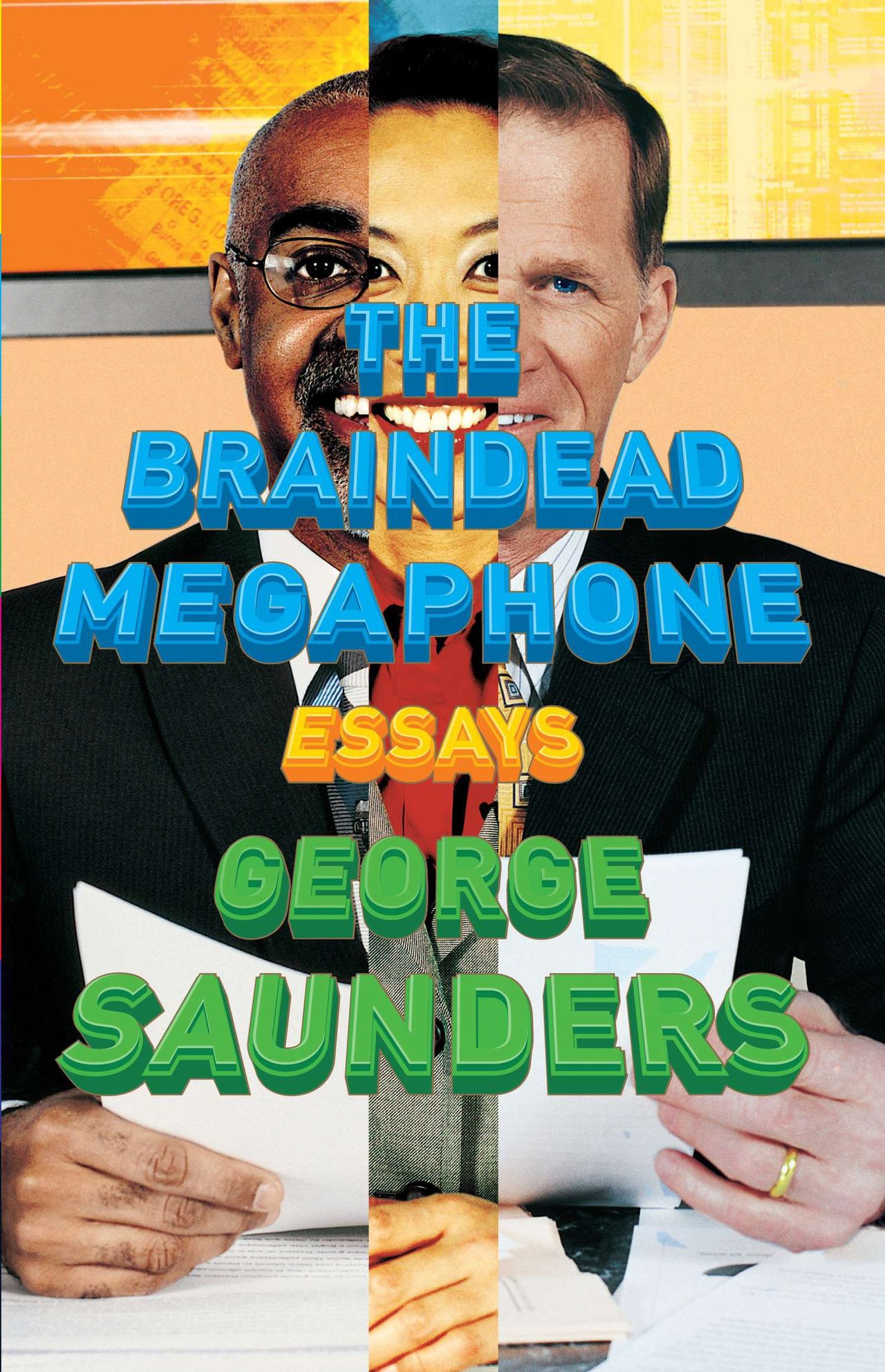
Cover of The Braindead Megaphone (2007).
(Courtesy Random House)
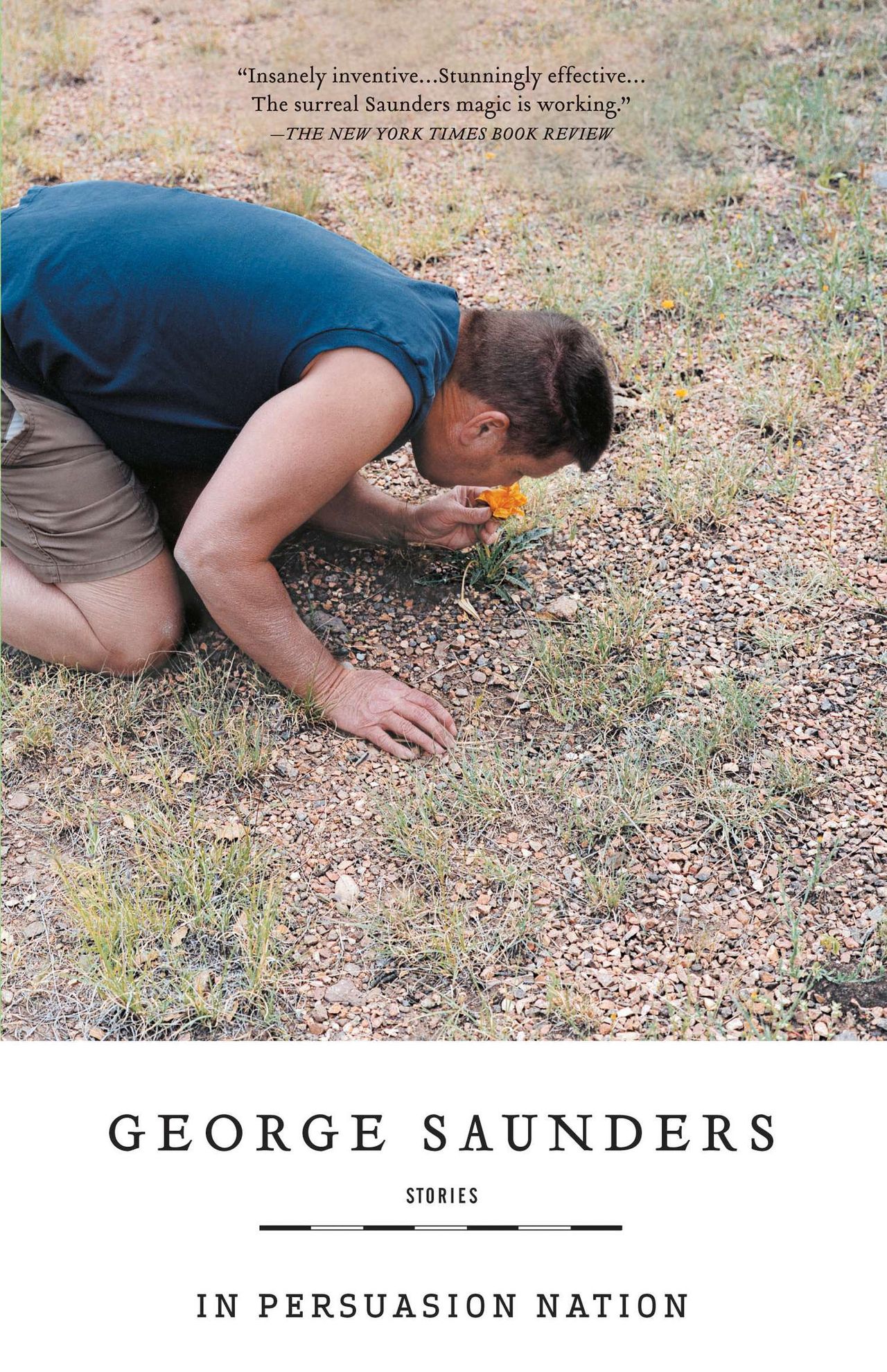
Cover of In Persuasion Nation (2006).
(Courtesy Random House)
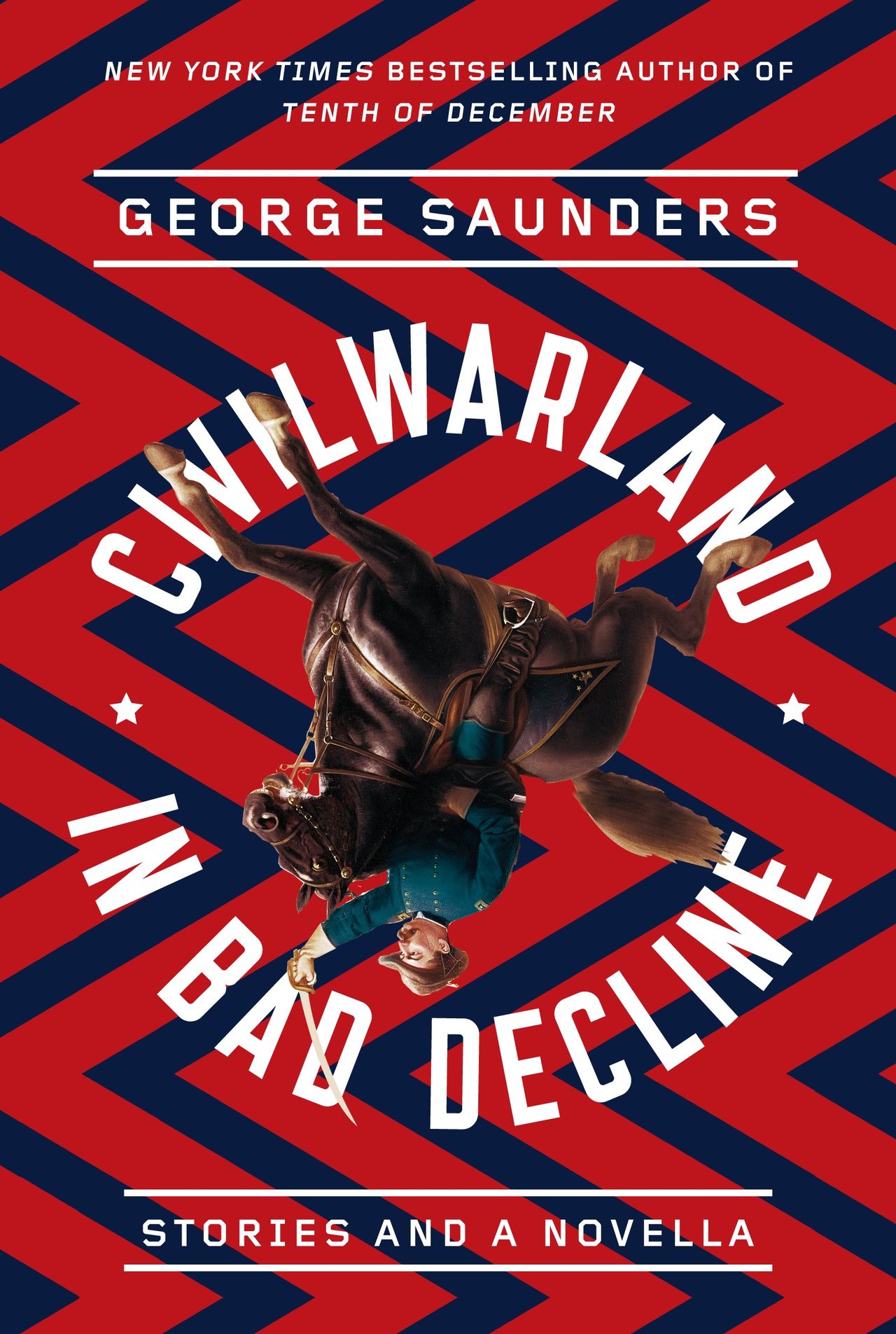
Cover of CivilWarLand in Bad Decline (1996).
(Courtesy Random House)
Cover of Liberation Day (2022).
(Courtesy Random House)
Cover of Lincoln in the Bardo (2017).
(Courtesy Random House)
Cover of Tenth of December (2013).
(Courtesy Random House)
Cover of The Braindead Megaphone (2007).
(Courtesy Random House)
Cover of In Persuasion Nation (2006).
(Courtesy Random House)
Cover of CivilWarLand in Bad Decline (1996).
(Courtesy Random House)
Cover of Liberation Day (2022).
(Courtesy Random House)
Cover of Lincoln in the Bardo (2017).
(Courtesy Random House)
Cover of Tenth of December (2013).
(Courtesy Random House)
Cover of The Braindead Megaphone (2007).
(Courtesy Random House)
Cover of In Persuasion Nation (2006).
(Courtesy Random House)
Cover of CivilWarLand in Bad Decline (1996).
(Courtesy Random House)
“I’ve found that my voice comes into focus when I’m taking things out and micro-choosing.”
With my students, everyone wants to find their own voice. It’s a very beautiful human desire, I think, to be unique. We tend to think that you get your voice by singing at the top of your lungs, on drugs or something, like some full expression, but I’ve found that my voice comes into focus when I’m taking things out and micro-choosing.
SB: I love this idea of writing as hosting. Maybe you could riff on that a little bit. Where do you see this link between hosting or hospitality and writing a story?
GS: Well, when I say, “Spencer, I know you have a busy day, but once upon a time…,” Okay, I’m saying that, but I’m kind of throwing down. I’m saying, “I’ve got something you’re going to want to hear,” and you, like a guest, say, “Okay, sure. I’ll come into your story.” Well, then we have a setup. It would be discourteous for me not to deliver—because I called you in. Likewise, I’m hoping that you’ll be somewhat generous with the first couple paragraphs. We’re going to get to know each other, but I think that’s the old contract, sitting around the fire and Blurg says he wants to tell a story and you go, “Okay, Blurg, go ahead, put down your club.” He starts saying something, and the tacit thing is it’s relevant. It’s of deep relevance to you that he’s going to tell you something.
For me, it was, as I say, a big change in my mindset, because before that I thought, No, I’m just tap dancing up here with such fluidity that the reader adores me and then say, “No, who wants that? Fluid tap dancing, who cares?” What we want is some kind of connection that says, even though you’re sitting out there and I’m up here, isn’t it like this? Isn’t life this way for you, too? Is it? I think the question mark is important, is life like this for you? The reader goes, “Yeah, actually it is.” “Okay.” And then we’re connecting. The beautiful thing for me is that it’s not just an ethos, it’s a technique. In fact, the technique taught me the ethos.
I was writing that first book so desperate to not work that job the rest of my life. I just wanted out. I wanted some literary thing to happen in my life. Because of the way the job was set up, it couldn’t be big. It had to be paragraph level. I didn’t have time. So to try to put as much into that paragraph as I could so that somebody out there would notice it. It was the desperation principle. Just “Please, dear editor, when this comes across your desk, I’m going to put barbs in it so you can’t put it down.”
SB: Yeah.
GS: Even if you go, “What the fuck is this mess?” “Good, you noticed.” So that was the first principle. But then it turns out that’s identical to the principle that says, “I want to respect you as a guest. I want your visit here not to be dull.”
SB: It’s interesting that your time constraint as you were trying to make a life of this as a writer was the very thing that I feel is essential to being a good writer: going sentence by sentence, paragraph by paragraph. It sounds obvious, but, actually, I think so often people try to approach it with plot or these other ideas, rather than just focusing on the one sentence or the one paragraph.
GS: Yeah. It reminds me of when [Aldous] Huxley took whatever he took, he took mescalin, I don’t know, took something, and then suddenly the garden was infinitely interesting. Every plant was a universe.
I think what the time constraint did was, I would take a paragraph with me on the bus or something. Well, you got an hour to work on a paragraph. Normally you would assume that a paragraph would take two minutes. Now your gaze adjusts and you start to notice the infinite possibilities that are in even a sentence, which can be kind of Rubik’s-cube maddening, but it can also be the doorway to identity. Because if somebody puts a sentence on the table between us, and you take it and I take it and we mess with it for an hour, I’m going to find out something about you, about your choices and about your inner ear and all that kind of stuff.
That was just accidental. It was just because it wasn’t five hours a day, because five hours a day, I think if I have five hours a day, I assume that my concerns are bigger. They’re big structures and they’re thematic and thereby you would overlook the paragraph. Whereas if you have two minutes a day, or in my case, I would get sometimes ten, like it’d be a gap between projects and I’d go, “Okay, okay, I’ve got ten minutes basically.” Literally looking at the clock, “Okay, I’ve got now nine minutes to try to get the file up, eight minutes and then drop into any paragraph, try to improve it by some percentage and then I’m out.” Which was just great. Actually, it’s funny, now, I’m trying to reenact that and get that, always trying to get that stride back.
SB: Yeah.
GS: That slow stride.
SB: It creates a sense of urgency that I think is important for translating onto the page and, in turn, to the reader.
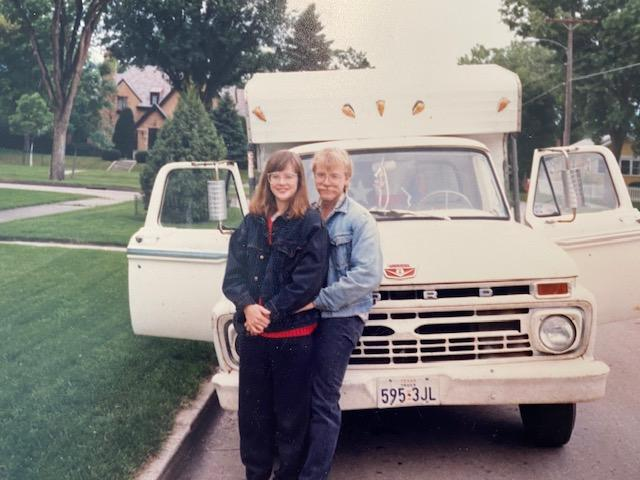
Saunders with his wife, Paula Redick, whom he met when they were both students in the M.F.A. creative writing program at Syracuse University. (Courtesy George Saunders)
GS: Yes. I always think of it as super-compressing. You’re taking a thought and you’re kind of compressing it down into its essence so that when it goes into the reader’s mind, it explodes. What happens is, the essence of that connection, is that you knew you super-compressed it and you knew that when you gave it to your reader, they would get it and it would blow up. There’s something very intimate about that. When someone understates something or makes a joke that is a little quiet and you as the reader fully receive it and it opens up in your mind, that’s part of the cementing of the intimacy that’s so important.
SB: I want to bring up Syracuse University here. This has had a particularly profound impact on your path as a writer, and also on your life. There, from 1986 to ’88, you studied under Tobias Wolff in the creative writing program, and also met fellow writer Paula Redick, who would become your wife. You’ve also gone on to teach at Syracuse for more than twenty years. Tell me a bit about your “Syracuse time,” if I can call it that.
GS: Oh, yeah.
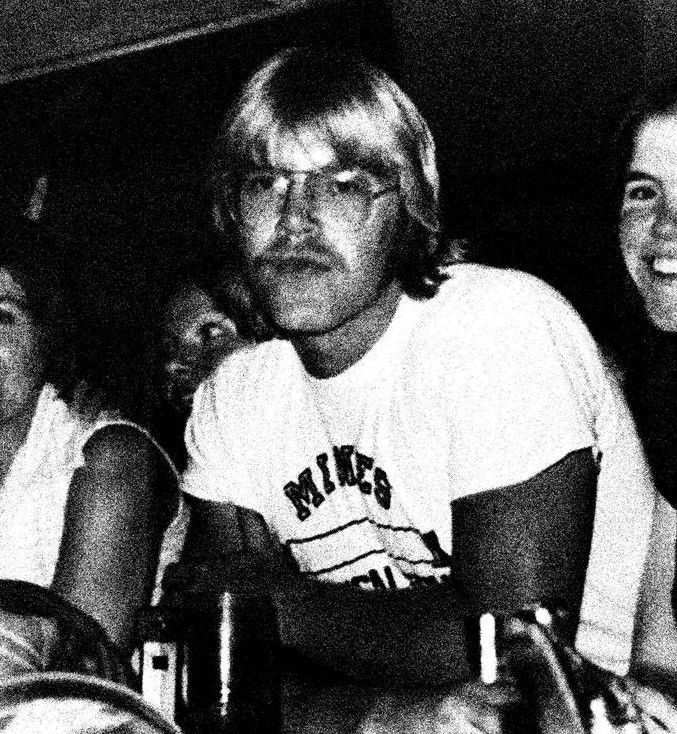
Saunders as a student at the Colorado School of Mines. (Courtesy George Saunders)
SB: What does it conjure for you?
GS: Oh, I love that place so much. The main thing was at the beginning, that university and particularly the program and particularly Tobias Wolff and Douglas Unger took a risk with me, because I didn’t have any English degree and had a geophysics degree and...
SB: You’d studied at the Colorado School of Mines.
GS: Yeah. As I later found out, they took the application upstairs and said, “It’s a little bit of a weird application, but we want to give this guy support.” So they gave me a full ride for the two years.
I was a rough customer at that point, coming from Texas and had been working, but they just very lovingly accepted me as a writer and spoke to me in that way and confided in me about my own work with frankness. That was a huge thing, to be brought over the transom that way, with no shame, all good assumptions, but also again, like the nuns with a great deal of rigor. That was huge. Again, it was the message that you’re a little weird [laughter], you’re a little behind, but you can do it. We believe that you can do it. That was enormous. Then I met Paula there. We got engaged in three weeks, which I think is still a record.
SB: Wow. While you were still students?
GS: Oh, yeah. I came in late August and we were engaged by Halloween or before Halloween. She’s wonderful.
Then there was a gap, and I came back to teach there. I think the unifying thing is that because of the way the program’s set up—somebody very wise set it up early—the program can attract and recruit and subsidize anybody with talent. You don’t have to have a trust fund to make it through the three years there. In fact, we, I would say, pride ourselves in finding people who maybe can’t afford it. That makes a really beautiful vibe because that’s all talent. There’s nothing but that. We get a lot of different kinds of people showing up at different stages of life with different experiences. Because of the support and because of the vibe, it’s really just three years of freedom and no promises, we can’t guarantee anything, but...
I always think of it as like Linus [van Pelt] talks about the pumpkin patch with nothing but sincerity. There’s not much system-created competition because once you get there, you already have your money and everybody who teaches there is a really good writer who is very serious about continuing to be writers. The vibe is, we’re all in this together and it’s not a given, but if we can help, we’ll help.
SB: One of the courses you’ve taught there for a long time you turned into a book effectively called A Swim in a Pond in the Rain. This class is about 19th-century Russian short stories in translation. In this book, you touch on this concept of what you call “iconic space.” I was hoping we could touch on that here. What is “iconic space,” exactly, and how do you go about teaching it?
GS: Well, that’s a fancy way of saying doing what only you can do, because we get something like seven hundred applications for six spots. You don’t have to teach anyone to write if they’ve made it through that.
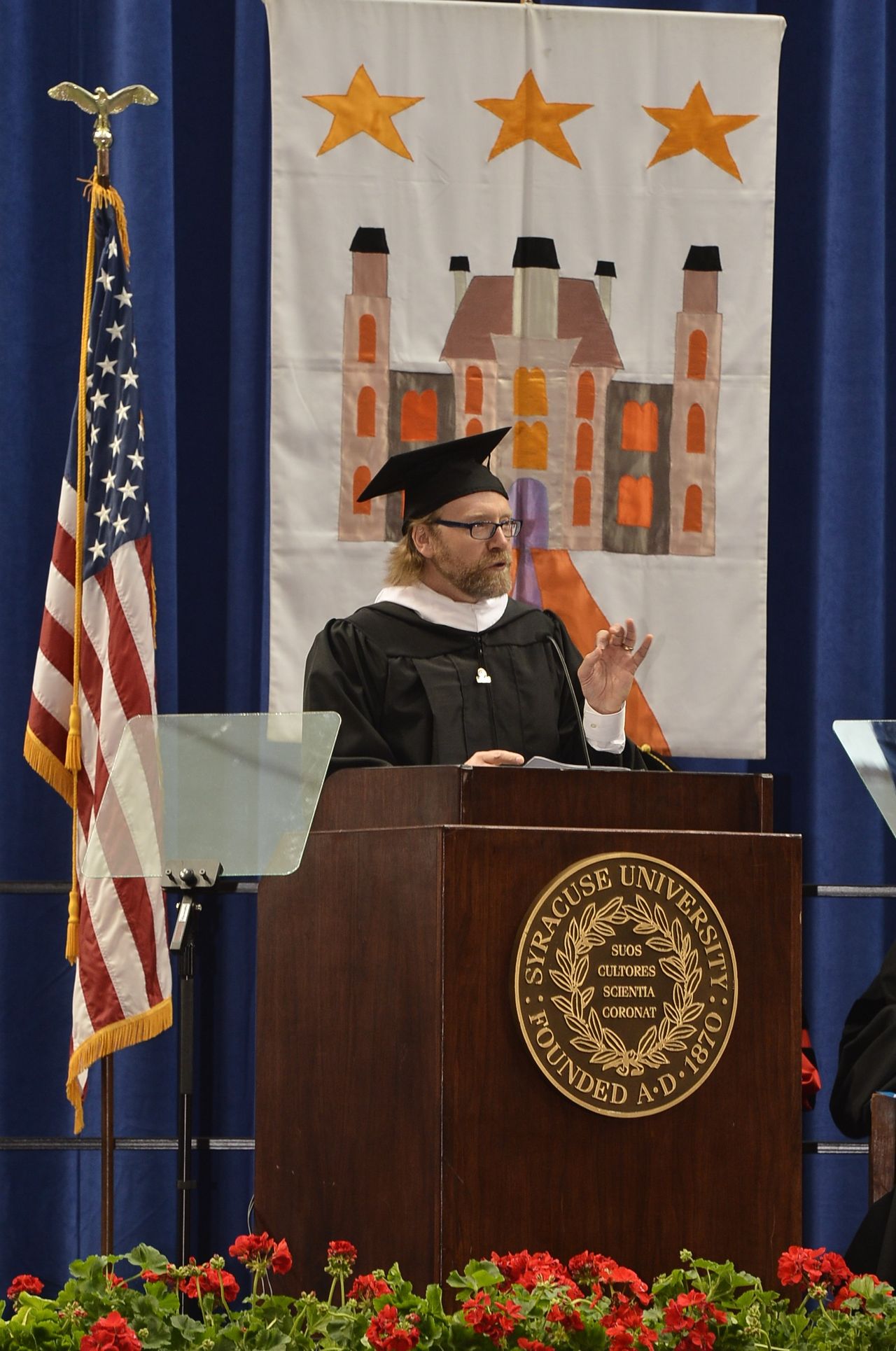
Saunders giving the commencement address to Syracuse University’s
class of 2013. (Courtesy George Saunders)
SB: Yeah. That must be one of the hardest schools to get into in the country.
GS: Yeah, it really is. It’s so beautiful. You read— I don’t read [applications] anymore, but when I did, you’d go for days and not find anything, and then suddenly somebody shows up and you’re like, “Oh, my God, now I remember what we’re looking for.” Then you get to call that person and have them come and then watch them for three years. But what I mean by that is, they’re already good writers. If you said to any of our writers, “Do something like Yeats, do something like Grace Paley,” they could do it, no problem. They’ve got great ears and they’ve read everything. Then the game becomes, “All right, now what is the mode in which you are totally unique, that uses everything you know that you don’t know you know yet. What’s the voice that is your voice?”
Again, the beautiful thing is there’s no way you can teach that. There’s no way you can guarantee it, but you can kind of set the table and you can identify what’s not it, which is a lot of what I’m doing, just in line edits for our students. Every so often, somebody breaks through. Then, the beautiful thing, too, for me is, having gone down this artistic path and with all this hard work, figuring out my method—I’m so happy I have a method—but it’s not your method. That’s been kind of the late-career revelation, is that I have to be very careful about assuming that my way works for anybody else.
SB: Yeah.
GS: You offer it, and you say, “Look, take ten percent of this—take none of it if you want. Here’s how I do it.” But then the very important P.S. to that is your way is going to be different.
SB: Yeah.
GS: Your job is not to internalize my way, but to say, “Fuck your way, George, and then find yours.” That’s the cherry on the top of it.
SB: It’s almost make the most of what George is teaching you, but—
GS: Including pushing back on it.
SB: Yeah.
GS: Really no, because I have all this whole idea about, like we talked about, revising from the sentence level. Some people don’t. There are some great books in the world that are made of mediocre prose, but there’s something else wonderful going on. So that’s been great for me to go, “Oh yeah, just because it’s heartfelt to me doesn’t mean it’s going to be true for you.”
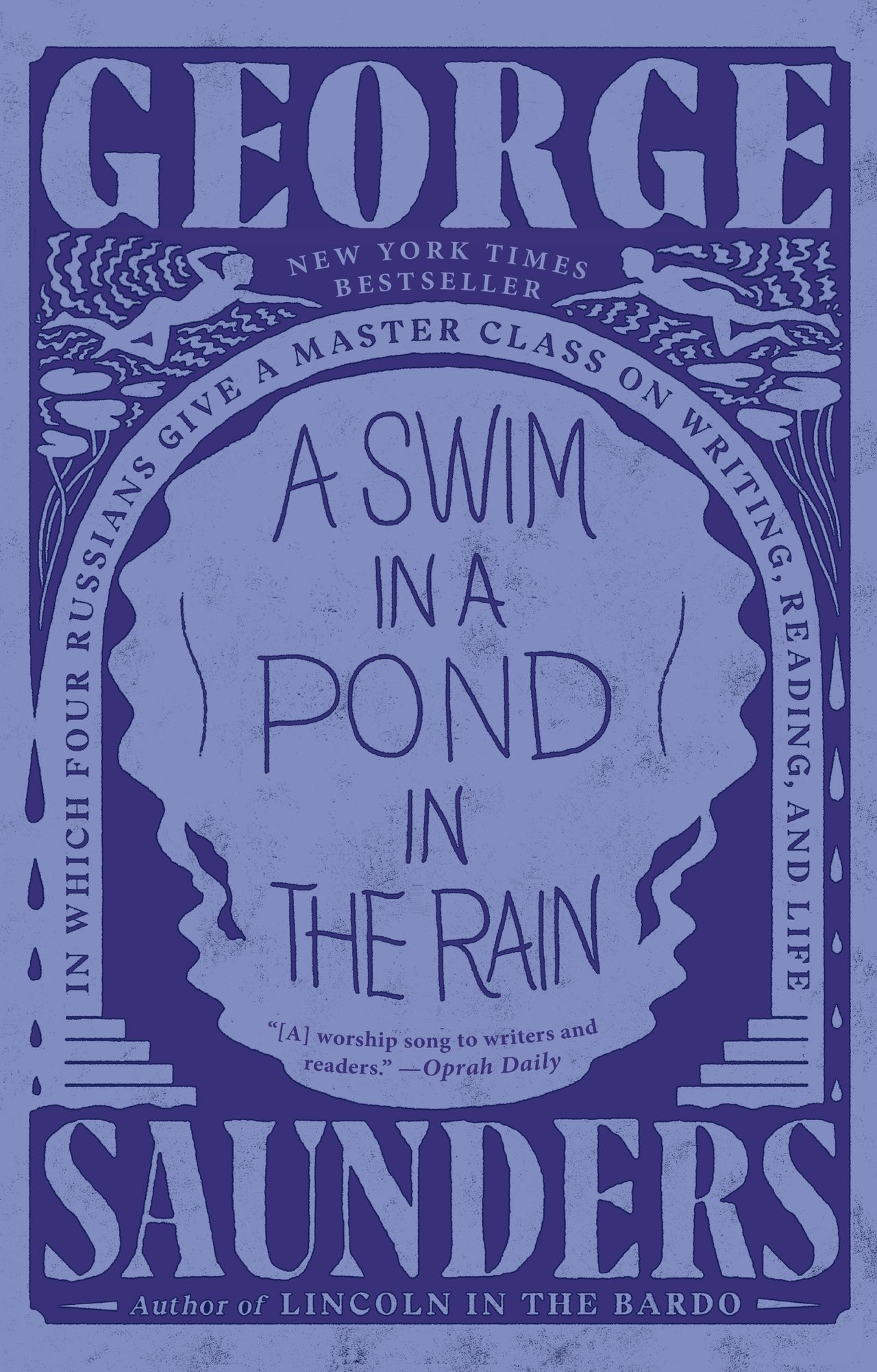
Cover of A Swim in a Pond in the Rain (2021).
(Courtesy Random House)
SB: You’ve noted that some of the best moments in your life have been while teaching that class of Russian stories. Why is that? What is it about these Russian stories that create or bring about these best moments for you?
GS: Well, one, it’s because they’re old, people come to them almost a little bit condescendingly at first, like, “Oh yeah, Tolstoy. Okay. I know Tolstoy.” Then when one of those stories starts to speak to the group collectively, it’s really powerful, because it’s almost like your old aunt, who you never noticed before suddenly says something completely riveting. You’re like, “Oh, my God, Aunt Zelda.”
Then I think what happens in the best of those classes is that you’ve got maybe fifteen or twenty people, including me, who just want to write. And for whatever weird reason, that’s our thing. We’re studying this old thing, this old story. From the front of the room, I can see lights going on, people getting different lessons from the story, and they are different. This writer who needs X is finding X. This writer who needs Y is finding Y. There’s a collective feeling, “Oh, shit. We’re in the middle of something here. This is good.” Literally like riding a wave. Sometimes that goes through to the end of the class and you just have to cut and go, “Okay, go forth and get out of here.”
Those were really beautiful moments, because it was everybody getting what they needed in the guise of talking about some ancient story. It wasn’t me telling them what the story was, but it was them within the context of the story, finding what they needed for their own work, which is incredible.
SB: When it comes to writing fiction, two analogies of yours I love are the writer as a roller-coaster designer—which probably connects to your obsession with roller coasters, I’m sure—but also this motorcycle-sidecar model of reading. I was hoping you could explain both of these for the listeners here and how you incorporate them into your process in teaching.
GS: Yeah. These are metaphors, and when they wear out, you have to discard them. But for me, the roller-coaster thing is, at the end of the day, my aesthetic is, I want you to sort of have your jaw dropped by a story or get to the end and go, “Oh, shit. That was... What? What? What? I don’t know what that…” That’s the best reaction as opposed to, “Oh, how interesting.” Or, “He’s really pilloried capitalism.” I don’t care about that really. If that happens, that’s great, but for me, it’s the thrill. That actually is what the job is…. Just so the reader would go, “Wow, jeez.” That’s it. I have to remind myself of that, because a lot of times the other ideas get in the way, almost like a kind of comfort food like, “Oh no, I’m the anti-capitalist guy and I’ve done that in this draft.”
SB: [Laughs] Right.
GS: That’s not enough. In fact, it’s kind of a security blanket to say, “My story has these ideas in it, therefore it’s a story.” It’s not true. The thrill part is what I have to remind myself of.
It’s interesting because as you’re working on the story, you really don’t have to know what it means. It’s always trying to tell you and you can kind of go, “All right, yeah, sure, but just stay back there.” You don’t know what it means, but you know where it means. I’ll get late in the story and I know that this one part isn’t done, but that it’s load-bearing. That’s all I have to know, actually. The roller-coaster guy, he just knows that there’s supposed to be a hill here and now he’s got to maximize the hill.
That’s an interesting way to work, because you’re really trying to keep the thematics at bay as long as you can and tend to the individual places in the story where something powerful is about to happen. The way you do that is with the language. I’m very attracted to anything that reduces anxiety in art from the creative end. For me to say, “Yeah, no, I don’t have to know what this story is. I don’t have to know what’s going to be important. I don’t even have to know what’s good. I just have to know— I have to be hypersensitive to the places within it where the meaning is kept and just make those sharper.” That roller-coaster thing is really just an anxiety-reduction metaphor for me.
“Everything there is to know about art is in that question: Why do we turn away?”
The other one, the motorcycle sidecar is the idea that when somebody... When you’re watching a movie, for example, you’re kind of in it or out of it in the first couple of minutes. It’s interesting to think, why do you reject a movie in the first five minutes? Which we do all the time. Everything there is to know about art is in that question: Why do we turn away? I would say it’s little offenses related to unfriendliness, the biggest of which is condescension. If there’s something in the first five minutes that makes you feel left behind or ignored, makes you, again, feel like the director is tap dancing so that you’ll be amazed but not engaged, we turn off.
The sidecar is, okay, if I am revising a story, what I want to do is keep my reader right next to me where she can’t object to anything. She’s charmed and she’s intrigued and she wants to know. We’re just sitting side to side. So if I lean left, she has to lean left. If I go right, she has to go right. If you sustain that state through the whole story, when I take the motorcycle off the cliff, she has to go with me—
SB: [Laughs]
GS: Because I haven’t given her any easy exits. So, as a narrative or as a revising strategy, it just means be super alert to any kind of condescension that’s sneaking in. By the way, we talked about it earlier, at the phrase level. If you say “the black cat, the dark-hued feline,” that second phrase is fucked up because I have already said that. And the fact that I... Why would I add that phrase? It’s partly, it seems like showing off—”dark-hued feline”? Come on, what is that?
SB: You’d never say that aloud. [Laughs]
GS: You’d never say it aloud. That’s right. The idea is, okay, if I give you those two versions, the two phrase one and the one phrase one, the second one with only one phrase is more respectful of you. The great leap of faith is that you, the reader, will notice that over the course of a story. You’ll notice the thousands of omissions of the normative or the habitual—you’ll notice it and it’ll translate into a better friendship. And we go off the cliff together.
SB: [Laughs] I’d like to end our conversation today about fiction as a moral, ethical tool, or this idea of the novel or the short story as a portal. I think they’re connected. You’ve written, “The true beauty of a story is not in its apparent conclusion but in the alteration in the mind of the reader that has occurred along the way.” Elsewhere, you’ve noted that, “That’s what fiction does: it causes an incremental change in the state of the mind. That’s it.” What do you think psychically occurs through reading a great story or novel? Do you think fiction, at least in a roundabout way, can bring about greater truth or even empathy?
GS: Years ago, I was here in New York and it was pouring rain. I came out of something and I walked up to a corner, the way you do, and there was a young woman standing there with an umbrella and I was like an old dude getting soaked. She just took a half step over and put her umbrella over me and then the light changed and we crossed. That’s a short story because it was a moment of— We were in that situation, I was getting soaking wet. She had an umbrella. We both knew it. Most times, you just go, “Oh, well,” and that’s a bad story, but I was aware of her, she was aware of me, she took a move, very sweet, we didn’t say a word, and that was it. I think it’s that moment of mutual recognition that actually is the most powerful thing in a story.
“On some micro level, a story reaffirms the idea that we actually can see each other.”
It can happen in so many different ways. It can happen because the story acknowledges a shared political view, but I think it happens more profoundly by the thousands of small choices that the writer has made that make you feel seen. That in itself—the world right now is so crazy, but the baseline craziness is that people are not seeing other people. You look up at our government—they’re not seeing us. They’re doing all these things to us. That’s hurtful and it’s weird. On some micro level, a story reaffirms the idea that we actually can see each other. The second thing is, when we do see each other, we become more mutually convinced of each other’s reality. The fact that you actually are every bit as real as I am.
That’s the thought that we’re trying to get through our heads from the time we’re babies: That person there is as real as I am. It seems counterintuitive and our neural systems seem to be designed to refute it, but we know it’s true. I think that’s what stories can do. But I get in trouble because I sometimes get up on the pulpit about stories. For me, that is it. It’s just there’s an alteration in your mind. You sat down at 8:10 with the Chekhov story, you finished it at 8:40. Compare the two minds. Report.
SB: In a way, I think that’s what all great art does or should do, is change you, somehow.
GS: Yeah. Even just for a couple seconds, because then you’re reminded that you’re changeable.
SB: All those micro changes, similar to working on a story, all the micro changes amount to the whole. The same is true of yourself.
GS: Yes, that’s very true. Exactly.
SB: To bring this conversation back to where we started, which was really about this transition between life and death, about the spirit and, I guess, the soul, another thing you said on Colbert the other week that struck me was, “You don’t have to be accurate about anything except the soul.”
GS: Wow. I didn’t know that I said that.
SB: I was hoping you could elaborate a little bit on that here, because I do think there’s something about even that “iconic space” that you’re teaching in class. It’s sort of how do you get in touch with your soul? How do we understand ourselves and our souls more deeply?
GS: Yeah. I think it’s funny that I used the word soul, because it’s not a real... Okay. So I think what we’re getting in touch with is the fact that we... ninety percent of the time, ninety-nine percent of the time we walk around with the idea that it is what it is. We have this mind that’s receiving all this data and it’s making this tidy little picture of the world that we mistake for the world, and that’s it. We’re solid; we’re fixed. I think what art can do, but also just living with a reasonable attitude can do, is make you go, “Oh, I’m seeing the world always through a lens.” I think the lens is built into my face, but actually the lens is, the mind is making it. There’s something really crazy and hopeful about the fact that we’re all lens-ified.
To the extent that we can... Because the lens is sometimes beautiful. It’s full of childhood memories and fondnesses and things we like, things we don’t like, but it’s also full of prejudice and bias and exclusion of other people. Ultimately, the idea that I’m the only one that actually matters. This is my movie and you’re just a co-star. I think that what art can do is make us aware that there’s a lens. It still comes back onto us, of course it does, but even the momentary suspension of lens is really powerful.
Maybe, to connect my Buddhist and Catholic paths, I would think that the removal of the lens, which means the awareness that you have a particular self, when the lens is off, that’s the soul. The pure soul is that thing, the lensless perception or something like that. I don’t know.
SB: That’s a beautiful way to end. I’m happy with that.
GS: Me too.
SB: Thanks, George.
GS: I had such a good time. Thank you so much. It was really wonderful.
This interview was recorded in The Slowdown’s New York City studio on Tuesday, March 17. The transcript has been slightly condensed and edited for clarity. The episode was produced by Olivia Aylmer, Ramon Broza, Mimi Hannon, and Johnny Simon. Illustration by Paola Wiciak based on a photograph by Pat Martin.